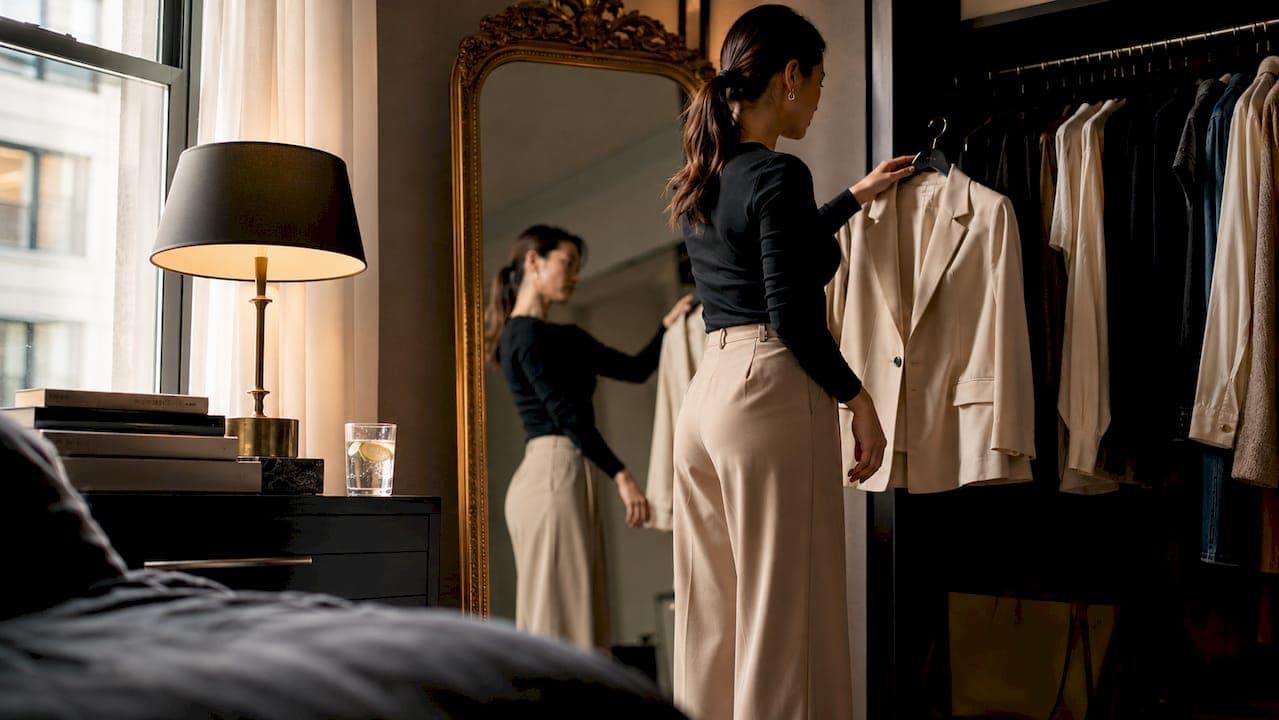
Occasion-based dressing systems are methods that categorize clothing by event type and dress code to make outfit choices faster and more consistent. The role of occasion-based dressing systems goes beyond aesthetics. These systems reduce decision fatigue, signal social awareness, and give your wardrobe a clear purpose. Think of them as the industry's version of a capsule wardrobe, extended across every role you play in life: professional, social, formal, and casual. When your clothes are organized by occasion rather than by color or season, getting dressed stops being a daily negotiation and becomes a simple match.
How do occasion-based dressing systems improve daily dressing efficiency?
A wardrobe organized by occasion functions like an operations system, not a storage closet. Planning outfits by occasion prevents last-minute scrambling and ensures you always have a complete, versatile combination ready. That shift from reactive to proactive dressing is where most of the time savings come from.
The capsule wardrobe concept is the clearest example of this in practice. A capsule wardrobe system frames clothing into event-specific groupings, such as a Work Capsule, a Weekend Capsule, and an Event Capsule. Each group contains pieces that work together and fit the context they were built for. You are not choosing from your entire wardrobe every morning. You are choosing from a curated set of ten to fifteen items that already belong together.
Decision fatigue is a real cost. Every choice you make draws on a finite pool of mental energy. When your wardrobe forces you to evaluate dozens of combinations before 8 a.m., you arrive at work already depleted. Occasion categories eliminate that friction by narrowing the field before you even open the closet door.
Here is how to build your own occasion categories:
- Professional capsule: Tailored trousers, blazers, button-down shirts, and polished shoes that meet workplace dress standards
- Casual capsule: Well-fitted jeans, quality T-shirts, clean sneakers, and layering pieces for weekends and errands
- Event capsule: A little black dress or a sharp suit, dressy accessories, and one or two statement pieces for weddings, galas, or dinners
- Seasonal capsule: Transitional pieces like lightweight knits or trench coats that bridge weather changes without requiring a full wardrobe overhaul
Pro Tip: Start with your most frequent occasion. If you dress for work five days a week, build that capsule first. Add event and casual capsules only after the daily foundation is solid.
What psychological and social effects does occasion-based dressing have?
Clothing communicates before you speak. Formal attire increases leadership perception through faster cognitive processing and greater visual attention from observers. Two experiments confirmed that individuals in formal clothing were more likely to be perceived as leaders. That is not a style preference. It is a measurable social outcome tied directly to occasion-based fashion choices.
"Dressing formally influences social cognition by changing leadership perception speed and intensity, highlighting occasion-based dressing's strategic value." — Research on cognitive processes in status ascription
The social signaling function of clothing is well documented. A semiotics study formalizes a four-stage style code process and explains that clarity in style codes matters more than aesthetics alone. Mismatches between your outfit and the occasion's dress code send confusing signals, regardless of how good the individual pieces look. A beautifully tailored suit at a beach wedding reads as tone-deaf, not stylish.
Occasion-based dressing also affects internal confidence. When you know your outfit fits the context, you stop thinking about what you are wearing. That mental bandwidth shifts to the conversation, the presentation, or the event itself. Appropriateness is not about conformity. It is about removing self-consciousness so you can be fully present.
The contrast with mood-based dressing is instructive. Mood-based dressing responds to internal emotional cues, which shift daily. Occasion-based dressing responds to external situational constraints, which are stable and predictable. Predictability is what makes the system work.
How do you identify and interpret dress codes for various occasions?
Dress codes vary widely, and events have differing formality levels. Researching the dress code before an event is the most reliable method to select an appropriate outfit. Do not rely on assumptions. A wedding invitation that says "festive attire" means something very different from one that says "black-tie optional."
Follow these steps to decode any dress code accurately:
- Read the invitation carefully. The exact wording matters. "Smart casual" is not the same as "business casual." Look for specific terms and treat them as instructions, not suggestions.
- Research the venue. A rooftop cocktail party in july calls for lighter fabrics and open-toe shoes. A cathedral ceremony in december requires layers and closed-toe footwear. The venue sets physical constraints the dress code alone may not specify.
- Consider the host's culture. A corporate gala at a conservative law firm and a creative agency's holiday party may both say "cocktail attire," but the expectations differ significantly. When in doubt, ask someone who knows the host.
- Map the formality spectrum. Black-tie sits at the top. Business formal follows. Business casual, smart casual, and casual each step down from there. Knowing where your event falls on that spectrum tells you how much formality to add or subtract.
- Check for contextual clues. Start time matters. Events before 6 p.m. are typically less formal than evening events. Outdoor settings usually call for more relaxed attire than indoor venues.
The Texas A&M System Offices dress code guidance illustrates how workplace dress standards vary by day, time, and event context, including Casual Friday as a distinct occasion with its own rules. That same logic applies to every social context you navigate.
Practical steps to build an occasion-based wardrobe system
An occasion-based wardrobe system includes multiple capsule wardrobes designed for the various roles and settings in your life. It is not a single minimalist set. It is a collection of small, focused sets that each do one job well.

The most common failure is the "orphan" item. An orphan is a piece that does not integrate into any complete outfit for an occasion you actually attend. That sequined blazer you bought on sale has nowhere to go if your event capsule does not include pieces that work with it. Orphan items create clutter and false abundance. Your closet looks full, but you still have nothing to wear.
| Wardrobe approach | Key characteristic | Common outcome |
|---|---|---|
| Occasion-based system | Clothes grouped by event type and dress code | Fast, confident outfit selection |
| Color-based organization | Clothes sorted by hue | Visually tidy but contextually mismatched |
| Mood-based dressing | Outfit chosen by daily emotional state | Inconsistent appropriateness across contexts |
| Quantity-first buying | Closet filled without occasion planning | High orphan item rate, decision fatigue |
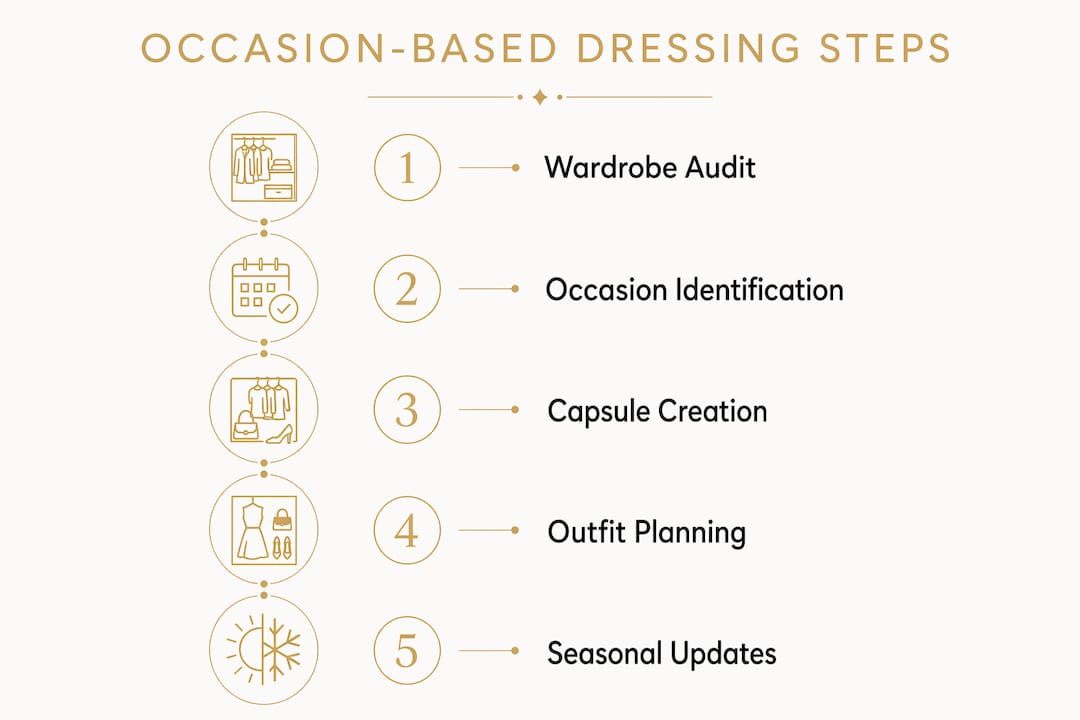
Building the system requires four steps. First, audit your current wardrobe and identify which occasions you actually dress for in a given month. Second, group existing pieces into those occasion categories and note the gaps. Third, shop intentionally to fill only the gaps, prioritizing pieces that work with at least three other items you already own. Fourth, run a calibration loop: after each event, note whether your outfit felt right. If it did not, adjust the capsule.
Pro Tip: Apply the "three-outfit rule" when buying a new piece. If you cannot mentally build three complete outfits for a specific occasion using that item and what you already own, skip it.
Seasonal dressing strategies fit naturally into this framework. Update each capsule at the start of a new season by swapping out weather-specific items while keeping the occasion structure intact. You are not rebuilding the system. You are refreshing the inventory inside it.
Key Takeaways
Occasion-based dressing systems work because they replace daily improvisation with pre-built, context-specific outfit sets that reduce decision fatigue and improve social appropriateness.
| Point | Details |
|---|---|
| Build occasion capsules | Group clothes by event type, not color or season, to make daily outfit selection faster. |
| Research dress codes | Always check the specific dress code before an event to avoid outfit mismatches. |
| Eliminate orphan items | Every piece you own should fit into at least one complete outfit for an occasion you attend. |
| Formal attire signals leadership | Research confirms formal clothing increases leadership perception through faster cognitive processing. |
| Run a calibration loop | After each event, assess whether your outfit fit the context and adjust your capsule accordingly. |
Why I stopped dressing by mood and never looked back
The shift that changed how I dress was simple: I stopped asking "what do I feel like wearing?" and started asking "what does this occasion require?" That sounds like a loss of freedom. It is actually the opposite.
When I built out separate capsules for work, social events, and formal occasions, I stopped wasting mental energy on outfit decisions entirely. The work capsule handles Monday through Friday. The event capsule handles weddings, dinners, and anything with a dress code. The casual capsule handles everything else. Each decision is already made before the day starts.
The deeper insight is that occasion-based fashion choices are not about dressing for other people. They are about removing friction from your own morning. You show up to the right place in the right clothes, feeling prepared rather than self-conscious. That confidence compounds. People notice it, even when they cannot name what they are responding to.
My one practical recommendation: start with the occasion you dress for most often. Build that capsule to a point where it feels complete. Then add the next one. Trying to build the entire system at once leads to analysis paralysis, which is exactly the problem you are trying to solve.
— Ahmed
Mytenue makes occasion dressing simple and personal
Putting an occasion-based wardrobe system together takes time, especially when you are starting from scratch. Mytenue was built for exactly this situation.
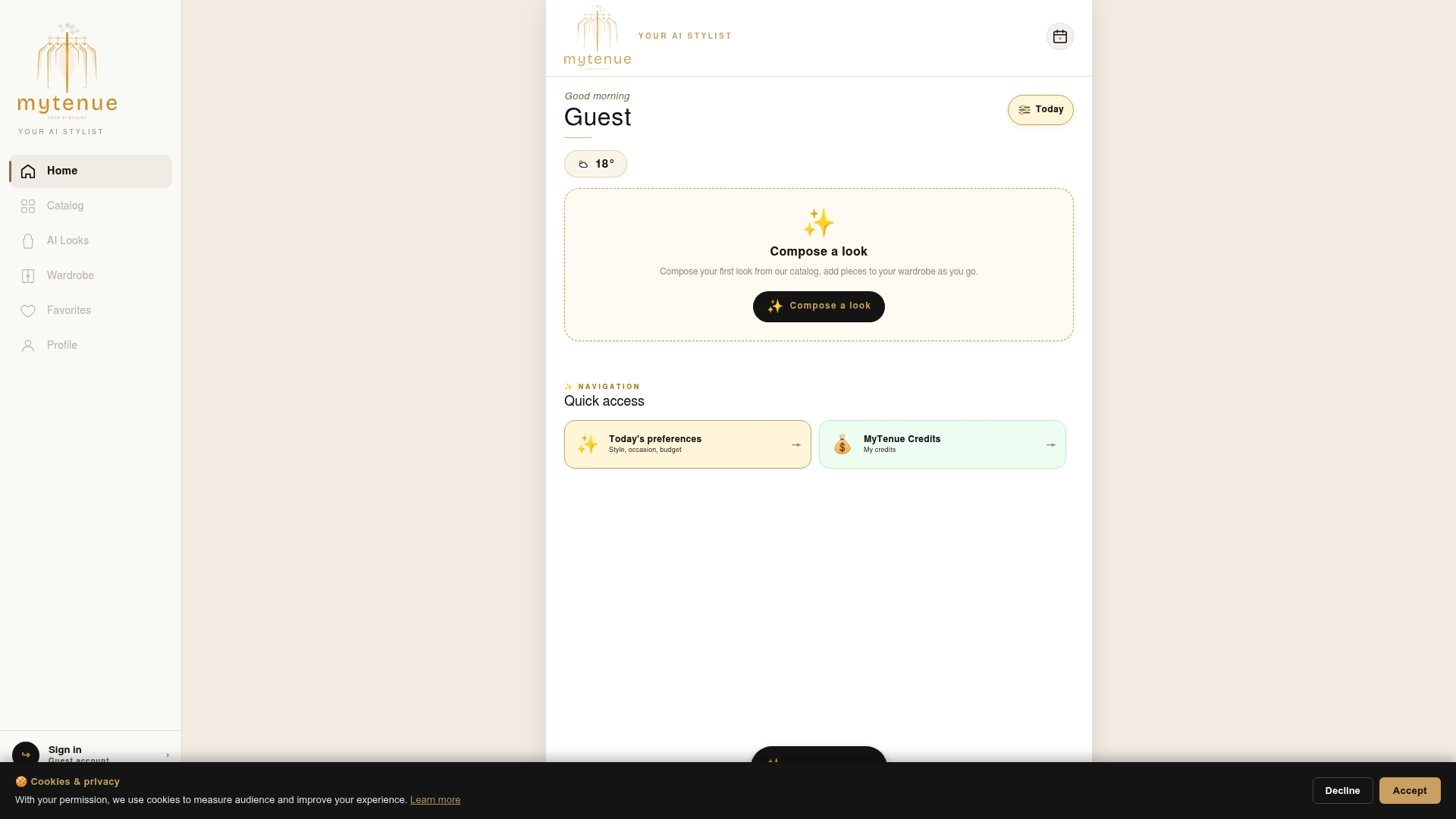
Mytenue uses AI to curate complete outfits based on your style preferences, the occasion, and your budget. You get personalized looks for specific events without spending an hour in front of your closet. The platform also helps you mix and match pieces you already own with new additions, so your wardrobe grows with purpose rather than by accident. Whether you are building a work capsule or preparing for a formal event, visit Mytenue to get outfit recommendations tailored to the occasion you are actually dressing for.
FAQ
What is an occasion-based dressing system?
An occasion-based dressing system is a method of organizing clothing into event-specific categories, such as work, casual, and formal, so outfit choices are faster and more appropriate. It replaces daily improvisation with pre-built, context-matched outfit sets.
How does occasion-based dressing reduce decision fatigue?
Grouping clothes by occasion narrows your choices before you open the closet. Research confirms that treating a wardrobe as a system of occasion-based sets prevents last-minute scrambling and reduces the mental load of daily dressing.
Why does formal attire affect how others perceive you?
Studies show that formal clothing increases leadership attribution through faster cognitive processing and greater visual attention from observers. The effect is measurable and consistent across professional and social contexts.
What is an orphan item in a wardrobe?
An orphan item is a piece of clothing that does not integrate into any complete outfit for an occasion you actually attend. Orphan items create the illusion of a full wardrobe while leaving you with nothing practical to wear.
How often should you update your occasion-based wardrobe?
Update each occasion capsule at the start of a new season by swapping weather-specific items while keeping the occasion structure intact. Run a calibration check after major events to identify gaps and remove pieces that no longer fit the context.