
Time-saving outfit planning tips are methods that help you quickly and confidently prepare stylish outfits by reducing daily decision-making through repeatable systems. The average morning spent staring at a full closet is not a wardrobe problem. It is a planning problem. Young professionals, busy parents, and students all face the same friction: too many choices, too little time. The fix is a structured approach, not more clothes. Tools like outfit planning apps, capsule wardrobes, and the outfit formula method turn a chaotic morning ritual into a two-minute decision.
1. What is the outfit formula method and why does it save time?
The outfit formula method is a repeatable daily structure built around four slots: a base, a layer, shoes, and one finishing touch. Following a fixed outfit pattern reduces decision fatigue by removing open-ended choices from your morning. Instead of asking "what do I wear today," you ask "which base do I pick today." That shift is small in words but enormous in mental energy saved.
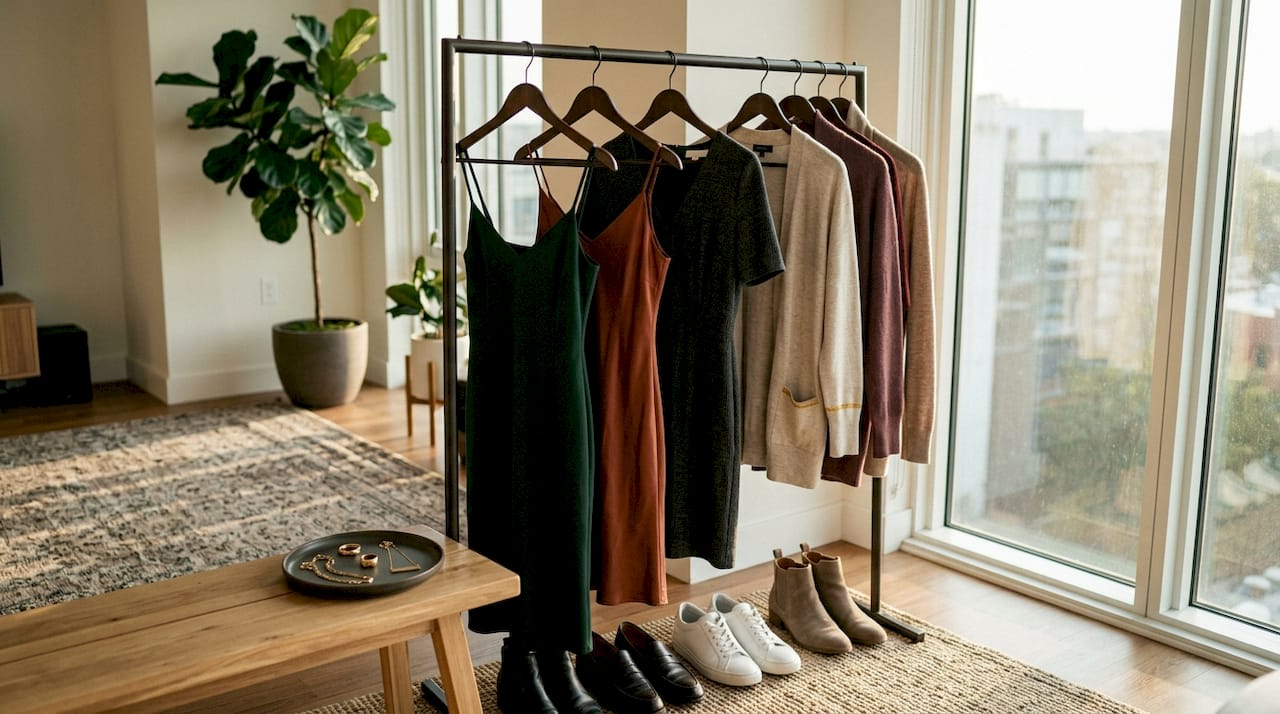
A base is typically a neutral top or dress. Layers include a blazer, cardigan, or jacket. Shoes anchor the look to the occasion. The finishing touch is one item: a belt, a scarf, or a watch. Nothing more.
The 1-2-3 outfit template takes about 15 seconds to apply once you know it. That speed comes from constraint. When you limit your finishing touches to one item, you eliminate the spiral of "should I add a necklace AND earrings AND a bag." One finisher. Done.
- Base options: white tee, black turtleneck, striped button-down, solid-color dress
- Layer options: denim jacket, structured blazer, oversized cardigan
- Shoe anchors: white sneakers (casual), loafers (smart casual), ankle boots (polished)
- Finishing touches: one watch, one belt, or one statement earring
Pro Tip: Limit your color palette to 2–3 neutral tones per formula. When everything coordinates, every combination works, and you never waste time second-guessing.
A repeatable template anchored to closet organization works best. Adding multiple finishers reintroduces the exact decision paralysis the formula was built to prevent. Keep it tight.
2. How can weekly outfit planning boost efficiency?
Weekly outfit planning assigns specific moods or intentions to each day, so your morning decision is already half-made the night before. A day-based outfit system pairs fixed anchors with flexible options, cutting the daily question down to a single variable. Monday might be your "polished and focused" day. Friday might be "relaxed and creative." Each day gets a mood, and that mood narrows your closet instantly.
Here is a practical weekly structure you can adapt:
- Sunday: Review the week ahead. Note meetings, events, and casual days.
- Monday: Assign a "uniform" anchor (e.g., navy trousers + white shirt) with a choice of two tops.
- Tuesday through Thursday: Rotate two or three pre-approved outfit formulas based on the day's energy.
- Friday: Use your most relaxed formula. This is your low-stakes day.
- Weekend: Free choice from a separate casual capsule.
The psychological benefit here is real. When you trust a system, you stop second-guessing it. Routine builds confidence. A planner, a notes app, or even a simple whiteboard on your closet door works as a weekly outfit calendar. The tool matters less than the habit.
Pro Tip: Pre-select accessories for each planned outfit the night before. Place them on a tray or hook near your mirror. This removes the last 90 seconds of morning delay.
3. What role do technology and documentation play in outfit planning?
Photographing outfits and using apps creates a visual wardrobe reference that speeds up morning choices. Using outfit photos together with apps helps you recall and repeat your best looks without rebuilding them from memory. Most people forget what they wore three Tuesdays ago. A photo library fixes that.
Outfit planning apps explained simply: they let you catalog your wardrobe digitally, build outfit combinations, and track what you have worn. Apps like Cladwell and Stylebook help you visualize, rotate, and sync wardrobe items so nothing gets forgotten at the back of your closet. These tools are especially useful for people who own more than they think they wear.
- Photograph every outfit you love immediately after wearing it. Use your phone's camera roll or a dedicated folder.
- Tag photos by occasion: work, casual, event, gym. This creates a searchable reference.
- Use an app to track wear frequency. Items you never reach for are candidates for removal.
- Build a Pinterest or saved-posts board for outfit inspiration sorted by season or occasion.
- Sync new purchases digitally before hanging them up. This forces you to plan combinations before the item gets lost in the closet.
Pro Tip: After photographing 20–30 outfits, patterns emerge. You will see which three or four pieces appear in almost every look. Those are your wardrobe anchors. Build around them.
Mytenue takes this concept further by using AI to curate personalized looks based on your style preferences, occasions, and budget. It connects your existing wardrobe items with new options, so you always have a ready-made outfit without starting from scratch.
4. What common mistakes waste time when getting dressed?
Mixing too many colors or trying new outfits every day causes confusion and wastes time. The biggest morning delays come from self-imposed complexity. You do not need a new outfit every day. You need a reliable rotation.
- Mistake 1: Wearing too many colors at once. Stick to 2–3 tones per outfit. More colors mean more decisions about what matches.
- Mistake 2: Keeping clothes that do not coordinate. Every item in your closet should work with at least three others. If it does not, it creates dead ends.
- Mistake 3: Saving "special" outfits indefinitely. Clothes you never wear take up visual and mental space. Wear them or remove them.
- Mistake 4: Mixing too many prints in one look. One print per outfit is the rule. Two prints require expertise most people do not have time to apply at 7 a.m.
- Mistake 5: Skipping the night-before check. Discovering a missing button or a wrinkled shirt at 8 a.m. costs you 10 minutes and your composure.
"Editing your wardrobe toward a coherent signature style compresses decisions to 'which version' instead of 'what to wear.'"
The corrective action is simple: edit your wardrobe down to pieces that coordinate naturally. A smaller, well-matched closet is faster to dress from than a large, chaotic one. Quality of coordination beats quantity of options every time.
5. How to tailor outfit planning for professionals, parents, and students
Each lifestyle group faces different dressing demands, and the best outfit planning tips shift slightly depending on your daily reality. The core formula stays the same. The application changes.
| Lifestyle | Core challenge | Recommended approach |
|---|---|---|
| Young professionals | Dress codes vary; meetings require polish | Build a 10-piece work capsule in neutral tones; assign two formulas per week |
| Busy parents | Speed is critical; clothes must be practical | Use a fixed morning uniform; keep a separate "quick grab" section in your closet |
| Students | Budget is tight; occasions range widely | Focus on versatile basics; use a budget-based outfit app to plan looks before buying |
Young professionals benefit most from a defined work capsule: navy, gray, white, and black pieces that mix freely. Two or three formulas cover every meeting scenario without daily reinvention.
Busy parents need speed above all else. The key is not more clothes but planning with fewer, well-coordinated pieces. A fixed morning uniform, such as dark jeans plus a solid top, removes the decision entirely. Reserve creative choices for weekends.
Students gain the most from budget-based outfit apps. These tools help plan looks before spending money, so every purchase fills a real gap rather than adding clutter. Mood and clothing interact, so having reliable outfit anchors also supports focus and confidence before class. A consistent style formula costs nothing to maintain once built.
Key takeaways
The most effective approach to outfit planning is a fixed formula built on fewer, well-coordinated pieces, supported by weekly pre-planning and digital documentation.
| Point | Details |
|---|---|
| Use the outfit formula | Apply a base, layer, shoes, and one finishing touch to dress in under five minutes. |
| Plan outfits weekly | Assign daily moods and pre-select combinations the night before to cut morning delays. |
| Document your best looks | Photograph outfits and use apps like Cladwell or Stylebook to build a visual reference. |
| Edit your wardrobe | Remove pieces that do not coordinate; a smaller, matched closet is faster to use. |
| Match tips to your lifestyle | Professionals, parents, and students each need a slightly different formula application. |
Why I stopped treating my wardrobe as a daily puzzle
The shift that changed my mornings was not buying better clothes. It was naming my formulas. Once I labeled my go-to combinations, such as "Monday meeting look" or "Friday casual," I stopped treating each morning as a fresh creative problem. Naming outfit formulas compresses decisions and builds trust in a daily dressing routine, making style less of a project and more effortless.
The psychological payoff surprised me. Decision fatigue is real, and it starts before you leave the house. Every choice you make before 9 a.m. draws from the same mental budget. Outfit decisions are not trivial. They are the first tax on your focus each day.
What I tell anyone who asks: start with three formulas, not thirty. Pick one for work, one for casual, one for events. Photograph each one. Repeat them without guilt. Consistency is not boring. It is confidence made visible.
The people who dress well consistently are not more creative than you. They have simply made fewer decisions. Their wardrobe does the work so their mind does not have to.
— Ahmed
Mytenue makes outfit planning faster and more personal
Ready to put these tips into practice without doing all the catalog work yourself? Mytenue is an AI-powered wardrobe platform built for exactly this kind of daily friction.
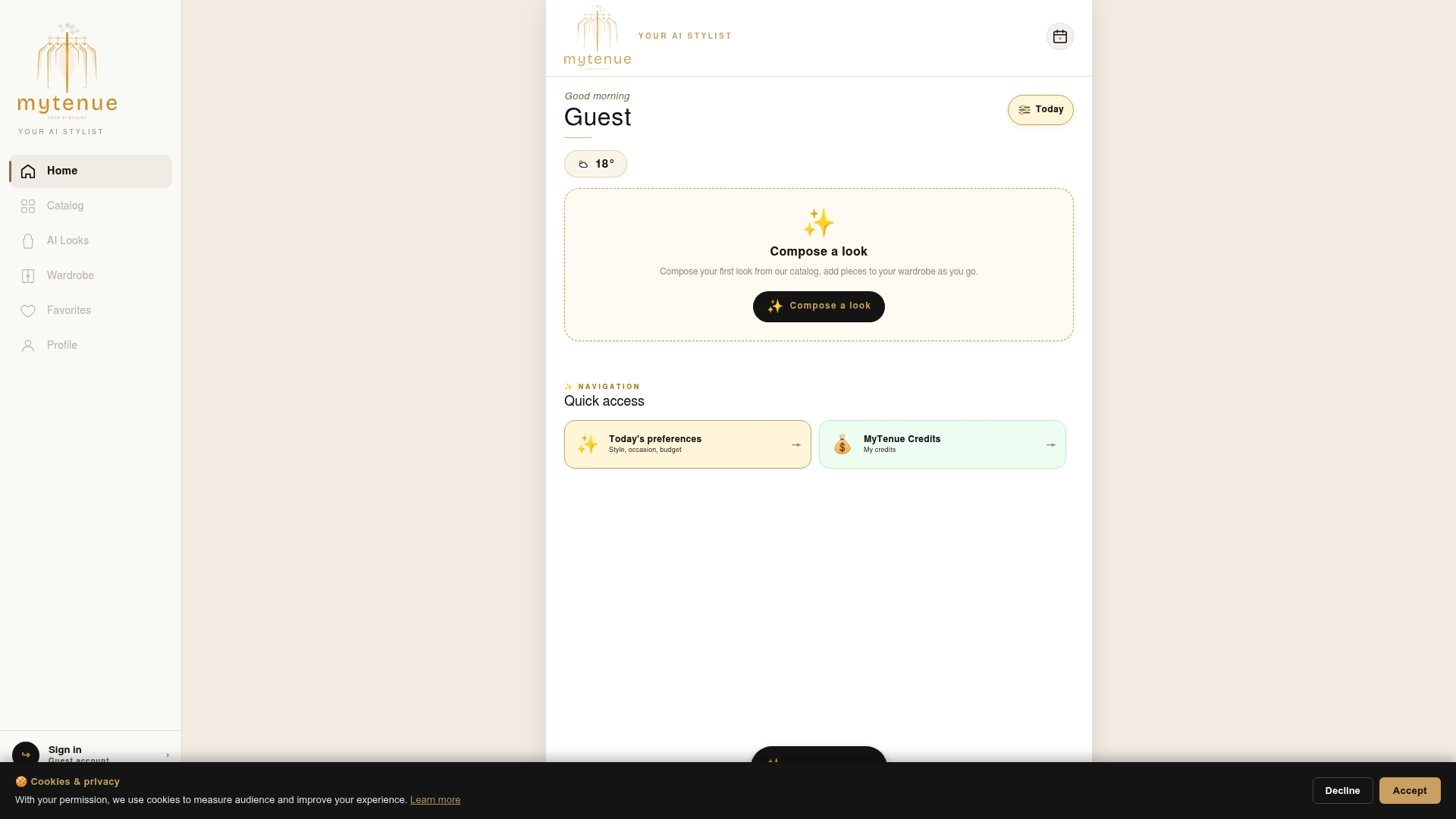
Mytenue lets you build complete outfits based on your style preferences, occasions, and budget, all in one place. It connects your existing pieces with new options and delivers ready-made looks without the guesswork. Whether you are a student building your first capsule wardrobe or a professional who needs polished looks fast, Mytenue gives you a personal AI stylist available whenever you need one. Your mornings get shorter. Your style gets sharper.
FAQ
What are time-saving outfit planning tips?
Time-saving outfit planning tips are repeatable systems, such as outfit formulas, weekly pre-planning, and wardrobe editing, that reduce daily decision-making and speed up morning dressing.
Why does outfit planning save time?
Outfit planning saves time by replacing open-ended daily choices with pre-made decisions. A fixed formula like base plus layer plus one finishing touch takes about 15 seconds to apply.
How do outfit apps simplify dressing?
Outfit planning apps like Cladwell and Stylebook let you catalog your wardrobe, build combinations, and track wear frequency so your best looks are always one tap away.
What is a budget-based outfit app?
A budget-based outfit app is a digital tool that helps you plan looks within a set spending limit, so every new purchase fills a real wardrobe gap rather than adding unused items.
How does outfit planning help students specifically?
Students benefit from outfit planning because it reduces spending on impulse purchases and builds a reliable rotation from fewer pieces, saving both time and money before class.