
Hyper-personalized styling is a fashion technology that creates outfit recommendations based on your individual identity, body characteristics, lifestyle, and real-time data signals. The industry term for this approach is "hyper-personalization," and it sits well above standard product recommendations. Where traditional personalization groups you into a customer segment, hyper-personalized fashion treats you as an audience of one. Platforms like Mytenue and technologies like Google Cloud's Virtual Try-On API are making this level of customization accessible to everyday shoppers. The result is a wardrobe experience that fits your actual life, not a demographic average.
What is hyper-personalized styling, and how does it work?
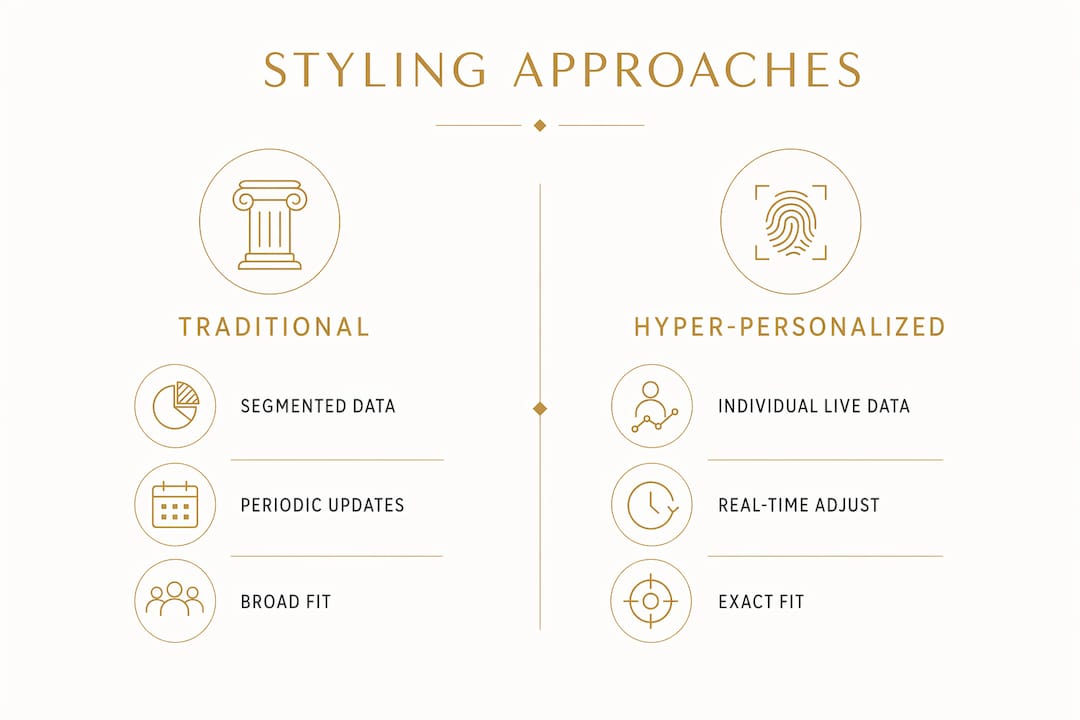
Hyper-personalized styling is defined as a per-request decisioning process that uses live signals and individual context rather than static customer segments. Shopify describes hyper-personalization as the combination of first-party data and AI and machine learning predictive models to tailor the experience in real time. That means every outfit suggestion you receive reflects who you are right now, not who a data model decided you were six months ago.
The factors feeding these systems go far beyond your shirt size. AI styling systems consider body shape, skin undertone, body proportions, climate, daily routine, social setting, repeat outfit patterns, and personal confidence levels. Each of these signals adds a layer of specificity that generic recommendation engines simply cannot replicate.

The practical output is outfit suggestions that feel like they came from a stylist who knows you well. That shift from trend-driven fashion to identity-driven styling is the core value proposition of hyper-personalized fashion.
What technologies and data inputs power this approach?
The engine behind hyper-personalized styling combines several distinct technologies working together. AI and machine learning handle pattern recognition and prediction. Virtual try-on tools handle visualization. And iterative feedback loops handle continuous improvement.
The data inputs are notably rich:
- Body measurements and proportions: Waist, hip, shoulder width, and torso length all inform fit predictions.
- Skin undertone and coloring: These guide color palette recommendations so suggested outfits complement your natural features.
- Lifestyle and social context: A morning commute, a client dinner, and a weekend hike each call for different outfit logic.
- Fit preferences and past behavior: What you bought, returned, or skipped tells the system what works for you.
- Real-time situational signals: Weather, calendar events, and location data can all feed into a live recommendation.
Academic research from AAAI 2026 documents integrated workflows that use iterative refinement and evaluate style consistency and visual quality across entire outfits, not just individual items. That hierarchical approach means the system learns from mismatches at the item level, the outfit level, and the try-on level simultaneously.
Virtual try-on is the most visible piece of this technology stack. Google Cloud's Virtual Try-On API, launched in may 2026 with brands like Diesel and Jil Sander, delivers high-realism 360-degree clothing previews on individual body contexts. That level of visualization closes the gap between browsing online and standing in a fitting room.
Pro Tip: When using a virtual try-on tool, upload a photo in fitted clothing rather than loose layers. The system reads your body contours more accurately, and the outfit preview will reflect a truer fit.
How does hyper-personalized styling differ from traditional personalization?
The difference is not just technical. It changes the entire quality of your shopping and dressing experience.
| Feature | Traditional personalization | Hyper-personalized styling |
|---|---|---|
| Data basis | Segment or cohort data | Individual real-time signals |
| Recommendation timing | Static, updated periodically | Dynamic, updated per request |
| Body fit consideration | Generic size ranges | Specific measurements and proportions |
| Context awareness | Limited (purchase history) | Full context: lifestyle, occasion, climate |
| Business constraints | Inventory and margin rarely integrated | Inventory, margins, and availability factored in |
| Outcome | Relevant to your group | Relevant to you specifically |
Traditional personalization places you in a bucket with thousands of other shoppers who share broad characteristics. Hyper-personalization treats each request as unique. The recommendation you receive at 7 a.m. before a job interview differs from the one you receive on a Saturday afternoon, even if your profile has not changed.
Research from Scientific Reports 2026 documents modular pipelines that embed anthropometric measurements, style preferences, and situational context together. That multimodal data fusion is what separates genuine hyper-personalization from a slightly smarter filter.
The business side matters too. Hyper-personalized systems factor in inventory availability and margin constraints when generating suggestions. You get recommendations that are actually purchasable, not just theoretically ideal.
What are the benefits and challenges of hyper-personalized styling?
The clearest benefit is decision fatigue relief. Choosing what to wear takes mental energy, and that energy compounds across a week. A system that narrows your options to a curated set of outfits matched to your day removes that friction entirely.
Other benefits include:
- Wardrobe functionality: Suggestions that account for what you already own help you get more use from existing pieces.
- Personal style discovery: Seeing outfit combinations you would not have tried yourself expands your style range.
- Fit confidence: Recommendations built on your actual measurements reduce the risk of buying something that does not work on your body.
- Sustainable choices: Mixing existing wardrobe items with new acquisitions reduces unnecessary purchases.
The challenges are real, and they deserve honest attention.
A 2026 study of 375 shoppers found that perceived complexity and trust deficits lower purchase intentions when AI personalization is involved in fashion decisions. (Source)
That finding matters because it shows that a technically superior system can still fail if it feels opaque or intrusive. Explainability and user controls improve trust in AI styling systems by reducing perceived complexity and giving you a sense of agency over the process.
Privacy is the other major challenge. Virtual try-on tools collect photos, and those photos may qualify as biometric data under GDPR. GDPR-compliant implementations require explicit consent with a timestamp, and best practice calls for deleting uploaded photos within one hour and output images within 24 hours. Before using any virtual try-on service, check its data retention policy.
Pro Tip: Look for platforms that show you why a recommendation was made. A brief explanation like "suggested because of your preference for relaxed fits and your upcoming outdoor event" signals that the system is working for you, not just collecting your data.
How can you use hyper-personalized styling to improve your wardrobe?
Getting real value from customized styling services requires a few deliberate steps. The technology is only as good as the information you give it.
- Build a complete style profile. Input your body measurements, color preferences, lifestyle routines, and the occasions you dress for most often. The more specific you are, the more relevant your recommendations become.
- Use virtual try-on before purchasing. Visualizing an outfit on your actual body context prevents costly returns and builds confidence in new styles. Google Cloud's Virtual Try-On API, now integrated by multiple retailers, makes this realistic rather than cartoonish.
- Give feedback consistently. When a suggestion misses the mark, say so. Iterative negative feedback loops in AI styling systems improve alignment by learning from style mismatches. Your corrections train the system to serve you better over time.
- Choose platforms with transparency controls. Select services that explain their recommendations and let you adjust the weighting of different factors. Control and convenience are the two primary drivers of adoption for AI virtual try-on tools, according to psychology research.
- Audit your wardrobe inputs regularly. Update your profile when your lifestyle changes, such as a new job, a move to a different climate, or a shift in your personal style. A stale profile produces stale recommendations.
The goal is a wardrobe that works for your actual life, not a curated collection that looks good in theory. Consistent engagement with the platform is what gets you there.
What emerging trends are shaping the future of personalized fashion?
The next wave of hyper-personalized fashion moves beyond outfit suggestions into full identity-based styling ecosystems. The table below maps the key trends and their practical implications.
| Trend | What it means for you |
|---|---|
| Multimodal data fusion | Systems combine body scans, calendar data, and social context for richer recommendations |
| Augmented reality try-ons | AR overlays let you preview outfits in your own mirror via smartphone |
| Privacy-aware AI design | Platforms build consent and data minimization into the core product, not as an afterthought |
| Identity-driven styling | Fashion shifts from "what is trending" to "what fits your life and values" |
| Sustainability integration | AI factors in garment longevity and environmental cost alongside style fit |
A 2026 Scientific Reports study shows that state-of-the-art systems now integrate anthropometric measurements, style preference learning, and situational context embedding in a single modular pipeline. That level of integration was not commercially viable three years ago.
Privacy-compliant implementations increase adoption of virtual try-on by addressing intrusiveness and building user confidence. Platforms that treat privacy as a feature rather than a compliance checkbox will win the next generation of fashion-conscious users.
Key takeaways
Hyper-personalized styling works because it treats you as an individual, not a segment, using real-time data, body-specific inputs, and AI-driven feedback loops to deliver outfit recommendations that fit your identity and your day.
| Point | Details |
|---|---|
| Core definition | Hyper-personalized styling uses live, individual-level data rather than static customer segments. |
| Technology stack | AI, machine learning, virtual try-on, and iterative feedback loops all work together to refine recommendations. |
| Key benefit | Decision fatigue drops when outfit suggestions are matched to your body, lifestyle, and daily context. |
| Main challenge | Perceived complexity and privacy concerns reduce trust; platforms with explainability and user controls perform better. |
| Practical step | Build a complete style profile, give consistent feedback, and choose platforms that explain their recommendations. |
Why I think hyper-personalized styling is the most underrated shift in fashion right now
Most fashion coverage focuses on trends, drops, and aesthetics. The real story is quieter and more personal. I have watched people spend hours each week deciding what to wear, only to feel uncertain about the result. That is not a style problem. It is a data problem. The outfit that works for your body, your schedule, and your confidence level is not the same outfit that works for someone who shares your age and zip code.
What strikes me most about hyper-personalized styling is that it finally puts the individual at the center of the fashion equation. The technology exists to do this well. The identity-based styling approach that fits personal comfort and daily life better than trend-driven fashion is not a future promise. It is available now.
My caution is this: the platforms that earn long-term trust will be the ones that show their work. If a system recommends a blazer and cannot tell you why, that is a red flag. Transparency is not a nice-to-have feature. It is the foundation of a useful styling relationship. Seek out platforms that give you control, explain their logic, and let you correct them. That combination is what turns a recommendation engine into something that genuinely improves your daily life.
— Ahmed
Mytenue: your AI stylist for a smarter wardrobe
Mytenue is an AI-powered styling platform built for people who want outfit recommendations that actually fit their life.
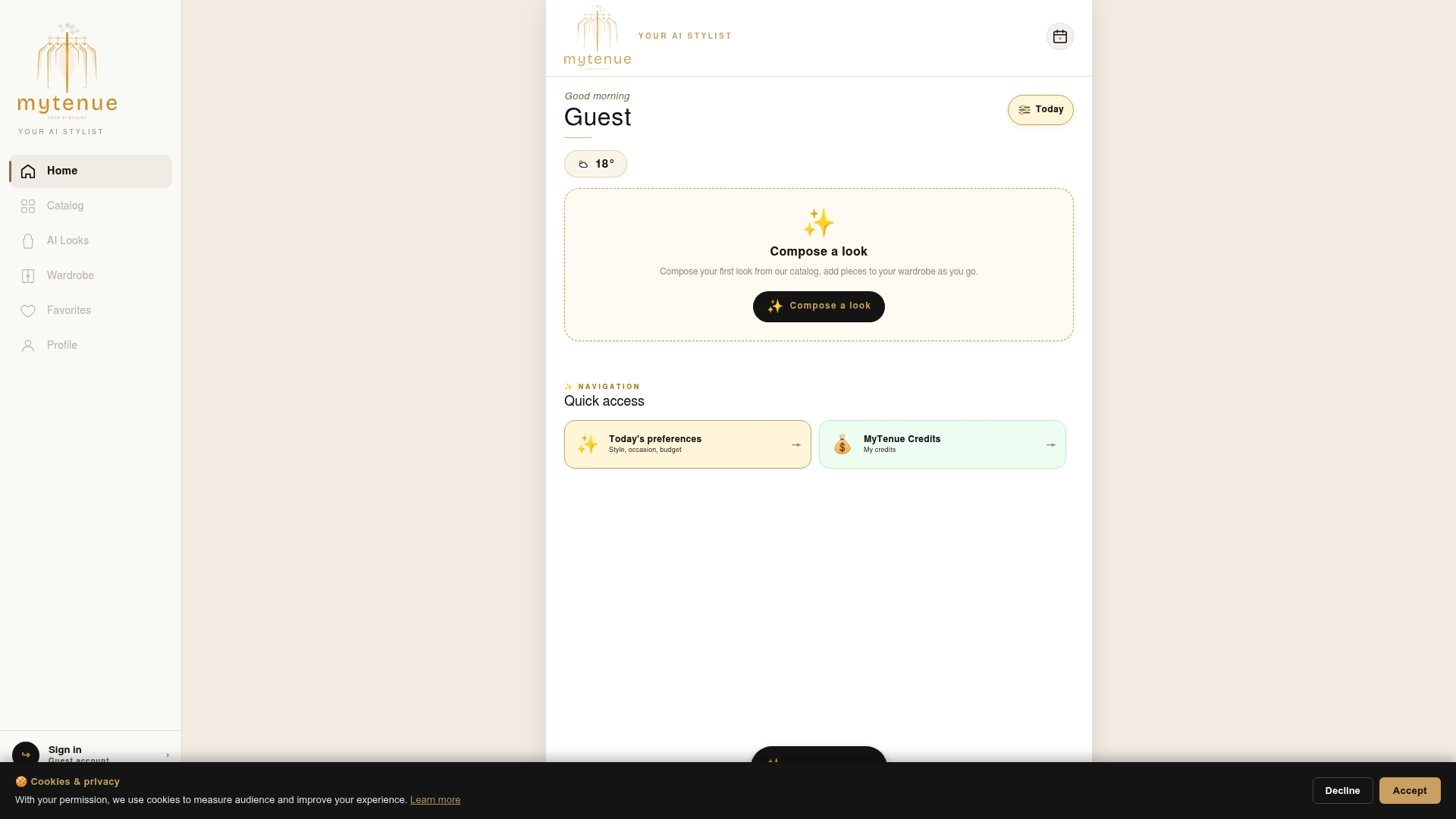
Mytenue combines your style preferences, occasions, and budget to curate complete looks in one place. The platform addresses decision fatigue directly by narrowing your choices to outfits that match who you are and what you have planned. It also encourages mixing existing wardrobe pieces with new finds, so you buy less and wear more. Whether you are building a capsule wardrobe or just want to stop staring at your closet every morning, Mytenue gives you a clear, confident starting point.
FAQ
What is hyper-personalized styling in simple terms?
Hyper-personalized styling is an AI-driven approach that creates outfit recommendations based on your individual body, lifestyle, and real-time context rather than grouping you with similar shoppers. The result is suggestions that fit your specific needs, not a demographic average.
How does hyper-personalized styling reduce decision fatigue?
By narrowing your outfit options to a curated set matched to your body, occasion, and preferences, the system removes the mental load of choosing from an open-ended wardrobe. Fewer, better choices take less time and produce more confidence.
Is my photo data safe with virtual try-on tools?
GDPR-compliant virtual try-on services require explicit consent and recommend deleting uploaded photos within one hour and output images within 24 hours. Always review a platform's data retention policy before uploading personal images.
How is hyper-personalized fashion different from regular personalization?
Regular personalization groups you into a segment and updates recommendations periodically. Hyper-personalized fashion uses individual real-time signals, including body measurements, lifestyle context, and situational data, to generate a unique recommendation for each request.
Do I need to share a lot of personal data to benefit from personalized styling?
The more specific your inputs, the more relevant your recommendations become. However, well-designed platforms let you start with basic preferences and refine over time, so you can build trust with the system before sharing more detailed information.