
AI wardrobe analysis is the process of digitizing your physical closet and applying machine learning algorithms to recommend outfits, identify wardrobe gaps, and optimize how you dress every day. The industry term for this technology is "AI styling," though "wardrobe optimization AI" describes the broader practice of using data to improve clothing decisions. Tools like SELION.AI, Modelfy, and Photta have each built distinct approaches to this problem, from active decision engines to combinatorial outfit planning. Understanding how these systems work gives you a real advantage in choosing the right tool and getting the most from your wardrobe.
What is AI wardrobe analysis and how does it work?
AI wardrobe analysis is defined as a system that catalogs clothing items digitally, then uses algorithms to generate outfit recommendations based on color compatibility, occasion, and personal style data. The process starts with image recognition. You photograph each garment, and the AI identifies the item's category, dominant color, pattern, and fit attributes. That data feeds into a recommendation engine.
The technical backbone of most systems relies on machine learning trained on large fashion datasets. These models learn which garment combinations are visually harmonious and which clash. The result is a system that can evaluate thousands of potential outfits in seconds, something no human stylist can do manually for a single client.
Platforms like SELION.AI and Modelfy represent two ends of the spectrum. SELION.AI focuses on active decision engines that factor in real-time context. Modelfy focuses on combinatorial math to show you how many outfits your existing wardrobe can produce. Both approaches share the same core goal: making your wardrobe work harder for you.
How do AI algorithms analyze your clothing?
The algorithm behind AI fashion analysis does several things at once. Here is what happens under the hood:
- Image processing: The AI uses computer vision to detect garment boundaries, classify item types (blazer, chino, sneaker), and extract color data using the HSV color space. HSV stands for hue, saturation, and value. It gives the system a precise, numeric way to compare colors and predict whether two items will look good together.
- Combinatorial outfit generation: Systems like Modelfy's outfit rotation planner multiply tops by bottoms by shoes to calculate every possible outfit combination. That number becomes your "wardrobe utility score." A low score signals that you own items that never get paired with anything else.
- Contextual signals: SELION.AI's engine pulls in weather and occasion data to filter recommendations. On a cold morning, the system suggests layers. For a formal dinner, it filters out casual items automatically.
- Explainable AI: Research from Springer Nature shows that systems using Grad-CAM, LIME, and SHAP can highlight which garment features drove a recommendation. Instead of a black-box result, you see: "This jacket was recommended because its navy tone matches your gray trousers and the occasion is business casual."
The explainability layer matters more than most people realize. LLM-generated explanations that describe dominant colors, categories, and style attributes build user trust by making the logic visible. When you understand why an outfit was suggested, you are more likely to wear it.
Pro Tip: When you first catalog your wardrobe, photograph garments against a plain white or light gray wall. Better contrast improves the AI's color detection accuracy and leads to more reliable outfit matches.

AI wardrobe analysis vs. human stylists: which is better?
The honest answer is that they solve different problems. Neither fully replaces the other.
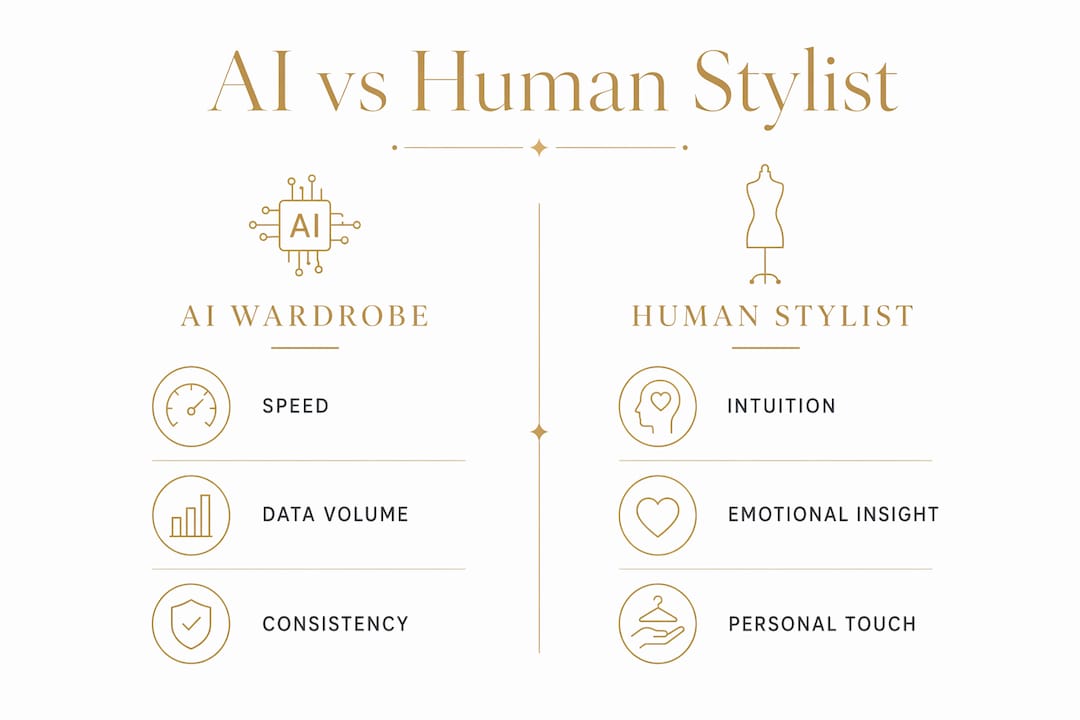
| Factor | AI wardrobe analysis | Human stylist |
|---|---|---|
| Speed | Generates hundreds of combinations instantly | Takes hours per session |
| Consistency | Applies the same logic every time | Varies by mood and energy |
| Fabric knowledge | Cannot feel texture or drape | Reads fabric with hands and eyes |
| Emotional context | Limited; works from data inputs | Reads body language and confidence |
| Cost | Low to free for most apps | High; typically $150–$500 per session |
| Scalability | Works for any wardrobe size | Limited by time |
Human stylists bring intuition and emotional context that AI currently cannot replicate. A stylist notices that you stand taller in a structured blazer. An algorithm does not. That tactile and emotional layer is a genuine gap in current AI styling technology.
AI, on the other hand, wins on data volume and consistency. It never has an off day. It can analyze 200 garments and surface a combination you have never tried, simply because you forgot that navy linen shirt existed. The most effective approach is to use AI for daily outfit decisions and wardrobe audits, then bring in a human stylist for major wardrobe rebuilds or special occasions.
Privacy and ethics in AI wardrobe apps
AI wardrobe apps process personal photos, and in some cases body images. That makes privacy a serious concern, not a footnote.
The key practices to look for in any app:
- Explicit consent: GDPR requires that apps obtain clear user consent before processing photos that function as biometric-like personal data. The app must log the timestamp of that consent.
- Short data retention: Photta deletes user-uploaded photos within 1 hour and generated results within 24 hours. That window limits exposure if a breach occurs.
- No model training on your images: Responsible apps commit to never using your photos to train their AI models. Your wardrobe data should not become someone else's training dataset.
- Clear privacy policies: Read the policy before uploading. Look for explicit statements about data sharing, retention periods, and deletion procedures.
Pro Tip: Before uploading wardrobe photos to any app, check the privacy policy for three specific words: "retention," "deletion," and "consent." If any of those words are missing, choose a different tool.
Mytenue's privacy policy and account deletion pages both address these points directly. Reviewing them takes two minutes and tells you exactly how your data is handled.
Practical benefits of AI wardrobe analysis for personal style
The most immediate benefit is time. AI wardrobe analysis eliminates the daily decision fatigue of standing in front of a closet with nothing to wear. But the deeper benefits go further.
Wardrobe utility scoring
Modelfy's combinatorial approach assigns a utility score to your wardrobe. A wardrobe with 40 items that generates 300 outfit combinations scores higher than one with 60 items that generates only 80. That score reveals which items are dead weight and which are workhorses. Selling or donating low-utility items reduces clutter and saves money on future purchases.
Contextual outfit suggestions
- Weather-based layering: SELION.AI's active decision engine checks local weather and suggests appropriate layers or outerwear. You stop wearing a light jacket on a 40-degree morning because you forgot to check the forecast.
- Occasion filtering: The system filters your wardrobe by occasion, showing only items appropriate for a job interview, a weekend brunch, or a gym session. This is especially useful for workweek outfit planning, where five days of outfits need to be ready without repetition.
- Gap identification: After analyzing your wardrobe, the AI flags missing categories. If you own 12 tops and only 3 bottoms, the system tells you. That prevents impulse purchases of items you already have too many of.
- Outfit rotation planning: Combinatorial tools calculate how many days you can go without repeating an outfit. For most people, the number is far higher than they expect. That realization reduces the urge to buy new clothing unnecessarily.
Sustainable fashion impact
AI wardrobe analysis directly supports sustainable fashion habits. When you know exactly what you own and how to combine it, you buy less and wear more. Occasion-based outfit systems that match existing items to new occasions extend the life of every garment in your closet.
| Benefit | How AI delivers it |
|---|---|
| Time savings | Instant outfit suggestions replace daily deliberation |
| Wardrobe efficiency | Utility scores reveal underused and overused items |
| Smarter shopping | Gap analysis prevents duplicate purchases |
| Sustainable habits | Higher outfit variety reduces need for new clothing |
| Style consistency | Color science ensures harmonious combinations every time |
Key takeaways
AI wardrobe analysis works by combining image recognition, color science, combinatorial logic, and contextual data to generate outfit recommendations that are consistent, personalized, and privacy-conscious.
| Point | Details |
|---|---|
| Core technology | AI uses HSV color mapping and machine learning to match garments accurately. |
| Combinatorial logic | Multiplying tops, bottoms, and shoes reveals your wardrobe's full outfit potential. |
| AI vs. human stylists | AI wins on speed and consistency; human stylists win on tactile and emotional insight. |
| Privacy standards | Look for explicit consent, short data retention, and no model training on your photos. |
| Practical value | Utility scoring, gap analysis, and occasion filtering reduce waste and simplify daily dressing. |
Why I think most people are using wardrobe AI wrong
Most people treat AI wardrobe tools like a novelty. They upload a few items, get a couple of outfit suggestions, and move on. That misses the point entirely.
The real value of wardrobe optimization AI shows up over time. When you catalog your full wardrobe, including the items buried in the back of your closet, the combinatorial math becomes genuinely useful. I have seen wardrobes with 50 items that could generate over 400 outfit combinations. The person wearing those clothes had no idea. They kept buying new things because they felt like they had nothing to wear.
The explainability layer is also underused. Systems that explain why a combination works, citing color harmony or occasion fit, teach you something. Over weeks, you internalize those principles and start making better choices without the app. That is the real goal: AI as a teacher, not a permanent crutch.
My advice is to treat the first two weeks with any AI styling tool as a learning phase. Catalog everything. Read the explanations. Notice which combinations you would never have tried on your own. Then start applying that logic independently. Hyper-personalized styling works best when the human wearing the clothes understands the reasoning behind the recommendations.
One genuine limitation worth naming: current AI cannot account for how you feel on a given day. A black outfit might be algorithmically perfect for a Monday meeting, but if you need color to lift your mood, the algorithm does not know that. Use the suggestions as a strong starting point, not a final answer.
— Ahmed
Mytenue: AI-powered styling built around your wardrobe
Mytenue is a personal styling platform that applies AI fashion analysis to your actual wardrobe, not a generic catalog of new products.
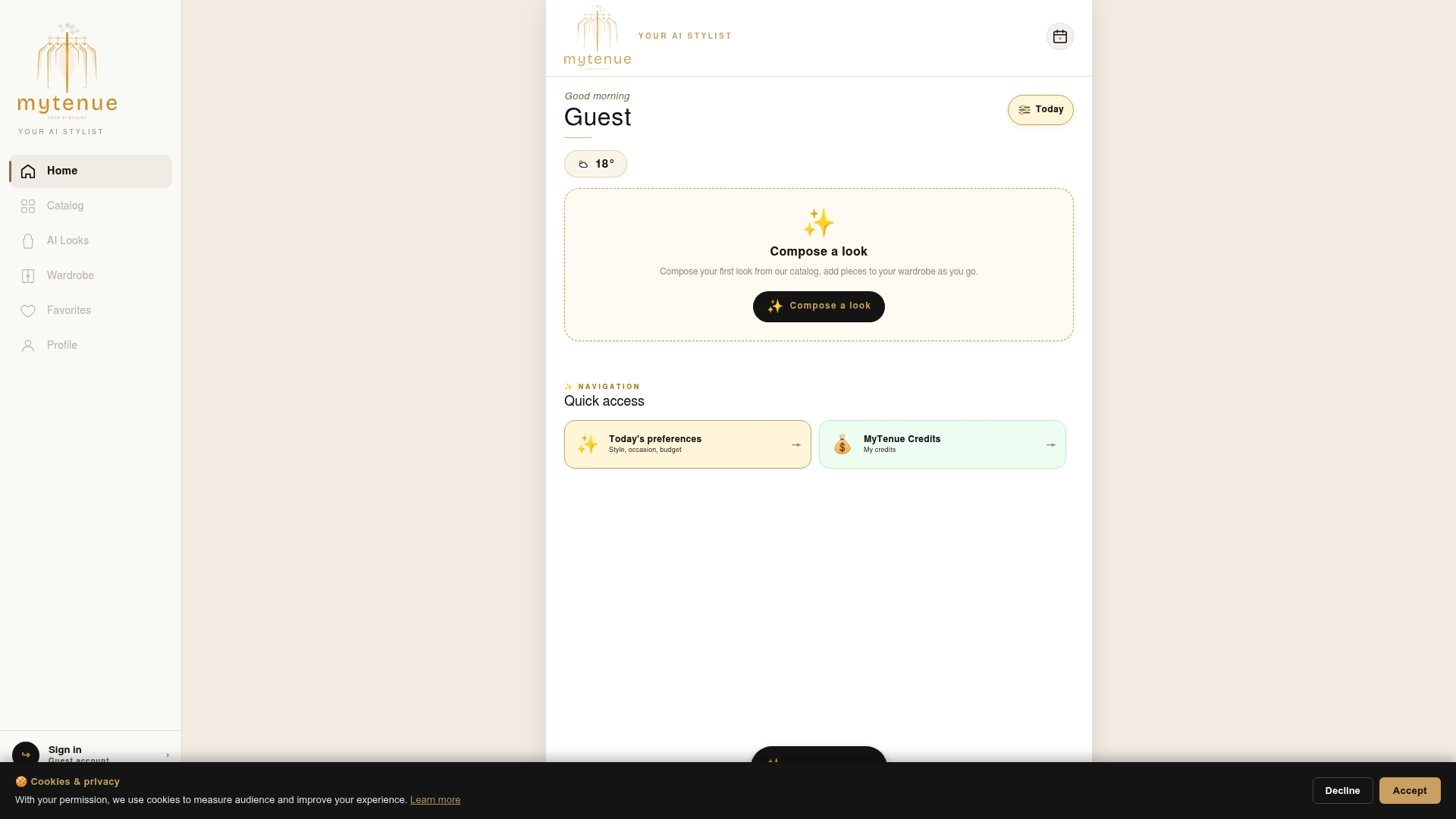
You upload your items, set your occasions and budget, and Mytenue generates outfit recommendations built from what you already own. The platform mixes existing pieces with new suggestions when genuine gaps exist, so you shop with purpose rather than impulse. Privacy is handled with the same rigor you would expect from a GDPR-compliant system: your images are yours. Ready to see what your wardrobe can actually do? Visit Mytenue and get your first personalized outfit plan today.
FAQ
What is AI wardrobe analysis?
AI wardrobe analysis is the process of digitizing clothing items and using machine learning algorithms to generate outfit recommendations based on color compatibility, occasion, and personal style data.
How does AI analyze clothing colors?
AI wardrobe systems use the HSV color space to map hue, saturation, and value for each garment. That numeric data lets the algorithm predict which items will look harmonious together.
Is my photo data safe in AI wardrobe apps?
Responsible apps apply GDPR-compliant practices, including explicit user consent, photo deletion within hours, and a strict policy against using your images to train AI models.
Can AI replace a human stylist?
AI delivers consistent, data-driven outfit suggestions at scale, but human stylists provide tactile feedback and emotional context that current AI cannot replicate. The two work best together.
What is a wardrobe utility score?
A wardrobe utility score measures how many outfit combinations your existing clothing can produce. Tools like Modelfy calculate this by multiplying tops, bottoms, and shoes to reveal underused items and wardrobe gaps.