
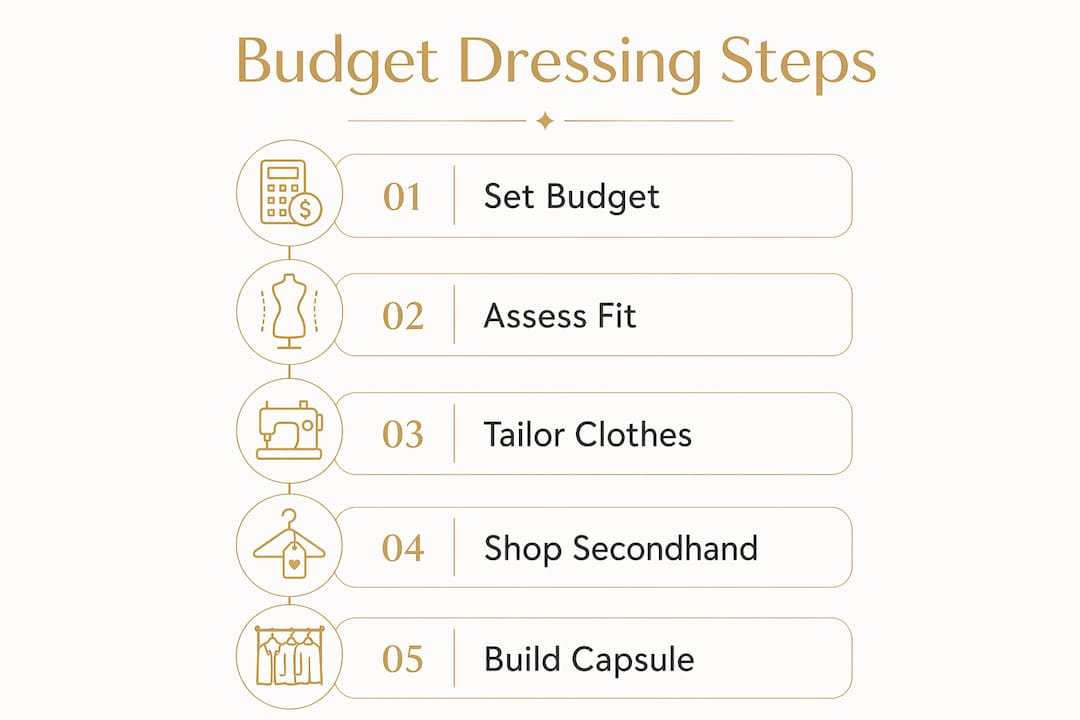
Dressing well spending less money is the practice of building a stylish, functional wardrobe through intentional budgeting, quality prioritization, and strategic shopping. The standard industry term for this approach is "cost-conscious dressing," and it rests on three pillars: a firm spending cap, a cost-per-wear mindset, and a capsule wardrobe structure. Financial planners recommend capping clothing at 5% of your monthly take-home pay. That single rule eliminates most impulse purchases before they happen. Pair it with the cost-per-wear concept, which divides a garment's price by the number of times you wear it, and you have a clear framework for deciding what is actually worth buying.
How to dress well spending less money: set your budget first
A clothing budget is not a restriction. It is a decision-making tool that removes the guesswork from every shopping trip.
The 5% monthly guideline is the most practical starting point for young adults and professionals. If your take-home pay is $3,000 per month, your clothing cap is $150. You can roll unused amounts into a quarterly or seasonal fund for larger purchases like a quality coat or dress shoes. This approach naturally shifts you away from fast fashion and toward planned, intentional buying.
Two behavioral tools make this budget stick:
- The 24-hour delay rule. Wait one full day before completing any non-essential clothing purchase. This pause eliminates most impulse buys because the initial excitement fades and you evaluate the item against your actual wardrobe needs.
- The Rule of Three. Only buy a piece if it pairs with at least three items you already own. This rule forces wardrobe cohesion and prevents the "nothing to wear" problem that drives unnecessary spending.
Tracking your clothing expenses monthly is the single fastest way to change your spending behavior. Most people underestimate what they spend on clothes by a wide margin.
Pro Tip: Set a separate savings line in your budget app labeled "clothing fund." Watching it grow makes planned purchases feel rewarding instead of guilty.
Why fit and quality matter more than price tags
A $40 shirt worn twice costs $20 per wear. A $400 jacket worn 400 times costs $1 per wear. That math is the core argument for buying fewer, better pieces rather than filling your closet with cheap items you rarely reach for.
Cost-per-wear calculations must also include maintenance. Dry cleaning and tailoring costs can double the effective per-wear cost of premium garments if you ignore them. Factor in upkeep before you decide a quality piece is "worth it."
The tailoring advantage
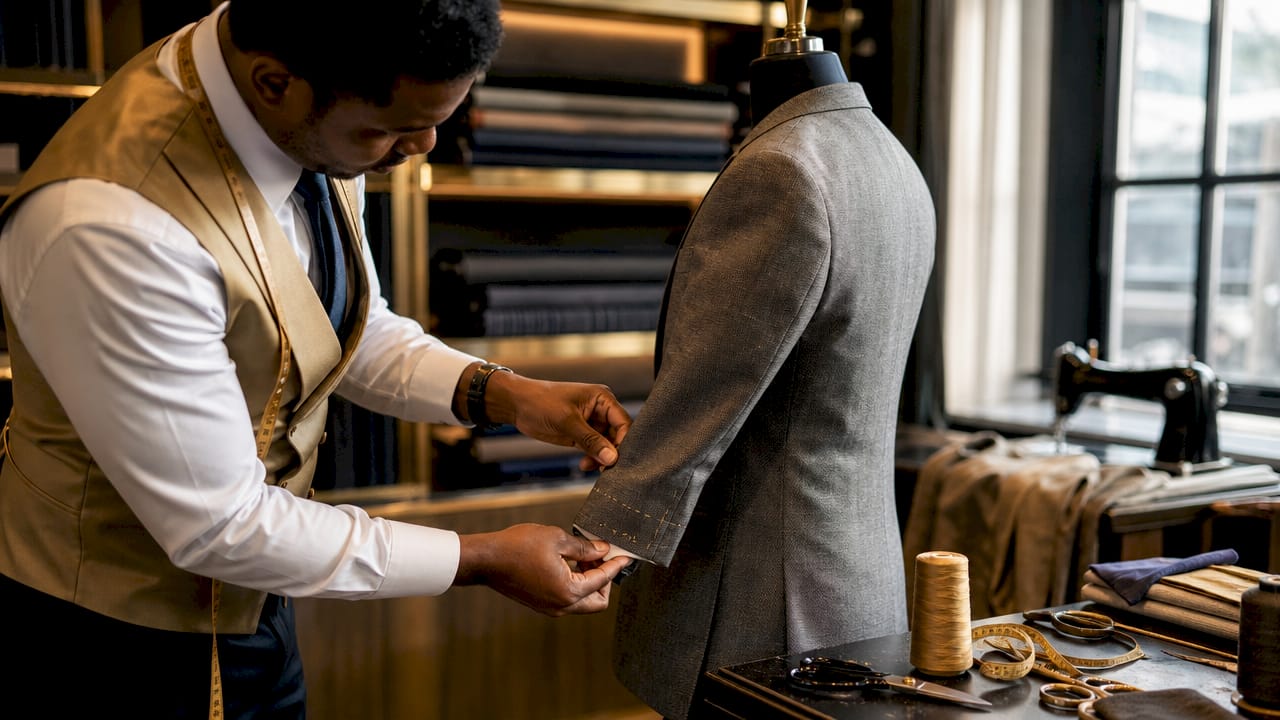
Tailoring is the most underused tool in budget dressing. A $30 thrift store blazer that fits perfectly looks more expensive than a $200 off-the-rack blazer that bunches at the shoulders. Common alterations like hemming pants, slimming sleeves, and taking in a waist typically cost $15–$28 each. That is a small investment that transforms how a garment reads on your body.
The table below shows where tailoring delivers the most value for budget shoppers:
| Alteration type | Typical cost | Visual impact |
|---|---|---|
| Hem pants | $15–$20 | High: correct break changes the entire silhouette |
| Slim sleeves | $20–$28 | High: removes boxy, ill-fitting appearance |
| Take in waist | $20–$25 | High: creates a clean, tailored line |
| Shorten jacket sleeves | $25–$28 | Medium: shows shirt cuff, adds polish |
Fabric quality is the second visual signal people read before price. Natural fibers like cotton, wool, and linen drape better and hold their shape longer than synthetic blends. You do not need to spend a lot to find natural fiber pieces. Thrift stores and end-of-season sales regularly stock them at a fraction of retail.
Pro Tip: When buying a cheaper item, budget $20–$25 for one tailoring fix upfront. Build that cost into your purchase decision before you buy.
How does secondhand shopping help you look stylish on a budget?
Secondhand apparel is 50–80% cheaper than new retail, making it the most direct path to cheap yet chic outfits without sacrificing quality. The resale market has grown significantly among young adults and professionals, driven by inflation and a shift toward more deliberate consumption.
The environmental case is equally strong. Reusing garments cuts CO2 equivalent emissions by up to 70 times compared to producing new clothing. Only 1–10% of secondhand items become waste, with the majority remaining wearable or repairable. Buying secondhand is both a financial and environmental win.
To shop secondhand effectively, follow these rules:
- Shop with a list. Know exactly what your wardrobe needs before you walk into a thrift store or open a resale app. Browsing without a plan leads to buying things that do not fit your existing wardrobe.
- Stick to your color palette. Selecting secondhand pieces that already align with your core colors prevents the repurchase loop where you buy something cheap, realize it matches nothing, and buy again.
- Check fit first, price second. A $5 item that needs $40 in alterations is not a bargain. Prioritize pieces that fit your shoulders and chest, since those are the hardest and most expensive fixes.
- Inspect fabric and seams. Look for pilling, thinning fabric, and weak seams. These issues worsen with wear and are rarely worth the repair cost.
The best thrift store finds are almost always classic pieces: wool coats, structured blazers, straight-leg trousers, and leather belts. These items hold their visual weight regardless of the season they were made.
What is a capsule wardrobe and how does it save money?
A capsule wardrobe is a small, curated set of versatile pieces that combine into many different outfits. The standard module structure includes roughly 2 pants, 3 tops, 1 outer layer, and 1 pair of shoes per category. Every item in the capsule works with every other item, which means you get exponentially more outfits from fewer pieces.
Capsule wardrobes maximize cost-per-wear because you wear each piece constantly. A $80 pair of well-fitted chinos worn three times a week costs far less per wear than a $20 pair of trendy pants worn twice. The capsule system forces that math to work in your favor.
A capsule-wardrobe workflow also prevents endless shopping by requiring every new purchase to fit into an existing matrix of outfit combinations. If a new item does not pair with at least three pieces you already own, it does not belong in your capsule.
The table below compares a reactive wardrobe approach with a capsule system:
| Factor | Reactive wardrobe | Capsule wardrobe |
|---|---|---|
| Monthly purchases | Frequent, unplanned | Rare, intentional |
| Outfit options | Low despite high item count | High from fewer pieces |
| Cost-per-wear | High (many rarely worn items) | Low (all pieces worn often) |
| Decision fatigue | High | Low |
Start your capsule with a wardrobe audit. Pull everything out, identify what you actually wear, and donate the rest. Build your occasion-ready outfit list from what remains, then fill only the genuine gaps. This process alone often reveals that you need to buy far less than you thought.
For professionals, a workweek outfit planning system takes the capsule concept further by mapping specific outfit combinations to specific days. It removes the morning decision entirely and keeps you from reaching for the same two outfits out of habit.
Key takeaways
Dressing well for less requires a spending cap, a cost-per-wear mindset, and a capsule wardrobe structure working together.
| Point | Details |
|---|---|
| Set a firm budget | Cap clothing at 5% of monthly take-home pay and roll unused funds into a seasonal purchase fund. |
| Use cost-per-wear math | Divide item price by expected wears; include tailoring and upkeep costs in the calculation. |
| Invest in tailoring | Alterations costing $15–$28 transform cheap garments and deliver better visual results than buying new. |
| Shop secondhand strategically | Buy only pieces that match your existing color palette and fit your shoulders without major alterations. |
| Build a capsule wardrobe | Limit your wardrobe to versatile modules where every piece pairs with at least three others. |
What I've learned from years of dressing well on a budget
The biggest mistake I see is treating budget dressing as deprivation. It is not. It is a system. Once you have a system, the pressure to buy disappears because you already know what you need and what you do not.
The Rule of Three changed how I shop more than any other single habit. Before I buy anything, I mentally run through three outfits I can build with it using what I already own. If I cannot get to three, I put it back. That one filter has saved me more money than any sale I have ever skipped.
Tailoring is the secret most people overlook. I have a thrift store blazer I paid $12 for. After a $22 sleeve alteration, it looks better than blazers I have seen on colleagues who spent $300. The fit is everything. Price is almost irrelevant once the fit is right.
The hardest part is patience. A great wardrobe built on a budget takes 12–18 months to assemble properly. You are not fixing everything in one shopping trip. You are making one good decision at a time, and those decisions compound. Start with the audit, find the gaps, fill them slowly and deliberately. The result is a wardrobe that actually works, costs less to maintain, and makes getting dressed feel easy instead of stressful.
— Ahmed
Mytenue makes budget-friendly outfit planning simple
Building a wardrobe that looks great without overspending takes planning. Mytenue is an AI-powered styling platform that helps you create complete outfits based on your style preferences, occasions, and budget, all in one place.
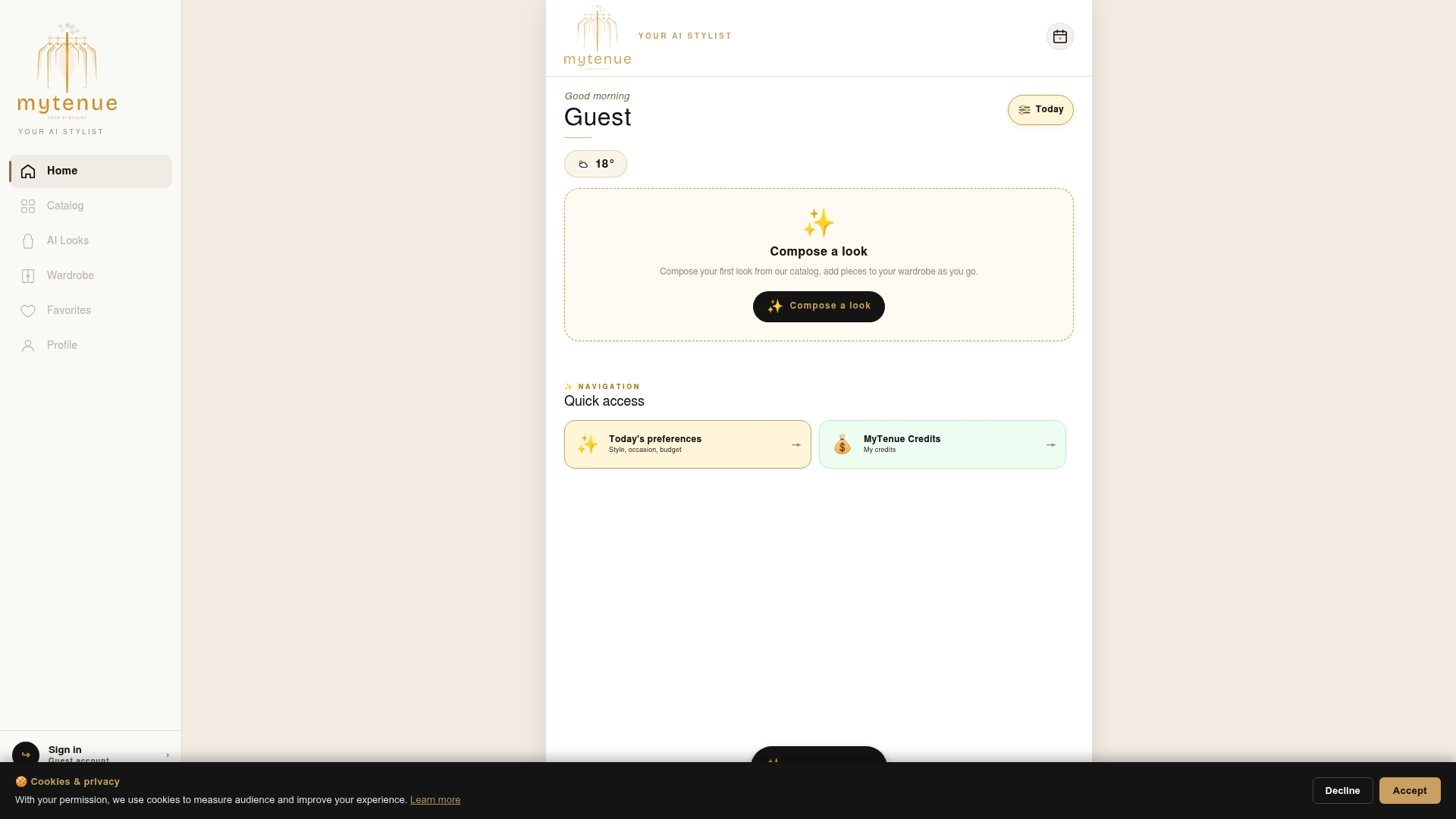
Mytenue supports the capsule wardrobe approach by helping you mix and match pieces you already own before suggesting new additions. It takes the guesswork out of outfit coordination and keeps your spending intentional. Whether you are building a professional wardrobe from scratch or refining what you already have, Mytenue gives you personalized outfit recommendations that fit your budget and your life. Try it and see how much easier dressing well can be.
FAQ
How much should I spend on clothes each month?
Financial planners recommend spending no more than 5% of your monthly take-home pay on clothing. Rolling unused amounts into a quarterly fund helps cover larger planned purchases without breaking your budget.
What is cost-per-wear and why does it matter?
Cost-per-wear divides a garment's price by the number of times you wear it. A $400 jacket worn 400 times costs $1 per wear, which is far better value than a $40 shirt worn only twice at $20 per wear.
Is secondhand shopping worth it for building a stylish wardrobe?
Secondhand clothing is typically 50–80% cheaper than new retail. Shopping with a defined color palette and fit criteria turns thrift stores into a reliable source of budget-friendly clothing ideas without the repurchase cycle.
How many pieces does a capsule wardrobe need?
A functional capsule module includes roughly 2 pants, 3 tops, 1 outer layer, and 1 pair of shoes per category. Every piece must pair with at least three others to justify its place in the wardrobe.
Does tailoring really make cheap clothes look better?
Common alterations like hemming and sleeve slimming cost $15–$28 and visibly improve fit. Correct fit is the single biggest visual factor in whether clothing looks expensive or cheap, regardless of the original price.