
Refining your personal style with AI feedback is the practice of combining a clear sense of your own aesthetic with technology-assisted outfit assessments to make intentional, consistent wardrobe choices every day. This is not about letting an algorithm dress you. It is about using AI as a mirror that reflects your style back to you with more clarity and speed than any morning wardrobe panic allows. The most effective approach pairs professional styling frameworks, like style words and mood boards, with AI-powered outfit coordination tools that generate personalized suggestions from your actual closet. Mytenue is built exactly for this process.
How to refine personal style with AI feedback: start with your foundation
AI feedback is only as good as the input you give it. Without a clear style foundation, even the most capable AI tool will return generic suggestions that feel disconnected from who you are.
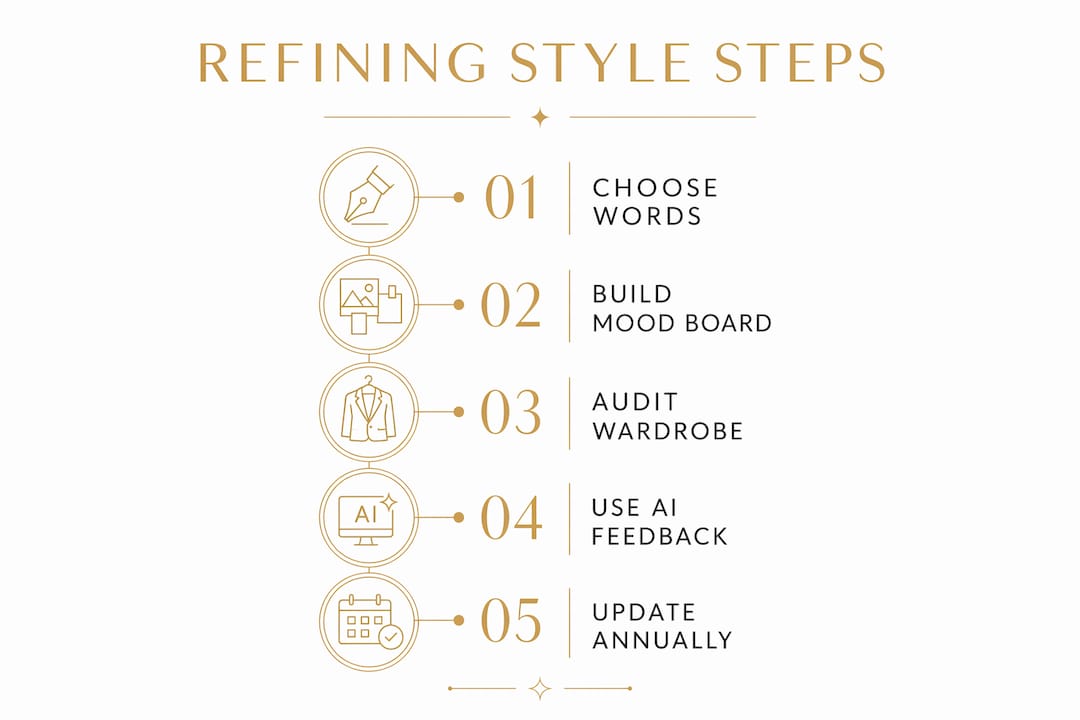
Step 1: Choose your style words
The first step is identifying 3–5 descriptive words that capture how you want to feel when you get dressed. These are not trend labels like "coastal grandmother" or "quiet luxury." They are personal descriptors: words like polished, relaxed, structured, earthy, or playful. Style words act as a filter. Every outfit you consider, and every AI suggestion you receive, gets measured against them. Style words should be revisited annually as your life and identity shift.
Step 2: Build a mood board
Collect 50–100 images that attract you visually. Pull from fashion editorials, street style photography, interior design, and art. The goal is not to copy outfits. The goal is to notice patterns. You might realize you are drawn to monochromatic palettes, oversized silhouettes, or earthy textures across every image you save. A mood board of 50–100 images reveals your real preferences far more honestly than any style quiz.

Step 3: Audit your wardrobe honestly
Professional stylists recommend auditing your wardrobe based on your real lifestyle, not the life you imagine living. If you work from home four days a week, your wardrobe should reflect that. Pull out everything you own and ask two questions: Does this fit my body right now? Does this match at least one of my style words? Anything that fails both questions is a candidate for removal.
Pro Tip: Photograph every item you keep. A digital catalog of your wardrobe is the single most useful thing you can do before using any AI styling tool.
What should you look for in an AI style feedback tool?
Not every AI styling app delivers the same type of feedback. The features that matter most for genuine personal style improvement are different from the features that generate the most social media buzz.
The most useful AI tools for style enhancement share these characteristics:
- Wardrobe digitization. The tool lets you upload photos of your actual clothes, not just browse a generic catalog.
- Style parameter inputs. You can enter your style words, preferred silhouettes, and color stories so the AI filters suggestions through your identity.
- Outfit generation from existing items. AI apps that mix existing wardrobe items help you define your style more sustainably than tools that push new purchases.
- Occasion-based sorting. The tool can separate work outfits from weekend looks and event dressing without you manually filtering every time.
| Feature | Why it matters |
|---|---|
| Wardrobe digitization | Grounds AI feedback in clothes you actually own |
| Style word input | Keeps suggestions aligned with your identity |
| Silhouette filtering | Prioritizes fit and proportion over trend |
| Occasion tagging | Speeds up daily decision-making |
| Mix-and-match engine | Reduces the urge to buy before exploring what you have |
Pro Tip: Before uploading your wardrobe to any AI tool, group items by category: tops, bottoms, outerwear, shoes, and accessories. This structure helps the AI generate complete looks rather than partial suggestions.
How do you use AI feedback to improve your outfits step by step?
Once your foundation is set and your wardrobe is digitized, the actual process of using AI feedback to refine your style follows a clear sequence.
-
Upload outfit photos or wardrobe data. Submit either a photo of a complete outfit or individual garment images. AI personal stylist apps can generate daily outfit ideas from your existing closet in seconds. The more complete your wardrobe catalog, the more relevant the output.
-
Evaluate feedback against your style words. When the AI returns a suggestion, do not accept or reject it based on gut reaction alone. Check it against your 3–5 style words. If the suggestion feels "off," identify which word it violates. This practice sharpens your style vocabulary over time.
-
Focus on silhouette and proportion first. Silhouettes that feel comfortable and unworn are the foundation of lasting personal style. AI feedback is most valuable when it highlights proportion issues, like a top that overwhelms a slim trouser, rather than just suggesting color swaps.
-
Build outfit formulas from winning combinations. When an AI suggestion works well, save it as a formula. A formula might be: tailored trouser + tucked linen shirt + loafer. Outfit formulas simplify daily dressing and keep your style consistent without requiring fresh decisions every morning.
-
Test new combinations before buying anything. Use the AI to pair items you already own in ways you have not tried. Many people discover that digitizing and testing existing items first eliminates the impulse to shop for something "missing" that was already in the closet.
Pro Tip: Screenshot every AI-generated outfit that scores well against your style words. Build a private album of your personal "approved looks." This becomes your go-to reference on rushed mornings.
For professionals managing a full week of outfit decisions, a structured approach like a workweek outfit planning checklist pairs well with AI feedback to keep daily dressing fast and intentional.
What are the most common pitfalls when using AI for style feedback?
AI feedback without a clear personal framework creates more confusion than it solves. These are the traps most people fall into and how to avoid them.
- No style foundation before using AI. Without style words and a mood board, AI suggestions feel random. You end up with a closet full of individual pieces that do not work together. Set your foundation first, always.
- Chasing micro-trends the AI surfaces. Some AI tools are trained on social media data and will surface whatever is trending. Setting firm AI constraints through style words and silhouette preferences ensures recommendations act as identity filters, not trend feeds.
- Treating AI output as final. AI feedback is a starting point, not a verdict. Use it to generate options, then apply your own judgment. The goal is to sharpen your eye, not outsource it.
- Forgetting to update your inputs. Style evolves. A mood board built in your mid-twenties may not reflect who you are at thirty.
Style is not a fixed destination. It is a dynamic conversation between identity and presentation, and AI helps maintain alignment rather than dictate the aesthetic.
Expert stylists recommend reviewing style words and mood boards annually to keep AI feedback fresh and aligned with your evolving identity. Set a calendar reminder every january to revisit both.
Key Takeaways
Using AI feedback to refine personal style works best when a clear style foundation, built from style words, a mood board, and a wardrobe audit, comes before any AI tool is introduced.
| Point | Details |
|---|---|
| Style words come first | Choose 3–5 descriptive words before using any AI tool to filter suggestions effectively. |
| Mood boards reveal real preferences | Collect 50–100 images to identify patterns in color, silhouette, and texture. |
| Digitize your wardrobe | Upload your actual clothes so AI feedback stays grounded in what you own. |
| Silhouette beats trend | Prioritize AI feedback on proportion and fit over color or trend-based suggestions. |
| Update inputs annually | Revisit style words and mood boards each year to keep AI guidance aligned with your identity. |
Why I think most people use AI styling tools backward
Most people download an AI styling app and immediately ask it what to wear. That is the wrong starting point. I have seen this pattern repeatedly: someone gets excited about AI fashion suggestions, uploads a few photos, receives a flood of recommendations, and ends up more confused about their style than before they started.
The tools are not the problem. The sequence is. AI feedback is a refinement mechanism, not a discovery mechanism. It works best when it has something clear to refine. When you give it your style words, your mood board patterns, and a digitized wardrobe, it becomes genuinely useful. When you give it nothing but a photo, it gives you nothing but noise.
Personal style is a fluid conversation between identity and presentation. AI is a tool that helps you maintain that conversation, not one that starts it for you. The people who get the most out of AI styling tools are the ones who already know roughly what they want and use AI to get there faster and with more consistency.
Start with the foundation. Then bring in the technology. That sequence changes everything.
— Ahmed
Mytenue makes AI-powered style refinement practical
Mytenue is built for exactly this process: establishing your style identity and then using AI to coordinate outfits from your real wardrobe every day.
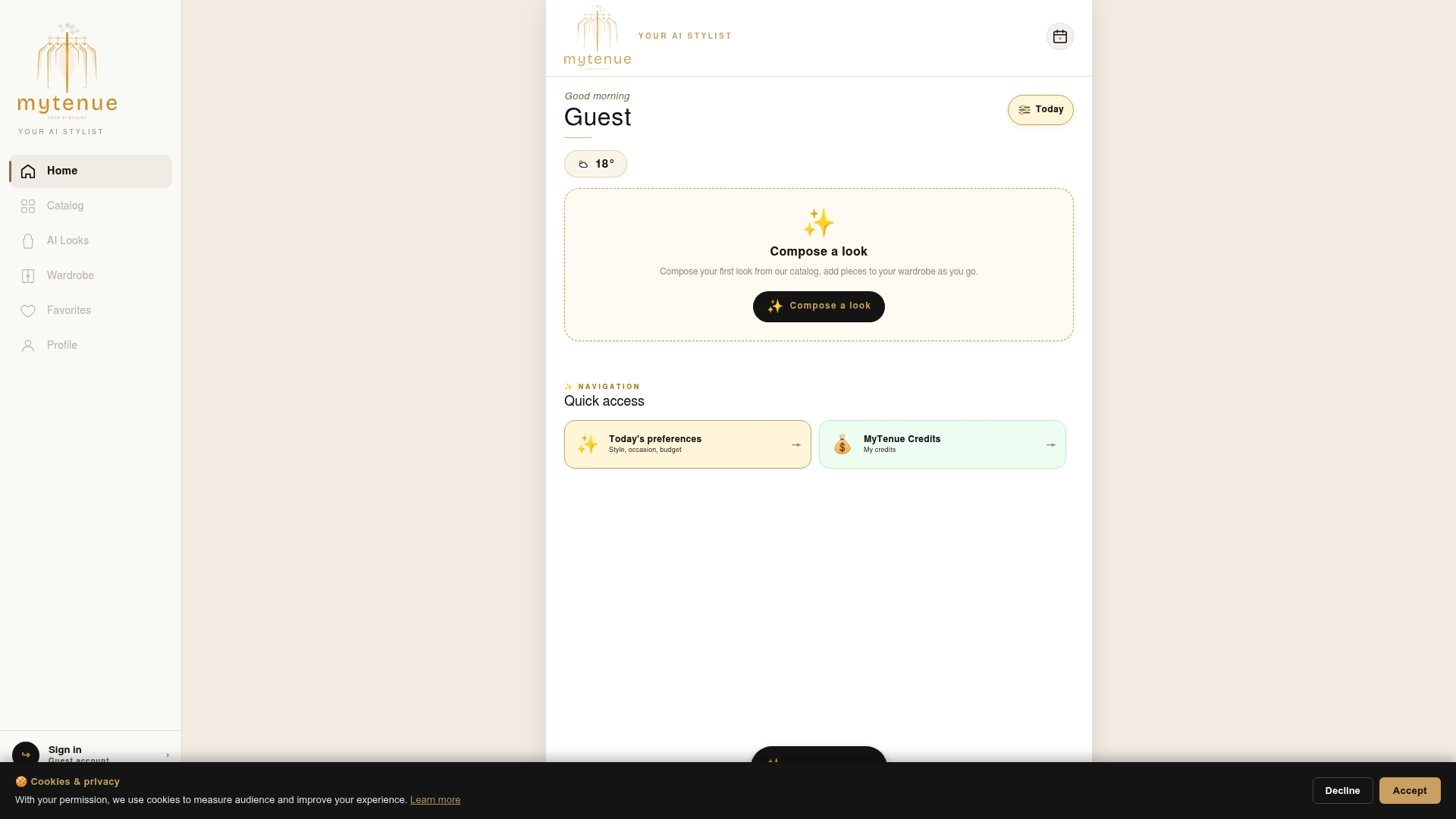
With Mytenue, you input your style preferences, occasions, and budget, and the platform generates complete outfit combinations from your existing clothes and curated additions. The result is a personal AI stylist that keeps your wardrobe working harder without pushing you toward unnecessary purchases. Mytenue also supports sustainable fashion choices by encouraging you to mix and match what you already own before adding anything new. For anyone who wants faster, more confident daily dressing, Mytenue delivers personalized outfit coordination that actually reflects who you are. Check out occasion-based dressing systems to see how Mytenue organizes recommendations by context.
FAQ
What does it mean to refine personal style with AI feedback?
Refining personal style with AI feedback means using technology-assisted outfit assessments to make more intentional wardrobe choices aligned with your established aesthetic. It combines professional styling methods, like style words and mood boards, with AI tools that generate personalized suggestions from your actual clothes.
How many style words should I use before starting with AI?
Choose 3–5 descriptive style words that capture how you want to feel when dressed. These words act as filters that keep AI suggestions relevant to your identity rather than generic trends.
Can AI help me use clothes I already own?
Yes. AI tools that digitize your wardrobe and generate mix-and-match combinations help you get more from existing items. This approach is more sustainable than shopping for new pieces before exploring what you already have.
How often should I update my style inputs for AI tools?
Expert stylists recommend revisiting your style words and mood board annually. Your identity and lifestyle shift over time, and outdated inputs lead to AI suggestions that no longer fit who you are.
What is the biggest mistake people make with AI style feedback?
The biggest mistake is using AI before establishing a clear style foundation. Without style words and a mood board, AI suggestions feel random and can lead to a disjointed wardrobe rather than a cohesive personal style.