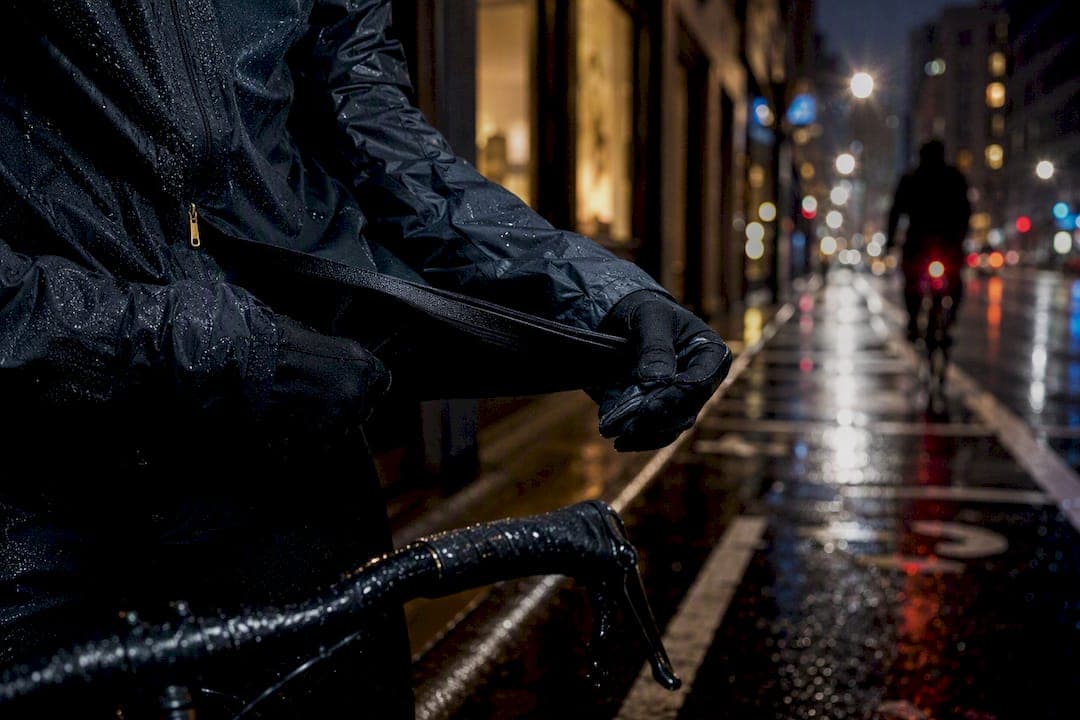
The minimum effective rain outfit for cycling is a waterproof jacket, overpants or a poncho, waterproof shoe covers, waterproof gloves, lights, and mudguards. Waterproofing and breathability matter equally: a jacket that blocks rain but traps sweat leaves you just as wet as no jacket at all. Add 360-degree visibility, since low light and wet roads are a dangerous combination. The sections below break down exactly how to choose and combine each piece.
TL;DR:
- Waterproof jackets with high hydrostatic head and good ventilation perform best, especially those with taped seams, storm flaps, and helmet-compatible hoods.
- Mudguards offer the biggest benefit, reliably preventing spray and keeping riders dry without relying solely on specialized clothing.
- Waterproof shoes outperform covers for frequent heavy rain rides, with sealed, membrane-lined shoes providing better dryness and comfort.
- Bright, high-visibility colors and 360-degree reflective elements are crucial for safety in low-light and rainy conditions, enhancing driver awareness.
- Layering and active moisture management, including proper fabric choices and venting, ensure comfort and dryness during longer or more intense rides.
Table of Contents
- The Core Pieces Of A Rain Outfit For Cycling
- How Do You Choose A Rain Jacket For Cycling?
- Beyond Clothing: Bike Changes That Keep You Drier
- Layering And Sweat Management On A Rainy Ride
- Caring For Rain Gear So It Keeps Working
- The Rainy Commute Checklist
- What Makes A Rain Glove Actually Work
- Comparing Waterproof Fabrics For Cycling Gear
- Should You Wear Waterproof Shoes Instead Of Covers?
- Managing Foggy Glasses And Low Visibility In Rain
- Why High-Visibility Colors Matter As Much As Waterproofing
- Dressing For Rainy Commutes
- Let Mytenue Plan Your Rainy-Day Outfit For You
- Sources
The Core Pieces Of A Rain Outfit For Cycling
Every rain-ready cyclist needs the same short list of gear. The difference between staying dry and arriving soaked usually comes down to how each piece is chosen, not whether you own it.
The jacket does the most work. Cycling-specific rain shells cut longer in the back (a drop tail), sit closer to the body to cut wind resistance, and often skip a hood because it interferes with a helmet. General-purpose rain shells from hiking or outdoor brands fit looser, add a hood, and work fine for short, low-speed commutes, but they flap at speed and soak through faster under hard effort. If you ride more than 20 minutes at commuting pace, a cycling-specific shell earns its price.
Overpants versus a poncho is a real trade-off, not a style choice. Overpants seal fully around the ankle, add no drag, and don't catch wind on descents. A cycling poncho covers more surface area in one motion and vents better in warm rain, but it flaps on descents and can catch on a wheel or fence post at low speed, which makes it a poorer choice for urban traffic. BikeRadar's guide to riding in the rain notes that gear performance in real conditions often differs from what a specs sheet promises, and this is one of the clearest examples: a poncho looks like more protection but frequently delivers less control.
Shoe covers solve most commute-length wet feet problems. Neoprene covers handle splash and drizzle well; full waterproof covers with taped seams handle sustained rain. Neither stays dry through a long ride in standing water, since water eventually works in through the sole seam or ankle opening. For rides over an hour in heavy rain, waterproof boots outperform any cover.
Gloves need a membrane layer, not just a water-resistant shell, or your hands stay damp from the inside within 20 minutes.
Helmet caps and clear or light-tinted eyewear round out the outfit. A thin helmet cover keeps rain from running down your neck, and clear lenses cut glare from wet road surfaces without darkening your view in already low light.
Priority for commuters versus long-distance riders differs sharply:
- Commuters (under 45 minutes): jacket and shoe covers matter most; a poncho can work if traffic is light.
- Long or all-day riders: overpants beat a poncho every time, and waterproof boots beat shoe covers.
- Anyone riding after dark in rain: lights and reflective elements move to the top of the list, above any clothing decision.
How Do You Choose A Rain Jacket For Cycling?
Waterproof rating alone tells you almost nothing about how a jacket performs on a bike. Cycling Weekly's testing of wet-weather jackets found that the top performers balance a high hydrostatic head with genuine ventilation, and that seam construction and zipper quality separate good jackets from mediocre ones more than the waterproof number does.
Hydrostatic head, measured in millimeters, tells you how much water pressure the fabric resists before it leaks. As a practical guide:
- 5,000mm to 10,000mm handles light rain and short commutes fine, and it's usually lighter and more breathable.
- 10,000mm to 20,000mm covers most commuting and club-ride needs in sustained rain.
- 20,000mm and above is built for hours of heavy rain, touring, or bikepacking, where the trade-off is usually a heavier, less breathable fabric.
Breathability matters just as much as the mm rating, and this is where riders get caught out. A high-mm jacket with no ventilation traps sweat during any real effort, so you end up wet regardless of the fabric's waterproof number. BikeRadar makes the same point from the testing side: staying dry from sweat matters as much as staying dry from rain. Look for pit zips, mesh-backed vents, or a two-way front zip you can crack open on climbs.
Construction details to check before buying:
- Taped seams at the shoulders and side panels, not just the main seam.
- Water-resistant zippers or a storm flap covering the front zip.
- A hoodless or helmet-compatible hood, since a standard hood bunches under a helmet and blocks peripheral vision.
- A drop tail and articulated sleeves, so the jacket covers your lower back in a riding position and doesn't ride up your arms when reaching for the bars.
Fit changes the calculation too. A race-cut jacket sheds wind better at speed but leaves no room for a base layer underneath. A commuter-fit jacket with a bit of room lets you layer for cold rain and still packs down small enough for a jersey pocket or pannier, a trade-off Bikepacking flag repeatedly for multi-day riders who need one jacket to do everything.
Pro Tip: Small construction details like zip quality, seam tape coverage, and drop-tail shape often decide how a jacket performs day to day more than the headline waterproof number ever does.
Beyond Clothing: Bike Changes That Keep You Drier
A single piece of clothing rarely fixes a wet commute. The bike itself is often the bigger problem, and fixing it costs less than another jacket.
Mudguards (fenders) give the best return of any single investment for staying dry. BikeRadar's wet-weather kit guidance points out that mudguards keep spray off your back, legs, and drivetrain more reliably than any jacket or overpants can, since they stop the water at the source instead of just repelling what lands on you. Full-length guards with mud flaps work best for regular commuters; clip-on guards suit riders who swap between wet and dry bikes.
Beyond the bike itself, a short list of accessories closes the remaining gaps:
- Waterproof panniers or a roll-top dry bag keep a laptop or spare clothes dry without needing a backpack cover.
- A backpack rain cover works if you already commute with a bag and don't want to switch to panniers.
- A saddle cover takes ten seconds to use and saves you from a soaked seat every morning the bike sits outside.
- A waterproof phone pouch matters more than people expect, since a cracked phone screen from rain damage costs more than the pouch.
Visibility deserves its own line item, not an afterthought. Front and rear lights running in daytime flash mode cut through rain and gray light far better than reflective strips alone, and reflective elements on a bag or ankle band catch headlights from angles your jacket's reflective trim can't.
Tires matter too. Wider tires with a bit more tread bite better on wet paint and metal grates, two of the most common causes of low-speed slips in rain.
Layering And Sweat Management On A Rainy Ride
Staying dry from the inside out matters as much as blocking rain from outside, a point BikeRadar's rain-riding guide makes directly. A fully waterproof jacket with no ventilation can leave you as damp as riding with no jacket, just from your own sweat.
Fabric choice under the shell decides most of your comfort. Merino wool and synthetic wicking base layers move moisture away from skin and stay warm even damp. Cotton does the opposite: it holds water against your skin and stays cold, which is why it's the one fabric to avoid entirely under rain gear. A guide on choosing fabrics by season covers how different fibers behave under moisture and temperature shifts, useful background if you're building a layering system from scratch.
Match the jacket to the ride. Short, low-effort rides in cold rain call for a fully waterproof shell, since you won't generate enough heat to sweat through it. Longer or harder rides do better in a water-resistant, highly breathable shell, even if it lets a little rain through, because trapped sweat causes more discomfort than light rain penetration.
On the bike, manage moisture actively: unzip the front zip on climbs, open pit zips before you start sweating rather than after, and shed a layer at a rest stop if you're overheating. In cold rain, watch for condensation building inside the jacket. That's a signal to vent, not to add another layer.
Warm summer rain and cold winter rain call for different setups entirely, and a packable outfit formula built for mid-season weather works well as a template for riders who need one system that adapts to both.
Caring For Rain Gear So It Keeps Working
A rain jacket loses waterproofing gradually, usually from dirt clogging the fabric's pores rather than a manufacturing flaw. Regular care keeps a $150 jacket performing like new for years instead of one wet season.
- Wash with a technical detergent made for waterproof outerwear, never standard laundry soap or fabric softener, which coats the fabric and kills breathability. Bike24's care guidance recommends washing regularly rather than only when visibly dirty, since built-up grime is what breaks down water repellence fastest.
- Test the DWR coating (durable water repellent) by splashing water on the shoulder after washing. If it beads and rolls off, the coating still works. If it soaks in and darkens the fabric, it's time to reproof.
- Reproof with a spray-on or wash-in treatment made for the fabric type, then tumble on low heat if the care label allows, since heat reactivates most DWR treatments.
- Check seam tape and zippers each season. Peeling tape can sometimes be resealed with iron-on seam tape; a failing waterproof zipper usually means replacement, since zippers aren't practical to repair reliably.
The Rainy Commute Checklist
Pack in this order so the wet stuff never touches the dry stuff:
- Waterproof jacket, folded into its own stuff sack or a zip-lock bag.
- Overpants or shoe covers, packed separately from anything you need to stay dry, like documents or a laptop.
- Gloves and a spare pair of dry socks, sealed in a small bag.
- A microfiber towel for wiping down the saddle and bars on arrival.
- Front and rear lights, checked and charged before you leave.
Keep the jacket and gloves on top of your bag or in the outer pocket, since you'll need them first and want them dry when you grab them again for the ride home.
What Makes A Rain Glove Actually Work
Waterproof gloves fail for one of three reasons: the membrane leaks at the wrist, the fabric traps too much heat, or the fit kills your ability to brake and shift.
Materials decide the baseline. Look for a waterproof, breathable membrane (not just a water-resistant outer shell), sealed at the wrist with a gusset or adjustable cuff that seals over your jacket sleeve rather than under it. Under the sleeve, water runs straight down your wrist into the glove.
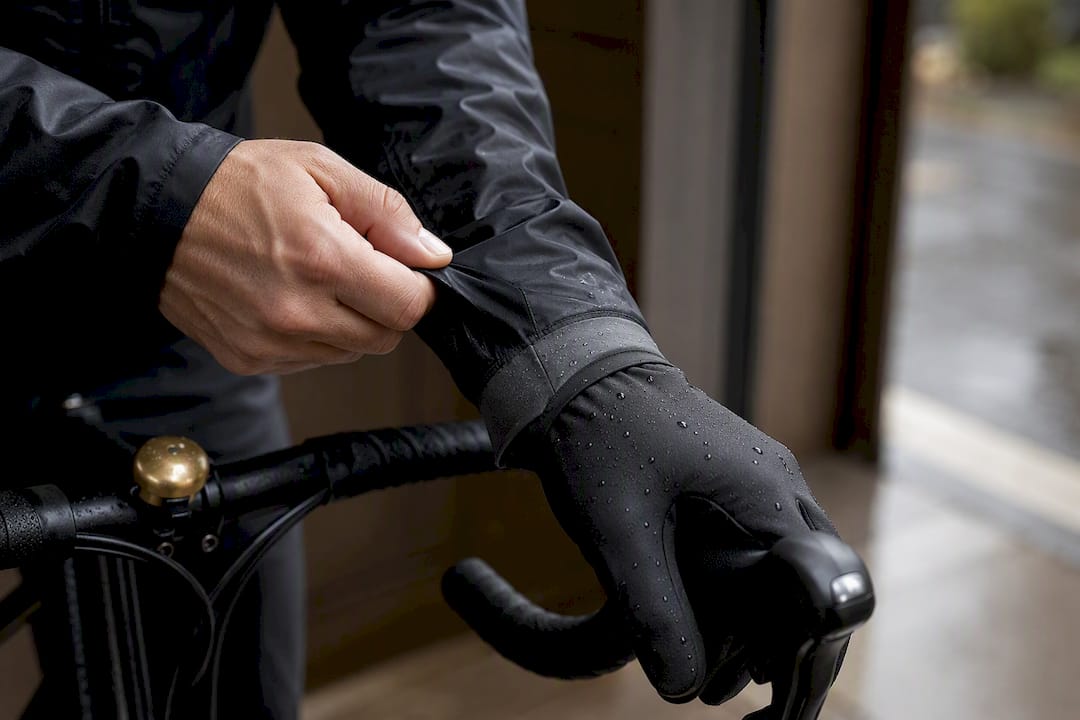
Dexterity matters more than most riders expect until they try braking hard in a thick glove. Test any glove candidate by gripping your own brake levers and shifting before buying; a glove that feels fine standing still can feel clumsy the moment you need a quick lever pull in traffic. Thinner gloves with textured palm grip generally beat thicker, bulkier ones for control.
Insulation should scale to temperature, not just rain intensity. A lightly insulated glove works for rain above about 50°F; below that, hands lose dexterity fast regardless of how waterproof the glove is, so a warmer liner glove under a thin waterproof shell often beats one heavily insulated waterproof glove. Touchscreen-compatible fingertips are worth paying for if you use your phone for navigation mid-ride.
Comparing Waterproof Fabrics For Cycling Gear
Not all "waterproof" fabric behaves the same way once you're pedaling hard in the rain.
Laminated membranes (the category most premium cycling shells use) sandwich a thin waterproof, breathable layer between an outer fabric and inner lining. They breathe well relative to their waterproofing and hold up over years of washing, but they cost more and pack slightly bulkier than simpler coatings.
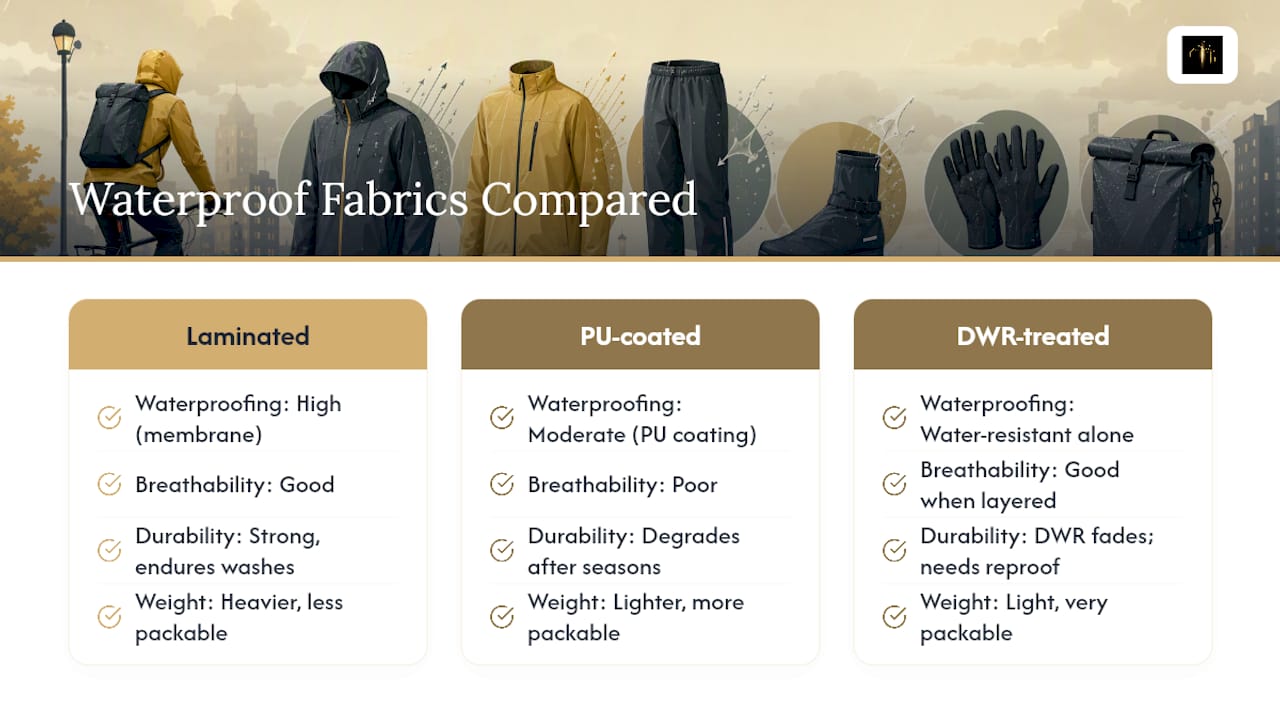
PU-coated fabrics apply a polyurethane coating directly to the base fabric. They're cheaper and often lighter, which makes them common in budget rain shells and ponchos, but the coating breathes poorly and tends to degrade faster, cracking or peeling after a couple of seasons of regular use.
DWR-treated fabrics rely on a surface treatment rather than a membrane or coating, which is why the beading effect fades over time and needs reproofing, as covered above. DWR alone, without an underlying membrane, isn't fully waterproof under sustained pressure like sitting rain or a long downpour, only water-resistant.
For commuting in typical rain, a DWR-treated fabric over a light membrane hits the best balance of breathability, weight, and packability. For heavy, sustained rain or all-day touring, a fully laminated membrane with a higher hydrostatic head is worth the extra weight and cost, a trade-off Bikepacking.com's fabric comparisons cover in detail for multi-day riders choosing between packability and total protection.
Should You Wear Waterproof Shoes Instead Of Covers?
Shoe covers work for most commutes, but they have a ceiling. Water eventually finds the seam where the cover meets your shoe sole, especially through puddles or standing water at intersections, and once it's in, it stays in for the rest of the ride.
Dedicated waterproof cycling shoes solve that problem at the source with a sealed, membrane-lined upper instead of a cover layered over a regular shoe. They cost significantly more than a pair of shoe covers, so the decision comes down to how often you actually ride in heavy or sustained rain. If wet commutes are a once-a-week event, covers over your regular shoes are the more practical purchase. If you ride in rain several times a week through fall and winter, waterproof shoes pay for themselves in comfort within a season, since you stop starting every ride with a mental note about which puddles to avoid.
One middle option: neoprene overshoes with a reinforced sole panel. They're not as fully sealed as a dedicated waterproof shoe, but they outlast thin fabric covers and handle deeper puddle splash better, a reasonable step up without the full cost of new shoes.
Managing Foggy Glasses And Low Visibility In Rain
Fogging happens when warm breath or body heat meets a cooler lens surface, and it gets worse the harder you're breathing, which is exactly when you need clear vision most.
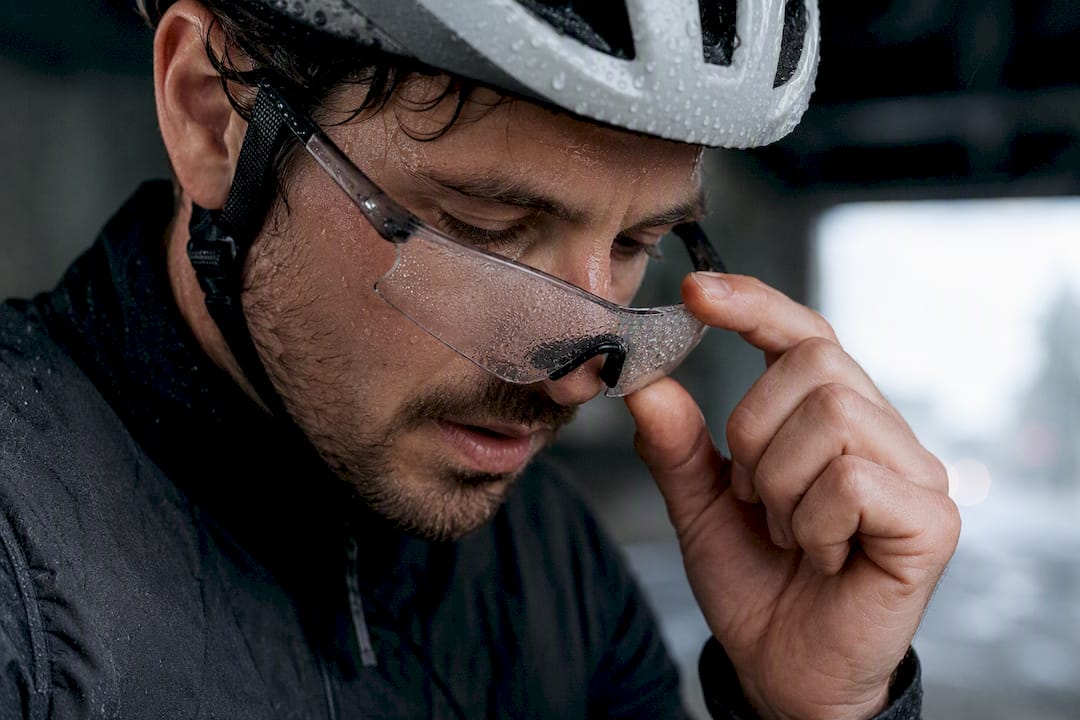
Clear or lightly tinted lenses beat dark ones in rain, since dark lenses make an already low-light situation worse. An anti-fog coating or spray helps, but airflow matters more: glasses that sit slightly off the face, or a helmet visor with a gap for airflow, clear faster than tight-fitting wraparound styles that seal against the skin. If fogging is a constant problem on a specific route, riding with the glasses pushed slightly down the nose for a few seconds clears them faster than wiping, since wiping just smears the water film without breaking the fog.
Why High-Visibility Colors Matter As Much As Waterproofing
Rain doesn't just make roads slippery. It cuts visibility for drivers at the exact moment splash and glare make you harder to see, which is why reflective and bright-color gear isn't optional gear so much as a second layer of the same safety system as your lights.
Regulatory guidance on reflective materials for road users points to 360-degree reflectivity as the standard to aim for, meaning reflective elements visible from the front, back, and both sides, not just a strip across the back of a jacket. Many performance rain jackets now build in 3M reflective trim as a standard feature rather than an add-on, a shift that's made high-visibility performance shells far more common than a few years ago.
Neon yellow, orange, and bright green outperform darker "sporty" colors like navy or black in rain, since they hold contrast against gray skies and wet asphalt even before headlights or reflective trim come into play. Combine a bright-colored jacket with reflective ankle bands (which catch headlights through the up-and-down pedaling motion) and a flashing rear light, and you cover the three ways drivers actually spot cyclists in poor light: color contrast, motion-triggered reflection, and active light.
Dressing For Rainy Commutes
Buying the right rain jacket solves half the problem. The other half is figuring out, every gray morning, what to actually wear with it from what you already own. There are apps that read the day's weather forecast, check your digitized wardrobe, and suggest a full outfit built around the one or two waterproof pieces you already own, rather than asking you to reinvent your rain kit from scratch each season.
Think of such apps as pairing logic layered on top of your gear choices, not a replacement for them. Once you have a solid jacket and a pair of waterproof gloves, these tools can help with the daily decision of what goes underneath and what colors work together, which matters more than it sounds like on a rushed commute morning. For more on how the app handles wet-weather outfit pairing specifically, see this breakdown of AI-suggested rain outfits.
— Ahmed
Let Mytenue Plan Your Rainy-Day Outfit For You
Once you've sorted your jacket, gloves, and mudguards, the daily question left is what to actually put on underneath before you leave the house. Some AI-based outfit planners check the forecast, scan a user's digitized wardrobe, and build a complete outfit around the waterproof pieces already owned, so the user is not guessing what pairs well with a rain shell early in the morning.

To be clear, Mytenue doesn't replace the actual gear-buying decisions covered above. It won't pick your hydrostatic head rating or recommend a mudguard. What it does is take the pieces you've already invested in and turn them into a coordinated outfit every morning, factoring in temperature, precipitation, and what's actually clean in your closet. If you want a shopping reference for a lightweight waterproof shell to add to your wardrobe first, this packable waterproof jacket is a solid style-forward option worth a look.
Try the app at Mytenue and let it build your next rainy-day outfit from what's already in your closet.
Sources
- Legifrance (reflective materials guidance)
- Cycling Weekly — Best waterproof cycling jackets 2026
- BikeRadar — buyers guide for riding in the rain
- Bikepacking
- Bike24 — protection and care tips for riding in rain