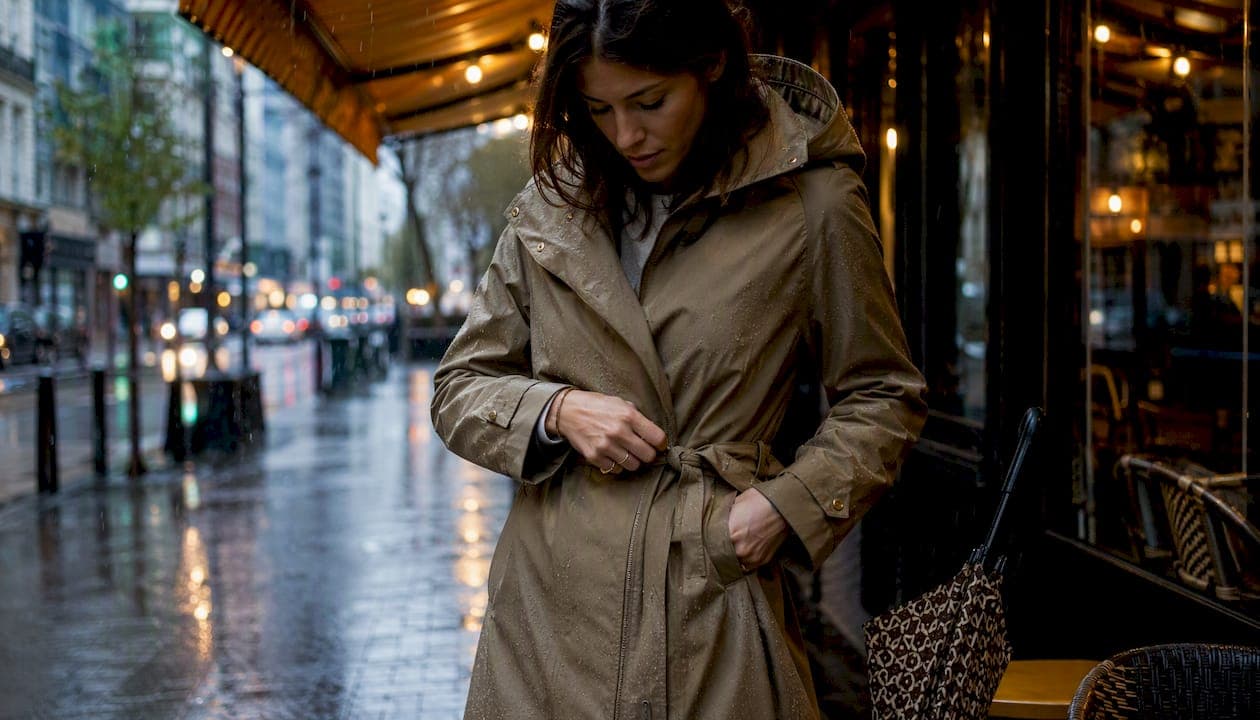
A great tenue pluie comes down to three moving parts: a weather-aware outer layer, a hem strategy that keeps cuffs dry, and footwear that survives puddles without looking like gear. Get those three right and everything else, from color to accessories, falls into place. Stylist Naina Singla and the Stitch Fix team put it simply: invest in outerwear that protects without swallowing your silhouette. A shell built with waterproof-breathable tech such as Gore-Tex does that job quietly, while a defined waist keeps the rest of the look from reading as bulky. MyTenue builds its rainy-day suggestions around exactly this framework.
Before you dress tomorrow, run this three-point check:
- Outer layer: Does it repel water at the shoulders and hem, not just resist a light drizzle?
- Hem line: Will your pants or skirt end above where puddles collect?
- Footwear: Can these shoes handle a wet curb without ruining suede or leather?
Key Takeaways
A working tenue pluie always combines a weather-aware outer layer, a hem strategy, and puddle-ready footwear, and AI personalization gets sharper every time you rate what you actually wore.
| Point | Details |
|---|---|
| Three core elements | Build every rainy-day outfit around outerwear, hem length, and footwear that handles wet ground. |
| Structure beats bulk | A belted trench or defined waist keeps layered looks sharp instead of shapeless. |
| Palette strategy | Stick to neutral bases and add one bright accessory to lift a gray day. |
| Layer for temperature swings | Use a removable three-layer system so mornings and afternoons both stay comfortable. |
| Feed the AI specifics | MyTenue's suggestions improve when you rate worn outfits and flag water-safe pieces in your wardrobe. |
Table of Contents
- The Three Styling Elements To Build Every Rainy-Day Outfit
- Layering, Silhouette, And Palette: Avoid Bulk And Keep The Look Sharp
- Six AI-Ready Outfit Recipes For Rainy Days
- A 2-Minute Pre-Departure Checklist And Care Tips
- How AI Personalizes A Rainy-Day Outfit
- Layering For Temperature Swings On Rainy Days
- Try AI-Curated Rainy-Day Looks With MyTenue
- Sources
The Three Styling Elements To Build Every Rainy-Day Outfit
Stylists agree that a polished tenue pluie rests on three repeatable rules: weatherproof outerwear, a hem strategy, and footwear that holds its shape when wet. None of these require sacrificing style for function.
Your outer layer does the heaviest lifting. A trench or parka cut just below the hip sheds water before it reaches your pants, and a structured hood (one that holds shape instead of collapsing) beats a flimsy drawstring hood every time. Water resistance matters less than water repellency at the seams and shoulders, where most casual jackets fail first.
Hemlines are where outfits quietly fall apart. Floor-grazing trousers wick water up the fabric within a block of walking. The fix: crop your pants above the ankle, tuck jeans into boots, or swap to tights and a knee-length skirt so nothing drags through standing water. FashionTimes recommends tucking jeans into boots specifically because it solves the hem problem without changing your whole outfit.
Footwear needs to look intentional, not tactical. Lug-sole boots, treated leather sneakers, and city-appropriate rain boots all read as fashion choices when paired with the right proportions. A small heel or block sole photographs better than a flat rubber welly and still clears puddles fine.
- Lug-sole boots for texture and grip on slick sidewalks.
- Treated leather sneakers for a commute that doesn't scream "rain gear."
- Sleek city rain boots when the forecast calls for standing water.
Pro Tip: Spray suede pieces with a protectant before the season starts, not after the first ruined pair, and add a rubber sole guard to leather flats you want to keep in rotation year round.
Layering, Silhouette, And Palette: Avoid Bulk And Keep The Look Sharp
Rain gear gets bulky fast when you stack pieces without structure. The fix isn't fewer layers, it's smarter ones. A belted trench or a jacket with a cinched waist counteracts the shapeless look that comes from wearing a shell over a sweater over a base layer. InStyle's stylists point to a defined silhouette as the difference between looking prepared and looking swallowed by your own outerwear.
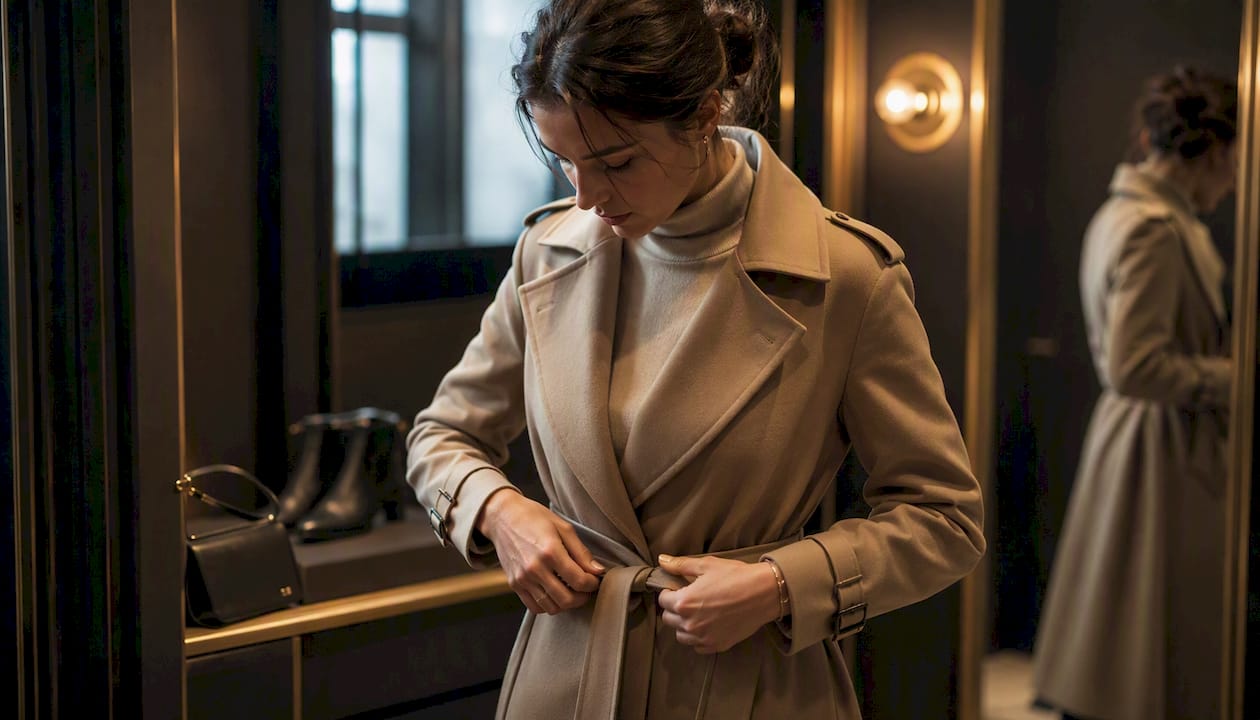
Stick to neutral bases (navy, camel, black, olive) and let one accessory carry color. A crimson umbrella or a mustard scarf does more for a gray day than an entire colorful outfit, and it keeps the rest of your look easy to repeat.
Fabric choice matters just as much as color. Knits, crepe, and treated leather hold their shape when damp; heavy cotton and unstructured wool absorb water and sag. Save your clingiest, heaviest sweaters for dry days.
Pro Tip: Balance proportions by pairing a long coat with cropped or straight-leg pants, and save cropped jackets for full-length trousers, so you avoid doubling up on volume at the same point of your body.
Six AI-Ready Outfit Recipes For Rainy Days
Each recipe below works as written or as a prompt you can feed straight into an AI stylist. Swap any piece for what's already in your closet.
- Commuter uniform: Belted trench, fine-knit sweater, cropped straight-leg pants, treated leather sneakers, structured tote with a water-resistant base.
- Office meeting: Tailored wool-blend coat, blouse, ankle-length trousers, block-heel boots, compact umbrella that fits in a bag.
- Weekend errands: Hooded technical shell, hoodie or fleece midlayer, joggers or cropped denim, lug-sole boots, crossbody bag.
- Date-night drizzle: Cropped moto jacket, silk-blend top, knee-length skirt with tights, sleek ankle boots, small clutch under one arm.
- Sporty errand run: Lightweight waterproof windbreaker, technical base layer, joggers, waterproof sneakers, compact backpack.
- Evening out: Longline coat, fitted dress, opaque tights, patent or lacquered leather flats, statement umbrella as the color pop.
When rain turns heavy, swap the shell for true rain boots and pack a foldable waterproof liner instead of relying on a single jacket. On warmer wet days, lighter waterproof fabrics and patent or lacquered leather work better than anything insulated.
To turn any of these into a MyTenue prompt, specify your preferred silhouette (fitted vs. relaxed), fabrics you want to avoid (wool that pills, suede in heavy rain), and the exact shoes already in your closet. That level of detail is what separates a generic suggestion from one you'll actually wear. If you're building looks around pieces you already own, the wardrobe transformation guide shows how far one good coat or bag can stretch across these six recipes.
A 2-Minute Pre-Departure Checklist And Care Tips
Most rainy-day outfit failures happen because of one missing item, not a bad outfit choice. A compact rain kit fixes that in under two minutes.
- Grab your umbrella and check it opens fully before you leave.
- Fold a spare pair of socks and slip them into your bag.
- Pack blotting tissues for humidity and a mini shoe protectant spray.
- Choose a structured tote or bag that won't sag when wet.
- Damp pieces: Air-dry away from direct heat; heat warps leather and shrinks knits.
- Suede: Let it dry fully before brushing, never while still wet.
- Hair and makeup: A setting spray and a small pack of blotting sheets handle most humidity fallout in seconds.
Keep this kit pre-packed in a small pouch inside your bag so you're never assembling it last minute. For a broader morning system, the outfit planning guide for busy mornings covers routines beyond just rain days.
How AI Personalizes A Rainy-Day Outfit
The quality of an AI-curated tenue pluie depends entirely on what you feed it. The highest-value inputs are your local forecast, your activity (commute, meeting, errand), your preferred silhouette, any fabric sensitivities, the shoes you actually own, and how much hem length you're willing to compromise on.
The best AI stylists improve with use: rating a suggested outfit after you wear it teaches the system which combinations actually worked in your climate and which ones, like suede in a downpour, should never come up again.
That feedback loop is what separates a one-time outfit generator from a tool that gets sharper every week. MyTenue applies this directly through:
- Wardrobe digitization that catalogs what you own, including which pieces are water-safe.
- Daily weather-adapted suggestions pulled from your local forecast.
- Virtual try-on so you can preview a look before committing to it on a wet morning.
Layering For Temperature Swings On Rainy Days
Rain rarely arrives at one temperature. Mornings run cold and damp, afternoons often warm up even under gray skies, and evening commutes can drop ten degrees the moment the sun sets. Building a tenue pluie around a single jacket ignores that swing entirely.
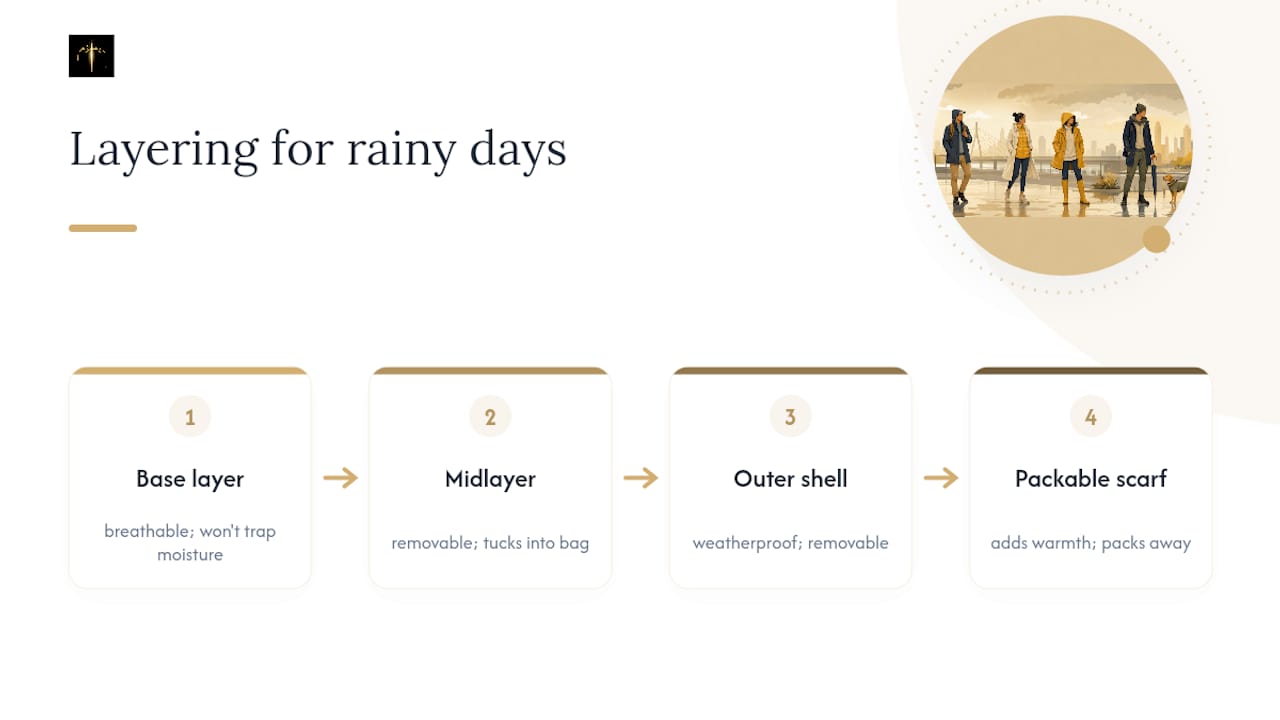
The fix is a three-layer system you can add or shed piece by piece. Start with a breathable base layer, a fine-knit top or lightweight long sleeve that won't trap moisture against your skin. Add a midlayer you can remove without disrupting the outfit: a cardigan, a light sweater, or a vest that tucks easily into a bag once temperatures rise. Finish with the weatherproof shell as your outermost, removable layer.
This approach solves two problems at once. It keeps you from overheating under a heavy coat once the rain lets up, and it means you're never stuck choosing between staying dry and staying comfortable. A cropped puffer over a knit works for a cold morning commute; strip it down to just the knit and a light shell by midday, and you've adjusted for temperature without changing the outfit's core identity. The layering guide for wardrobe savings makes the same case from a cost angle: fewer single-purpose pieces, more combinations from what you already layer daily.
Accessories deserve the same flexible thinking. A packable scarf adds warmth in the morning and disappears into a bag by afternoon, doing more practical work than most standalone jackets.
A note on testing rainy-day looks
I've spent a good chunk of my time writing for MyTenue's blog testing which "rain-proof" style choices actually survive a real commute versus which ones just look good in photos. The hem rule and structured outerwear consistently outperform trendier fixes. For more outfit logic like this, see my other guidance on the MyTenue blog.
Try AI-Curated Rainy-Day Looks With MyTenue
Guessing at rain outfits from a closet full of options costs you time every single gray morning. MyTenue skips that entirely: it digitizes your wardrobe, then generates daily weather-adapted looks pulled from pieces you already own, so you're not rebuying rain gear you don't need.
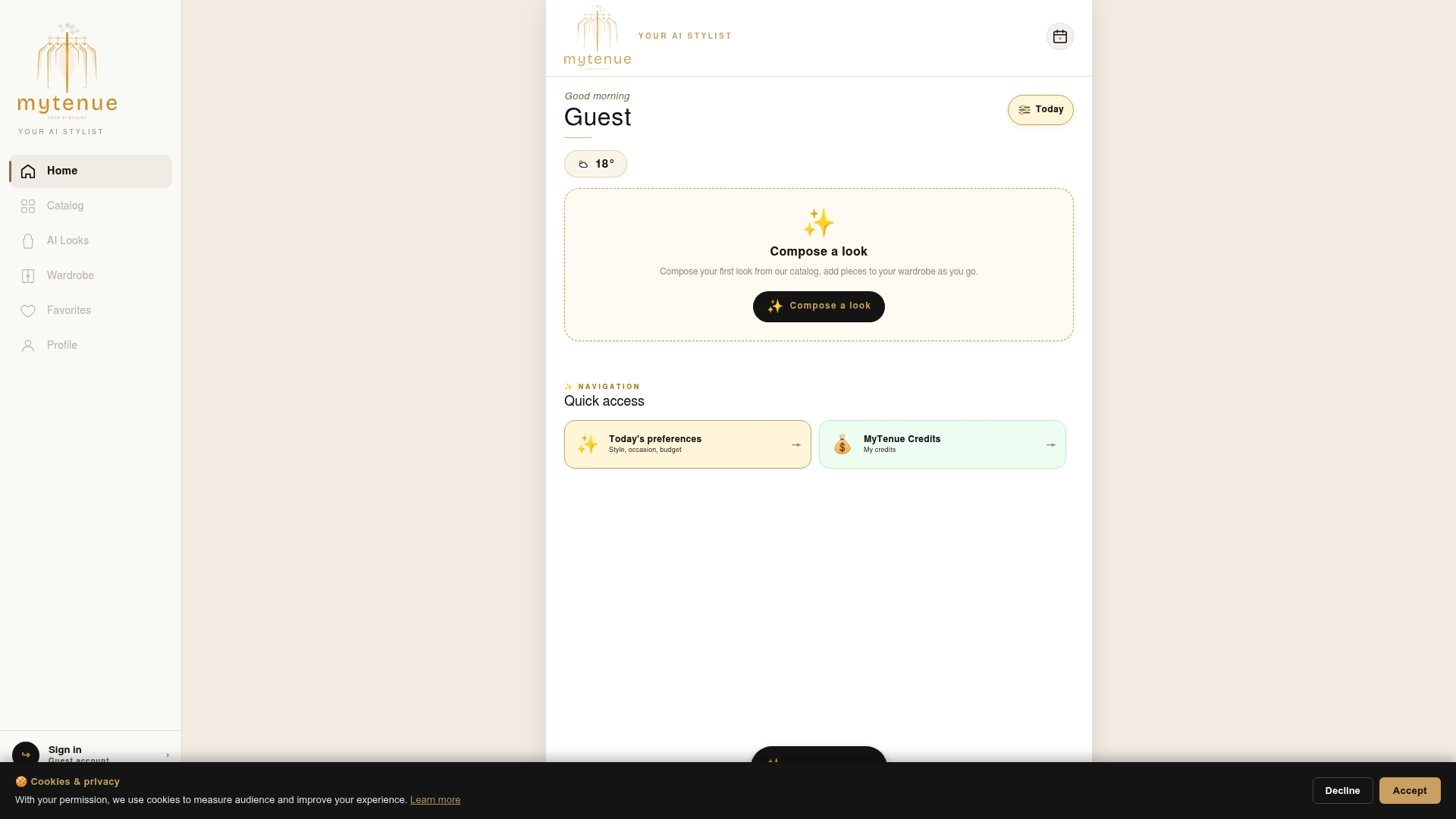
Two features matter most for tenue pluie specifically. Daily weather-adapted suggestions automatically favor water-safe fabrics and skip suede on wet forecast days. Wardrobe filters let you flag which shoes and jackets are rain-appropriate, so the AI stops suggesting your good leather boots on a downpour day. Pair that with virtual try-on and you can preview the whole look before you're standing in front of your closet at 7 a.m.
If your rainy-day rotation needs a professional backbone, the business casual capsule guide pairs well with these AI suggestions for office days. Ready to stop rebuilding the same three rain outfits from memory? Start with MyTenue and let it generate your next tenue pluie from your actual closet.
Sources
- 12 Rainy Day Outfits to Keep You Looking Chic, Not Soggy
- Rainy Day Outfits That Keep You Looking Polished and Put Together