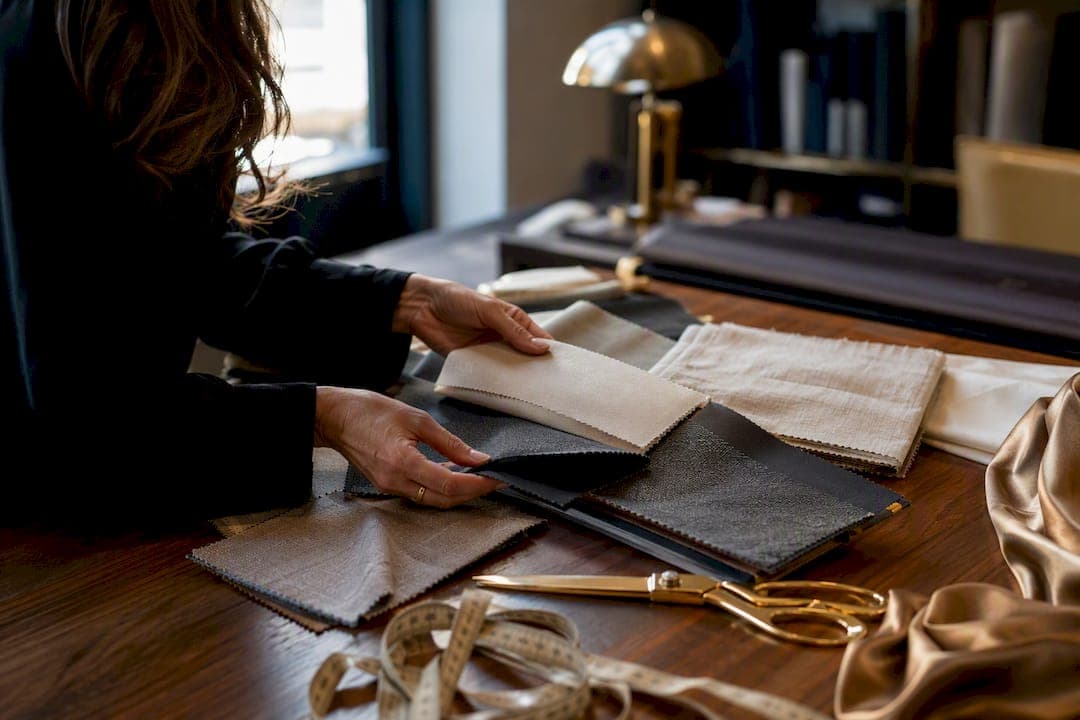
Summer calls for linen, cotton voile, and lightweight silk because they move air and dry fast. Mid-season favors cotton-linen blends and mid-weight twills that layer without bulk. Winter belongs to wool, flannel, and boiled wool for their insulating density. Getting tissus et saisons right comes down to matching fiber, weave, and weight to what your body actually needs in that weather, not just picking what looks seasonal on the bolt.
Here's the quick shortlist before we get into rules, sewing technique, and the science of breathability:
- Summer: Linen (breathable), cotton voile (lightweight), lightweight silk (moisture-wicking)
- Mid-season: Cotton-linen blends (versatile), chambray (layerable), light merino (thermoregulating)
- Winter: Wool (insulating), flannel (structured), boiled wool (dense and warm)
The rest of this guide walks through the decision rules, fabric-by-fabric sewing notes, a comparison table, and a short technical explainer on what actually makes a fabric breathable.
Key Takeaways
Matching grammage and weave to the season, not just fiber name, is what separates a garment that performs from one that just looks the part.
| Point | Details |
|---|---|
| Prioritize weave and weight | Grammage and weave structure often matter more than fiber choice alone for seasonal fit. |
| Buy grammage variety, not fiber variety | Choose the same fiber family in two or three weights rather than switching materials entirely. |
| Pre-wash before cutting | Measure shrinkage on a test square, since linen and denim can shrink 3 to 5% on the first wash. |
| Layer with a clear purpose | Pair a breathable base, an insulating mid-layer, and a protective outer layer for transitional weather. |
| Maintain finishes to keep them working | Use mild detergent and skip fabric softener on DWR and membrane fabrics to preserve water repellency. |
Table of Contents
- Tissus Et Saisons: Four Rules for Picking the Right Fabric
- What's Trending in Seasonal Fabrics Right Now
- Summer Fabrics That Actually Keep You Cool
- Spring and Autumn Fabrics for Changeable Weather
- Winter Fabrics Built for Warmth and Structure
- Comparing Summer, Mid-Season, and Winter Fabrics at a Glance
- Sewing Technique That Saves Your Fabric (and Your Sanity)
- The Science Behind Breathability, Explained Simply
- Why Spring and Autumn Deserve Separate Fabric Plans
- How to Layer Fabrics for Transitional Weather
- Waterproof and Weather-Resistant Fabric Options
- Fabric Thickness and Weave: The Overlooked Variable
- Fabric Handling Tips by Season and Fiber
- Frequently Asked Questions
- Sources
Tissus Et Saisons: Four Rules for Picking the Right Fabric
Before you fall for a pretty print, run it through four checks. These rules work whether you're buying by the meter or auditing what's already hanging in your closet.
- Breathability first. Ask: does this fabric let vapor escape, or will it trap heat against skin? Loose weaves and hygroscopic fibers like linen and cotton pull moisture away from the body, while dense synthetics often hold it in.
- Insulation second. Ask: does this fiber trap air, or let it pass through? Wool fibers crimp and trap pockets of warm air; that's why a lightweight merino sweater can outperform a bulkier cotton one in the cold.
- Weight and drape third. Ask: will this grammage suit the silhouette I want? A 90 gsm voile drapes and floats; a 400 gsm melton stands structured and holds a coat's shape.
- Care and durability fourth. Ask: can I maintain this fabric's performance long term? A gorgeous wool coating loses value fast if it pills after two washes or needs dry cleaning you'll never get around to.
On the label or at the fabric hand, look for grammage (grams per square meter), fiber content percentages, weave type (plain, twill, satin), and any finish (brushed, calendared, water-repellent).
Pro Tip: Breathable does not mean loosely woven. A tightly woven cotton poplin with hydrophilic fibers can breathe better than a loose, synthetic mesh that traps humidity against skin. The fiber's ability to absorb and release moisture matters as much as how open the weave looks.
When choosing fabrics in the store, check for coolness or warmth against the back of your hand, how the fabric recovers from scrunching, and whether the fiber content is natural, blended, or synthetic.
What's Trending in Seasonal Fabrics Right Now
Natural fibers are having a real moment across seasonal collections, and it's not just aesthetics.
- Natural fiber revival: Linen and organic cotton dominate spring and summer lines, prized for their natural air permeability.
- Technical finishes: Water-repellent coatings and brushed or peached surfaces now show up on everyday jackets, not just outdoor gear.
- Thermoregulating blends: Merino-synthetic blends and phase-change finishes promise warmth without weight, especially in mid-season outerwear.
One note of caution: a trendy finish doesn't override function. A gorgeous brushed-cotton shirt that pills after three wears fails the job a plain flannel does better. Function first, trend second, always.
Summer Fabrics That Actually Keep You Cool
Linen leads the pack for a reason: its long fibers create a fabric that wicks moisture and dries quickly, which explains why it's favored across summer collections for shirts, dresses, and unlined jackets. It wrinkles fast and that's part of the charm, not a flaw to fight.
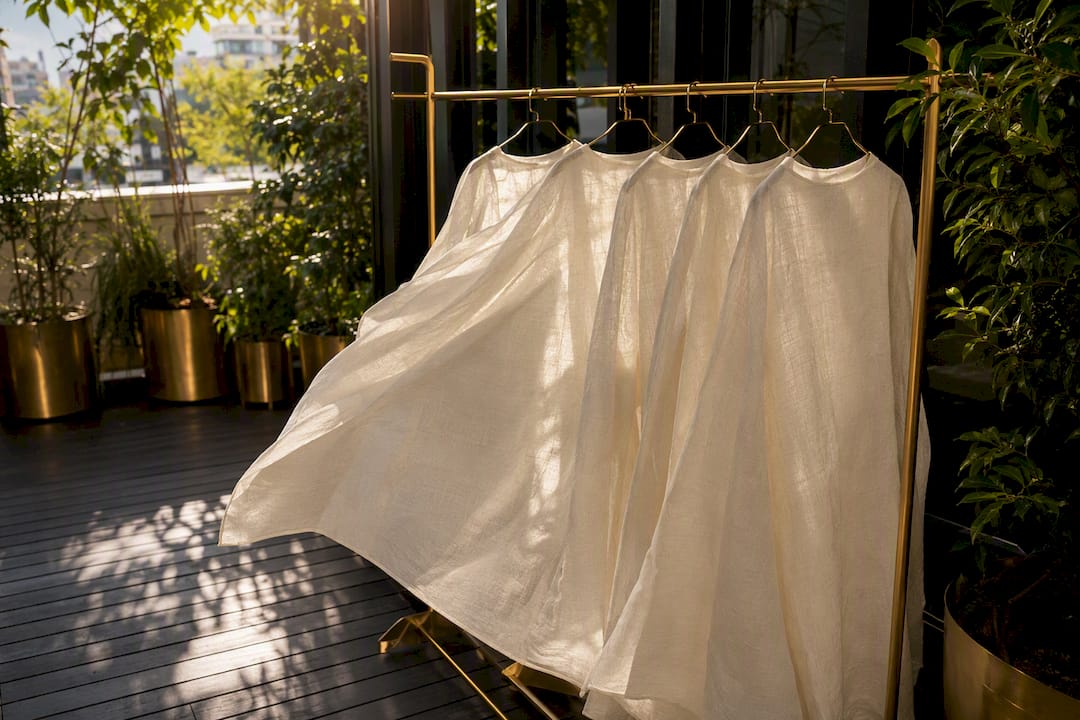
Cotton voile and lightweight poplin come next. Voile's open, sheer weave suits blouses and summer dresses; poplin's tighter plain weave gives more structure for shirts while staying breathable. Lightweight silk (habotai or china silk) adds drape and a cooling hand for special-occasion pieces, though it demands gentler handling. Modal and viscose, both derived from wood pulp, offer a silky feel with better moisture absorption than most synthetics, working well for linings and draped tops. Chambray splits the difference between denim's look and a lighter weight, ideal for summer button-downs. Lightweight technical blends (cotton with a touch of elastane, or moisture-wicking polyester weaves) show up in activewear and travel clothing where quick-dry matters more than natural fiber purity.
Sewing these fabrics well means respecting how they move:
- Cut with weights, not pins, on slippery fabrics like silk and viscose to avoid shifting during layout.
- Use a sharp, fine needle (size 60/8 or 70/10) to avoid snagging loose weaves.
- Stabilize slippery fabric with tissue paper or spray starch before cutting.
- Finish seams with French seams or a narrow zigzag since linen and voile fray easily.
Pre-wash everything before cutting. Linen and cotton can shrink 3 to 5% on the first wash, and skipping this step means a garment that no longer fits after laundering. Iron linen while still slightly damp for the crispest results, and hang cotton voile rather than folding it to avoid crease lines that are hard to press out.
Pro Tip: Choose lighter colors and lower grammage fabrics for maximum airflow. White and pale linen at 150 gsm reflects heat and breathes better than the same fiber dyed dark at 200 gsm. Weight matters as much as color when you're building for real heat.
Spring and Autumn Fabrics for Changeable Weather
Mid-season sewing isn't about picking a "medium" fabric. It's about choosing the right grammage and weave of a fiber you already trust, then layering smart.
Cotton-linen blends split the difference between crispness and breathability, working well as a single layer on a mild day or under a jacket on a cooler one. Chambray in a slightly heavier weight than summer's version handles both a solo shirt and a layering piece. Light flannel brings a brushed surface that traps a bit more warmth without the bulk of true winter wool. Fine merino wool, prized for thermoregulating comfort across mid-season and winter projects, works beautifully as a base layer that won't overheat you the moment the sun comes out. Lightweight gabardine, with its tight twill weave, resists wind and light rain while staying soft enough for jackets and trousers.
- For layering without bulk, pair a breathable cotton or merino base with a light wool or gabardine outer piece.
- Choose the same fiber in two weights rather than switching families entirely. A cotton-linen shirt at 130 gsm and a cotton-linen jacket at 220 gsm coordinate better than mixing unrelated fibers.
- Reserve stiffer fabrics for outer layers so inner pieces stay soft against skin.
This grammage-first approach is exactly what fabric retailers recommend when building a mid-season wardrobe: buy chambray, a mid-weight twill, and a light flannel from the same color family, and you've built a capsule that transitions across six weeks of unpredictable weather instead of three.
Pro Tip: Spring sewing should prioritize quick-drying breathability since spring showers are common; autumn sewing should lean toward slightly heavier weaves that resist wind. Same fiber family, different grammage, different season.
Typical projects: a lightweight jacket in gabardine, a chambray shirt with a hidden button placket, or a transitional dress in a cotton-linen blend that takes a cardigan well. Handle these fabrics gently when pressing; flannel scorches easily, so use a press cloth and moderate heat.
Winter Fabrics Built for Warmth and Structure
Wool worsted and woven wool anchor most winter wardrobes because the fiber's natural crimp traps insulating air pockets, a property merino and other wools handle differently depending on weight and finish. Flannel, a brushed woven fabric, adds a soft surface layer that increases perceived warmth even at moderate grammage. Tweed brings texture and structure for outerwear, historically valued for its wind resistance as much as its look. Boiled wool undergoes a felting process that shrinks and thickens the fiber, producing a dense fabric that doesn't fray and holds a coat's shape without lining. Fleece and polar fabrics, both synthetic knits, trap warm air efficiently at a fraction of wool's weight, making them practical for base and mid-layers. Insulated laminates, which sandwich a thin insulating layer between two fabric faces, show up in technical outerwear where warmth-to-weight ratio matters most.
Layering in winter means thinking in three parts: a breathable base layer close to skin, an insulating mid-layer that traps air, and a protective or structured outer layer. This is the same principle technical outerwear brands rely on: base layer for moisture management, mid-layer for warmth, shell for wind and water resistance. Leave a small air gap between layers rather than sizing everything skin-tight; that trapped air is doing real insulating work.
- Use a larger needle (size 90/14 or 100/16) for thick wool and boiled wool to avoid skipped stitches.
- Increase seam allowances slightly on bulky fabrics so you have room to grade and press seams flat.
- Press wool with steam and a press cloth, never dry heat directly on the fiber, to avoid shine marks.
Care matters more with wool than almost any other category. Hand wash or use a wool cycle with cold water, lay flat to dry, and store with cedar blocks to deter moths. Pilling happens fastest on loosely spun wools rubbed against friction points like bag straps or coat cuffs, so a fabric shaver becomes a genuine wardrobe tool rather than an afterthought. For waterproof or weather-resistant winter pieces, look for a DWR (durable water repellent) finish or a laminated membrane, both of which need occasional reproofing to keep performing as detergent buildup and softeners degrade these coatings over time.
Comparing Summer, Mid-Season, and Winter Fabrics at a Glance
| Dimension | Summer | Mid-Season | Winter |
|---|---|---|---|
| Breathability | High: open weaves, hygroscopic fibers | Moderate: balanced weave density | Lower priority: insulation takes over |
| Insulating power | Minimal by design | Light to moderate, layer-dependent | High: crimped fibers, brushed surfaces |
| Weight/drape | Light, floaty (90 to 150 gsm) | Medium (150 to 250 gsm) | Heavy, structured (250 gsm and up) |
| Care considerations | Pre-wash, gentle iron, air dry | Moderate care, watch flannel scorching | Hand wash wool, avoid dryer heat |
| Typical uses | Shirts, dresses, linings | Jackets, layering shirts, transitional dresses | Coats, outerwear, structured layers |
Sewing Technique That Saves Your Fabric (and Your Sanity)
Every fiber has a failure point, and most of it traces back to skipping prep work.
- Pre-wash before cutting. Wash linen and cotton the way you plan to launder the finished garment, then measure a marked square before and after to calculate actual shrinkage. Denim can shrink up to 3% on the first wash even when labeled "pre-shrunk," so don't skip this step just because the bolt says otherwise.
- Match needle to fiber. Use a universal or ballpoint needle for cotton and linen, a sharp needle for denim, and a larger 90/14 to 100/16 needle for wool and boiled wool.
- Choose seam finishes by fray risk. French seams suit fraying linen and voile; a serged or zigzag finish works faster on cotton and denim; bound seams add a tailored look to wool coats.
- Reduce hem bulk on heavy fabrics by grading seam allowances in steps rather than trimming them all to one width.
When fabric slips under the needle, switch to a walking foot or add tissue paper beneath the layers. When it puckers, loosen the tension slightly and test on a scrap first. When it stretches along the bias, stay-stitch the edge before you handle the piece further.
Pro Tip: *Keep a small notebook of shrinkage percentages by fabric type.
Pro Tip: Cut wool and heavy fabrics with a rotary cutter and a straight edge instead of scissors. It's faster and produces cleaner lines on fabric that shifts easily under shears.
The Science Behind Breathability, Explained Simply
Breathability is really two different jobs: letting water vapor escape (transpiration) while sometimes also blocking liquid water from getting in (rain protection). A fabric can be one, both, or neither, and the specific mechanism a fabric uses determines how well it performs and how much upkeep it needs.
Three main technologies handle this job:
| Technology | Principle | Strengths | Limits |
|---|---|---|---|
| Hydrophilic fibers | Fiber absorbs and releases moisture (cotton, wool, linen) | Comfortable, natural, no maintenance needed | Slower to dry once saturated |
| Microporous membranes | Tiny pores let vapor out, block liquid drops | Genuine rain protection with breathability | Needs reproofing, can clog over time |
| Technical weaves | Weave structure and finish control airflow | Durable, workwear-friendly | Performance varies by finish, not just fiber |
Fiber choice alone doesn't determine breathability. Weave structure and finishing treatments often change how air moves through fabric more than the raw material does. A tightly woven synthetic can breathe worse than a natural fiber, and a loosely woven natural fiber can still trap heat if the finish seals the surface.
For everyday clothing, hydrophilic fibers like cotton and linen usually deliver enough breathability without extra cost or care. Reserve membrane technology for genuine rain or wind exposure, since those laminates need mild detergent, no fabric softener, and occasional reproofing to keep working as designed.
Why Spring and Autumn Deserve Separate Fabric Plans
Lumping spring and autumn together under "mid-season" glosses over a real difference: spring weather trends warmer and wetter, autumn trends cooler and drier in most temperate climates.
Spring sewing should prioritize quick-drying, breathable fabrics that handle sudden showers without staying damp against skin. Cotton-linen blends and lightweight gabardine both dry fast and shed light rain without feeling clammy. Look for a slightly open weave that still resists wind, since spring breezes can undercut a fabric's warmth even when the sun is out.
Autumn calls for a different bias: slightly heavier grammage and tighter weaves that trap warmth as daylight shortens and temperatures drop steadily rather than swinging widely. A light flannel or mid-weight twill in a 200 to 240 gsm range suits autumn better than the 150 to 180 gsm fabrics that felt right in April. Chambray shifts from a standalone shirt fabric in spring to a layering piece under a light jacket by October.
The practical takeaway: buy two grammages of your go-to mid-season fiber, a lighter one for spring's damp mildness and a heavier one for autumn's steady chill rather than treating one fabric weight as good for both.
How to Layer Fabrics for Transitional Weather
Layering works best when each piece has a distinct job rather than three shirts stacked for warmth alone. A breathable base (cotton or fine merino) manages moisture against skin. A light insulating mid-layer (flannel, light wool knit, or a thin quilted piece) traps warmth without bulk. An outer layer (lightweight gabardine or a wind-resistant weave) blocks air movement and light rain.
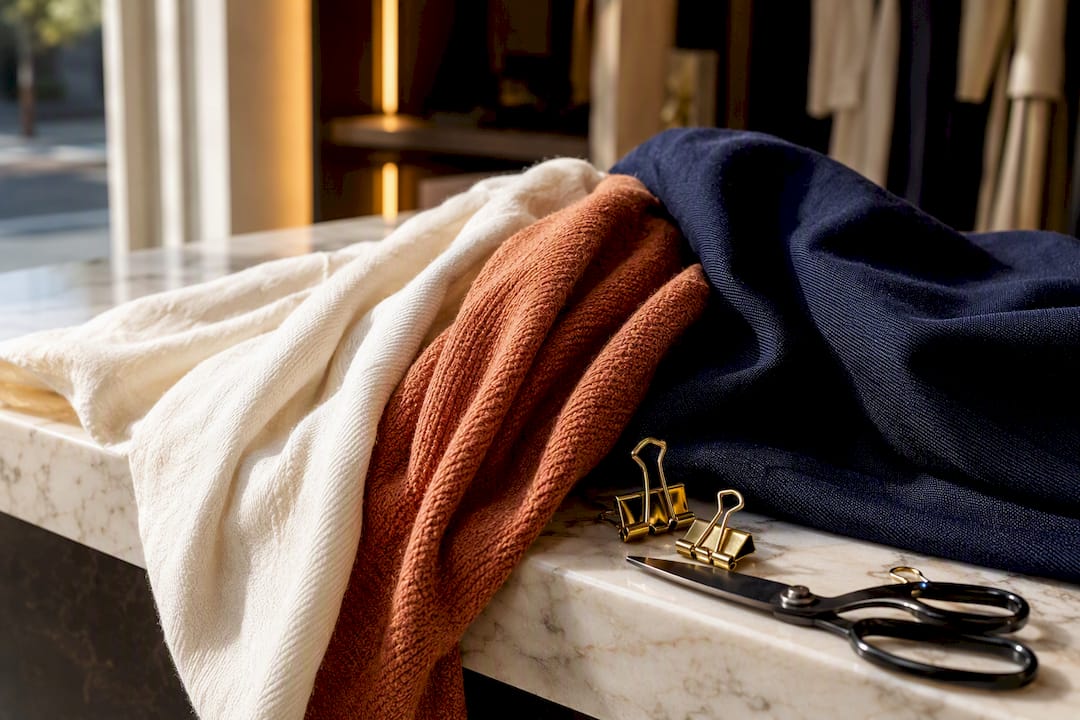
Mixing fabric types matters as much as mixing weights. Pairing a soft cotton-linen shirt under a structured wool blazer works because the blazer's tighter weave protects the looser one beneath it from wind, while the shirt's breathability keeps you from overheating once you step indoors. Avoid stacking two loosely woven fabrics together; you'll trap moisture without gaining meaningful warmth.
Keep a small air gap between layers rather than sizing everything snugly. That trapped air layer is doing genuine insulating work, and it's the same principle behind why a slightly looser cardigan often feels warmer than a tight one in the same wool.
Waterproof and Weather-Resistant Fabric Options
Rainy and variable seasons call for fabrics that block liquid water without turning a garment into a sauna. A DWR (durable water repellent) finish applied to a tightly woven fabric causes water to bead and roll off rather than soak in, and it works well on lightweight jackets and outerwear shells. Microporous membrane laminates go a step further, physically blocking rain drops while still letting vapor escape, which makes them the right call for genuine downpour conditions rather than the occasional drizzle.
Waxed cotton offers a heritage alternative: the wax coating repels water and ages into a patina, though it needs periodic rewaxing to keep performing. Tightly woven gabardine, even without a special finish, sheds light rain reasonably well thanks to its dense twill structure.
Whatever finish you choose, maintenance determines how long it lasts. Aggressive detergents and fabric softeners strip DWR coatings faster than normal wear does, so mild detergent and air drying preserve performance far longer than a standard hot wash cycle.
Fabric Thickness and Weave: The Overlooked Variable
Grammage (weight per square meter) tells you more about a fabric's seasonal fit than its fiber name alone. A 100% cotton poplin at 120 gsm behaves like a summer fabric; the same cotton woven at 300 gsm behaves like a winter twill.
Weave structure changes performance just as much. Plain weave (over-under, over-under) creates the most open structure and generally breathes best. Twill weave, with its diagonal rib, adds durability and a denser hand suited to mid-season and winter garments. Satin weave produces a smooth, lustrous surface with less air permeability, useful for linings and eveningwear rather than everyday breathability.
As a rough seasonal guide: summer fabrics generally sit under 150 gsm with open plain or loose weaves. Mid-season fabrics fall in the 150 to 250 gsm range with plain or twill weaves. Winter fabrics run 250 gsm and up, often in twill, herringbone, or felted (boiled) construction. Checking both numbers, weight and weave, before buying prevents the common mistake of choosing a fiber name without confirming the version actually suits your season.
Fabric Handling Tips by Season and Fiber
Each fiber shifts under the needle differently depending on the season's typical grammage, so quick handling reminders per fiber save real frustration.
Linen at summer weight frays fast and shifts on the cutting table, so weight it down rather than pinning, and finish seams promptly before edges unravel. Cotton at any weight behaves predictably, though heavier autumn and winter cottons need a slightly larger needle to avoid skipped stitches. Denim resists stretching but can shift along the bias when cut for lighter mid-season chambray versions, so stay-stitch curved edges immediately after cutting. Wool at winter weight compresses under pins, leaving visible holes, so use pattern weights and chalk instead. Silk and other slippery mid-weight fabrics benefit from spray starch before cutting, regardless of season, since the added stiffness prevents shifting without altering drape once washed out.
Applying These Fabric Rules to Your Own Wardrobe
Building a seasonal capsule usually starts with picking three wearable pieces per season using the four rules above: one breathable piece, one mid-weight layering piece, and one structured outer piece. That's enough variety to mix and match for weeks without buying a single unnecessary yard of fabric.
Matching fabric to season gets easier once you can see your existing wardrobe clearly, which is where a tool like Mytenue genuinely helps. It analyzes what's already in your closet and suggests seasonal combinations based on fabric weight and function, not just color.
Frequently Asked Questions
What fabric is best for hot, humid summer weather? Linen ranks among the top choices because its long fibers wick moisture and release it quickly, keeping the fabric from feeling damp against skin even in humidity.
Is wool too warm for spring? Not if you choose the right weight. Fine merino wool works well in spring because it's thermoregulating rather than simply insulating, meaning it adjusts to body temperature instead of just trapping heat.
How do I know if a fabric is breathable before buying it? Check the fiber content for natural or hydrophilic materials, feel whether the weave has visible openness, and ask if any finish has been applied that might seal the surface and reduce airflow.
What fabric should I use for a baby's winter layer? Choose an OEKO-TEX Standard 100 certified wool or cotton blend to limit exposure to harmful substances on sensitive skin.
Can I make a waterproof jacket breathable at the same time? Yes, through a microporous membrane or a DWR finish on a tightly woven shell fabric, though both require regular maintenance with mild detergent to keep performing over time.
What's the biggest mistake sewists make with mid-season fabrics? Buying entirely different fiber families for spring and autumn instead of the same fiber in two grammages, which wastes both money and closet space when one adjustable wardrobe plan would work better.
Sources
- Qu’est ce qu’un Tissu Respirant ? | Blog Würth Modyf
- Quelle laine choisir selon la saison ? Guide hiver, été, bébé | Mille et Un Tissus
- Tissu respirant : définition, exemples, matières, technologie