
Mid-season dressing works when you use a three-layer formula: base, mid layer, light outer. That's it. Get those three right and you can handle a cool morning that turns into a warmer afternoon without changing clothes or freezing at the bus stop.
Here are two combos you can copy today:
- Casual: cotton tee (base), fine merino cardigan (mid), denim jacket (outer), finished with a canvas tote.
- Smart-casual: silk blouse (base), lightweight wool blazer (mid/outer combo), trench over the shoulder for later, finished with a leather crossbody.
One more thing before you start layering: stick to natural fibers. Cotton, linen, merino, and silk breathe and regulate heat far better than heavy synthetics, which is the whole point of dressing for weather that can't make up its mind.
Key Takeaways
Mid-season dressing succeeds when you combine a breathable base, a flexible mid layer, and a packable outer layer instead of relying on one heavy piece.
| Point | Details |
|---|---|
| Use the three-layer formula | Combine base, mid layer, and light outer to handle temperature swings without bulk. |
| Stock the core ten pieces | A trench, merino cardigan, denim surchemise, blazer, and midi skirt cover most situations. |
| Choose natural fibers | Cotton, linen, merino, and silk regulate temperature better than heavy synthetics. |
| Copy a formula, then adjust | Start from one of the five outfit formulas and swap one piece for warmer or cooler days. |
| Let Mytenue handle the matching | Mytenue's AI applies this same layering logic to your digitized wardrobe and the day's weather. |
Table of Contents
- How to Layer Effectively for Any Mid-Season Day
- 10 Key Pieces Every Mid-Season Wardrobe Needs
- Which Fabrics Actually Work for Variable Temperatures?
- Choosing the Right Outerwear for Mid-Season Conditions
- Shoes and Accessories for Shifting Weather
- Five Outfit Formulas You Can Copy Today
- Practical Styling Tips and Common Mistakes
- Why This Method Works
- Sources
How to Layer Effectively for Any Mid-Season Day
Layering isn't about piling on clothes. It's a system, and each piece has one job. The base sits against your skin and manages moisture. The mid layer traps warmth without adding bulk. The outer layer blocks wind and light rain. Fashion outlets consistently point to layering as the primary technique for adapting to swinging temperatures, and the reason is simple: one heavy coat can't flex the way three thin pieces can.
Here's the method broken into steps:
- Start with a breathable base, fitted but not tight.
- Add a mid layer that's thin enough to move in. A fine knit or lightweight zip cardigan works better than a chunky sweater.
- Choose an outer layer you can remove and carry easily. If it doesn't fold into a bag, it's too heavy for the season.
- Check proportions. If your base and mid layer are both loose, tighten the outer layer, or vice versa. Never stack three loose pieces at once.
Pro Tip: Keep one layer you can lose at lunch. If your outer piece works as a standalone jacket, you've built in flexibility without planning for it.
10 Key Pieces Every Mid-Season Wardrobe Needs
Editors keep coming back to the same short list because it works. Fashion coverage consistently flags trench coats, lightweight knits, denim surchemises, blazers, and midi skirts as the pieces that carry a wardrobe through shifting weather.
- Trench coat: water-resistant, structured, works over almost anything.
- Fine merino cardigan: warmth without bulk.
- Denim surchemise: a hybrid layer that works as a mid or light outer piece.
- Lightweight wool blazer: instant polish over a tee or blouse.
- Midi skirt: pairs with boots or sneakers, transitions season to season.
- Straight jeans: the anchor piece for almost every formula below.
- Silk blouse: breathable base that photographs well under a blazer.
- Ankle boots: the workhorse shoe of the season.
- White sneakers: dress down any smart-casual look.
- Compact scarf: the fastest warmth fix in your bag.
For fit, prioritize pieces cut close enough to layer under a coat but roomy enough to layer over a knit. Spend more on the trench and the blazer since they anchor the most outfits; save on basics like tees and jeans. A full breakdown of these core pieces lives in this capsule wardrobe guide.
Which Fabrics Actually Work for Variable Temperatures?
Cotton breathes and softens with wear. Linen resists heat buildup but wrinkles fast, so save it for milder days. Merino wool regulates temperature in both directions, warm when it's cool, cool when it warms up, which is why it shows up in nearly every mid-season styling guide. Silk adds a light, breathable base layer under structured pieces.
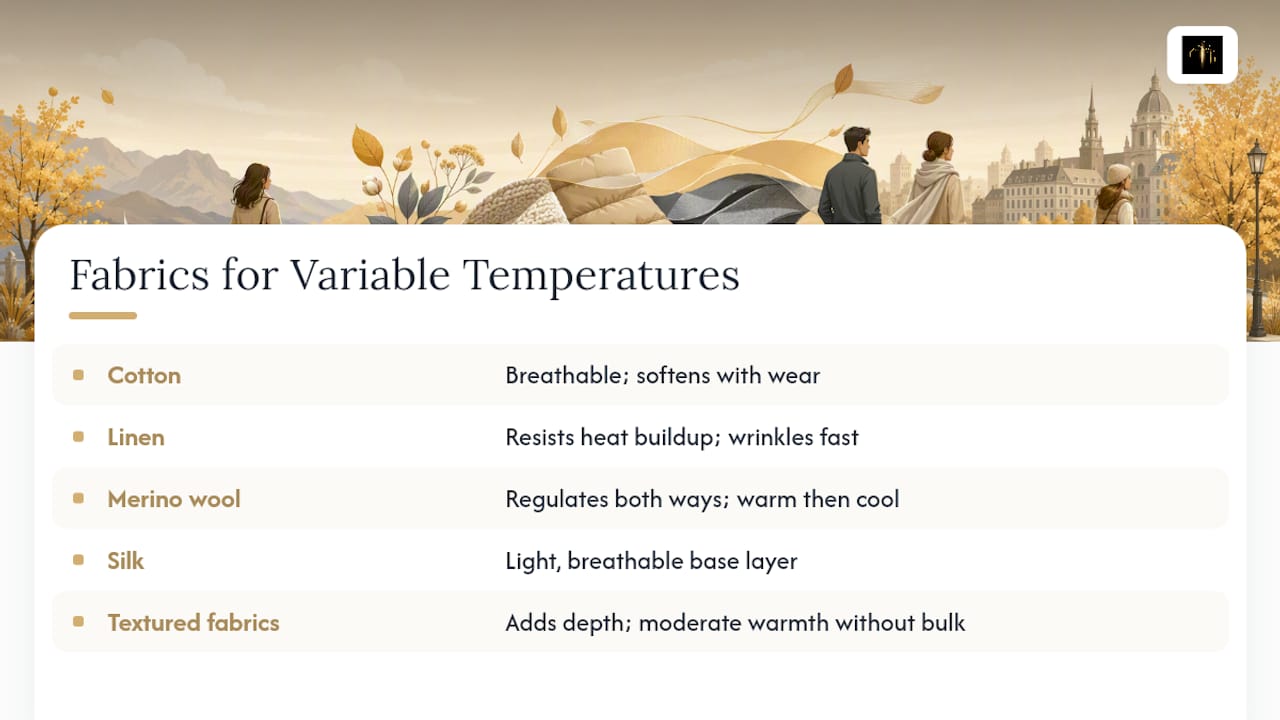
Textured fabrics like tweed and corduroy also earn their place. They add visual depth and moderate warmth without bulk, especially in blazers and trousers.
Avoid heavy polyester blends. They trap heat and don't breathe, so you overheat indoors and still feel cold outside. Wash natural fibers on cooler cycles and air-dry knitwear flat. This guide on fabrics by season covers care details piece by piece.
Choosing the Right Outerwear for Mid-Season Conditions
A trench handles light rain and dresses up a casual outfit fast. A denim jacket suits weekend errands but offers no wind protection. Lightweight wool works best for cooler, dry days when you need warmth without a heavy coat. A quilted vest is the underrated pick: it layers over a knit without restricting your arms, and it packs down small.
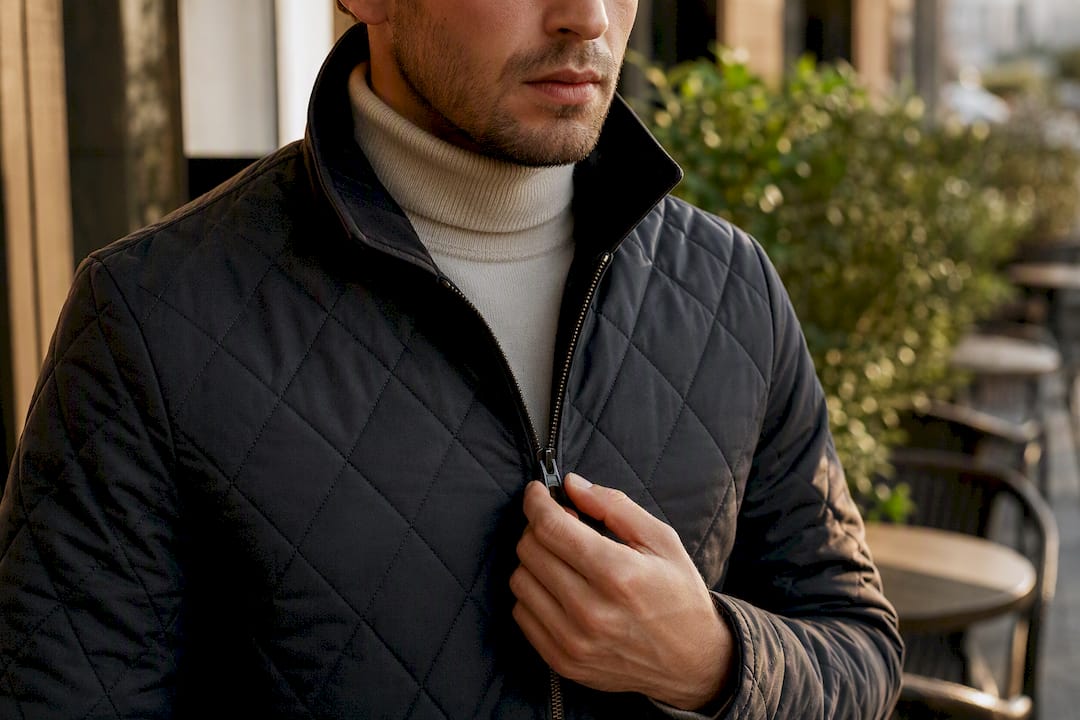
Practical hybrid pieces like the surchemise and lightweight trench solve the packability problem best, since both fold flat and work as either a mid or outer layer depending on temperature. If rain is likely, check outfit ideas built specifically for wet mid-season days.
Shoes and Accessories for Shifting Weather
Ankle boots handle both dry pavement and light drizzle, making them the most reliable mid-season shoe. Moccasins or loafers work on milder, dry days. White sneakers cover everything in between.
Accessories carry more weight than people expect. Vogue France repeatedly flags scarves, compact umbrellas, and structured bags as the details that finish a mid-season look.
- A scarf adds 10 degrees of comfort without changing your outfit.
- A compact umbrella fits any bag and saves a trench from a soaking.
- A structured leather bag adds polish that jeans and sneakers alone can't. If boots are your go-to, this guide to styling combat boots has useful pairing ideas.
Five Outfit Formulas You Can Copy Today
- Casual: cotton tee, merino cardigan, denim jacket, white sneakers, canvas tote. On colder days, swap the cardigan for a thicker knit.
- Commute: silk blouse, thin sweater, trench, ankle boots, structured bag. Add a scarf if temperatures drop below 50°F.
- Office smart-casual: cotton shirt, wool blazer, straight jeans, loafers, leather belt. Layer a fine knit underneath on cooler mornings.
- Weekend chic: knit top, denim surchemise, midi skirt, ankle boots, compact scarf. Trade the skirt for jeans if it's windy.
- Date night: silk top, lightweight wool coat, tailored trousers, heeled boots, small clutch. For rooftop dinners, add a thin cardigan underneath.
These five cover most weekly situations, and swapping pieces within a set rather than buying new ones is exactly how a small wardrobe stretches across the season.
Practical Styling Tips and Common Mistakes
Over-bulking is the most common error: three thick layers add weight, not warmth. Swap one for something thinner instead. Mixing incompatible fabrics, like a stiff cotton shirt under a rigid blazer, creates a boxy silhouette. Pick one structured piece and keep the rest fluid. Ignoring proportions (loose top, loose bottom) reads sloppy; balance one fitted piece against one relaxed one.
- Pack a scarf and a foldable outer layer for temperature swings.
- Belt an oversized coat to reset proportions instantly.
- Roll sleeves on a blazer or shirt to lighten a look by early afternoon.
Pro Tip: Keep one spare pair of shoes at your desk or in your bag. Swapping boots for sneakers is the fastest way to reset an outfit for evening plans.
Why This Method Works
The three-layer formula holds up because it mirrors how professional stylists already build looks. Mytenue's AI applies the same logic: it reads the day's weather, checks your digitized wardrobe, and suggests base, mid, and outer combinations automatically. Mixing existing pieces this way also cuts down on unnecessary buying, which keeps the approach practical and sustainable.
A Quick Take From Ahmed
The formula that gets the most mileage in my own closet is the commute outfit. A blouse, a thin sweater, and a trench solve almost every temperature between 45°F and 65°F. Try adjusting one of the five formulas above with pieces you already own before buying anything new.
— Ahmed
How Mytenue Turns These Formulas Into Daily Outfits
Building five solid formulas is one thing. Deciding which one fits Wednesday's weather, at 7am, half awake, is another. Mytenue checks the forecast and your digitized wardrobe, then suggests a complete outfit built on the same base, mid, and outer logic covered above, no manual matching required.

The app also generates virtual try-on previews so you can see a combination on your own avatar before committing to it, and it flags pieces already in your closet that can replace a planned purchase. If you want smart-casual combinations ready to test against your own wardrobe, that's a fast way to start. Mytenue offers a free tier, so you can load a few key pieces and try the AI on one of the five formulas above. Start at Mytenue and see what it builds from your first trench or cardigan.
Sources
- Comment s’habiller pour la mi-saison : les bonnes pièces et les bonnes associations
- 10 pièces idéales pour la mi-saison
- Comment adopter un look mi-saison sans tomber dans les clichés - Madame Dentelle