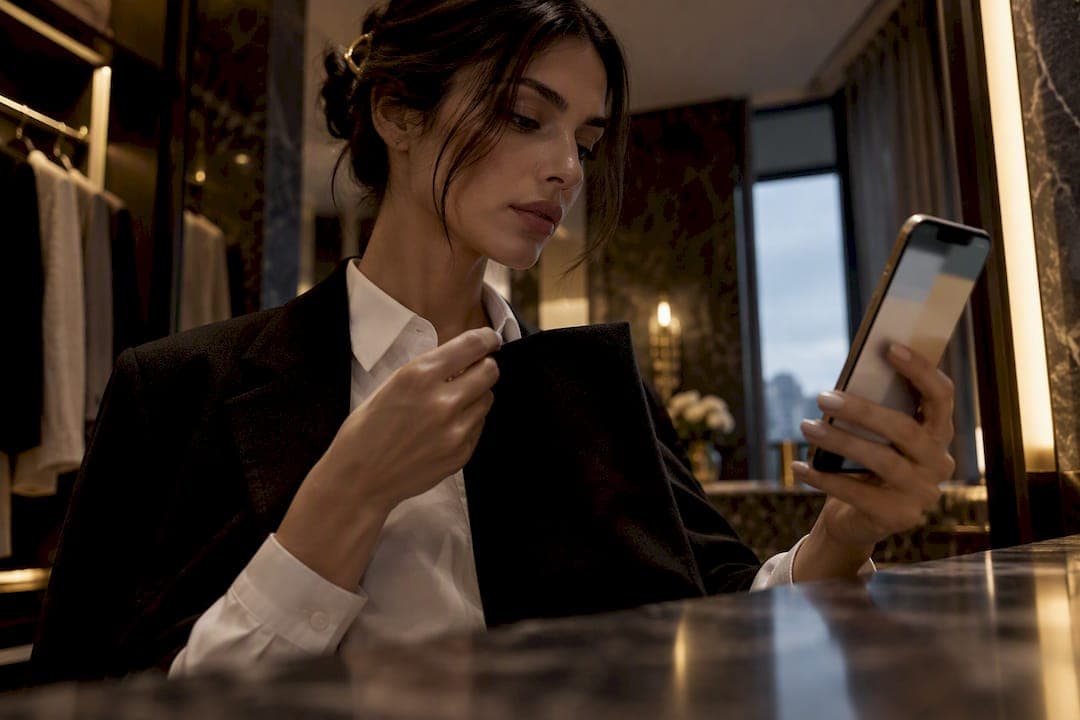
A meeting outfit needs to match three things: the dress-code tier (formal, business casual, or smart casual), your sector, and the seniority of who's in the room. Once you know the tier, an AI wardrobe assistant can generate outfit options straight from your closet in seconds. Pick your tier below, or open the app and let it do the sorting for you.
TL;DR:
- Dressing one tier higher than expected and wearing a removable blazer helps navigate sector and meeting purpose uncertainties.
- AI wardrobe tools generate three to five outfit options by analyzing your closet, matching context, weather, and occasion for optimal selections.
- For video calls, focus on a structured top in solid colors to avoid flickering patterns, and ensure your outfit aligns with the meeting's formality level.
- Decision fatigue around dressing can be reduced by prepping outfits the night before and scheduling them via wardrobe apps, saving mental energy.
- Formal attire, especially in finance and legal sectors, significantly influences perceptions of competence and effort during meetings.
Table of Contents
- What Are the Main Meeting Dress-Code Levels?
- What Outfit Formulas Work for Each Meeting Level?
- How Does an AI Wardrobe Assistant Build a Meeting Outfit?
- What's the 10-Minute Pre-Meeting Checklist?
- What Do AI-Generated Meeting Outfits Actually Look Like?
- Why Meeting Outfits Still Matter in an AI-Assisted Wardrobe
- Let Mytenue Build Your Meeting Outfit For You
- Sources
- FAQ
What Are the Main Meeting Dress-Code Levels?
Most meeting attire falls into three buckets, and French business etiquette guides confirm the level you choose should shift with sector and meeting purpose, not personal taste alone.
Formal / business formal means a tailored suit, a crisp button-down, and polished leather shoes. Think board reviews, client pitches, or anything in finance or law. Business casual relaxes the jacket requirement: chinos or a structured skirt, a blouse or knit polo, loafers instead of oxfords. Smart casual goes further still, dark denim or tailored joggers paired with a blazer or structured cardigan, clean sneakers or minimalist boots.
Sector changes everything here. Finance and legal teams skew formal even for internal check-ins. Tech companies often treat smart casual as the ceiling, even for client calls. Creative agencies frequently reward personality over polish, but a stray thread or scuffed sneaker still reads as careless in any of these settings.
A few sector-specific cues worth remembering:
- Client-facing meetings in any industry: dress one tier above your office norm.
- Internal standups or team syncs: match whatever your manager typically wears.
- Interviews or pitch meetings: lean formal even in casual-dress companies, since interview-specific guidance consistently favors sobriety over trend.
When you genuinely can't tell, two rules solve it. Dress one notch up from what you assume is expected, and bring a removable layer, a blazer or cardigan, so you can adjust in the elevator. Asking the meeting host directly also works better than guessing, and it removes the anxiety of showing up wrong.
What Outfit Formulas Work for Each Meeting Level?
Repeatable combinations beat overthinking. Build these from a small capsule wardrobe and you'll cover most weeks without new purchases.
Business formal, three go-to combos:
- Charcoal suit, white dress shirt, silk tie, black oxfords.
- Navy blazer, matching trousers, light blue shirt, brown leather derbies.
- Structured sheath dress, blazer, low pump, minimal gold jewelry.
Business casual and smart casual, four flexible combos:
- Tailored chinos, tucked knit polo, unstructured blazer, suede loafers.
- Midi skirt, fitted turtleneck, cropped blazer, ankle boots.
- Dark jeans (no rips), button-down, cardigan, clean white sneakers.
- Tailored joggers, structured tee, moto-inspired jacket, chunky loafers.
The blazer is your pivot piece. Swap it in over a casual base and the whole outfit reads more client-ready in seconds, a shortcut backed by style research on how a single structured piece elevates casual clothing. Stick to matte or textured fabrics over anything shiny, and if the meeting is on video, avoid thin stripes or houndstooth. They create a flickering moiré effect on camera.
Pro Tip: Add one accent color, a burgundy tie, a jewel-toned blouse, or colored socks, but keep it to a single item. Two accent pieces start to compete for attention on screen and in person.
How Does an AI Wardrobe Assistant Build a Meeting Outfit?
The process is more mechanical than people expect, and that's the appeal. You give the tool context, it filters your existing wardrobe against that context, and it returns a short list of outfits instead of an overwhelming closet.
Here's the sequence Mytenue and similar wardrobe apps follow:
- Input the meeting context: formal, casual, client-facing, video, and the day's weather.
- The AI cross-references your digitized wardrobe for fit, color harmony, and fabric appropriateness.
- It returns three to five outfit options, pulling combinations you may not have considered from pieces you already own.
- You vet each option: check fit and structure, confirm shoes are clean, and if it's a video call, preview how the top half frames on camera.
- Save or schedule the pick to a calendar so the decision doesn't repeat itself next week.
Mytenue's specific advantage here comes from three features working together: wardrobe digitization that catalogs what you own, virtual try-on that shows the combination on your own avatar, and weather-adapted suggestions that rule out anything impractical for the forecast, capabilities the app lists directly on its outfit assistant page.
Why bother with any of this instead of grabbing the usual suit? Because the outfit itself is doing communication work before you say a word. Research on workplace attire links formal dress to higher perceived competence, and separate experimental findings show professionally dressed individuals get judged more favorably on effort and capability than casually or provocatively dressed peers in the same room.
What's the 10-Minute Pre-Meeting Checklist?
Run this the night before or right before you walk in:
- Fit and movement test: sit down, reach overhead, check nothing pulls or gaps.
- Shoes: scuff-free, laces even, no visible salt stains or scratches.
- Fabric check: no wrinkles, no visible lint, no deodorant marks on dark fabric.
- Scent: light or none. Strong fragrance reads as distracting in small conference rooms.
- Video-specific: collar sits naturally in frame, no fine patterns, check your lighting and background before the call starts.
Keep a small emergency kit at your desk: a lint roller, a shoe brush, a travel steamer, and a stain pen. Ten minutes with these tools fixes ninety percent of last-minute wardrobe problems.
What Do AI-Generated Meeting Outfits Actually Look Like?
Concrete examples make the workflow click faster than any description of the process. Say you input "client pitch, formal, rainy, finance sector" into a wardrobe app. It should surface a navy suit paired with a white shirt and your driest pair of leather shoes, skipping suede entirely because of the weather flag.

For "internal standup, business casual, video call, tech," expect the app to prioritize the top half: a structured knit or button-down in a solid color, paired with whatever bottoms you're comfortable in off-camera. The AI de-prioritizes pants entirely since the camera won't show them.
A "team offsite, smart casual, sunny" prompt shifts differently. Here the tool might suggest tailored joggers with a structured tee and loafers, pulling in a lighter color palette since outdoor lighting reads differently than a fluorescent conference room.
The pattern across all three: context changes the output completely, even when the wardrobe pool stays identical. That's the actual value of digitizing your closet into an app instead of scrolling through it manually. The same fifteen items produce different valid combinations depending on who's in the room, what the weather's doing, and whether anyone can see your shoes.
Why Meeting Outfits Still Matter in an AI-Assisted Wardrobe
Clothing communicates before you speak, and that hasn't changed just because software now helps you choose it. What has changed is how much mental energy you have to spend getting there. Every outfit decision you don't have to make from scratch is energy saved for the actual meeting.
Decision fatigue around dressing is real and largely avoidable, and most closets already contain better combinations than people default to under pressure. The habit worth adopting isn't complicated: pick tomorrow's outfit the night before, even loosely. It removes the one variable that turns a normal morning into a stressful one.

Let Mytenue Build Your Meeting Outfit For You
Some apps turn the outfit formulas above into an actual daily habit instead of a one-time read. They digitize your existing wardrobe, then use AI to match pieces by color, fabric, and occasion, so a "client pitch, formal" prompt returns real outfits pulled from clothes you already own, not a shopping list.
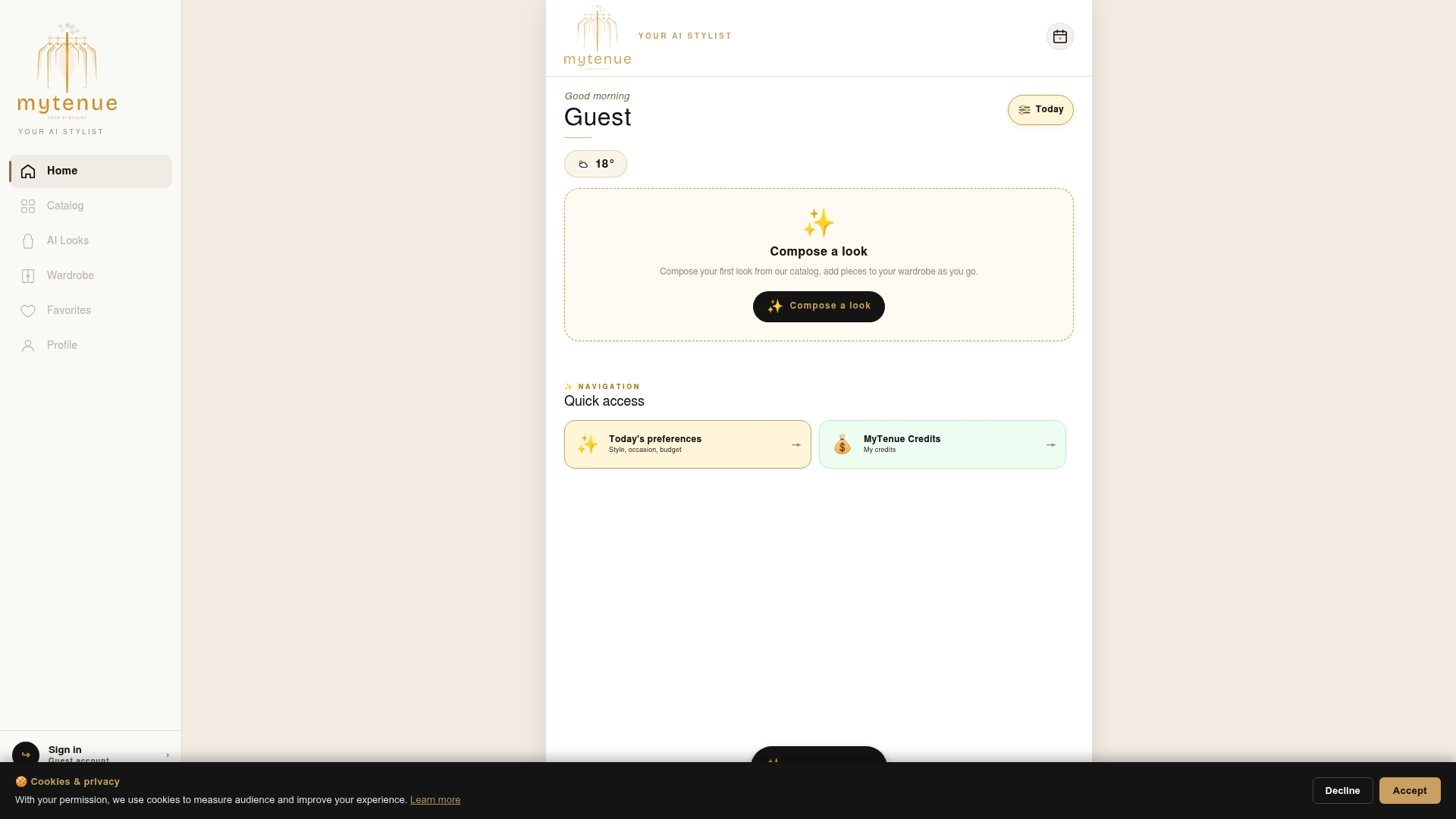
Three features matter most for meeting prep specifically: virtual try-on lets you preview a combination on your own avatar before committing to it, weather-adapted suggestions rule out anything impractical for the forecast, and calendar-based outfit planning lets you schedule Tuesday's pitch outfit on Sunday night instead of scrambling at 7 AM. The Free tier gets you started with core wardrobe digitization, and Basic, Premium, and Gold plans unlock deeper styling features as your needs grow.
Open the Mytenue app and digitize your closet before your next meeting. The outfit suggestions are ready in the time it takes to make coffee.
Sources
- French business etiquette — Talk in French
- Research on workplace attire and perceptions — TXST digital library
- Effects of outfit on observers' perceptions — PMC article
- Dress code in the company: reconcile comfort and image — Indice RH
FAQ
What Does "Tenue Réunion" Actually Mean?
It refers to the outfit you choose specifically for a meeting, formal or casual, rather than everyday work attire. The right choice depends on your dress-code tier, sector, and whether the meeting is client-facing or internal.
How Formal Should My Meeting Outfit Be?
When unsure, dress one notch above what you think is expected and bring a removable layer like a blazer. Sector guidance suggests finance and legal meetings skew formal, while tech and creative fields often accept business casual or smart casual.
Can AI Really Suggest Outfits From My Own Closet?
Yes. Apps like Mytenue digitize your wardrobe, then match items by color, fabric, and occasion to generate outfit options based on the meeting context you input. The Mytenue app offers this starting with a free tier, with Basic, Premium, and Gold plans for deeper styling features.
What Should I Wear on Camera for a Video Meeting?
Prioritize the top half since that's what the camera shows: a structured, solid-colored top works better than fine patterns, which can create a flickering moiré effect. Check your lighting and background before the call, since both affect how put-together the outfit reads on screen.
Does What I Wear Actually Affect How Competent I Seem?
Research indicates it does. Studies on workplace attire link formal dress to higher perceived competence, and separate findings show professionally dressed individuals get judged more favorably on effort than casually dressed peers in comparable settings.