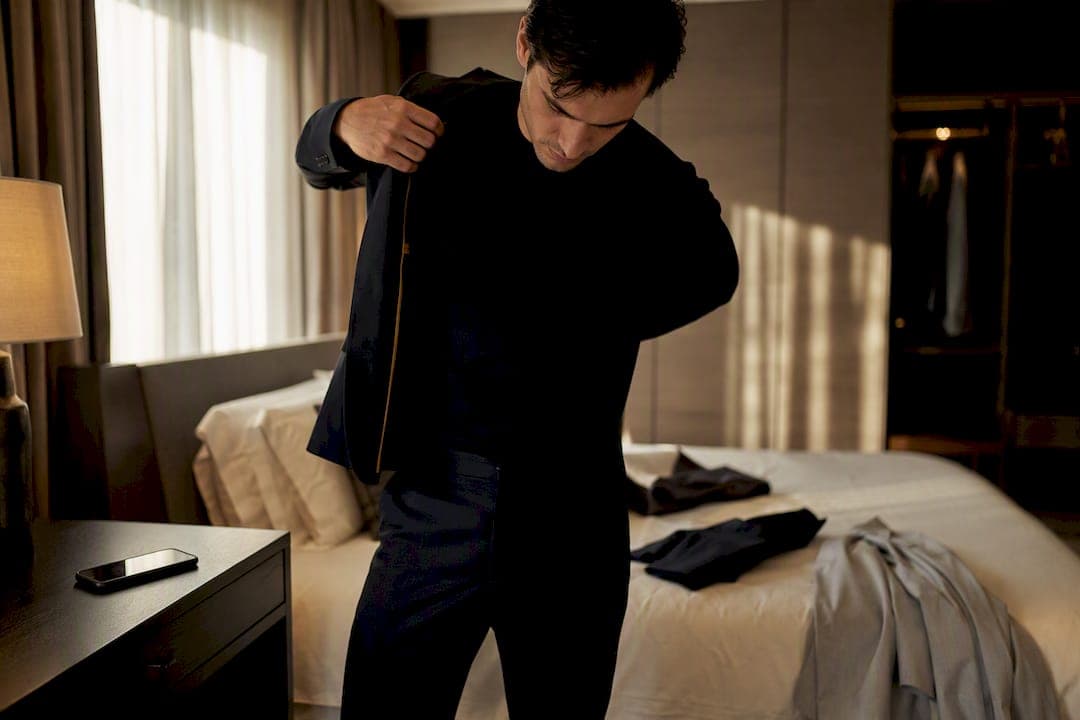
The fastest way to dress a person is to build the outfit around three pieces: one statement item, one grounding neutral, and one small styling moment that makes it feel finished. Skip the overthinking. Pick those three anchors, then let an AI stylist generate and preview real combinations from an actual wardrobe before anything gets worn.
Use this checklist right now:
- Statement piece: the item that sets the tone (a bold jacket, a bright shoe, a graphic top).
- Grounding neutral: a base color that lets the statement piece breathe (black trousers, a white shirt, tan denim).
- Styling moment: one intentional detail (a belt, a scarf, rolled sleeves, layered jewelry).
Once those three are chosen, digitize the wardrobe or upload a photo to an AI stylist and test the combination before committing.
Key Takeaways
Dressing a person quickly and well comes down to one repeatable formula (statement piece, neutral, styling moment) tested through an AI stylist before it hits real life.
| Point | Details |
|---|---|
| Use the three-part formula | Pick one statement piece, one grounding neutral, and one styling moment for every outfit. |
| Prepare quality photos first | Well-lit, full-body photos and clear garment shots produce far more accurate AI outfit suggestions. |
| Match clothes to real proportions | Dress the body's actual proportions, not a trend, using structure and neckline to create balance. |
| Build basics before statement pieces | Foundational neutrals and layering pieces make new statement items easier to style, not harder. |
| Try MyTenue for the full workflow | MyTenue digitizes a wardrobe and generates AI outfit suggestions with virtual try-on and calendar planning. |
Table of Contents
- How Do You Dress a Person Using an AI Stylist?
- What Is the Step-by-Step Process to Dress Someone With AI?
- What Outfit Formula Actually Makes Clothes Look Put Together?
- When Should You Use AI Styling Instead of Doing It Yourself?
- What Should You Check Before Uploading Photos to a Styling App?
- How Should You Dress Different Body Types?
- How Does Color Theory Improve What You Wear?
- How Do You Build a Versatile Wardrobe From Scratch?
- How Do You Measure Yourself for a Better Fit?
- How Do You Layer and Accessorize Without Overdoing It?
- What Are the Most Common Dressing Mistakes?
- Ready to Try the Full AI Styling Workflow?
- Frequently Asked Questions
- Sources
How Do You Dress a Person Using an AI Stylist?
An AI stylist works by scanning a digital wardrobe and generating outfit combinations based on occasion, weather, color, and fit, then previewing them on an avatar or photo. It replaces the mental math of "does this go with that" with a system that already knows what's in the closet.
Expect these core features from any serious AI stylist app:
- Virtual wardrobe: photograph or upload clothing items to build a digital closet.
- Occasion and weather matching: suggestions shift based on the event and forecast, not a generic template.
- Virtual try-on or avatar preview: see the outfit on a body shape before trying it on physically.
- Outfit calendar: plan looks in advance for a week, a trip, or a specific event.
- Budget-aware shopping suggestions: recommendations that account for what's missing versus what's already owned.
The recommendations themselves come from a mix of AI pattern matching and the data supplied: fabric type, color, fit preference, and past choices. For everyday dressing, the features that matter most tend to be virtual try-on (it catches mismatches instantly), the outfit calendar (it kills morning decision fatigue), and the ability to edit or swap a single suggested piece rather than starting over.
What Is the Step-by-Step Process to Dress Someone With AI?
Getting a usable outfit out of an AI stylist takes five steps, and skipping the first one is where most people get bad results.
- Prepare the inputs. Photograph each clothing item against a plain background in natural light, and take one full-body photo in fitted clothing for the avatar or try-on feature. Blurry or poorly lit images produce inaccurate garment mapping, since AI try-on accuracy depends heavily on input photo quality.
- Set preferences. Enter the occasion, the vibe (polished, casual, bold), a budget ceiling, and any fit constraints (no waistbands, prefers long sleeves, avoids certain colors).
- Generate options. Run the outfit suggestions, use the virtual try-on to preview how each look actually sits, and pull up two or three variations side by side rather than accepting the first result.
- Evaluate against the formula. Check each suggestion for a statement piece, a grounding neutral, and a styling moment. If one is missing, that's usually the outfit that looks flat in person.
- Finalize in real life. Try the physical pieces on, note anything that needs a quick tailoring fix, and save the approved look to an outfit calendar or packing list for later.
Pro Tip: Generate three outfit variations minimum before choosing. The first AI suggestion is rarely the best one. It's a starting point, not a verdict.
This mirrors how stylists have long built reliable daily looks by hand: a base of top and bottom, a third piece, shoes, then accessories and finishing details, a sequence that reduces decision fatigue whether a human or an algorithm is running it.
What Outfit Formula Actually Makes Clothes Look Put Together?
Editors keep coming back to the same three-part structure because it works regardless of personal style: one statement piece, one grounding neutral, and one intentional styling moment. This is the exact framework WhoWhatWear's 2026 outfit guide uses to explain why some outfits read as effortless and others read as try-hard.
Three quick sketches show how it plays out:
- A camel coat (statement) over a black turtleneck and trousers (neutral), finished with a red beret (styling moment).
- White sneakers (statement, if the rest is dressed up) with tailored gray pants and a plain tee (neutral), finished with a woven belt (styling moment).
- A printed midi skirt (statement) with a fitted white tank (neutral), finished with layered gold jewelry (styling moment).
Dressing well often comes down to picking a mood and committing to it. Try new colors, mix textures, and drop anything that doesn't feel like you, no matter how "correct" it looks on paper.
The formula works because it gives an AI stylist's output a clear pass/fail test. If a generated outfit has three statement pieces competing for attention, or zero styling moments, that's the signal to ask for another version instead of settling.
When Should You Use AI Styling Instead of Doing It Yourself?
AI styling earns its keep in a few specific situations, and knowing which ones saves both time and frustration.
It helps most when:
- Time is tight and there's no mental bandwidth to plan an outfit from scratch.
- A wardrobe refresh is overdue and old pairings feel stale.
- An online purchase is uncertain, since virtual try-on shows how a new piece might work with existing pieces before it ships.
- Travel or event planning requires multiple outfits mapped out in advance.
Skip or supplement AI suggestions when tailoring needs are highly custom, a workplace has a strict or nuanced dress code, or cultural dress conventions carry meaning an algorithm can't weigh. AI handles combination logic well; it can't feel how fabric moves or sits on a specific body, which is why a real try-on still matters before the outfit leaves the house.
What Should You Check Before Uploading Photos to a Styling App?
Before signing up for any AI stylist, a few practical details are worth confirming. Most serious apps in this category offer both mobile and web access with bilingual interfaces, so check that language and platform support match before committing.
Pricing typically splits into two tiers:
- Free tier: limited outfit generations, basic wardrobe digitization, capped try-on credits.
- Paid tier: full outfit calendar planning, expanded virtual try-on, and access to a premium catalog.
On privacy, wardrobe photos and body images are personal data, and it's worth checking any app's settings before uploading them, the same due diligence Google's privacy policy recommends for any service handling personal photos. Look specifically for the ability to delete uploaded images, clarity on whether processing happens locally or in the cloud, and an easy way to close an account and remove data entirely.
How Should You Dress Different Body Types?
Dressing well starts with understanding proportion, not with following rigid rules about what a "type" is allowed to wear. The goal is balance: drawing the eye where you want it and creating a silhouette that feels intentional rather than accidental.
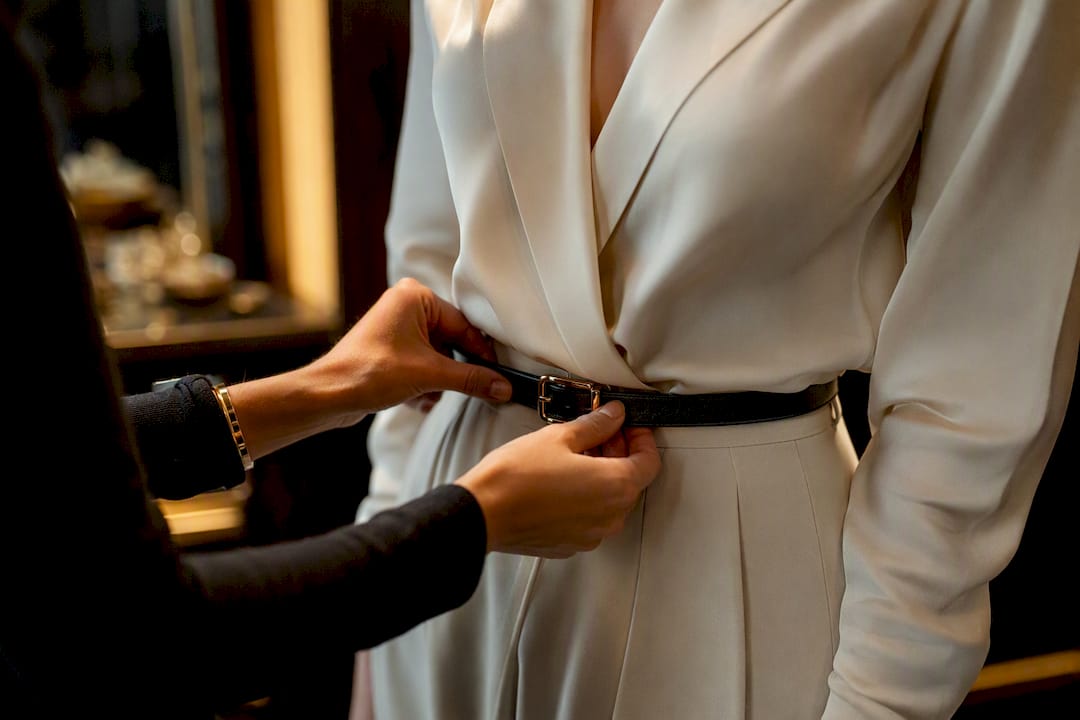
For a rectangular frame (similar measurements at bust, waist, and hips), a defined waist creates the curve the body doesn't naturally have. Belts, wrap dresses, and peplum tops do this work efficiently.
For a pear shape (hips wider than shoulders), balance comes from adding visual weight up top. Structured shoulders, statement sleeves, and boat necklines pull the eye upward.
For an apple shape (fuller through the midsection), an empire waistline or a V neckline elongates the torso without clinging to any one area.
For an hourglass shape (bust and hips roughly balanced with a defined waist), fitted silhouettes that follow the natural waistline tend to look more polished than boxy or oversized cuts.
None of this is about hiding a body. It's about understanding proportion the way a tailor does, which is exactly the kind of data point that helps an AI stylist generate better fits. When entering body measurements or preferences into a wardrobe app, more specific input produces more accurate outfit suggestions than vague sizing categories.
How Does Color Theory Improve What You Wear?
Color does more heavy lifting in an outfit than most people give it credit for. Complementary colors (opposite each other on the color wheel, like navy and rust) create contrast that reads as intentional. Analogous colors (next to each other, like teal and forest green) create a calmer, monochromatic-adjacent look that photographs well and feels cohesive without effort.
Personal coloring matters just as much as the wheel itself. Warm undertones (gold jewelry looks better than silver, veins appear more green than blue) tend to suit earthy tones: olive, rust, warm browns, and cream. Cool undertones (silver jewelry flatters more, veins read blue or purple) lean toward jewel tones, true white, and charcoal gray.
Neutrals still do the structural work in most outfits. Black, white, navy, camel, and gray form the grounding piece in the three-part styling formula, precisely because they let a statement color or pattern take center stage without competition. Vogue's guidance on personal style emphasizes experimenting with color and accessories rather than defaulting to safe neutrals every time, since a wardrobe with zero color risk tends to feel forgettable in photos and in person.
When uploading wardrobe items to an AI stylist, note the undertone of each piece if the app allows it. This single data point noticeably improves how well the suggested combinations actually work together.
How Do You Build a Versatile Wardrobe From Scratch?
Building a wardrobe that actually works starts with an audit, not a shopping trip. Before adding anything new, reassess what's already owned and separate it into three piles: worn regularly, worn occasionally, and never worn.
From there, the wardrobe grows in four stages:
- Foundational basics: well-fitting jeans or trousers, a white shirt, a plain tee, a versatile jacket. These are the pieces in nearly every outfit.
- Neutral layering pieces: a cardigan, a blazer, a coat in camel or black. These stretch the basics across seasons and occasions.
- Mid-tier versatile pieces: patterned shirts, a good pair of boots, a midi skirt. These add personality without demanding a whole new outfit around them.
- Statement pieces: the bold jacket, the printed dress, the unusual shoe. These come last, because they only shine against a solid foundation.
This staged approach also happens to be exactly what makes wardrobe digitization efficient. Digitizing a small, versatile wardrobe built this way gives an AI stylist far more usable combinations than a closet full of one-off statement pieces with nothing to pair them with. Start photographing basics first; the AI needs a solid base of neutrals before its outfit math starts producing anything wearable.
How Do You Measure Yourself for a Better Fit?
Fit affects how an outfit looks more than fabric quality or price ever will. Four measurements cover most fitting decisions: chest or bust, waist (at the narrowest point, not where pants sit), hips (at the widest point), and inseam for pants length.
A shirt that's too tight across the shoulders will never look intentional, regardless of styling. A pair of pants hemmed to break slightly at the shoe, rather than pooling at the ankle, instantly reads as more put together. These are tailoring details, not expensive ones.
When entering measurements into an AI stylist or trying virtual try-on, precise numbers beat generic size labels every time, since sizing varies wildly between brands. A size medium in one brand can fit like a small or a large in another. If a piece is close but not quite right, note whether the issue is length, width, or both. That's the difference between a five-minute tailoring fix (a hem) and a piece that should be returned entirely.
How Do You Layer and Accessorize Without Overdoing It?
Layering works best when each piece serves a visible purpose rather than just adding bulk. A general rule: three layers maximum for most outfits (base, mid, outer), with each one slightly looser than the layer beneath it so nothing binds or bunches.
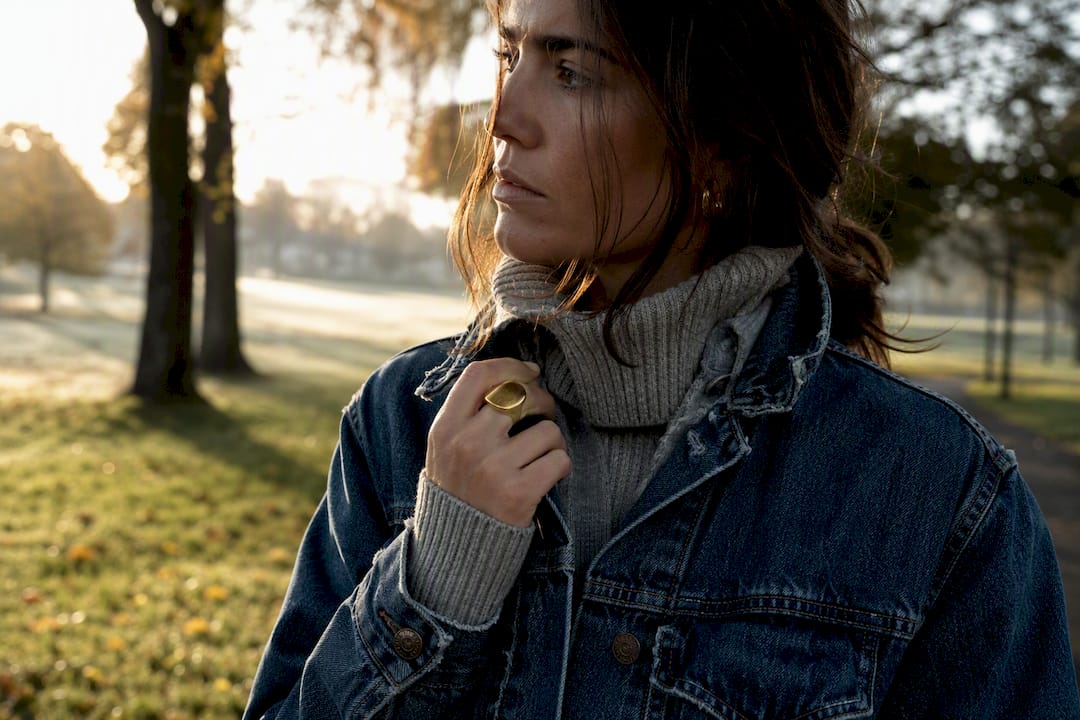
Accessorizing follows a similar restraint principle. One statement accessory, paired with one or two supporting pieces, tends to look more deliberate than five competing pieces at once. A bold necklace pairs best with simple earrings; a patterned scarf pairs best with plain jewelry. Let one piece lead.
Texture mixing adds depth without adding visual noise: a leather jacket over a soft knit, or a structured blazer over a flowy dress. This is also where the "styling moment" from the outfit formula usually lives. A belt cinching an oversized coat, a scarf tied on a bag strap, or rolled cuffs revealing a contrasting lining all do the same job: they signal the outfit was chosen on purpose.
What Are the Most Common Dressing Mistakes?
Most dressing mistakes come down to one of a handful of repeatable errors, whether dressing yourself or someone else.
- Too much competing for attention. Multiple statement pieces in one outfit cancel each other out instead of building on each other.
- Ignoring fit for the sake of trend. An on-trend piece in the wrong size will always look worse than a basic piece that fits well.
- Skipping the styling moment. An outfit with just a top and bottom, no accessory or detail, often reads as unfinished even when the pieces are nice individually.
- Dressing for the body you wish you had. Fighting proportions instead of working with them creates visible tension in how clothes sit.
- Overlooking weather and occasion mismatch. A perfectly styled outfit still fails if it's wrong for the setting or the forecast.
The fix for nearly all of these is the same: slow down at the evaluation step. Check for exactly one statement piece, one neutral, and one intentional detail before calling an outfit finished.
A Stylist's Note on Trusting the Formula
I've found the three-part formula works precisely because it removes ego from the decision. Clients second-guess themselves less when there's a checklist instead of a vibe to chase. If you want to see the workflow in action, MyTenue is the platform I'd point someone to first.
Ready to Try the Full AI Styling Workflow?
MyTenue puts this entire process in one app: digitize a wardrobe, generate outfit suggestions built on occasion and weather, preview them on a personal avatar, and lock in the winners on an outfit calendar. It's the workflow described throughout this guide, minus the guesswork.
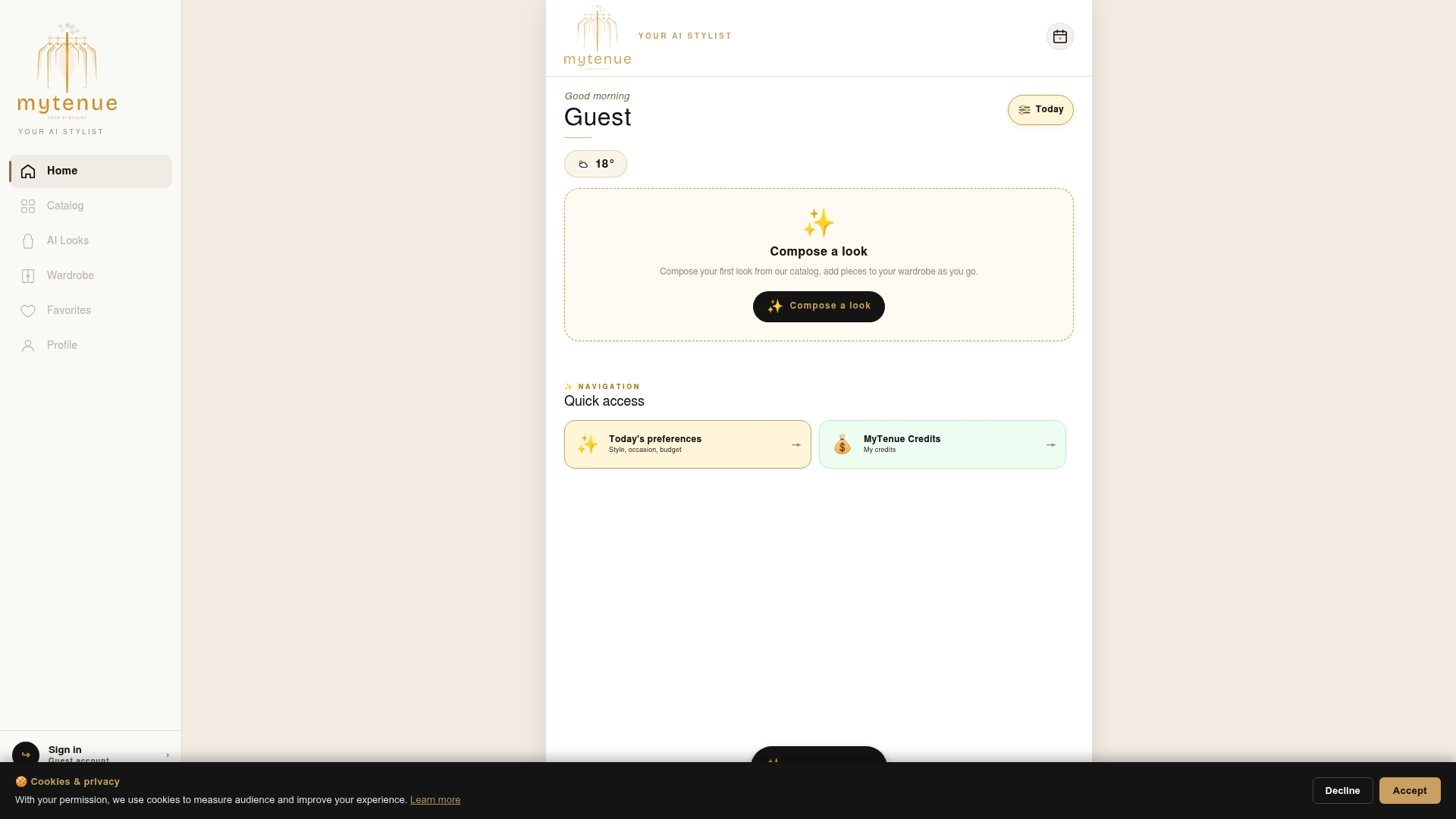
Here's what matters most for readers dressing themselves or someone else on a schedule:
- Bilingual mobile and web access, so the app works wherever you're planning outfits.
- Outfit planner to map looks in advance for the week or a trip.
- Premium catalog with loyalty credits for adding new pieces without starting from zero.
- Privacy controls over uploaded wardrobe photos and avatar images.
If the statement-plus-neutral-plus-styling-moment formula sounds like something you'd rather test digitally than guess at in front of a closet, start building your wardrobe with MyTenue and generate your first AI-styled outfit today.
Frequently Asked Questions
What's the quickest way to dress a person for an event with little notice? Pick one statement piece already in the closet, pair it with a neutral base, add one styling detail, then run it through an AI stylist for a quick fit and color check before leaving.
Can AI stylist apps work with clothes I already own? Yes. Most AI stylists are built around wardrobe digitization, so photographing existing pieces gives the app real material to generate combinations from, rather than pushing new purchases.
How many outfit options should I generate before choosing one? Three variations is a reasonable minimum. The first suggestion often misses the formula (missing a neutral or overloaded with statement pieces), so comparing options catches that fast.
Do virtual try-on features actually reflect how clothes will fit? They give a strong preview of color, proportion, and general fit, but a physical try-on still matters for fabric behavior, movement, and any tailoring needs an avatar can't show.
Is it safe to upload personal photos to a styling app? Check the app's privacy settings before uploading anything: look for the ability to delete images, clarity on cloud versus local processing, and full account deletion options.
Sources
- How to Find Your Style | Vogue
- Best outfit formula 2026 | WhoWhatWear
- How to find your own personal style | InStyle
- How to build an outfit that always works | Nicole Colee