
The 10-item wardrobe concept is a minimalist wardrobe framework built on 10 core seasonal clothing pieces, excluding shoes, accessories, outerwear, and undergarments. Also called a capsule wardrobe in its most focused form, this method prioritizes quality and versatility over volume. The goal is not to own only 10 items total. The goal is to build a seasonal foundation of 10 pieces that mix and match with ease, reducing decision fatigue and sharpening your personal style. If you have ever stood in front of a full closet and felt like you had nothing to wear, this approach fixes that problem directly.
What is the 10-item wardrobe concept?
The 10-item wardrobe consists of 10 versatile core clothing pieces chosen each season, with outerwear, shoes, accessories, and undergarments counted separately. That distinction matters. It means your 10 items are the working heart of your wardrobe: the trousers, skirts, dresses, blouses, and sweaters you reach for every day. Everything else supports those pieces without adding to the core count.
The concept shifts focus from quantity to intentional selection. Each piece must earn its place by coordinating with at least three other items in the set. A navy blazer that pairs with two trouser options and a dress counts. A sequined top that works with nothing else does not. This "cost-per-wear" thinking is central to the method: the more you wear a piece, the more value it delivers.
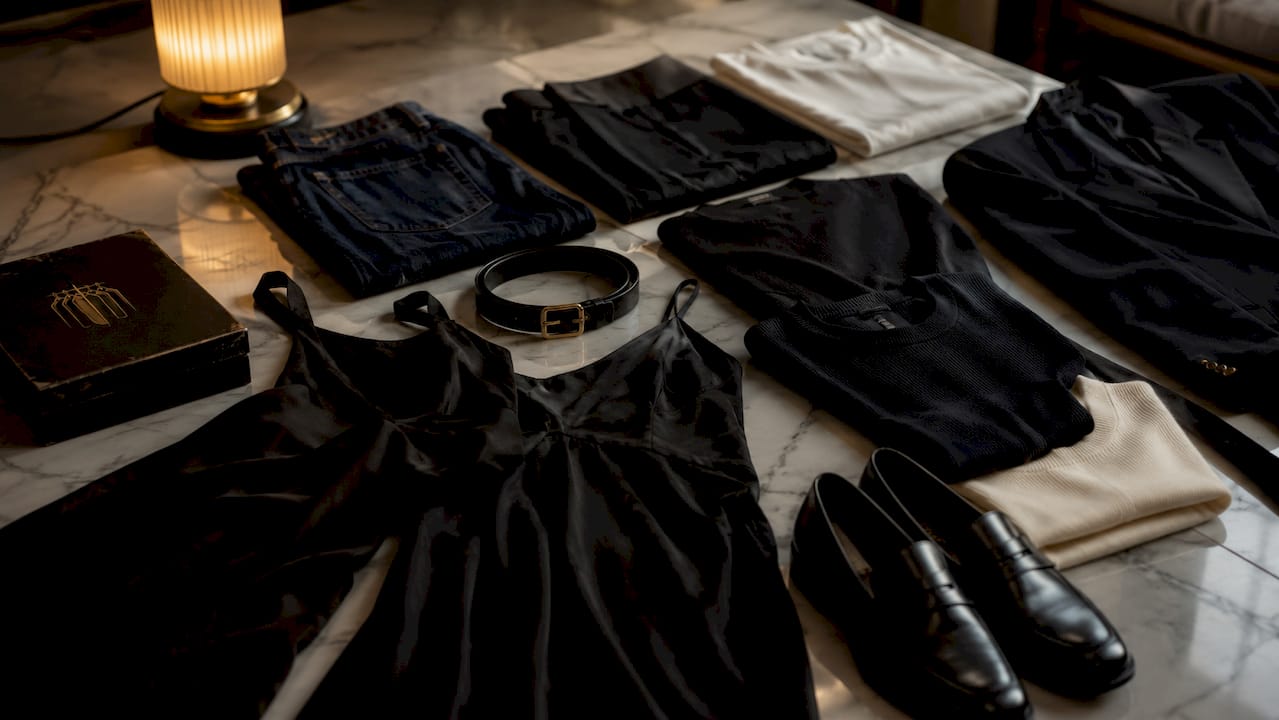
The 10-item wardrobe reduces decision fatigue and clutter by focusing on curated quality and lifestyle fit rather than strict numerical limits. That framing is important. The number 10 is a target and a discipline, not a law.
What types of clothing form the 10 core pieces?
The most effective 10-item wardrobes draw from five main categories: bottoms, tops, dresses or jumpsuits, layering pieces, and one or two statement items. Here is a sample seasonal list to make that concrete:
| Category | Example Item |
|---|---|
| Bottoms | Straight-leg dark denim jeans |
| Bottoms | Tailored trousers in camel or gray |
| Tops | White button-down shirt |
| Tops | Fitted crewneck sweater |
| Tops | Silk or satin blouse |
| Layering | Structured blazer |
| Dress/Jumpsuit | Wrap dress in a solid color |
| Dress/Jumpsuit | Midi skirt in a neutral tone |
| Statement | Printed or textured top |
| Versatile extra | Lightweight knit cardigan |
Extras like plain white t-shirts, workout gear, and outerwear sit outside the core count but complement every item on the list. Shoes, bags, and jewelry multiply outfit options without inflating the core number. A single pair of white sneakers and a pair of ankle boots can produce dramatically different looks from the same 10 pieces.
Pro Tip: Before adding any item to your core list, ask whether it pairs with at least three other pieces already in your wardrobe. If it does not, it is an extra, not a core item.
How to create and maintain your 10-item wardrobe each season
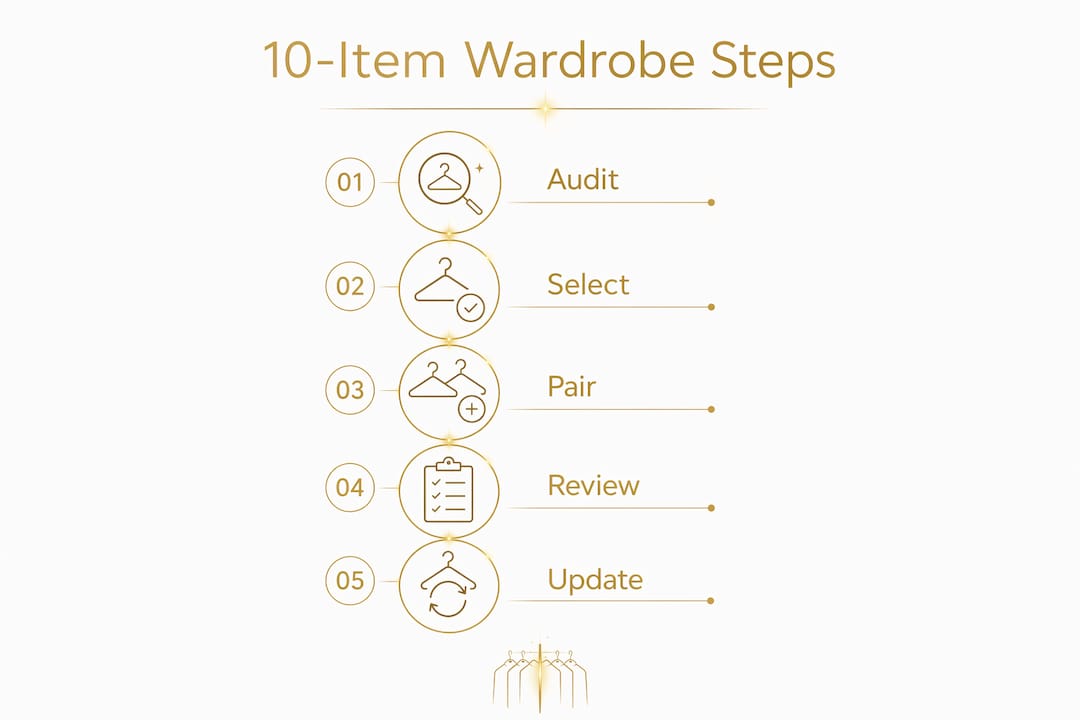
Building a seasonal capsule wardrobe works best as a structured audit, not a shopping trip. The process has four clear phases.
-
Empty and assess. Pull every item from your closet. Sort by what you actually wear, what you love, and what has sat untouched for months. Be honest. A cyclical seasonal audit involves emptying the closet, assessing lifestyle needs, choosing a neutral palette, and selecting 10 items that coordinate well.
-
Define your lifestyle needs. A teacher, a remote worker, and a sales executive have different daily demands. Your 10 items must serve your real life, not the life you imagine on a good day. Climate matters too. Someone in Minnesota needs different core pieces in january than someone in Miami.
-
Choose a neutral base palette. Neutrals like black, white, navy, camel, and gray coordinate across every item in the set. One or two accent colors add personality without breaking the system. A palette decision made upfront prevents the "nothing matches" problem later.
-
Fill gaps with existing pieces first. Auditing existing pieces before buying new items builds an authentic, comfortable minimalist closet. You may already own seven of your ten core pieces. Identify the gaps and shop only for those.
At the start of each new season, repeat the audit. Swap heavy knits for linen tops in spring. Replace sandals with boots in fall. The core count stays at 10; the specific items rotate to match the weather and your activities.
Pro Tip: Set a calendar reminder at the start of each season to do a 20-minute closet review. Seasonal consistency is what keeps the system working long term.
Common misconceptions and challenges when adopting a 10-item wardrobe
The biggest misconception is that the 10-item wardrobe means owning only 10 pieces of clothing in total. That reading makes the concept feel punishing and impractical. The actual framework counts only core seasonal items. Extras, outerwear, shoes, and accessories sit outside that number entirely.
A second common pitfall is aspirational shopping. Aspiration-driven shopping causes frustration; success comes from honestly assessing daily life and selecting accordingly. Buying a silk blouse because you want to be the kind of person who wears silk blouses, when your actual week involves school pickups and grocery runs, produces a piece that never gets worn.
The transition to a minimal wardrobe is a process, not an event. Psychological benefits come from releasing guilt about past purchases and staying curious about your changing needs. Perfection is not the point. Progress is.
Other common challenges include:
- Feeling restricted by the number and abandoning the system entirely
- Counting items inconsistently across seasons, which creates confusion
- Ignoring the "extras" category and then feeling like the wardrobe is incomplete
- Trying to build the entire capsule from new purchases instead of auditing first
Pro Tip: If 10 feels too restrictive at first, start with 15 core items and work down over two seasons. The goal is intentionality, not a specific number.
What are the real benefits of a 10-item wardrobe?
A curated 10-item wardrobe delivers benefits that go well beyond a tidier closet. The most immediate gain is speed. When every item in your core set coordinates with every other item, getting dressed takes minutes instead of the mental energy of sorting through dozens of options. That time compounds across a week, a month, and a year.
The focus on intentional living and cost-per-wear efficiency shifts spending away from impulse purchases toward fewer, better pieces. Over time, that shift produces real cost savings. A $200 blazer worn 80 times costs $2.50 per wear. A $40 top worn twice costs $20 per wear. The math favors quality.
Key benefits at a glance:
- Reduced decision fatigue: Fewer choices mean faster, more confident mornings
- Stronger personal style: A curated set reflects who you are, not what was on sale
- Sustainability: Fewer purchases mean less textile waste and a smaller environmental footprint
- Psychological clarity: Less clutter in the closet produces less mental noise overall
- Better outfit planning: Every combination works, so planning outfits for the week ahead becomes straightforward
The sustainability angle is worth emphasizing. The fashion industry generates significant waste through overproduction and fast consumption cycles. Choosing 10 intentional pieces per season directly counters that pattern.
How to personalize the 10-item wardrobe for your lifestyle
The distinction between core items and extras is flexible and subject to individual lifestyle requirements. That flexibility is the concept's greatest strength. A rigid universal checklist fails most people because no two lives look the same.
A corporate professional might count a structured blazer and two pairs of tailored trousers as non-negotiable core pieces. A freelance creative working from home might replace those with comfortable knit sets and one elevated top for video calls. Both approaches are correct. Strict universal checklists fail; the wardrobe must reflect actual lifestyle to ensure usability and frequent wear.
Questions to guide your personalization:
- What are the three most common settings in your daily life? (office, home, social events)
- Which items do you reach for automatically, without thinking?
- What occasions do you dress for at least twice a month?
- Does your climate require layering for most of the year?
- Are there activity-specific needs, like gym wear or outdoor gear, that belong in the extras category?
Answering these questions honestly produces a core list that fits your real life. A parent of young children needs different pieces than a frequent business traveler. Both can use the 10-item framework. The number is the discipline; the specific items are entirely yours to define.
Pro Tip: Photograph your current favorite outfits before your audit. The pieces that appear most often in those photos are your natural core items. Start there.
The functional wardrobe guide from Mytenue expands on how to identify which pieces serve multiple roles in your daily life, which is exactly the thinking that makes a 10-item system work long term.
Key Takeaways
The 10-item wardrobe concept works because it replaces volume with intention, giving every piece a clear role and every outfit a reliable foundation.
| Point | Details |
|---|---|
| Core items only | Count only seasonal clothing pieces; exclude shoes, outerwear, and accessories from the 10. |
| Audit before buying | Review existing pieces first and shop only to fill genuine gaps. |
| Neutral palette first | A shared color base makes every combination work without effort. |
| Personalize the count | Adjust what qualifies as "core" based on your actual daily life, not an ideal version of it. |
| Seasonal rotation | Revisit and swap pieces each season to keep the wardrobe relevant and functional. |
What I have learned from living with less
Ahmed here. I spent years convinced that a fuller closet meant more options. What I actually had was more noise. The morning I committed to a seasonal 10-item framework, I expected to feel restricted. Instead, I felt focused.
The hardest part was not the decluttering. It was admitting which pieces I owned for the life I wanted versus the life I actually lived. Three dress shirts for events I attended maybe twice a year. A leather jacket that looked great on a rack and never matched anything I owned. Letting those go required honesty, not willpower.
What surprised me most was how quickly my style sharpened. When you can only keep 10 pieces, you get very clear on what you actually like. No more "good enough" purchases. Every item has to earn its spot. That clarity carries into other decisions too. The mindset shift from "more is safer" to "better is enough" has a way of spreading.
My practical advice: do not try to build the perfect 10-item wardrobe in one afternoon. Start with what you already love, identify two or three gaps, and fill those deliberately. Reassess after one full season. The system improves as you learn more about your own habits. Perfection is not the goal. A wardrobe you actually use is.
— Ahmed
Mytenue makes wardrobe simplification easier
Knowing the theory behind a 10-item wardrobe is one thing. Putting it into practice, season after season, is where most people get stuck.
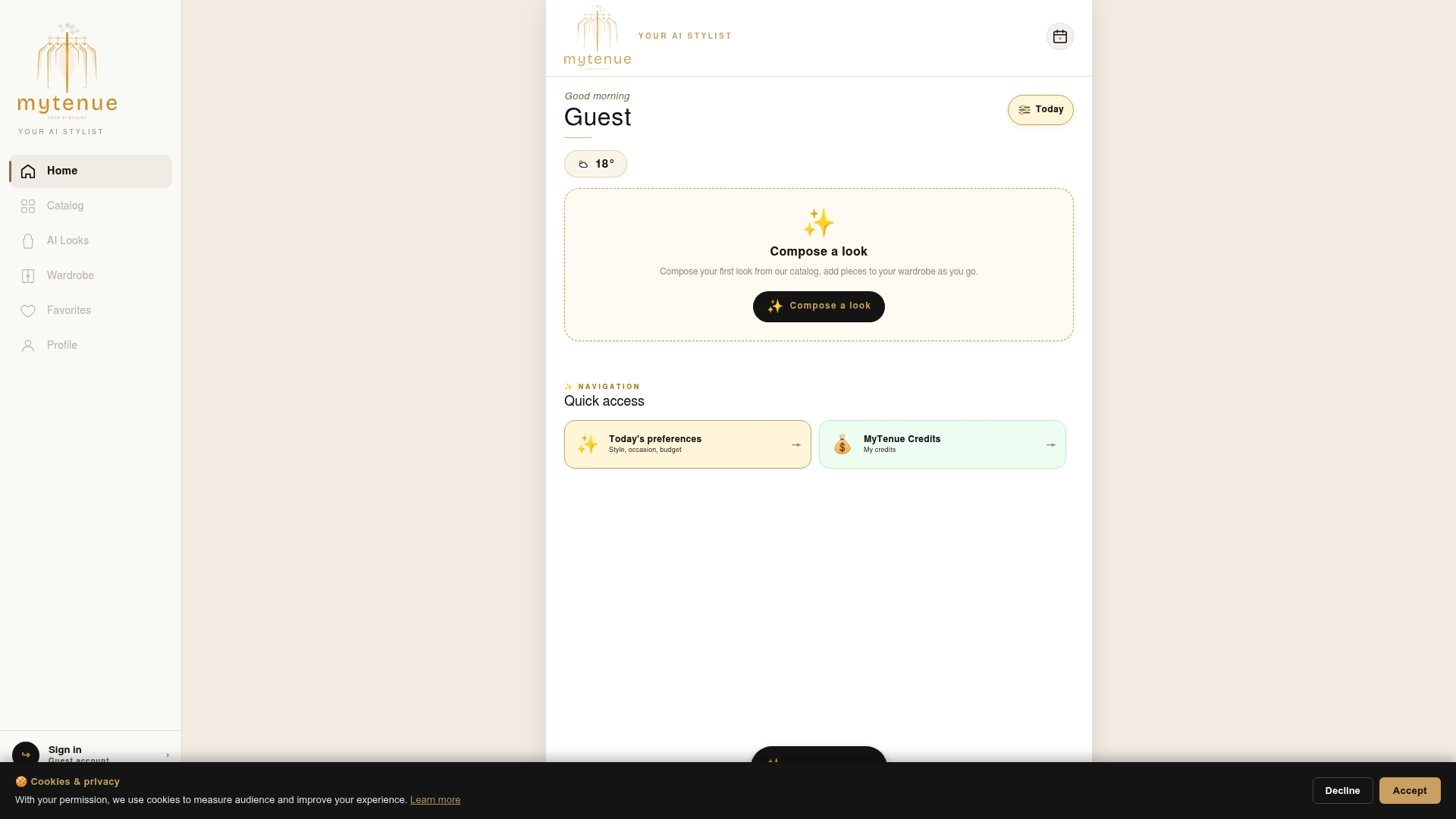
Mytenue is an AI-powered platform that helps you build and plan outfits based on your style preferences, occasions, and budget. Whether you are starting a fresh seasonal capsule or figuring out how to get more combinations from the pieces you already own, Mytenue gives you personalized outfit recommendations in seconds. You can mix existing wardrobe items with new picks, plan your week ahead, and stop second-guessing every morning. Visit Mytenue to see how AI-assisted wardrobe planning fits your lifestyle. Your 10 core pieces will work harder than ever.
FAQ
What is the 10-item wardrobe concept?
The 10-item wardrobe concept is a minimalist framework built on 10 core seasonal clothing pieces, excluding shoes, outerwear, accessories, and undergarments. The focus is on versatile items that coordinate easily and reduce daily decision fatigue.
Does the 10-item wardrobe mean owning only 10 clothes total?
No. The 10 items refer only to core seasonal pieces. Extras like t-shirts, workout clothes, outerwear, and accessories sit outside the count and complement the core set.
How do I choose which 10 items to keep?
Start by auditing your existing wardrobe and identifying the pieces you wear most often. Choose items that pair with at least three other pieces in your closet, and build around a neutral color palette for maximum versatility.
How often should I update my 10-item wardrobe?
A seasonal review works best, typically four times a year. Swap pieces to match the climate and your current activities, keeping the core count at 10 each time.
Can the 10-item wardrobe work for different lifestyles?
Yes. The framework is flexible by design. What counts as a core item depends entirely on your daily life, whether that means workwear, casual pieces, or a mix of both.