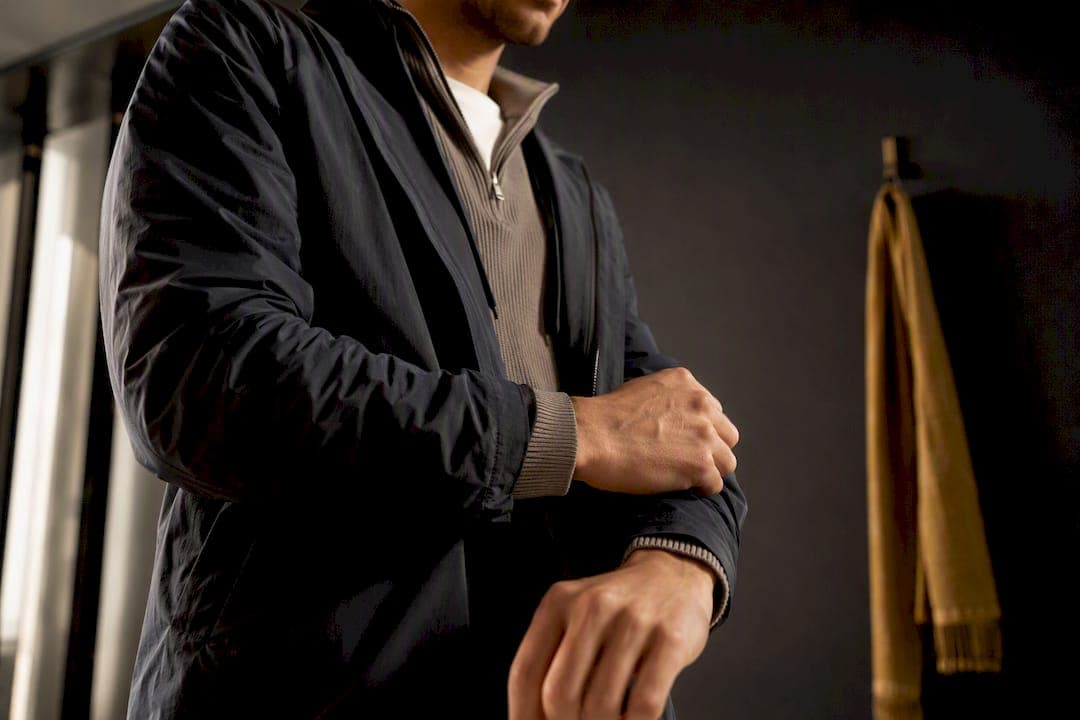
Check the full forecast, not just the temperature: wind, precipitation odds, and how active you'll be all change the call. Build your outfit in three layers matched to that activity level, and grab a compact shell if rain chances top 50%. Temperatures under 10°C mean base, mid, and outer layers; above 25°C means loose, breathable fabric and nothing more. An app can pull your forecast and build the outfit for you in seconds.
TL;DR:
- For temperatures below 10°C, a full three-layer system with insulating outerwear is essential for warmth and protection.
- Above 20°C, lightweight, breathable fabrics like linen or cotton should replace insulation and waterproofing, aiming for comfort and heat management.
- Wind speed over 25 km/h can make the air feel several degrees colder, requiring windproof outer layers and neck coverage to maintain comfort.
- Rain probability below 30% allows for an umbrella, but once above 60%, a waterproof shell becomes necessary to stay dry.
- Activity level influences outfit choices, with outdoor exercise requiring layered, moisture-wicking clothes and slow walks benefiting from warmer, insulating layers.
Table of Contents
- Outfit Formulas by Temperature: What to Wear at Every Range
- How Does Layering Actually Work?
- Should You Carry an Umbrella or Wear a Rain Shell?
- How Should Your Outfit Change by Activity?
- Build Tomorrow's Outfit Tonight: A Five-Minute Routine
- Why These Dressing Rules Actually Hold Up
- Where to Check Forecasts and Layering Guidance
- An Editorial Take on Dressing by the Forecast
- Let MyTenue Build the Outfit While You Check the Weather
- Sources
Outfit Formulas by Temperature: What to Wear at Every Range
A "tenue selon météo" strategy starts with a simple habit: matching your layers to the actual number on the forecast, not what the sky looks like out your window. Below are six temperature bands with formulas you can copy directly, no adjustment needed unless wind or rain enters the picture (covered in the next sections).
Cold ranges call for the full three-layer rule, while anything above 20°C shifts the priority toward breathability over insulation, according to temperature-band outfit heuristics from Globe-Trotting. Here's how that plays out at each level.
0 to 5°C: Full winter protection
- Base layer: merino wool or a synthetic thermal top, never cotton.
- Mid layer: a fleece or wool sweater, sized to fit under your coat without pinching.
- Outer layer: an insulated, windproof parka, preferably down or synthetic fill.
- Footwear: insulated, waterproof boots with tread.
- Accessories: hat, gloves, and a scarf or neck gaiter, since heat escapes fast through an exposed neck.
Example outfit: thermal top, wool sweater, down parka, insulated boots, wool hat, and gloves.
6 to 10°C: Layered but mobile
- Base layer: long-sleeve merino or a light synthetic top.
- Mid layer: a medium-weight sweater or fleece you can remove indoors.
- Outer layer: a wool coat or a heavier windproof jacket.
- Footwear: leather boots or lined sneakers.
- Accessories: a light scarf, and gloves if you're outside for more than 20 minutes.
Example outfit: merino top, cotton or wool sweater, wool coat, leather boots, light scarf.
11 to 15°C: The transition zone
This band trips people up the most because morning and evening temperatures often sit at opposite ends of it. A denim jacket or a trench over a long-sleeve shirt covers most of the day. Sneakers or ankle boots work fine, and you probably don't need gloves unless wind speeds pick up.
15 to 20°C: Light layering
- Base layer: a t-shirt or light long-sleeve top.
- Mid layer: an optional light cardigan or overshirt for cooler mornings.
- Outer layer: a windbreaker or light jacket, easy to tie around your waist later.
- Footwear: sneakers or loafers.
Example outfit: t-shirt, overshirt, windbreaker, sneakers. No accessories needed unless it's overcast and breezy.
20 to 25°C: Warm and breathable
Cotton or linen short sleeves, light chino pants or a midi skirt, and breathable sneakers or sandals. Skip synthetic fabrics here. They trap heat and sweat far more than natural fibers at this range.
Above 25°C: Heat management mode
Light-colored, loose, breathable clothing is the rule. Merino wool sounds counterintuitive for hot weather, but it wicks moisture effectively even above 25°C, according to guidance from Texas A&M's Howdy Health. Linen shorts, a loose cotton tank, and open sandals round out a heat-wave outfit that won't leave you drenched by noon. For a full breakdown of hot-weather dressing tactics, MyTenue's heat wave outfit rules walk through a faster daily routine for those weeks when the mercury won't budge.
How Does Layering Actually Work?
Three layers, each with a job. The base layer sits against your skin and moves sweat away from your body. The mid layer traps warm air close to you, and that trapped air, not the fabric itself, is what actually keeps you warm. The outer layer blocks wind and rain from stripping that heat away.
Skip any one of these and the whole system breaks down. A great mid layer under a leaky outer shell still leaves you cold and wet the moment it rains.
Fabric choice matters as much as the layer count. REI's cold-weather dressing guide is blunt about this: your base layer should wick moisture, your mid layer should insulate, and your outer layer should block wind and water, with cotton avoided entirely as a base layer whenever conditions might turn wet. Cotton absorbs sweat and holds onto it, which pulls heat straight off your skin.
- Base layer: merino wool for multi-day wear and odor resistance, synthetics for intense activity and faster drying.
- Mid layer: fleece for everyday warmth, wool sweaters for a dressier look, down for maximum warmth-to-weight ratio.
- Outer layer: a hardshell for sustained rain, a softshell for wind with light moisture, a packable synthetic-fill jacket for cold, dry days.
Down insulation compresses smaller and insulates better per ounce than synthetic fill, but it loses almost all its warmth when wet. Synthetic fill costs you a little warmth-to-weight but keeps performing even damp, which makes it the safer pick for anywhere rain is a real possibility.
Pro Tip: Check the fit of your mid layer before buying an outer shell. If the mid layer compresses the air pocket inside your coat, you lose insulation even with the "right" pieces on.
Linen deserves a mention outside the cold conversation. Its loose weave allows airflow that cotton and most synthetics can't match, which is why it dominates the warm-weather end of any smart wardrobe. For a deeper look at how different fibers perform across the year, MyTenue's seasonal fabric guide breaks down fiber choice by climate and activity.
Should You Carry an Umbrella or Wear a Rain Shell?
The split comes down to wind and how much walking you're doing. Under light, steady rain with minimal wind, an umbrella works fine and keeps your outfit unaffected underneath. Once wind speeds climb or you're walking more than a few blocks, a waterproof shell outperforms an umbrella every time, since gusts flip umbrellas inside out and leave your lower half soaked anyway.
- Rain probability under 30%: skip the shell, keep a compact umbrella in your bag as backup.
- Rain probability 30 to 60%: pack a light rain jacket or packable poncho, wear water-resistant shoes.
- Rain probability above 60%: wear the waterproof shell, skip the umbrella, choose fully waterproof footwear.
Wind changes how cold the air actually feels against your skin. Winds around 25 to 30 km/h can make the air feel 5 to 7°C colder than the thermometer states, which is exactly why checking wind speed matters as much as checking the temperature number itself. Cover your neck with a scarf or gaiter, choose a windproof outer layer over a merely warm one, and expect any exposed skin to feel the drop first.
Comfort isn't just a thermometer reading. Humidity, wind, and solar radiation all shift how warm or cold a given temperature actually feels, which is why Météo-France's "temperature ressentie" metric exists separately from the raw air temperature.
UV and sun exposure by the numbers:
UV index 6 already calls for active protection. Between 8 and 10, unprotected skin can burn within 15 to 30 minutes, fast enough to catch most people off guard on a midday errand.
Apply SPF 30 or higher at least 15 minutes before sun exposure and reapply every two hours. Clothing labeled with a sun protection factor adds a real layer of defense on top of sunscreen, particularly useful on long outdoor days when reapplying every two hours isn't realistic. For rainy-day outfit combinations that still hold up when the wind kicks in, MyTenue's rain outfit guide pairs waterproof pieces with looks that don't sacrifice style for function.
How Should Your Outfit Change by Activity?
The same forecast produces different outfits depending on what you're doing with your day, and this is where most people overdress or underdress without realizing it.
- Sedentary or office days: Dress warmer than the forecast suggests. Low activity means your body generates less internal heat, so add a layer you'd normally skip if you were moving all day.
- Commuting with mixed indoor and outdoor stretches: Prioritize easy on/off layers over one heavy piece. A cardigan or light jacket you can remove in a warm office beats a sweater you're stuck wearing at your desk.
- Running or intense exercise: Dress as if the temperature is 5 to 10°C warmer than the actual reading. Activity generates enough internal heat that a jacket appropriate for standing still will leave you overheated and drenched within ten minutes.
- Cycling or urban commuting by bike: Wind resistance matters more than for walking, so close-fitting windcutter layers beat anything loose that flaps. Visibility gear and waterproofing take priority over warmth alone. The Beam's guide to cycling in rain covers gear choices specific to wet-weather riding, from fenders to visibility layers.
Footwear needs the same activity lens. Insulated boots make sense for a slow winter walk but turn into a liability on a run, where breathable trainers with grip matter more than warmth. For commuting through brief rain or puddles, ankle-covering shoes handle the unpredictability better than low sneakers, a small swap that saves you from soaked socks by mid-morning.
Build Tomorrow's Outfit Tonight: A Five-Minute Routine
Deciding what to wear at 7 AM half-awake is how mismatched outfits happen. A short routine the night before fixes that.
- Check the full forecast: temperature range, wind speed, and precipitation probability, not just the single-number "feels like" figure at the top of your weather app.
- Pick your base layer based on the low temperature of the day, not the high.
- Choose your mid and outer layers based on wind and rain odds, referencing the bands and formulas above.
- Prepare accessories: sunglasses and a hat for UV over 6, gloves and a scarf under 10°C, an umbrella for anything under 60% rain probability.
- Pack compact backups: a foldable shell, a lightweight scarf, and a compact umbrella that fit in a bag without adding bulk.
Pro Tip: Keep one "emergency layer" permanently in your bag, a packable shell that never comes out unless the forecast shifts. It removes the daily decision of whether to carry one at all.
This is also exactly where MyTenue earns its place in the routine. Instead of running through five manual steps every night, the app pulls your local forecast and generates a full outfit from your own digitized wardrobe, matched to temperature, wind, and rain odds automatically. For anyone who wants the same daily logic without the daily effort, that's the entire point of automating it.
Why These Dressing Rules Actually Hold Up
None of this is guesswork. The rules above are grounded in how the body and atmosphere actually interact, and each piece has research behind it.
Felt temperature, not the number on a thermometer, is what your body actually reacts to. Météo-France's own explanation of temperature ressentie confirms that wind, humidity, and solar radiation all shift comfort independent of the air temperature reading. Layering science backs the same logic from the clothing side: a wicking base, insulating mid, and protective outer shell is the structure REI recommends for a reason, since each layer solves a different physical problem rather than just adding bulk.
Comfort is never one number. It's temperature, wind, humidity, and sun exposure acting together, which is exactly why a single forecast reading undersells how an outfit will actually feel once you're outside in it.
- Sunscreen timing (SPF 30+, 15 minutes before exposure, reapply every two hours) comes from official French consumer guidance.
- Hot-weather fabric choices reflect Texas A&M's Howdy Health recommendations on breathable, light-colored clothing.
- The platform applies this same logic automatically, generating weather-adapted outfit suggestions daily from a user's digitized wardrobe rather than asking readers to memorize temperature bands themselves.
Where to Check Forecasts and Layering Guidance
A handful of sources cover the details worth bookmarking. Météo-France explains felt temperature directly from the source. Official sunscreen guidance covers SPF application timing. REI's layering guide goes deeper on fabric selection for cold conditions.
For outfit-specific breakdowns, MyTenue's blog covers rainy-day dressing, heat wave outfit rules, and mid-season layering formulas in more detail than any single article can hold.
An Editorial Take on Dressing by the Forecast
Most advice on dressing for weather treats temperature as the only variable that matters. It isn't. Wind and rain probability change an outfit more than a five-degree temperature swing ever will, and that's the piece conventional style advice keeps skipping.
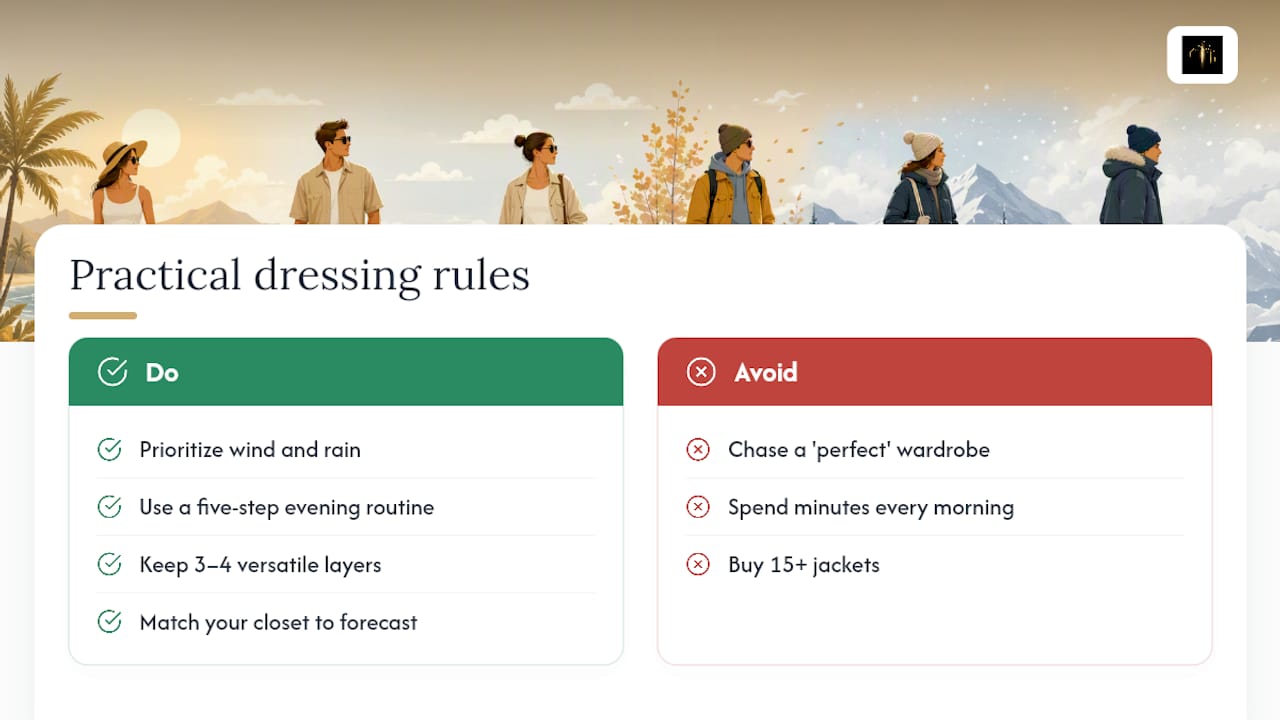
The bigger issue is decision fatigue, not knowledge gaps. Most people already know cotton gets cold when wet and that layers beat one heavy coat. What they lack is a fast way to apply that knowledge every single morning without spending ten minutes staring into a closet. That's where a five-step evening routine beats any style guide: it turns knowledge into a habit.
Where I'd push back on standard advice is the obsession with owning the "perfect" weather wardrobe. You don't need fifteen jacket options. You need three or four solid layers you actually understand how to combine, and a fast way to match them to tomorrow's forecast. That's a workflow problem before it's a wardrobe problem, and tools that solve the workflow, like matching a digitized closet to a live forecast, matter more than another shopping trip.
— Ahmed
Let MyTenue Build the Outfit While You Check the Weather
This app skips the manual matching entirely. Instead of cross-referencing a temperature band, a wind forecast, and your own closet every morning, it pulls your local weather and builds a complete outfit from pieces you already own, in seconds rather than the ten minutes most people spend staring at hangers.

That's the real difference from doing this by hand: you get the same layering logic covered throughout this guide, applied automatically to your actual wardrobe rather than a generic formula. It can also generate editorial-style flat-lay images of each look, so you can see the outfit before you commit to it, and plans ahead with a built-in calendar for days you already know the forecast will shift. If you've digitized even part of your closet, MyTenue turns that inventory into a daily decision you no longer have to make from scratch. Start by downloading the app and letting it check tomorrow's forecast for you at Mytenue.
Sources
- Economie
- How to dress in cold weather (REI Expert Advice)
- What to wear in hot weather (Texas A&M / Howdy Health)