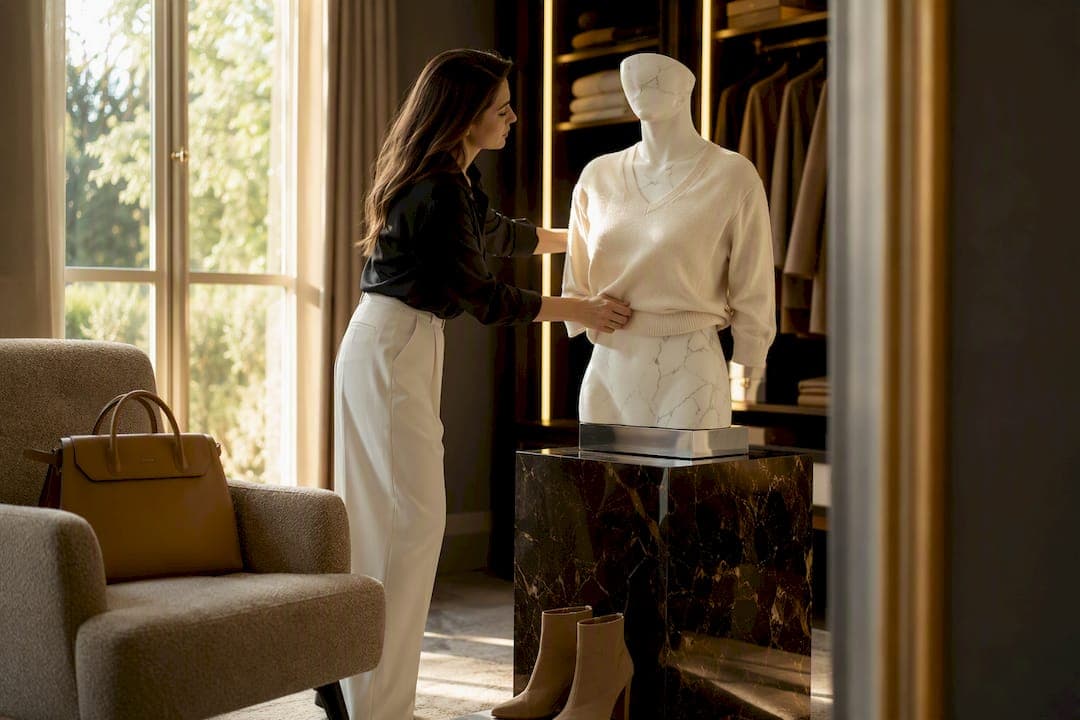
A personal virtual mannequin, your avatar inside an AI styling app, speeds up outfit decisions, boosts fit confidence, and helps you wear more of what you already own. That's the core payoff. Research from CHI 2026 shows virtual try-on tools cut exploration time by letting users confirm fit before committing, while Frontiers in Psychology links realistic avatar previews to fewer returns and greener purchase habits. Mytenue builds its entire outfit-planning experience around this evidence.
Here's what a personal styling mannequin actually gets you:
- Fit confidence before you ever put on the clothes
- Faster decisions, because you stop second-guessing combinations
- Outfit coordination across your whole wardrobe, not just single pieces
- Style discovery you wouldn't have tried on your own
- Calendar-based planning so mornings stop being a scramble
- Sustainability gains from wearing more of what's already in your closet
Quick stat: Avatar-based virtual fitting scored higher across trust, satisfaction, and purchase intention than standard model photos in a 231-person comparative study, a good sign for anyone who's ever bought something online and regretted it the second it arrived.
Key Takeaways
A personal avatar improves outfit planning by combining fit confidence, faster decisions, and wardrobe reuse into one workflow backed by peer-reviewed research on virtual try-on.
| Point | Details |
|---|---|
| Fit confidence reduces returns | Realistic avatars build trust, which studies link to fewer post-purchase returns. |
| Avatars speed decisions | Most people use virtual try-on as a final fit check, not endless browsing. |
| Customization drives habit formation | Mix-and-match features keep people engaged as much as accurate fit does. |
| Setup quality determines usefulness | Clear photos and real measurements make avatar suggestions worth trusting. |
| Mytenue applies this directly | Its avatar, calendar planning, and weather-aware suggestions put these benefits into daily use. |
Table of Contents
- What Are the Benefits of a Personal Mannequin for Outfit Planning?
- How Does Avatar-Based Outfit Planning Actually Work?
- How Do You Set Up an Avatar for Reliable Outfit Planning?
- Does Virtual Try-On Actually Support Sustainable Wardrobe Habits?
- What Everyday Use Looks Like
- Try MyTenue's Avatar Feature for Outfit Planning
- Frequently Asked Questions
- Sources
What Are the Benefits of a Personal Mannequin for Outfit Planning?
Each benefit maps to a specific pain point you already know well. Let's go through them one at a time.
Fit confidence and fewer returns. Trust is the whole game here. When your avatar's proportions and posture match your real body, the preview actually predicts how a garment will sit, not just how it looks on a hanger. The JESK comparative study found avatar fitting outperformed model images on perceived realism and satisfaction, and the Frontiers research ties that same realism to stronger green purchase intentions, meaning people buy fewer things they end up sending back.
Decision speed. You don't need to try on six shirts to know which one works with those trousers. The CHI 2026 study found people mostly use virtual try-on at the final decision stage, as a fast yes-or-no check rather than an endless browsing loop. That's the opposite of doomscrolling a closet.
Style discovery and self-congruity. An avatar removes the risk from experimenting. Research in the Journal of Business Research on customization affordances found that features like mix-and-match tools drive adoption almost as strongly as fit accuracy does. Trying a silhouette you'd never buy blind, on your own body shape, is a low-stakes way to learn what actually flatters you.
Practical coordination. This is where daily life gets easier:
- Layer pieces virtually before committing to a look
- Mix new items with wardrobe staples you forgot you owned
- Pull weather-aware suggestions so you're not caught in a raincoat-less panic
- Slot outfits into a calendar for the week ahead
Engagement and habit formation. Customization keeps people coming back. The same apparel m-shopping research found that satisfaction with your avatar photo specifically, not just the outfit suggestions, is a major driver of continued use.
Pro Tip: Update your avatar's measurements every few months. Bodies change, and a stale avatar quietly erodes the trust that makes the whole system useful.
How Does Avatar-Based Outfit Planning Actually Work?
An avatar starts with inputs: a photo, your measurements, sometimes a short body scan. That data builds a 3D model, and garment-rendering software drapes clothing over it, adjusting for fabric behavior and fit. Research on integrated digital closet systems describes this pipeline using tools like body segmentation and generative rendering models to make the drape look physically plausible, not just pasted on. The VogueVault architecture paper walks through this kind of hybrid approach and its sustainability upside: fewer blind purchases, more confident reuse of existing pieces.
Photo and measurement quality upstream determines everything downstream. A blurry photo or guessed waist size produces an avatar that looks fine but predicts nothing useful.
Look for these reliability cues before you trust an avatar's suggestion:
- A confidence score or fit-range indicator, not just a static image
- Multiple angles, not one flattering front view
- Notes on fabric drape or stretch, since a knit and a stiff denim behave differently on the same body
- Honest uncertainty flags when the app isn't sure
Treat the avatar as final verification when its confidence signals are strong. Treat it as a starting point for exploration when they're not.
How Do You Set Up an Avatar for Reliable Outfit Planning?
Getting useful results starts before you open the app to browse anything.
- Take your reference photo in even lighting, standing straight, in fitted neutral clothing. Shadows and baggy layers throw off proportion detection.
- Enter measurements you've actually taken with a tape measure, not guesses from a size chart.
- Digitize your wardrobe in batches using a comprehensive style catalog to tag each piece by category, color, and occasion so mix-and-match suggestions have something to work with. Tag each piece by category, color, and occasion so mix-and-match suggestions have something to work with. Starting with a core capsule of your 10 to 15 most-worn items gets you useful outfit suggestions fastest, rather than trying to photograph an entire closet on day one.
- Connect calendar and weather features so outfit planning happens a few days ahead instead of every single morning.
- Check the app's privacy and confidence disclosures. Does it show a fit-confidence score? How long does it retain your photos and measurements?
Pro Tip: Photograph new purchases into your wardrobe the same day they arrive. A digital closet that lags behind your real one stops being useful fast.
For a deeper walkthrough on getting wardrobe data right, best practices for wardrobe personalization covers the setup details in more depth.
Does Virtual Try-On Actually Support Sustainable Wardrobe Habits?
The evidence points that way, with some caveats. Visual realism and personalization in virtual try-on strengthen green purchase intentions, largely because people buy more precisely and return less. Avatar-based fitting also scores higher on trust and satisfaction than static model images, and that trust correlates with fewer impulse buys that end up unworn.
The tradeoff: none of this works without accuracy. An avatar that overstates its own reliability, with no uncertainty cues, can produce the opposite effect: false confidence in a purchase that doesn't fit. Transparency about fit uncertainty isn't a nice extra. It's what makes the sustainability case hold up at all.
What Everyday Use Looks Like
I've watched two scenarios play out repeatedly with avatar-based planning, and both come down to time. Prepping for an event used to mean pulling half a closet onto the bed. With an avatar, you preview three or four combinations in minutes and land on one with actual confidence. Packing for a trip works the same way: build the week's outfits against your avatar first, and you stop overpacking "just in case" items you never wear.
One caution worth repeating: validate your avatar's setup quality before you lean on it for big decisions. A rushed photo produces rushed suggestions.
Try MyTenue's Avatar Feature for Outfit Planning
Mytenue builds its avatar tool around exactly the benefits covered above: virtual try-on for fit confidence, mix-and-match suggestions that pull from your existing wardrobe, calendar-based outfit planning, and daily weather-aware recommendations. Instead of piecing together a spreadsheet, a mood board, and a mirror, you get one place where your avatar previews the whole outfit before you commit to wearing it, or buying it.
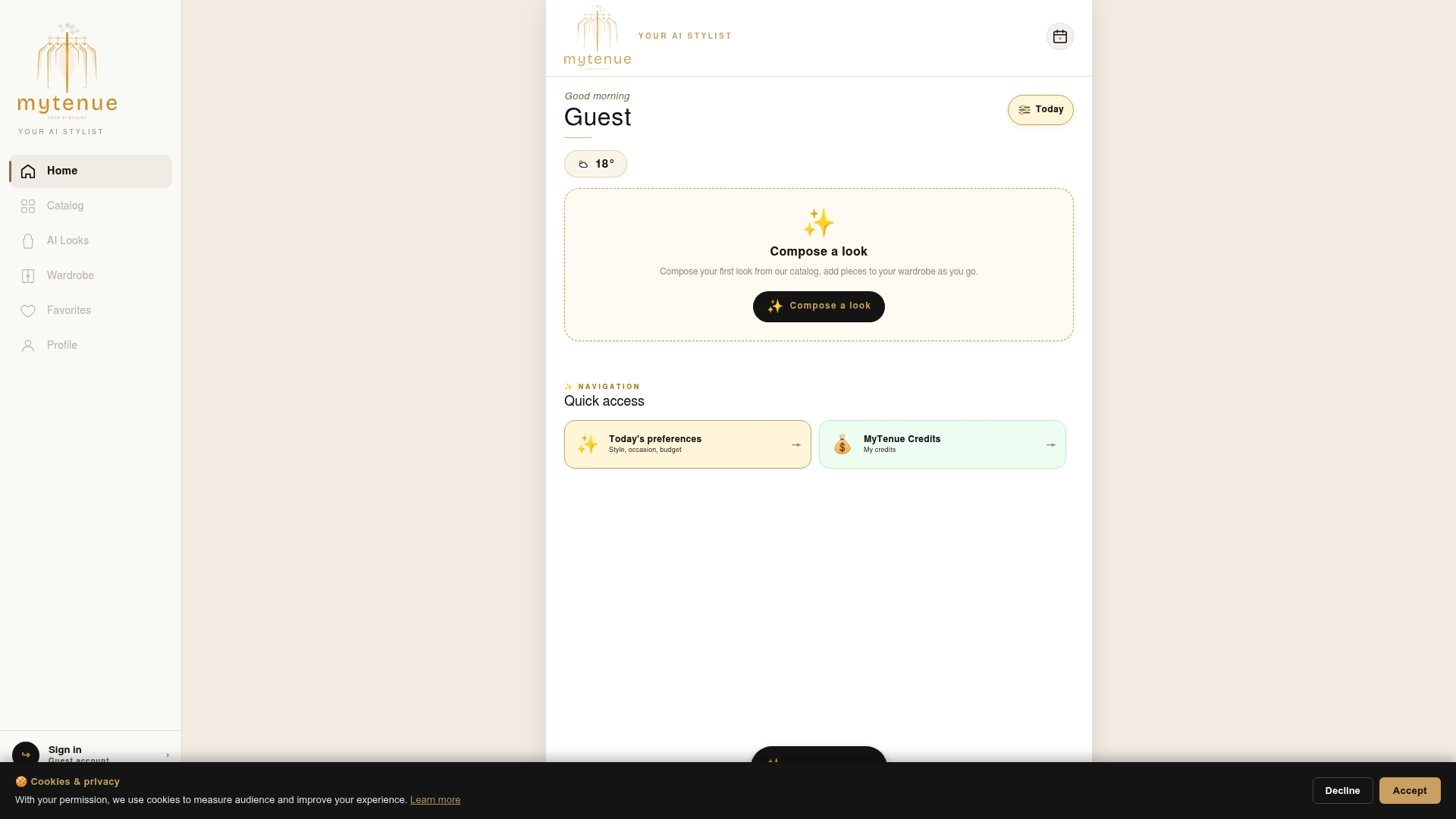
The app runs on a freemium model, so you can create your avatar and test outfit coordination before deciding whether a paid tier fits your routine. Privacy details on data retention and photo storage are available directly in the app settings. If you want the deeper setup mechanics first, predictive fashion technology explains how the suggestion engine behind your avatar actually prioritizes outfit combinations. When you're ready to see your own wardrobe rendered on your own body shape, create your avatar on Mytenue and plan tomorrow's outfit tonight.
Frequently Asked Questions
Does a personal avatar actually improve outfit planning, or is it a gimmick? The research says it's real. Avatar-based fitting outperformed standard model images across trust, satisfaction, and purchase intention in the JESK comparative study, and users treat it as a genuine decision tool rather than novelty.
How accurate does my avatar need to be? Accuracy depends entirely on your inputs. A well-lit photo and real tape-measure numbers produce a far more useful model than guessed sizes, and apps that show confidence scores or fit ranges are being honest about where their limits are.
Can an avatar help me buy less and reuse more of my wardrobe? Yes, when the avatar is accurate. Studies connect realistic virtual try-on to stronger green purchase intentions and more deliberate buying, which in practice means fewer impulse purchases and more mixing of existing pieces.
Should I use my avatar to make every outfit decision? Use it as a fast final check, not the only input. If the app flags low confidence or you haven't updated your measurements recently, treat the suggestion as a starting point rather than a verdict.
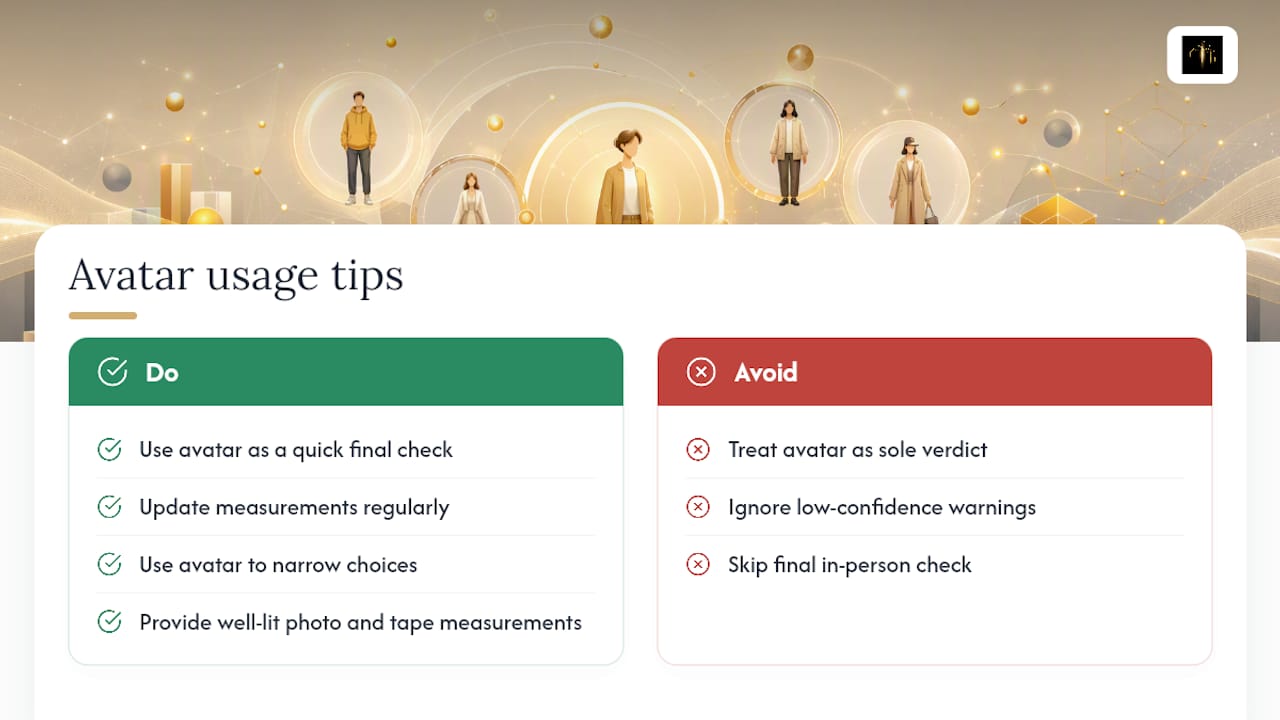
Does using an avatar mean I stop trying on clothes in person? Not entirely. Most people use virtual try-on to narrow choices before a final in-person check, which is exactly how the CHI 2026 findings describe typical usage.
Sources
- AI-based virtual try-on technology and the activation of green psychological mechanisms: evidence from a digital consumer environment
- A Comparative Study on the User Experience of Virtual Fitting: The Effects of Fitting Types on UX Factors and Purchase Intention in Fashion E-commerce
- VogueVault: Intelligent digital closet with personalized virtual try-on — architecture and sustainability implications