
Here's the fastest way to stop an impulse fashion purchase: pause, don't decide. The most effective combination is a mandatory wait (24 to 72 hours for small buys, 30 days for anything over your usual budget), a wishlist instead of a cart, a monthly clothing allowance, and one dead saved credit card. Run through this before you tap "buy":
- Move the item to a wishlist or "saved for later" folder instead of checkout.
- Set a timer: a waiting period of one to three days for smaller purchases, 30 days for anything above it.
- Delete the saved card on that retailer's site or app right now, not after this purchase.
- Check your monthly clothing allowance. If it's spent, the item waits until next month.
- Open your closet or wardrobe app first. Do you already own something that does this job?
Pro Tip: Turn off one-tap checkout in your phone's wallet settings tonight. That single change adds just enough friction to break the "see it, buy it" loop most fashion apps are built around.
Key Takeaways
Stopping impulsive fashion purchases works best when a mandatory pause, visible wardrobe data, and a fixed budget all operate together instead of relying on willpower alone.
| Point | Details |
|---|---|
| Pause before paying | Use BISOU at checkout, 5-5-5 for cart items, and the 30-day rule for bigger purchases. |
| Remove checkout friction | Delete saved cards, disable one-click buying, and unsubscribe from sale emails. |
| Track your triggers | Run a 7-day log of time, mood, and app to spot your top two or three impulse patterns. |
| Make your wardrobe visible | Digitize your closet or run a hanger flip so "need" becomes a real question, not a guess. |
| Set financial guardrails | Fix a monthly clothing allowance and apply one-in/one-out before adding anything new. |
| Try wardrobe digitization | Mytenue scans your closet and plans outfits so you can check for duplicates before buying. |
Table of Contents
- The Psychology Behind Éviter Les Achats Impulsifs Mode
- What Pause Rules Actually Stop an Impulse Purchase?
- Wardrobe-First Methods That Make Buying Feel Unnecessary
- Budget Rules That Actually Block Impulse Spending
- When Impulse Shopping Becomes a Compulsive Buying Problem
- Sources
The Psychology Behind Éviter Les Achats Impulsifs Mode
Impulse buying isn't a willpower failure. It's a predictable loop between anticipation, dopamine, and a checkout button designed to remove every obstacle between you and "purchase confirmed." The brain releases dopamine when you anticipate a reward, not when you receive it, which is why the scroll itself feels good even before you've spent a cent, according to Psychology Today's analysis of shopping and dopamine. Stress, boredom, and loneliness all raise the odds you'll go looking for that hit.
Retailers know this, and their interfaces are built around it. Countdown timers, "only 3 left in your size," and one-click checkout aren't neutral design choices. They're urgency engineered to short-circuit the pause where you'd normally ask yourself if you actually need the item.
Picture the moment this usually happens: it's 11:40 PM, you're scrolling in bed, an email lands with "extra 20% off tonight only," and your card is already saved. Three seconds later, you own a jacket you'll forget by Thursday. That's not a coincidence. It's late-night low willpower, plus an emotional trigger, plus zero friction, plus a scarcity cue, all stacked in the same sixty seconds.
Learning to name which piece of that stack hit you, the mood, the timing, the missing friction, is the first real step toward éviter achats impulsifs mode before it costs you money you'll regret spending.
What Pause Rules Actually Stop an Impulse Purchase?
Three pause rules cover almost every situation you'll face, and each one targets a different kind of urge.
BISOU works best in the checkout moment itself. It's five quick questions:
- Besoin (Need): Do I actually need this, or do I just want it right now?
- Immédiat (Immediate): Can this wait, or is there a real deadline?
- Semblable (Similar): Do I already own something close to this?
- Origine (Origin): Where does this urge come from, boredom, an ad, a friend's post?
- Utile (Useful): Will I actually wear this in real life?
If two or more answers point toward "no," close the tab. The BISOU method works precisely because it forces a conscious answer instead of a reflexive tap.
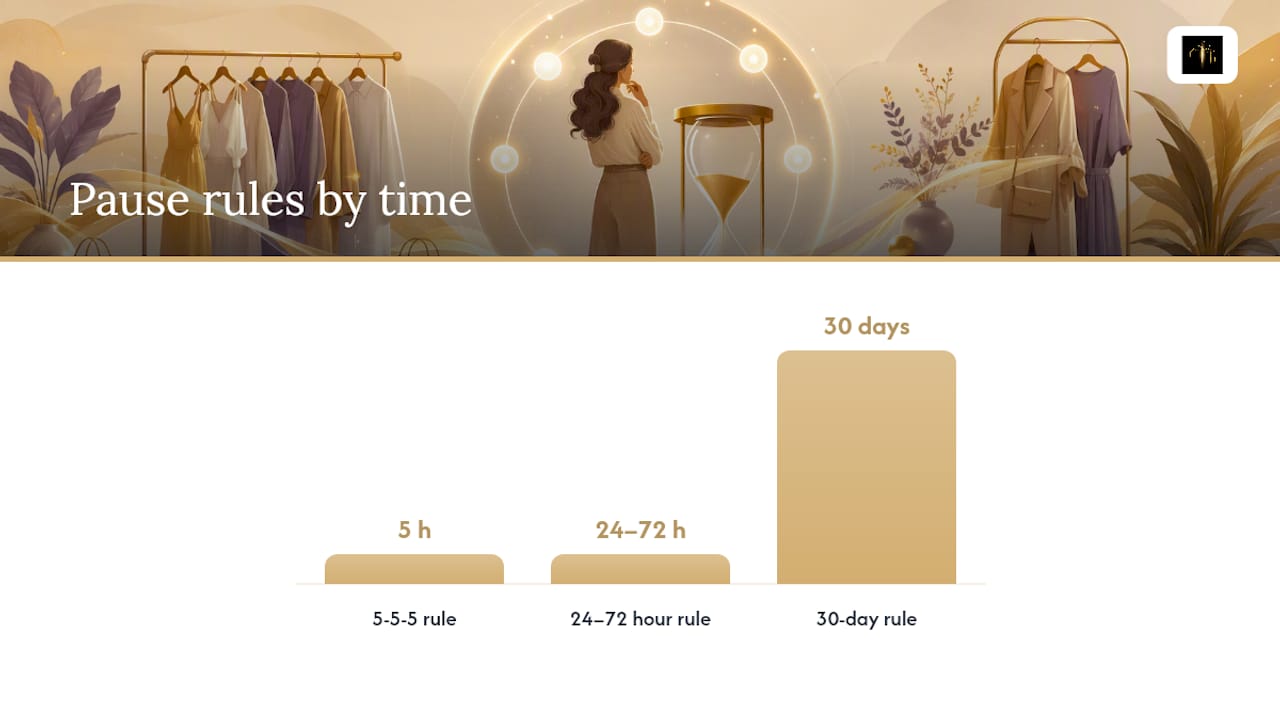
5-5-5 is built for online carts specifically: leave the item sitting for 5 hours, name 5 pieces already in your closet it would pair with, and picture 5 separate times you'd actually wear it. Struggling to hit five wears is a strong signal the desire is about the dopamine of buying, not the garment itself.
The 24 to 72 hour rule handles smaller, cheaper impulses, while the 30-day rule is reserved for anything that would strain your budget. Waiting several weeks lets the initial dopamine spike fade completely, separating a fleeting want from a genuine gap in your wardrobe.
Pair those pauses with permanent friction: delete saved cards, turn off one-click checkout, unsubscribe from every sale email, and mute the haul accounts that made you want the thing in the first place.
Pro Tip: Run a 7-day trigger log. Every time you feel the urge to buy clothing, jot down the time, your mood, and the app you were using. By day seven, you'll usually see the same two or three triggers repeating, which tells you exactly where to add friction.
Wardrobe-First Methods That Make Buying Feel Unnecessary
The fastest way to kill a fake "need" is to actually see what you already own. Most closets hide more usable outfits than people realize, and that invisibility is what fuels repeat purchases.
Start with a hanger flip: turn every hanger backward, and flip it forward each time you wear that piece. After 60 to 90 days, whatever's still backward tells you exactly what you're not using, and what you don't need more of. Add a quick try-on ritual for anything you're unsure about, and run a 3-outfit test, can you build three distinct looks around this piece before buying a fourth one like it?
Digitizing your wardrobe takes this further. Scanning your clothes into a digital closet turns "I have nothing to wear" into a visual, searchable fact, and wardrobe digitization consistently helps people rediscover pieces they'd forgotten they owned, which cuts the perceived need to shop.
A simple two-week routine works well here:
- Days 1 to 3: Photograph or scan every wearable item in your closet.
- Days 4 to 7: Build five outfits using only what you scanned, no new purchases.
- Days 8 to 11: Plan a full week of outfits ahead of time using your digital wardrobe.
- Days 12 to 14: Note any real gaps, then compare them against your wishlist before buying anything.
When your wardrobe becomes visible, vague desire turns into a concrete planning question, "does this fill an actual gap?", instead of an emotional impulse.
Mytenue is built around exactly this workflow: it digitizes your existing pieces, plans outfits from your calendar, and flags duplicates before you buy another version of something you already own. For deeper wardrobe-planning tactics, Ahmed's time-saving outfit planning guide walks through the full process.
Budget Rules That Actually Block Impulse Spending
A pause rule stops the moment. A budget stops the pattern.
A few guardrails make this stick:
- Keep a small "fun fund" for genuinely spontaneous buys, and only shop from that account, never your main card.
- Apply one-in/one-out: a new piece only enters if an old one leaves, maintaining a consistent wardrobe size, which turns every purchase into a real trade instead of pure addition.
- Treat returns as data, not failure. If you're returning the same category repeatedly, that's your trigger pattern showing up in your order history.
- Avoid buy-now-pay-later plans for clothing. Splitting a purchase into four payments hides the true cost and has been linked to repeat impulsive buying and rising debt.
- Log every clothing purchase somewhere, a notes app, a spreadsheet, a banking app's tagging feature. Seeing the running total is often enough on its own to slow you down.
When Impulse Shopping Becomes a Compulsive Buying Problem
Occasional impulse buys are normal. A pattern becomes something else when it starts hurting you financially or emotionally, and the warning signs are fairly consistent.
Watch for accumulating debt you're hiding from a partner or family, buying items you never unbox, feeling unable to stop even when you've promised yourself you would, or continuing to shop despite real financial strain. Secrecy is often the clearest signal: if you're deleting order confirmations or timing purchases around when someone else won't notice, that's worth taking seriously.
If any of that sounds familiar, freeze the card first, then log every purchase for a week, tell one trusted person what's happening, and reach out to a licensed therapist or a consumer credit counselor. France's consumer recall and protection portal is also a useful reference point when you're untangling returns or verifying a product before deciding whether to keep it.
One change, one real result
I stopped buying the same black turtleneck four times in two years the moment I digitized my closet and could actually see all four of them side by side in one screen. That visibility did more than any willpower trick I'd tried before. If you want to go deeper on the planning side, my wardrobe upgrade strategies piece covers the routine that got me there.
— Ahmed
Let Mytenue Show You What's Already in Your Closet
Mytenue turns your closet into a searchable, plannable system, so the question at 11 PM isn't "should I buy this?" but "do I already own something close to it?" 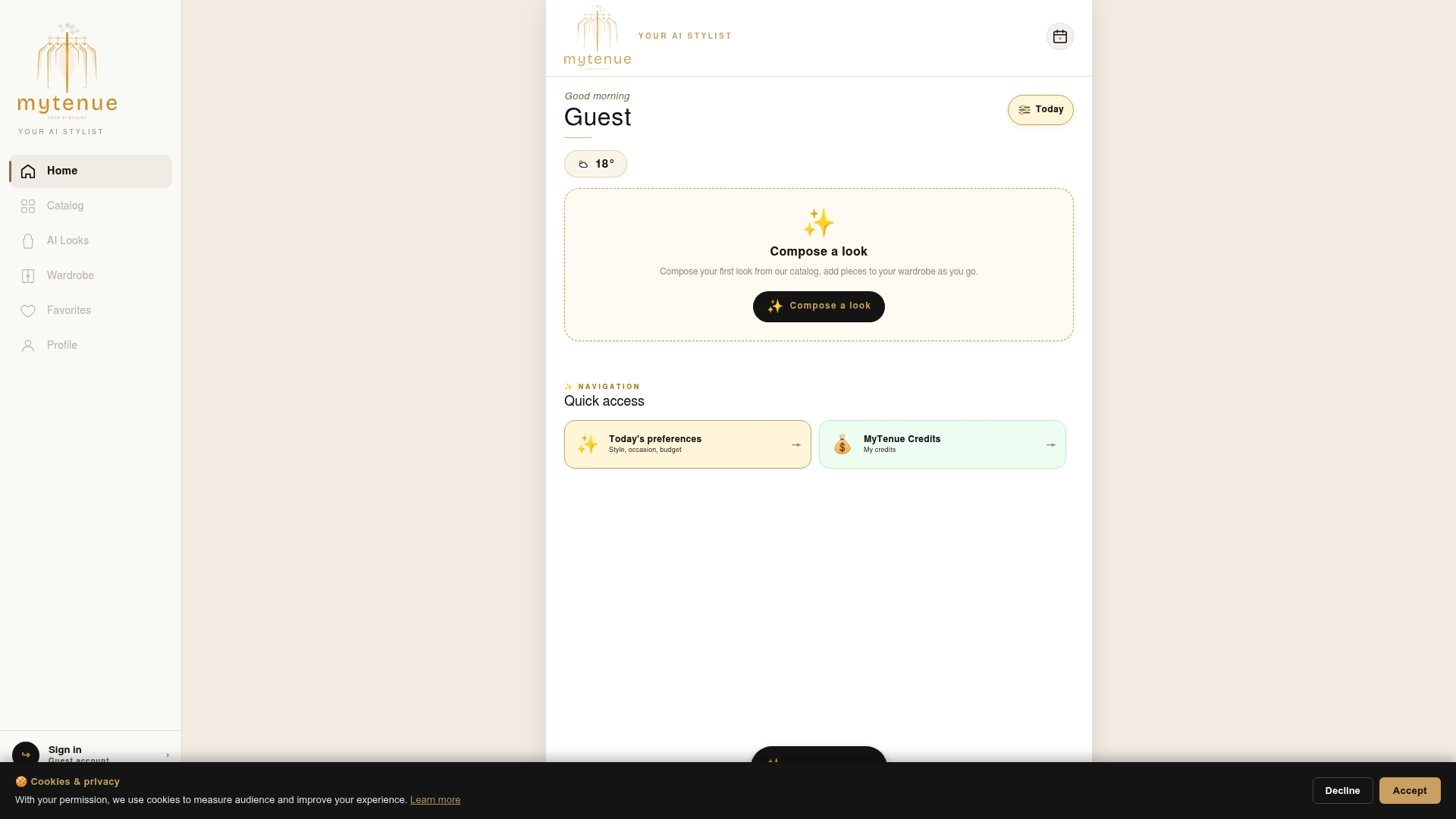
The app scans your existing pieces, builds outfit suggestions around your calendar, and flags near-duplicates before they turn into a fourth black turtleneck. That single visibility shift is often enough to break the late-night scroll-to-cart pattern this article walks through. You can also browse predictive outfit planning to see how the AI builds daily looks from what you already own.
Start with the free tier, digitize a shelf or a drawer tonight, and see how many "new" outfits show up from clothes you forgot you had. Try Mytenue and give your next impulse a wardrobe check first.
Sources
- How to apply the 30-day method before any clothing purchase — StyleSettendances
- Des mois sans acheter: 5 rules — Vogue France
This article is general information, not a substitute for advice from a qualified doctor. Consult a qualified healthcare professional about your own circumstances before acting on anything here.