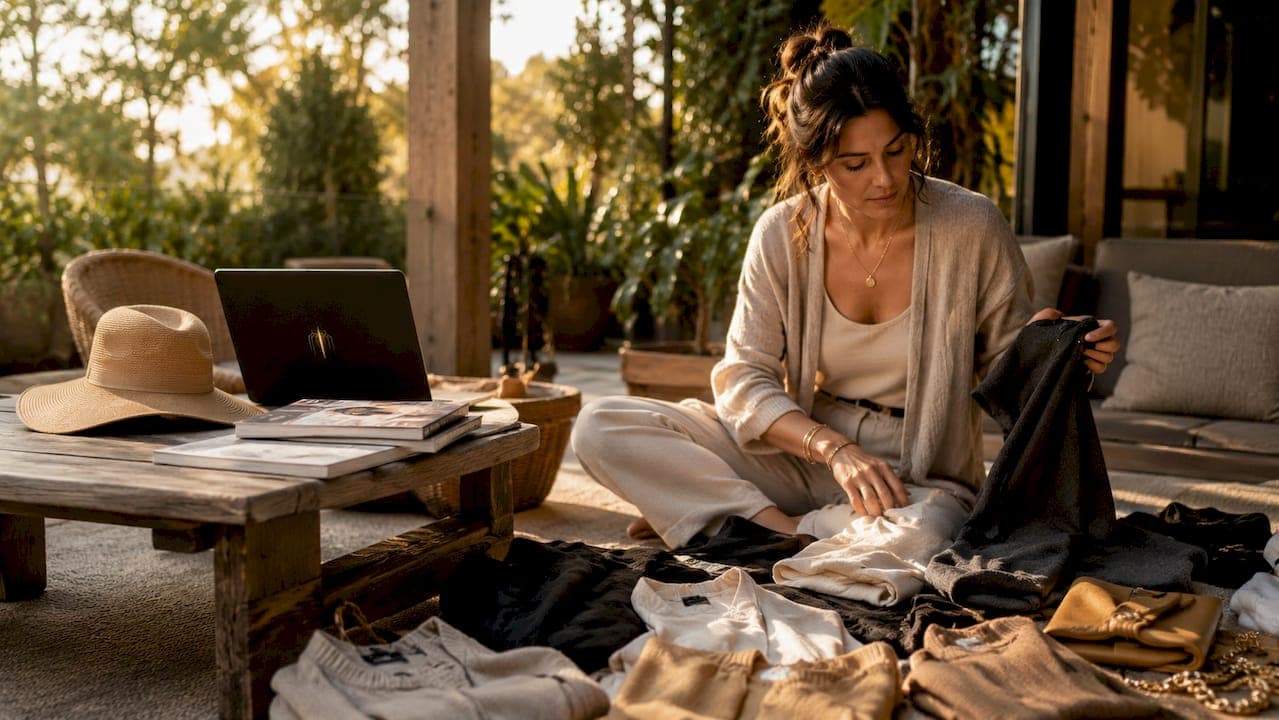
Outfit stretching is defined as maximizing the number of distinct looks you create from a small, carefully chosen set of clothes. The professional term for this approach is capsule wardrobe building, and it works whether you have $50 or $200 to spend. A well-planned capsule of 15 core pieces generates 25–30 unique outfit combinations for under $200. The outfit stretching checklist for a tight budget covered here combines that capsule concept with styling habits and maintenance routines that make affordable clothes look polished every single day.
1. Build your core wardrobe essentials checklist first
The foundation of any budget wardrobe is a short list of high-versatility pieces. Every item you buy must work with at least three others already in your closet. If it does not pass that test, skip it.
Start with these 15 pieces as your wardrobe essentials checklist:
- White crew-neck tee (2 units)
- Black or navy fitted tee
- Dark wash straight-leg jeans
- Neutral chinos or trousers (tan or gray)
- Black leggings or joggers
- Button-down shirt in white or light blue
- Solid-color crewneck sweatshirt
- Blazer in navy, black, or camel
- Simple midi or wrap dress
- Denim jacket or structured coat
- White sneakers
- Clean black or white canvas shoes
- Ankle boots in black or brown
- Leather or faux-leather belt
- Two to three simple accessories (watch, scarf, or minimal jewelry)
Stick to a neutral base palette of black, white, navy, and gray, then add one accent color you love. That color discipline is what makes every combination work without effort.
Pro Tip: Thrift your outerwear and structured blazers. These pieces set the tone of any outfit, and investing first in outerwear elevates every basic underneath them.
2. Master outfit formulas that multiply your looks
Outfit formulas are repeatable combinations that always look intentional. You swap one item at a time to create a new look without rethinking the whole outfit from scratch.
Here are seven formulas that work with the checklist above:
- Classic casual: White tee + dark jeans + white sneakers. This combination costs under $50 total and reads as clean and put together in almost any casual setting.
- Smart casual: Button-down shirt + chinos + ankle boots. Tuck the shirt halfway for a relaxed finish.
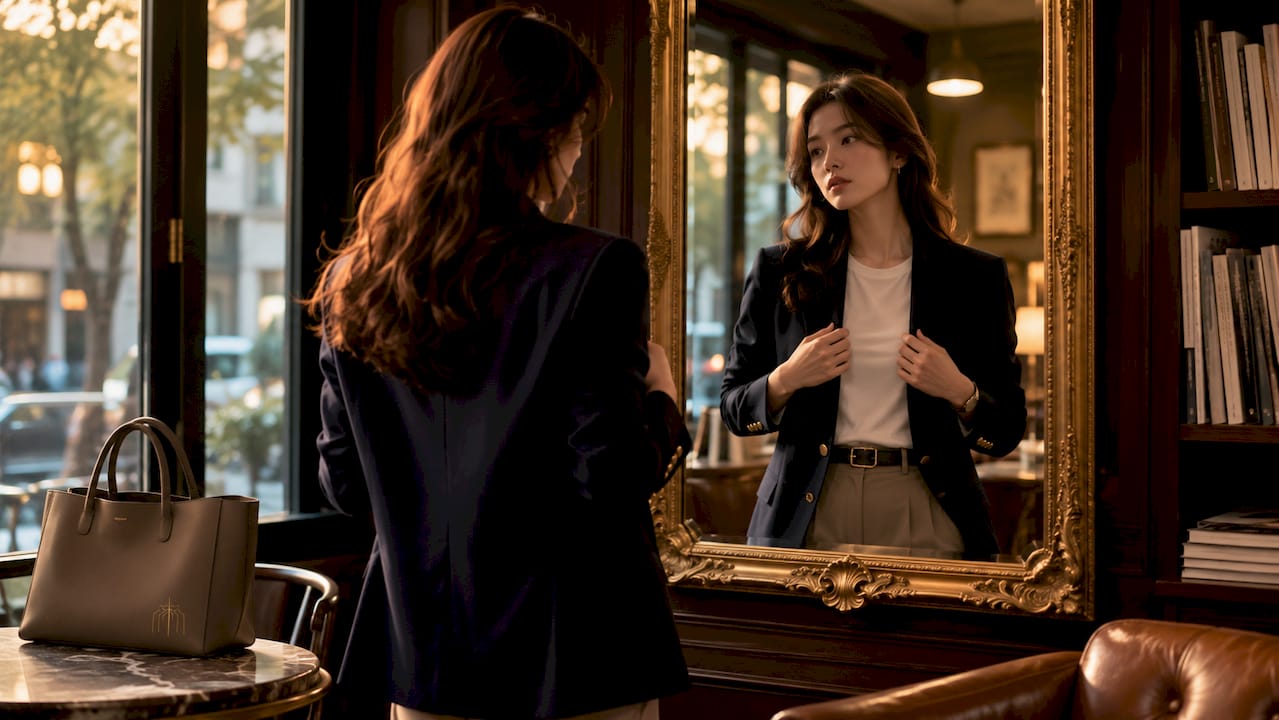
- Elevated basics: Blazer + fitted tee + straight-leg jeans + loafers or clean sneakers. The blazer does the heavy lifting.
- Monochrome: One color family head to toe. Monochrome dressing is the most effective way to make low-cost items look intentional and mask price differences.
- Dress formula: Midi dress + denim jacket + sneakers for day; same dress + blazer + ankle boots for evening.
- Layer formula: Crewneck sweatshirt + collared shirt underneath (collar peeking out) + jeans + boots. One outfit becomes two by removing the sweatshirt.
- Tonal neutral: Tan chinos + white tee + camel blazer + white sneakers. All neutrals, zero effort, high impact.
Pro Tip: Photograph your best outfit combinations and save them to a phone album. On rushed mornings, you pull from proven looks instead of starting over. Mytenue's outfit planning tools do this automatically with AI-curated suggestions.
3. Use layering to create seasonal variety without buying new clothes
Layering is the most cost-effective way to adapt a small wardrobe across changing temperatures. The same five pieces can produce completely different looks in july versus november.
Add a denim jacket over a dress for fall. Wear that same dress with a turtleneck underneath in winter. Remove the jacket in spring and swap the turtleneck for a light scarf. Three seasons, zero new purchases.
The rule is simple: build outfits in layers of three. A base layer (tee or fitted top), a mid layer (sweatshirt, blazer, or button-down), and an outer layer (coat or jacket). You can remove or add each layer to shift the look and the warmth level.
Accessories do the same job. A chunky scarf in winter, a canvas tote in summer, and a belt in any season all change how an outfit reads without changing the clothes themselves.
4. Maintain your clothes so they always look fresh
Clothing maintenance is free and dramatically changes how budget pieces look. De-pilling, lint removal, and ironing make garments look twice as expensive at no extra cost. A pilled sweater reads as cheap. The same sweater after five minutes with a fabric shaver reads as quality.
Your maintenance checklist:
- De-pill knitwear and fleece after every three to four wears using a fabric shaver ($8–$12 at most drugstores).
- Lint roll dark fabrics before leaving the house.
- Iron or steam collared shirts, trousers, and blazers before wearing. Wrinkles are the fastest way to make good clothes look bad.
- Wash cold and air dry whenever possible. Heat breaks down fabric fibers faster than anything else.
- Choose pima cotton when buying basics. Pima cotton weighs more per square yard than standard cotton and holds its shape through 15 or more wash cycles.
Pro Tip: Tailoring inexpensive pieces to fit your body properly is the single biggest upgrade you can make. A $15 tee that fits perfectly looks better than a $60 tee that does not. Most basic alterations cost under $10 per piece.
5. Style your budget outfits with intention
Styling is how you wear clothes, not just what you wear. Small adjustments change the entire feel of an outfit without spending anything.
Three styling moves that work every time:
- Cuff your jeans once or twice at the ankle. It shows your shoes, creates a clean line, and signals that you dressed with intention.
- Half-tuck your shirt. A full tuck looks formal. A half-tuck looks effortless and modern.
- Go monochrome when in doubt. Wearing one color family from head to toe makes any budget outfit look curated. It also visually lengthens your frame.
Fit is the non-negotiable. Clothes that fit your body correctly always look more expensive than clothes that do not, regardless of price. Before you style anything, check that shoulders sit correctly, waistbands do not gap, and hems hit the right spot.
6. Shop with a system to avoid overspending
Budget shopping without a system leads to impulse buys that clutter your wardrobe and drain your money. The fix is category spending caps. Category caps work like this: $40 maximum for outerwear, $30 for bottoms, $20 for tops, and $35 for shoes. These limits force you to prioritize and compare before buying.
Apply the one-in-one-out rule alongside the caps. Every new item that enters your wardrobe means one existing item leaves. This keeps your closet from growing beyond what you can actually use and style.
Wait 24–48 hours before buying anything that is not on your planned list. Impulse buying is the leading cause of wardrobe failure on a tight budget, not poor maintenance. A cooling-off period cuts most impulse purchases before they happen.
Track cost per wear for every item you consider. A $60 coat you wear 80 times costs $0.75 per wear. A $15 trendy top you wear twice costs $7.50 per wear. Cost per wear makes the math visible and justifies spending a little more on durable basics.
Pro Tip: Buy basics like tees and underwear new. Thrift everything else, especially outerwear, blazers, and denim. You get the most visual impact from secondhand structured pieces at a fraction of retail price. Check out this guide on affordable style choices for more buying frameworks.
7. Recycle outfits across seasons without starting over
Seasonal wardrobe refreshes are expensive and unnecessary when you have a solid core. The goal is to swap just 3–4 items per season while keeping the rest of your wardrobe intact.
A practical seasonal rotation looks like this:
- Spring/Summer: Swap the heavy coat for the denim jacket. Add one lightweight dress or linen shirt. Store wool and heavy knits.
- Fall/Winter: Bring back the structured coat and ankle boots. Add a chunky scarf and one warm layer. Store sandals and lightweight tops.
Store off-season clothes properly to extend their life. Fold knitwear flat (never hang it, as hanging stretches the shoulders). Use cedar blocks instead of mothballs. Keep everything in breathable cotton bags, not plastic bins that trap moisture.
Accessories are your seasonal refresh tool. A straw hat and canvas tote signal summer. A wool scarf and leather gloves signal winter. Both cost under $20 and change the entire feel of the same outfit. For more ideas on outfit recycling strategies, the concept extends well beyond seasonal swaps.
Pro Tip: Before buying anything new for a new season, restyle every piece you already own in a new combination. You will almost always find two or three looks you forgot you had.
Key takeaways
Strategic wardrobe building is more about system and planning than quantity or chasing trends. The checklist approach works because it removes guesswork and keeps every purchase connected to a clear purpose.
| Point | Details |
|---|---|
| Start with 15 core pieces | A 15-piece capsule generates 25–30 outfit combinations for under $200. |
| Use outfit formulas | Repeatable combinations let you swap one item to create a new look instantly. |
| Maintain clothes regularly | De-pilling, steaming, and cold washing make budget clothes look twice as good. |
| Shop with category caps | Spending limits by category prevent impulse buys and keep your wardrobe focused. |
| Rotate seasonally, not fully | Swapping 3–4 items per season keeps your wardrobe fresh without a full refresh. |
What I have learned from years of wardrobe stretching
The biggest mistake I see people make is treating their wardrobe as a collection instead of a system. They buy things they love individually but cannot combine. The result is a full closet and nothing to wear.
The mindset shift that changed everything for me was thinking in outfits, not items. Every purchase decision starts with the question: what three outfits does this piece create with what I already own? If I cannot answer that immediately, I put it back.
Maintenance is where most people leave money on the table. I have worn a $12 thrifted blazer to job interviews and client meetings. Nobody knew. The blazer was pressed, de-pilled, and fit correctly after a $9 alteration. That is a $21 blazer that performed like a $150 one.
Patience is the real budget fashion skill. Waiting for the right piece at the right price, rather than buying the convenient option right now, is what separates a wardrobe that works from one that wastes money. The 10-item wardrobe concept pushed me to be even more selective, and my style improved immediately after I cut my closet in half.
— Ahmed
How Mytenue helps you plan outfits on any budget
Knowing the checklist is one thing. Seeing it come together as real outfits is another.
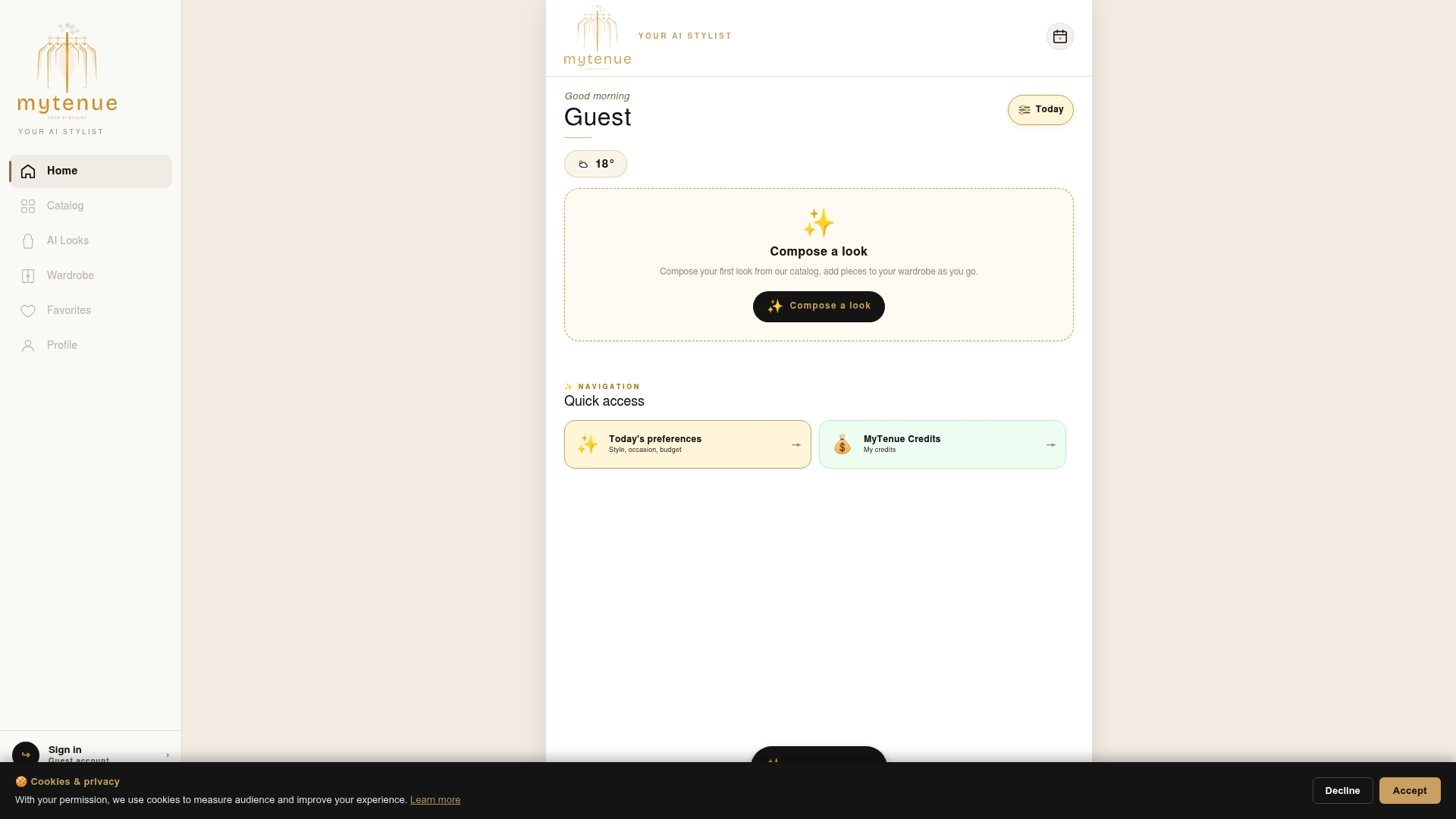
Mytenue is an AI-powered outfit planning platform that takes your existing wardrobe pieces and builds complete looks around your style preferences, occasions, and budget. You input what you own, and Mytenue shows you combinations you have not tried yet. No more staring at a full closet with nothing to wear. The platform also flags which new pieces would add the most outfit combinations to your current wardrobe, so every purchase you make is intentional. Visit Mytenue and let your AI stylist put your budget wardrobe to work.
FAQ
What is the outfit stretching checklist for a tight budget?
An outfit stretching checklist is a curated list of versatile, mix-and-match clothing pieces designed to maximize outfit combinations from minimal spending. A 15-piece capsule wardrobe generates 25–30 distinct outfits for under $200.
How many clothes do I actually need to have enough outfits?
Fifteen core pieces are enough to create 25–30 outfit combinations when chosen in a neutral color palette with strong mix-and-match potential. Quality and versatility matter far more than quantity.
What is the best way to make cheap clothes look expensive?
Monochrome dressing and proper garment maintenance are the two most effective methods. De-pilling, ironing, and tailoring pieces to fit correctly make budget clothes look significantly more polished at little to no cost.
Should I buy new or thrift when building a budget wardrobe?
Buy basics like tees and underwear new for hygiene and durability. Thrift structured pieces like blazers, coats, and denim, where secondhand quality is high and the price difference is largest.
How do I avoid impulse buying when shopping on a budget?
Apply a 24–48 hour waiting period before any unplanned purchase. Pair this with category spending caps and the one-in-one-out rule to keep your wardrobe focused and your spending controlled.