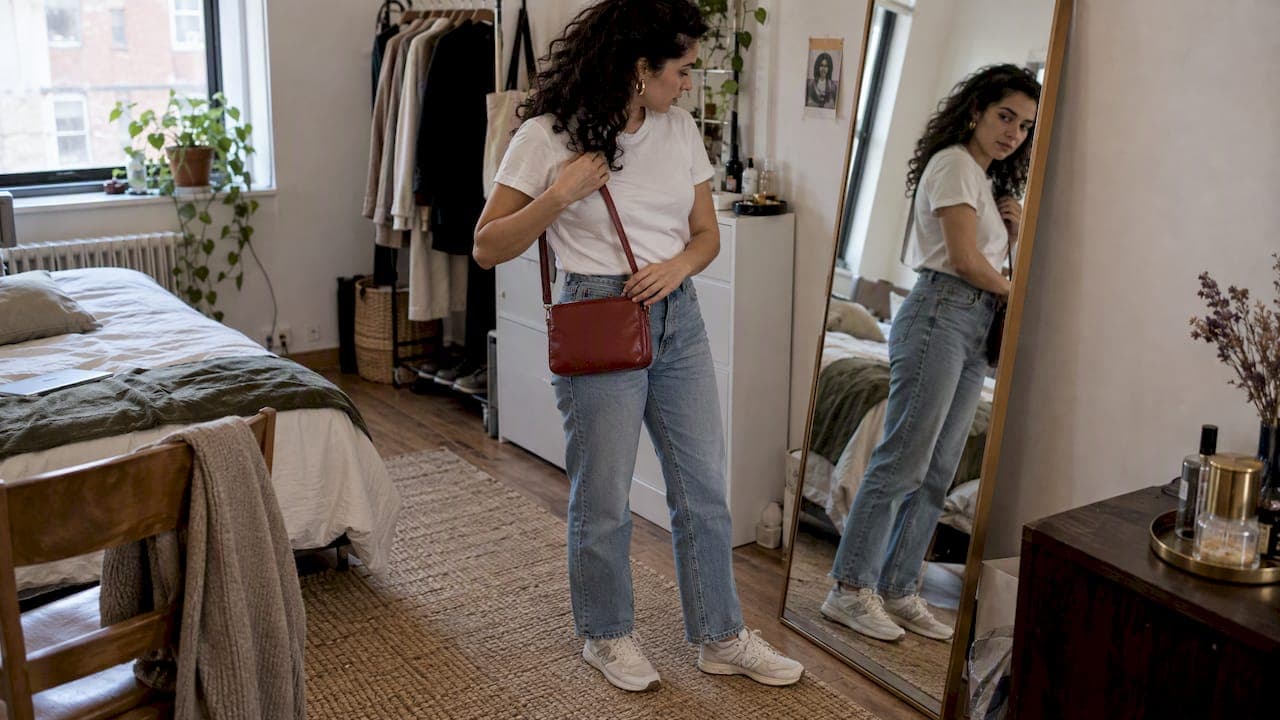
Outfit formulas are repeatable templates that pair specific wardrobe slots, like a top, bottom, topper, shoe, and accessory, so you can dress quickly and stylishly using pieces you already own. The fastest formula to start with is a neutral base plus one accent color. Tools like a printable cheat sheet or an app like MyTenue help you turn this into a daily habit.
TL;DR:
- Pair fitted and loose pieces for proportion, echo a color between shoes and bag, or swap only the topper to change a base outfit’s mood.
- Build formulas around weekly contexts, photograph combinations that work, track which you wear again, then save searchable labels on your phone or a printed cheat sheet.
- For travel, pair two or three tops and bottoms in one color story with a thin base layer, insulating topper, and packable shoes.
- The French wardrobe method suggests around five seasonal purchases beyond basics, but treats that number as a guideline rather than a strict limit.
- For petite frames, shorter hemlines and jackets reduce visual bulk; if volume sits on top, balance it with straighter bottoms, and reverse the pairing otherwise.
Table of Contents
- 1. Core Outfit Formulas You Can Copy Today
- 2. How to Build Your Own Outfit Formulas From Your Existing Wardrobe
- 3. Outfit Formulas for Work, Casual, Evening, and Travel
- 4. A Printable Cheat Sheet You Can Pin or Screenshot
- 5. Three Wardrobes, Three Formulas, Many Outfits
- 6. Why Formulas Work Better Than Daily Guesswork
- Try MyTenue to Put Your Formulas on Autopilot
- FAQ
- Sources
1. Core Outfit Formulas You Can Copy Today
Start with neutral base plus one accent color. Pick two or three neutrals you already wear on repeat (black, white, camel, navy) and add a single bright or bold piece, like a red bag or a cobalt scarf. It works because your eye has one focal point instead of five competing choices. Try: white tee + straight jeans + white sneakers + red crossbody. Or: black turtleneck + gray trousers + loafers + emerald earrings.
Monochrome or tonal dressing means wearing different shades of the same color family head to toe. It reads polished because it elongates the body and removes the guesswork of color matching. Try: camel sweater + camel wide-leg pants + brown boots. Or: all shades of blue denim with a chambray shirt.
Complementary echo repeats one color in two places, like a shoe and a bag, to tie a look together without full monochrome. Try: olive jacket + white tee + jeans + olive boots.
Visual balance breaks your outfit into sections, usually by tucking in a shirt or adding a cropped layer. It works because it avoids the boxy look of an untucked top over straight pants. Try: tucked blouse + high-waist pants + blazer as the third section.
Balance of proportion pairs a fitted piece with a loose one. Wide-leg pants call for a fitted top; a flowy blouse calls for slim bottoms. Try: oversized blazer + fitted tank + straight jeans.
Texture formula combines pieces in different textures, such as smooth, knit, and structured fabrics, to add visual depth without adding color. Try: silk camisole + wool blazer + leather pants.

Sandwich layering places the same color at the top and bottom of an outfit with a contrasting middle layer, which frames the look. Try: black top + beige cardigan + black pants.
Hero accessory formula builds the whole outfit around one statement piece, like bold earrings or a printed scarf, and keeps everything else simple. Try: plain black dress + statement necklace + neutral heels.
Topper swap takes one base outfit (top plus bottom) and changes only the outer layer, a blazer, denim jacket, or trench, to shift the entire mood. The same jeans and tee can go from casual to polished with one swap.
A few more quick patterns worth keeping in rotation:
- Shirt plus jacket plus trouser: a classic combination that works for most body types and occasions.
- Dress plus belt plus boot: adds shape and seasonality to a single dress.
- Knit plus skirt plus flat: a soft, low-effort formula for cooler days.
- Wide pant plus fitted top plus heel: balances volume and keeps the silhouette elongated.
2. How to Build Your Own Outfit Formulas From Your Existing Wardrobe
You do not need new clothes to build formulas that work for your actual life. You need a system for noticing what already works and repeating it on purpose.
- Define the contexts you dress for. List the main situations that make up your week, such as work, weekend errands, and travel.
- List your garment slots. Note the categories you reach for most: tops, bottoms, toppers, shoes, and accessories, then pick favorites in each.
- Photograph combinations that work and label them. Start with a neutral-base-plus-one-accent-color outfit, snap it, and name the photo something searchable like "work, neutral plus accent."
- Test outfits and track wear counts. Note which combinations you reach for again without thinking, and which ones you skip.
- Adapt formulas by season, weather, and proportion. If you're shopping to fill gaps, the five-piece French wardrobe method is a useful guideline: build around versatile basics, then limit new non-basic purchases to around five per season rather than treating it as a strict rule.
- Compile your final formulas into a cheat sheet you can screenshot or print.
Pro Tip: Keep your cheat sheet on your phone's lock screen folder or a sticky note inside your closet door so you see it before you start second-guessing yourself.
This approach turns a vague sense of "I have nothing to wear" into a short list you can act on fast. A moderated five-piece approach backs this up: adding a handful of trend pieces each season that mix easily with what you own keeps a small wardrobe producing fresh outfits without constant shopping.
3. Outfit Formulas for Work, Casual, Evening, and Travel
Different parts of your week call for different formulas, but the underlying slots stay the same. You're just adjusting formality, comfort, and layering.
For work:
- Blazer + tonal base + statement shoe keeps things professional while letting one piece show personality.
- Shirt + trouser + loafer is a safe, repeatable base for most office dress codes.
- Knit + midi skirt + ankle boot softens a workwear look without sacrificing polish.
For casual days:
- Hero accessory + neutral base lets a bag, scarf, or sneaker carry the outfit while the rest stays simple.
- Oversized sweater + straight denim + flat sneaker keeps proportions balanced and comfortable.
For evening:
- A glossy shoe or metallic bag can lift a plain base outfit into evening territory without changing anything else.
- A statement topper, like a sequin jacket over a simple slip dress, does the same job with less effort than a full outfit change.
For travel and shifting weather:
- Thin base layer + insulating topper + packable shoe swap lets you adjust for temperature changes without overpacking.
- Pack two or three tops and bottoms that all share one color story so every piece pairs with every other piece.
Quick formality swaps are worth memorizing: change the shoe (sneaker to loafer to heel), change the topper (cardigan to blazer to coat), or change the accessory (canvas tote to structured bag). For a weekly planning checklist, map out which swap you'll need each day before the week starts. Proportion adjustments matter too: if you're petite, keep hemlines and jacket lengths shorter to avoid visual bulk; if you carry more volume on top, balance with a straighter bottom, and vice versa.
4. A Printable Cheat Sheet You Can Pin or Screenshot
A reference turns formulas into a habit instead of a one-time read. Fill in your own pieces under each template:
- Neutral base: [neutral top] + [neutral bottom] + [neutral shoe] + [one accent accessory]
- Monochrome: [top] + [bottom] + [shoes], all one color family
- Topper swap: [base top] + [base bottom] + [blazer OR denim jacket OR trench]
- Hero accessory: [simple top] + [simple bottom] + [statement piece]
- Sandwich layer: [color A top] + [contrast cardigan] + [color A bottom]
- Proportion balance: [fitted piece] + [loose piece] + [shoe]
Photograph each finished outfit in the same spot and light so colors stay consistent, then label the file with context and formula name, like "travel, topper swap." For more quick combinations, a related roundup of formulas and color pairings can round out your list.
| Template type | Best for | Core slots |
|---|---|---|
| Neutral base + accent | Everyday, low effort | Top, bottom, shoe, accessory |
| Monochrome | Work, elongating silhouette | Top, bottom, shoe |
| Topper swap | Transitional weather | Base outfit, topper |
| Hero accessory | Simplifying decisions | Base outfit, statement piece |
Once your templates are set, drop them into a weekly calendar or rotate them through a small capsule so each formula resurfaces every week or two.
5. Three Wardrobes, Three Formulas, Many Outfits
A small wardrobe paired with a few formulas can produce far more looks than most people expect.
Case 1: a young professional with a small wardrobe using neutral base, topper swap, and monochrome:
- White shirt + black trouser + loafer
- Black turtleneck + gray trouser + blazer
- White shirt + gray trouser + cardigan + necklace
- Black trouser + camel sweater + ankle boot
- Gray trouser + white shirt + trench
- Camel sweater + black trouser + loafer
Case 2: a busy parent with a comfort-focused wardrobe using hero accessory, sandwich layer, and proportion balance:
- Oversized sweater + leggings + sneaker + scarf
- Tee + cardigan + tee (sandwich) + jeans
- Loose tunic + fitted legging + flat
- Denim jacket + tee + jogger
- Cardigan + tank + straight pant
- Sweater + jean + ankle boot + tote
Case 3: a frequent traveler with a small capsule using topper swap, neutral base, and layering:
- Tee + jean + sneaker + denim jacket
- Tee + jean + cardigan
- Dress + jacket + flat
- Base layer + sweater + packable coat
- Tee + wide pant + loafer
- Dress alone for warm transit days
A simple flat-lay photo or outfit grid for each capsule makes it easy to see all the combinations at a glance and spot which formulas you haven't tried yet. A capsule wardrobe guide can help you choose which pieces earn a permanent spot.
6. Why Formulas Work Better Than Daily Guesswork
Teaching people to build formulas instead of chasing new outfits every day changes how they get dressed. The pattern can help people make fewer decisions, repeat what already works, and spend less time staring at a closet. MyTenue digitizes a wardrobe and generates outfit suggestions directly from the pieces someone already owns, which is the same logic behind every formula above, just automated. Less time deciding, more confidence walking out the door.
— Ahmed
Try MyTenue to Put Your Formulas on Autopilot
Building formulas by hand works, but running them daily gets easier with a tool that already knows your wardrobe. We built MyTenue to digitize your closet and generate outfit suggestions from the pieces you already own, using AI to check color, fabric, style, and occasion compatibility for you.
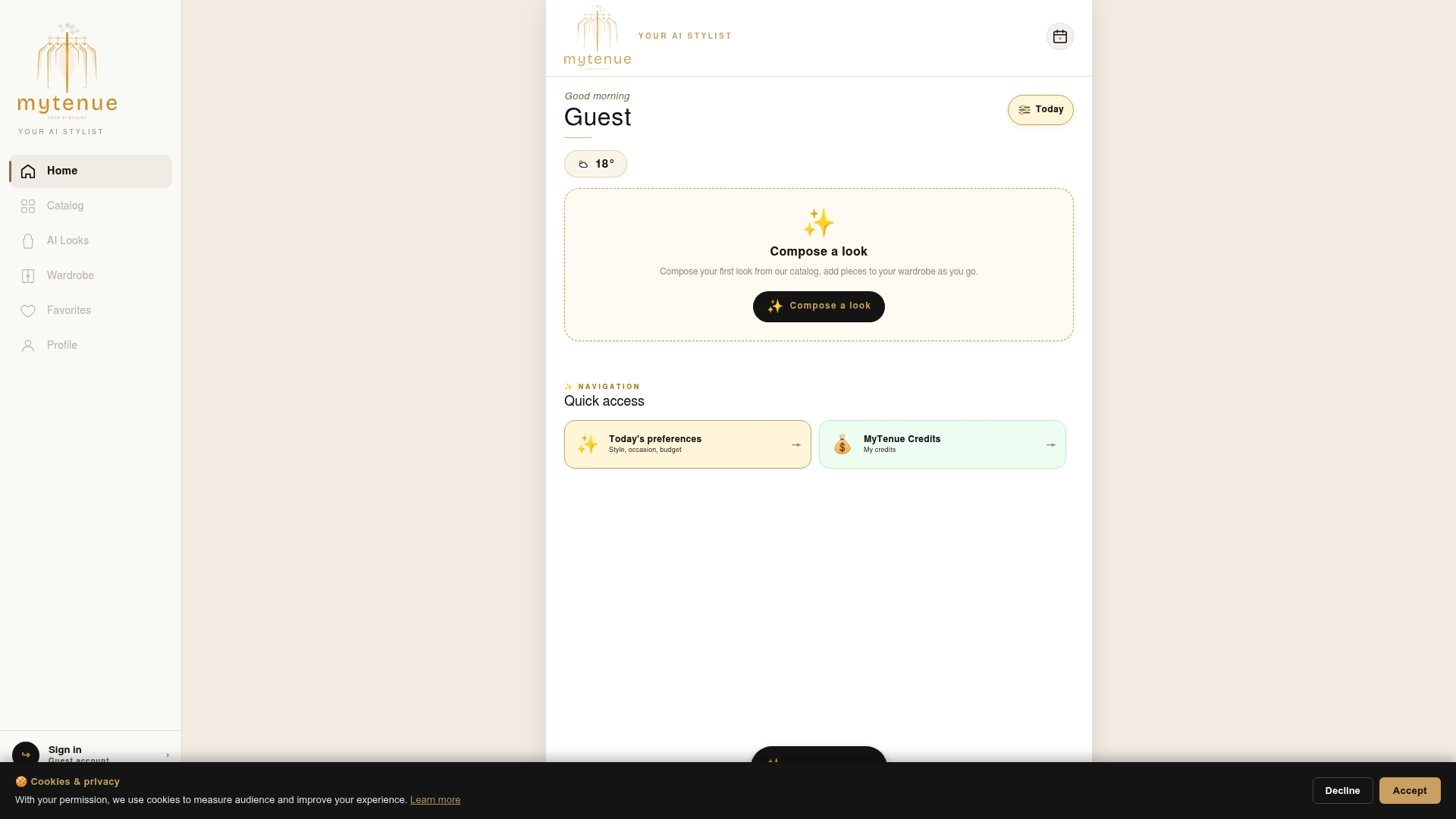
Beyond suggestions, we offer high-quality virtual try-on with your own avatar, weather-adapted daily picks, editorial flat-lay outfit images, and calendar-based outfit planning so your formulas land on the right day automatically. Our Free plan is the easiest way to see how it works with your own clothes, and Basic, Premium, and Gold tiers unlock more styling depth and premium catalog access as you need it. Visit our app page to start digitizing your wardrobe today.
FAQ
What are some outfit formulas?
Common outfit formulas include neutral base plus one accent color, monochrome dressing, topper swap, hero accessory, and proportion balance (pairing a fitted piece with a loose one). Each one gives you a repeatable pattern so you can build a full outfit from a short mental checklist instead of starting from scratch.
Is the MyTenue app worth it?
MyTenue generates outfit suggestions directly from your own digitized wardrobe and adds features like virtual try-on, weather-based picks, and calendar planning, which can save real time compared to manually testing formulas. The Free plan lets you try the core features before deciding if a paid tier fits your routine.
What is the 7-rule for outfits?
There isn't one agreed rule among style sources; the idea varies depending on where you read it. A common version suggests keeping an outfit to a limited number of visible elements, counting top, bottom, shoes, and accessories, so the look stays intentional rather than cluttered.
What is the French wardrobe method?
The French wardrobe method is a purchasing and editing framework, not an outfit formula: you build a foundation of versatile basics, then limit new non-basic purchases to around five pieces per season. A moderated version of this approach treats that number as a guideline for keeping a small wardrobe current, not a strict rule.
Why do outfit formulas work so well?
Fashion sites describe outfit formulas as a styling trick that turns staples like a white tee, jeans, and blazer into repeatable, low-effort looks. They work because you're reusing a proven pattern instead of making new decisions every morning.
Sources
- How to Build a French Capsule Wardrobe With 5 Pieces | Who What Wear
- The 5-Piece French Wardrobe Is Your Spring Closet Solution | Vogue