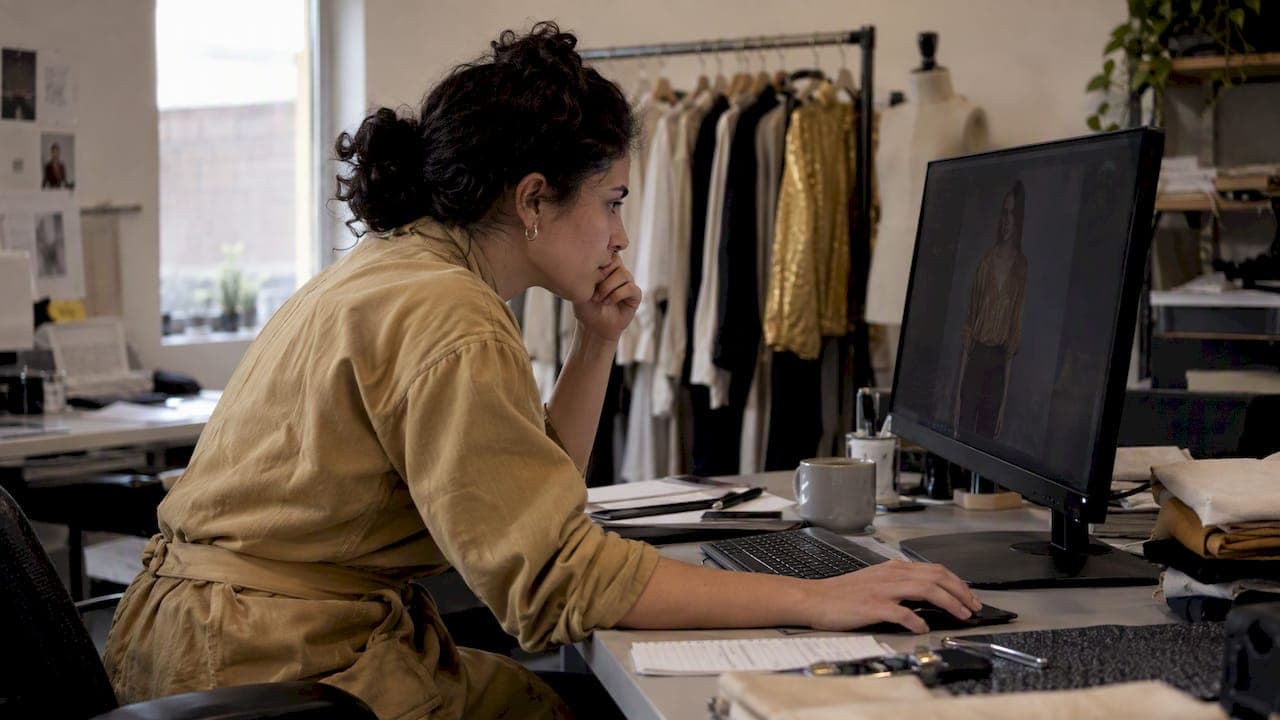
Try-on render quality means garment fidelity, identity preservation, and believable fit, working together so the image looks like a real photo. The priority for product teams: measure garment fidelity and body compatibility with human-aligned tests before chasing speed or style. Get that right, and conversion follows. Get it wrong, and shoppers stop trusting the preview entirely.
TL;DR:
- Score silhouette, color, structure, texture, branding, and identity separately; a blended rating can conceal a strong overall image with a distorted logo.
- Pixel metrics such as SSIM, LPIPS, and FID can miss fit problems; human ratings remain essential, while VTON-IQA predicts perceptual quality without reference images.
- Blurry garment images and poorly lit shopper photos limit output quality regardless of model, so enforce capture standards and route borderline renders to manual review.
- Label generated results as previews, not fit guarantees, and offer avatar or model alternatives when confidence is low rather than publishing a flawed image.
Table of Contents
- Why rendering quality drives conversions, returns and trust
- Core fidelity dimensions to test
- Technical drivers behind render quality and speed
- How to measure try-on quality with metrics and human testing
- QA checklist before you ship or scale try-on
- Uploader, preview modes, and fallback flows that build trust
- How MyTenue approaches render quality as a publisher
- Try wardrobe-first virtual try-on with MyTenue
- FAQ
- Sources
Why rendering quality drives conversions, returns and trust
A believable preview changes buying behavior. When shoppers can see how a garment actually falls on a body shape close to their own, they commit faster and second-guess less. Merchant platforms now treat product-image quality as a ranking and trust signal, and Google Merchant Center's own image guidelines stress that generated images are approximations, never a promise of exact fit.
That distinction matters for the copy around your try-on feature: say "preview" or "visualization," never "guaranteed fit." Setting that expectation protects trust when a render is close but not perfect.
Track these signals as render quality improves:
- Conversion lift on product pages where try-on is used versus not used
- Try-on feature adoption rate among visitors
- Return rate for items previewed through try-on versus items bought without it
Core fidelity dimensions to test
Render quality is not one score. It's a set of dimensions that each fail differently, and a recent taxonomy from dimension-wise virtual try-on research provides product and QA teams a concrete checklist to work from.
- Silhouette and drape: Does the garment outline match how the fabric would actually fall, including hems and shoulder lines?
- Color and material appearance: Does the color hold steady under different lighting conditions, including white balance shifts?
- Structural details: Are seams, collars, sleeves, and fastenings placed correctly instead of smoothed away?
- Texture and pattern fidelity: Do prints, embroidery, and knit patterns stay sharp instead of blurring into a flat wash of color?
- Logo and branding accuracy: Is the logo legible and undistorted, since shoppers notice branding errors immediately?
- Body compatibility and identity preservation: Does the render keep the person's actual face, skin tone, and proportions intact?
The same paper found these seven dimensions, silhouette, color, neckline and sleeve shape, structural features, texture, fine detail, and logo preservation, consistently separate strong renders from weak ones. Teams that score renders against each dimension individually catch failures that a single overall rating would hide.
Pro Tip: Score each dimension on its own scale rather than averaging into one quality number, since a perfect silhouette can mask a ruined logo.

Technical drivers behind render quality and speed
Two pipeline families dominate virtual try-on today. Warp-based approaches map the garment onto a body estimate directly, which is fast but struggles with complex poses and can stretch patterns unnaturally. Diffusion-based pipelines generate the image from the ground up conditioned on the garment and body, producing more natural texture but at higher compute cost.
A few technical choices decide where a render lands on that spectrum:
- Pose and shape estimation quality (DensePose, SMPL, OpenPose) sets the foundation; a bad body estimate dooms everything downstream
- Segmentation accuracy determines whether the garment boundary is clean or ragged
- A post-hoc refiner stage, as used in OutfitAnyone's two-stream diffusion approach, recovers fine texture and reduces identity drift after the main generation pass
- Compressed latent-space diffusion can bring near-real-time response without the full cost of pixel-space diffusion, narrowing the latency-versus-fidelity gap
Input quality often matters more than any model choice. A blurry packshot or a poorly lit user photo caps the ceiling on output quality no matter how capable the pipeline is.
How to measure try-on quality with metrics and human testing
Objective metrics like SSIM, LPIPS, and FID give a quick automated signal, but they measure pixel and feature similarity, not whether a shopper finds the result convincing. A render can score well numerically while still looking subtly wrong to a human eye.
That gap is why human-aligned frameworks matter. VTONQA's multi-dimensional dataset scores renders across three dimensions, clothing fit, body compatibility, and overall quality, using mean opinion scores (MOS) from real raters. Its findings show clothing fit is the hardest dimension for models to nail, while body compatibility tends to score higher, and objective metrics correlate poorly with human judgment specifically on fit.
For teams that can't run MOS studies on every batch, reference-free assessment models like VTON-IQA predict human-aligned quality scores without needing a ground-truth comparison image, trained on large annotated benchmarks.
The VTON-QBench benchmark backing VTON-IQA includes 62,688 images and 431,800 human annotations, giving the model a large reference base for predicting perceptual quality at scale.
Watch these operational KPIs once a scoring method is in place:
- Share of try-on renders above your MOS quality threshold
- Try-on-to-purchase lift compared to product pages without try-on
- Artifact rate flagged by automated or manual review
QA checklist before you ship or scale try-on
Before launch, run every image through a short gate instead of trusting the pipeline blindly.
- Confirm packshots meet resolution, lighting, and single-garment framing standards, following merchant image specification guidance.
- Require user-photo uploads to meet minimum pose, background, and face-visibility rules.
- Run automated preflight checks: alignment score, identity-preservation comparator, and artifact detector.
- Route borderline results to manual review instead of auto-publishing them.
- A/B test any pipeline change against your current MOS benchmark before a full rollout.
Set hard thresholds up front: a latency ceiling, a maximum acceptable artifact rate, and a minimum MOS target. Our own sizing guidance on accurate virtual try-on covers how fit-specific QA steps reduce size-related returns.
Pro Tip: Treat identity drift as a launch blocker, not a cosmetic bug. Shoppers notice when a render doesn't look like them, and that breaks trust fast.
Uploader, preview modes, and fallback flows that build trust
Good UX compensates for pipeline limits. An uploader with instant framing feedback and overlay guidance, as explored in uploader UX research for photo-based previews, catches bad input before it ever reaches the model. Our own guide to photographing clothes for AI try-on walks through the same logic for garment shots.
- Offer a choice between avatar, personal photo, or model-library preview, and let shoppers pick what feels right for them
- Retain metadata flagging AI-generated images where platform rules require it
- When render confidence is low, fall back gracefully: ask for a better photo, or show a model image instead of forcing a flawed render
How MyTenue approaches render quality as a publisher
We built our wardrobe-first approach around identity preservation from day one: avatar-based previews that keep a person's proportions and features intact, paired with outfit curation drawn from items already in a closet. Our photo-based preview design reflects the same evaluation loop described above, guided photo capture, automated checks, and manual review for edge cases, applied daily across our catalog.
— Ahmed
Try wardrobe-first virtual try-on with MyTenue
We give AI outfit recommendations pulled straight from your own closet, paired with avatar previews that keep your proportions and features true to life. No guesswork about what fits. No flat, generic model shots standing in for your body.

- Avatar-based try-on that preserves your identity while showing real garment fit
- AI outfit curation from your own wardrobe, plus new pieces that match your style
- Editorial flat-lay generation and weather-ready daily suggestions, all in one app
Privacy sits at the center of how we built this: your photos stay yours, and preview generation follows the same guided-capture and review steps outlined above. See it for yourself on our app page, where subscription tiers are available.
FAQ
What makes a virtual try-on render look realistic?
Realism comes from matching silhouette, color, texture, and structural details to the real garment while keeping the shopper's face and proportions intact. The dimension-wise fidelity framework treats these as separate scores rather than one blended quality rating, since a render can nail color while still distorting the logo.
How is try-on quality measured objectively?
Objective metrics like SSIM, LPIPS, and FID compare pixel and feature similarity, but they correlate poorly with what a human actually perceives as a good fit, according to VTONQA's benchmark findings. Human-aligned models like VTON-IQA close that gap by predicting perceptual scores without needing a reference image.
Why do some try-on renders distort a person's face or body?
Identity drift typically happens when pose and shape estimation is inaccurate or when a diffusion pipeline over-generates detail without a refinement step to anchor it back to the original photo. A post-hoc refiner stage, as used in OutfitAnyone's research pipeline, helps recover texture while reducing that drift.
Can virtual try-on guarantee a correct clothing size?
No. Try-on renders are visualizations, not fit guarantees, and merchant platform guidance is explicit that generated images are approximations. Pairing a render with clear sizing guidance, like our steps for accurate virtual try-on sizing, reduces size-related disappointment.
What should a basic quality-control checklist include?
At minimum: packshot standards for resolution and lighting, user-photo requirements for pose and face visibility, automated identity and artifact checks, and a manual review step for borderline results. Setting a latency ceiling and a minimum MOS target before launch keeps quality consistent as volume scales.