
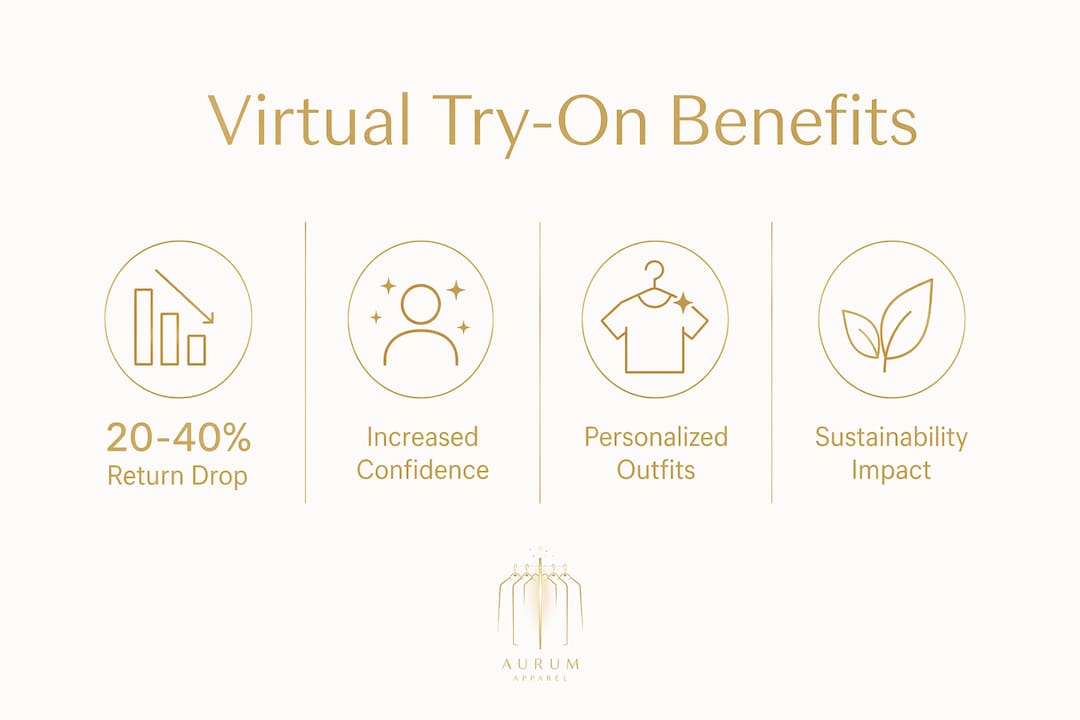
Virtual fitting rooms are defined as AI and augmented reality tools that let you see clothing on your own body without ever touching a garment. The role of virtual fitting rooms in fashion goes far beyond novelty. These tools directly address the two biggest pain points in online shopping: buying clothes that don't fit and returning them. Research shows that virtual try-on features can reduce apparel return rates by 20–40% and lift conversions by up to 32% in categories like eyewear. That's not a marginal improvement. That's a structural shift in how fashion retail works, and it's happening right now.
How do virtual fitting rooms work?
Virtual fitting rooms, also called digital try-on tools, use a combination of computer vision, body pose estimation, and generative AI to place garment images onto your body in real time. The process is straightforward. You upload a photo or activate your camera, and the system maps your body shape, then overlays the selected garment with adjusted proportions. Modern AI systems complete this process in under 10 seconds. That speed matters because it keeps the experience feeling like shopping, not like filling out a form.
The technology comes in three main formats:
- Browser-based tools: Run directly in your web browser with no app download required. These are the most accessible but sometimes sacrifice fabric realism for speed.
- Mobile apps: Offer real-time AR overlays using your phone camera. These work well for accessories and outerwear.
- AR mirrors: Found in physical retail locations, these let you see outfit changes on a full-length digital display without undressing.
Each format has a different trade-off between accessibility and visual accuracy. Browser-based tools prioritize speed. AR mirrors prioritize immersion.
Pro Tip: Use virtual fitting rooms to confirm silhouette and color coordination first. Don't expect them to replicate how a silk blouse drapes or how a knit stretches. Those tactile qualities still require physical contact.

What are the main benefits of virtual try-ons for shoppers?
The clearest benefit is confidence. Virtual fitting rooms build both cognitive and emotional confidence before you commit to a purchase. You stop guessing whether a blazer will hit at the right hip point or whether that shade of olive actually works with your skin tone. You see it. That shift from guessing to seeing changes purchase behavior significantly.
Here are the four benefits that matter most:
- Fewer returns. Improved fit clarity means fewer surprises when the package arrives. The 20–40% return rate reduction is the most cited figure in the industry, and it holds across apparel categories.
- Higher conversion. Shoppers who use virtual try-on are more likely to complete a purchase. The 32% conversion lift in eyewear shows what happens when uncertainty is removed from the equation.
- Less time spent deciding. Virtual try-on tools reduce product exploration time by clarifying fit expectations early. You spend less time reading size charts and more time choosing styles you actually like.
- Better personalization. Real-time outfit visualization lets you experiment with combinations you wouldn't have considered otherwise. This is where virtual fitting technology starts to feel like having a personal stylist on call.
The personalization angle connects directly to AI-powered outfit curation, where tools go beyond single-item try-on to suggest complete looks based on your existing wardrobe and style preferences.
Pro Tip: Virtual try-on works best for verifying fit and silhouette. Use it as your first filter, then rely on size guides and fabric descriptions for the final call on texture and weight.
What are the current limitations of virtual fitting room technology?
The technology is genuinely useful, but it has clear limits. Simulating tactile fabric properties like softness, elasticity, and draping remains the hardest unsolved problem in virtual garment representation. A jersey knit and a structured canvas look different in real life, but many digital try-on tools render them with similar visual weight. That gap creates unrealistic expectations for shoppers who rely on the preview too heavily.
The core challenges break down like this:
- Fabric physics realism: Most tools prioritize fast rendering over accurate fabric simulation. Fast AI-driven image swaps sometimes produce uncanny results where garments look pasted on rather than worn.
- Tactile feedback: No current technology replicates the feel of fabric. This is a fundamental limitation, not a software bug.
- Privacy concerns: Uploading photos to external servers raises legitimate data security questions. On-device processing using WebGL or WebGPU techniques keeps your photo data local and prevents external transfer. Fashion-conscious shoppers should check whether a platform processes images on-device before uploading.
- Body diversity accuracy: Fit prediction improves with more body data, but many platforms still underperform for non-standard body types.
The good news is that the industry knows where the gaps are. Fabric simulation research is active, and on-device processing is becoming a standard privacy feature rather than a premium add-on.
Pro Tip: Before uploading photos to any virtual fitting platform, check its privacy policy for language about on-device processing or local image handling. That one detail tells you a lot about how seriously the platform takes your data.
What is the impact of virtual fitting rooms on fashion retail?
Virtual fitting rooms are reshaping fashion retail at the structural level. They reduce the cost of returns, which is one of the most expensive problems in ecommerce. They also accelerate the shift toward AI wardrobe personalization, where the shopping experience becomes less about browsing and more about curating.
| Impact area | What changes | Why it matters |
|---|---|---|
| Return rates | Drop by 20–40% with accurate fit previews | Lower logistics costs for retailers, less waste for shoppers |
| Conversion rates | Up to 32% lift in high-confidence categories | More purchases completed per session |
| Decision time | Reduced through fit clarity and visual confirmation | Shoppers reach decisions faster with less frustration |
| Sustainability | Fewer returns means less packaging and transport emissions | Supports fashion's broader environmental goals |
| Consumer confidence | Strengthened through visual and cognitive reassurance | Builds long-term brand loyalty |
The sustainability angle is underappreciated. Every returned garment generates packaging waste and transport emissions. A 30% reduction in returns across a major retailer's catalog represents a meaningful environmental gain, not just a financial one.
The future of virtual fitting rooms points toward portable, cross-platform digital wardrobes. The vision is a unified virtual wardrobe where you can mix and match items from different brands in a single session. That capability would fundamentally change how fashion-conscious shoppers plan outfits and make purchase decisions. It also aligns with how visual styling tools are evolving to support full wardrobe management rather than single-item decisions.
Key Takeaways
Virtual fitting rooms deliver measurable results in conversion, returns, and shopper confidence, but their value depends on using them for fit and silhouette verification rather than fabric assessment.
| Point | Details |
|---|---|
| Core function | AI and AR tools overlay garments on your body to confirm fit before purchase. |
| Proven impact | Return rates drop 20–40% and conversions lift up to 32% with virtual try-on. |
| Best use case | Verify silhouette, color, and proportion. Do not rely on them for fabric texture. |
| Key limitation | Fabric physics simulation remains imperfect, sometimes producing unrealistic previews. |
| Future direction | Cross-platform digital wardrobes will let shoppers mix items from multiple brands in one session. |
What I've learned from watching virtual fitting rooms mature
I've followed virtual fitting technology for years, and the thing that surprises most people is how quickly the useful part arrived and how slowly the perfect part is coming. The useful part, confirming whether a coat hits at the right length or whether a color works with your complexion, is already here and works well. The perfect part, simulating how a fabric moves when you walk, is still years away from being reliable.
What I tell fashion-conscious shoppers is this: treat virtual try-on like a first edit, not a final answer. Use it to cut your shortlist from ten items to three. Then use size charts, fabric descriptions, and return policies to make the final call. That workflow saves real time and reduces the frustration of returns without asking the technology to do something it can't yet do.
The trend toward AI-powered outfit decisions that reduce decision fatigue is the bigger story here. Virtual fitting rooms are one piece of that. The broader shift is toward tools that know your wardrobe, understand your style, and help you dress well without spending an hour in front of your closet. That future is closer than most people realize.
— Ahmed
Mytenue: your AI stylist for smarter outfit choices
Choosing what to wear shouldn't take longer than wearing it. Mytenue uses AI to curate complete outfits based on your style preferences, occasions, and budget, all in one place.
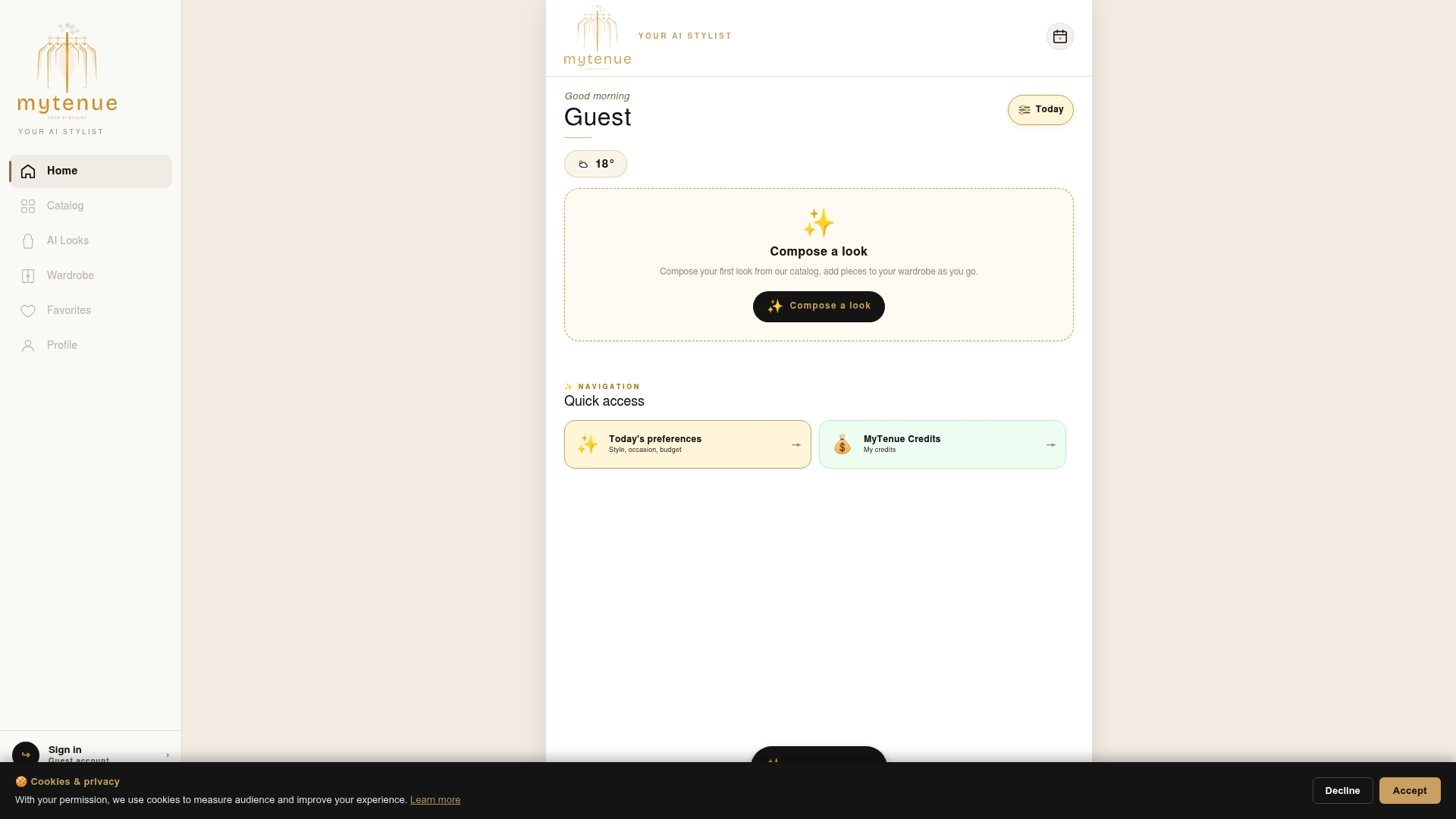
Whether you want to mix existing wardrobe pieces with new finds or build looks from scratch, Mytenue's AI styling does the heavy lifting. No more second-guessing. No more decision fatigue. Just outfits that work, ready when you are. Visit Mytenue and let your AI stylist take it from here.
FAQ
What is the role of virtual fitting rooms in fashion?
Virtual fitting rooms let shoppers see how clothing looks on their own body before buying, using AI and augmented reality. Their primary role is to reduce purchase uncertainty, lower return rates, and build shopper confidence.
How do digital fitting rooms work?
They use computer vision and body pose estimation to map your body shape, then overlay garment images with adjusted proportions. Most modern systems complete this process in under 10 seconds.
Do virtual fitting rooms actually reduce returns?
Yes. Research shows virtual try-on features reduce apparel return rates by 20–40% by giving shoppers clearer fit expectations before purchase.
What can't virtual fitting rooms do yet?
They cannot accurately simulate how fabric feels, moves, or drapes on the body. Tactile properties like softness and elasticity remain beyond current digital representation.
Are virtual fitting rooms safe for privacy?
Platforms that use on-device processing via WebGL or WebGPU keep your photo data local and do not transfer it to external servers. Always check a platform's privacy policy before uploading images.