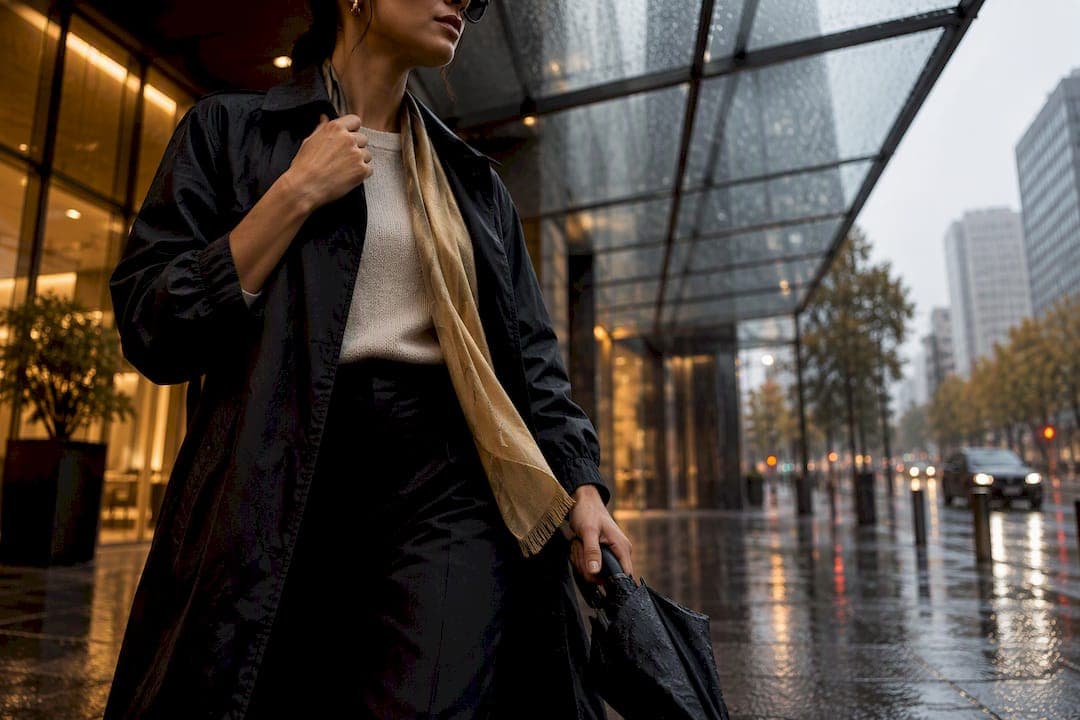
The easiest reliable way to pick an outfit is a modular three-layer system adjusted for the day's temperature band, plus a quick check on rain and wind. Forecasts get less certain the further out you look, so re-check before you leave the house. If you want the math done for you, an AI tool like MyTenue can turn those checks into ready outfits in seconds.
TL;DR:
- Dressing for the day depends on three key numbers: temperature range, rain probability, and wind speed, rather than detailed weather forecasts.
- Outfits should be based on specific temperature bands, with layered systems that can be adjusted easily for swings or changing conditions.
- Waterproof outer layers and waterproof footwear are essential for actual rain, while repellent fabrics suffice for light drizzle and short errands.
- High humidity and UV index impact fabric choice, favoring breathable, light-colored, loose garments to stay cool and protected.
- AI tools like MyTenue automate weather-based outfit planning by matching forecast data to your wardrobe, making daily dressing quicker and more reliable.
Table of Contents
- Quick rules to decide an outfit this morning
- Temperature bands: copyable outfit formulas for common ranges
- Rain and wind: what to wear and what to pack
- Heat and heat-wave dressing: fabrics and safety first
- Materials and sustainable care: pick fabrics that perform and last
- How AI and MyTenue put these rules to work
- Fast morning workflow: a 6-step checklist
- How humidity and UV index shape what you wear
- Advice for transitional weather days
- Why day-focused outfit planning works
- MyTenue: a practical way to automate daily outfit picks
- Sources
- FAQ
Quick rules to decide an outfit this morning
You do not need a weather degree to dress well. You need three numbers and thirty seconds: the temperature range for the day, the chance of rain, and how hard the wind will blow. Everything else is styling.
- Check the day's low and high temperature, not just one number, since mornings and afternoons often call for different layers.
- Look at precipitation probability and intensity: light drizzle changes little, but a real chance of rain means swapping in a waterproof outer layer and water-resistant shoes.
- Check wind speed: strong gusts make a hood far more practical than an umbrella.
- When the temperature swing is large, grab one or two removable mid-layers instead of committing to a single heavy piece.
- If you are short on time, default to neutral base and mid-layers that work whether or not you add a jacket later.
- Before walking out, glance at short-term radar. Météo-France notes that finer-scale events like showers are often unpredictable beyond a few hours, so a five-minute recheck beats a forecast you saw the night before.
Temperature bands: copyable outfit formulas for common ranges
Skip the seasonal guesswork. Match your outfit to the actual number on your phone.
- 0 to 5°C: thermal base layer, wool or fleece mid layer, insulated waterproof coat, waterproof boots, and a knit hat.
- 6 to 10°C: long-sleeve base, sweater or light fleece, a wind-resistant jacket, closed sneakers or boots, and a scarf.
- 11 to 15°C: cotton or blended tee, light cardigan or overshirt, a packable shell for wind, sneakers, and no accessory needed beyond the shell.
- 16 to 20°C: short or long sleeves depending on personal comfort, an optional light layer for shade or evening, sneakers or loafers, and sunglasses.
- 21 to 25°C: breathable tee or blouse, no mid layer, light shoes, and a cap or sunglasses for daytime glare.
- Above 25°C: loose, breathable fabrics only, sandals or ventilated sneakers, and a hat for sun exposure.
Adjust for how you move through the day. A bike commute needs a slightly lower base layer since exertion raises your body temperature, while a sedentary office day calls for one extra layer you can shed indoors. These bands mirror the formulas tested in Six Temperature Bands, and the 10°C range gets a deeper breakdown in One Three Layer Formula, which shows how a single three-piece system stretches across six distinct looks.
Pro Tip: Keep one packable shell in your bag year-round. It turns any of these formulas into a rain-ready outfit without changing anything else.
Rain and wind: what to wear and what to pack
Water-repellent (déperlant) fabric sheds light drizzle for a while, then soaks through. Waterproof means sealed seams and a membrane built to handle sustained rain. For a quick errand, repellent is fine. For a commute or a forecast with real rain, choose waterproof.
- Pick rubber-soled boots or water-resistant sneakers over canvas shoes, which stay wet for hours.
- Protect your bag with a dry bag insert or a rain cover rather than hoping the fabric holds up.
- Choose a hood over an umbrella when wind is strong: umbrellas turn inside out, hoods do not.
- If radar shows a short, intense shower rather than steady rain, a compact packable layer beats committing to a full raincoat.
- Keep the palette simple (navy, olive, black) so a waterproof shell still looks intentional with the rest of the outfit.
The case study behind Tenue Pluie walks through exactly this balance: staying dry without looking like you dressed for a storm. Cyclists get their own version in the Commuter Rain Kit, built around six pieces that survive a ride without soaking through.
Heat and heat-wave dressing: fabrics and safety first
Hot days are as much about safety as style. Choose breathable, loose-cut fabrics like linen or lightweight cotton, and stick to light colors that reflect rather than absorb heat. A hat and sunglasses are not optional accessories once the sun is strong.
- Favor linen, lightweight cotton, or technical breathable synthetics over anything tight or heavy.
- Choose light colors: white, pale blue, and light gray reflect more heat than black or navy.
- Add a hat or cap and sunglasses whenever you expect direct sun exposure.
- Pick fast-drying fabrics if you know you will sweat, since they stay comfortable longer.
During heat waves, public guidance recommends staying cool, drinking regularly, limiting strenuous activity and adapting clothing to prioritize breathable, light fabrics and sun protection, according to Service-Public's heat-wave guidance. Dressing for heat is really about supporting those same behaviors: less fabric, less color absorption, more shade. For everyday sun habits beyond clothing, the skin protection checklist covers practical steps that pair well with lighter outfits.
Materials and sustainable care: pick fabrics that perform and last
Not every fabric earns its place in your closet. Wool insulates even when damp and resists odor, linen breathes but wrinkles fast, cotton is comfortable but slow to dry, and synthetics resist water and dry quickly but trap heat and shed microfibers. Weigh the tradeoff against how often you will actually wear the piece.
- Choose durable garments over cheap, short-lived ones, since a piece that lasts fewer washes costs more per wear.
- Wash less often and air-dry when possible to extend garment life.
- Repair small damage instead of replacing the item.
- Favor single-material garments, since they are easier to recycle at the end of their life.
ADEME's guidance on choosing and caring for clothing makes the point directly: fabric choice alone does not lower your impact. Care and longevity do the real work, which is exactly why a rain shell or a wool coat is worth paying more for if you will wear it for years.
How AI and MyTenue put these rules to work
An AI stylist runs the same checklist you just read, automatically. MyTenue pulls hourly forecast data, precipitation probability, wind, and a personal comfort setting, then matches that against your digitized wardrobe to suggest layers that fit the day.
- Open the app and let it read the day's forecast for your location.
- Get two or three outfit options built from pieces you already own.
- Pick one, then pack a removable layer if the forecast shows a temperature swing or rain risk.
The same logic runs through Six Temperature Bands, One Three Layer Formula, and Tenue Pluie, each built around real forecast conditions rather than generic seasonal advice.
Pro Tip: Digitize a capsule of 10 to 15 core pieces first. Fewer, well-chosen items give the AI more useful combinations than a half-photographed closet.
Fast morning workflow: a 6-step checklist
Whether you have two minutes or ten, the order of operations stays the same.
- Check the day's low and high temperature.
- Check precipitation probability and wind speed.
- Pick your base and mid layer from your temperature band.
- Add or skip the outer layer based on rain and wind.
- Grab a compact rain layer if radar shows any chance of showers.
- Do a final radar check right before you leave.
With ten minutes, add a quick glance at your calendar to see if the day includes extra walking or a workout, which might change footwear. With two minutes, stick to the six steps above and trust the temperature band formula. If your schedule is predictable, prep the whole outfit the night before and only reconfirm the forecast in the morning.
How humidity and UV index shape what you wear
Temperature alone does not tell the whole story. High humidity makes warm days feel hotter and slows sweat evaporation, so breathable, loose-fitting fabrics matter even more than the thermometer suggests. On humid days, skip tight synthetics that trap moisture against skin and choose linen or technical fabrics designed to wick and dry fast.
UV index works independently of temperature. A cool, overcast day can still carry a high UV index, especially in spring and early summer, which means sun protection is a clothing decision, not just a sunscreen one. Long sleeves in a light, breathable fabric, a wide-brim hat, and sunglasses all reduce exposure without adding heat. On days with both high humidity and high UV, the safest combination is light color, loose cut, and enough coverage to limit direct sun without trapping sweat.
Check both numbers together rather than one at a time. A hot, dry, low-UV day calls for minimal coverage and breathable fabric. A milder, humid, high-UV day might call for more coverage in a lighter fabric instead of less coverage overall.
Advice for transitional weather days
Spring and fall days are the hardest to dress for because the morning and afternoon can feel like two different seasons. The fix is not a single outfit, it is a modular one: start with a light base layer, add a removable mid layer for the cold morning, and plan to shed it by early afternoon.
Mixed conditions, like a cold start with rain moving in by afternoon, call for the same approach with one addition: pack a compact waterproof layer even if the morning looks dry. A day that swings from 8°C to 18°C, for instance, is best handled with a tee, a cardigan, and a packable shell rather than a single heavy coat that becomes a burden once the sun comes out.
The Tenue Mi-Saison formulas are built around exactly this kind of day, offering five combinations that flex between layers rather than locking you into one look. On days like these, resist the urge to dress for the coldest hour of the day. Dress for the middle of the range and carry the rest.

Why day-focused outfit planning works
Seasonal rules assume every day in a season behaves the same, and it does not. A modular, temperature-band approach adapts to what the forecast actually says, and the formulas behind MyTenue's case studies hold up because they were built from real daily conditions, not averages. Forecasts still carry uncertainty, so always glance at the sky, or the radar, before you walk out the door.
— Ahmed
MyTenue: a practical way to automate daily outfit picks
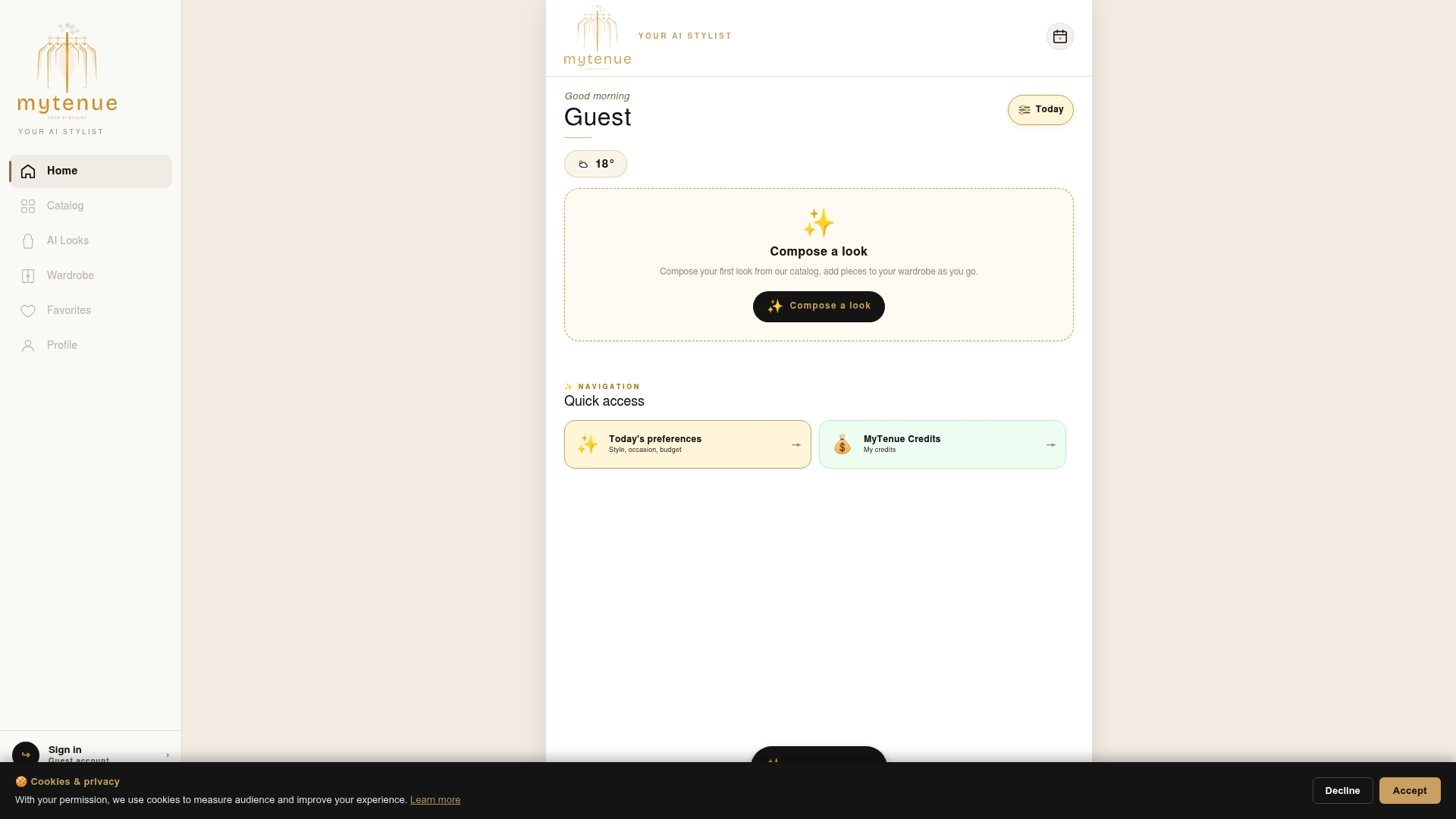
You already know the formula: check the temperature band, check rain and wind, adjust layers. MyTenue does that check for you and builds outfits from pieces you already own. It reads the day's weather, matches it against your digitized wardrobe, and gives you two or three ready options, including a virtual try-on so you can see the outfit before you commit to it.
Start with the free version to digitize a few garments and see how the recommendations feel. Paid subscription tiers unlock more styling features and daily options. Everything starts on the MyTenue app page.
Sources
- Météo‑France — What can be forecast and at what horizon?
- ADEME — 10 solutions to choose and care for clothing
- Service-Public — heat-wave and safety guidance
FAQ
What is the 3-3-3 rule for clothing?
Definitions vary online, and there is no single official source confirming one canonical "3-3-3 rule" for clothing. The most useful version echoes this article's approach: three temperature checks (morning low, afternoon high, and wind), applied to a three-layer system of base, mid, and outer pieces.
How should I dress today based on the weather?
Start with the day's low and high temperature to pick your layers, then check rain probability and wind before choosing your outer layer and shoes. Météo-France notes that short-term radar is more reliable than a single forecast pictogram for deciding on rain gear at the last minute, so recheck before you leave.
What outfits should I avoid after 50?
There is no meteorology or sustainability source backing a specific list of outfits to avoid by age, so this article will not invent one. The more useful guidance at any age is functional: match fabric and layers to temperature, humidity, and UV index rather than to a style rule tied to age.
How do I dress between 10 and 20 degrees Celsius?
This range spans two of the outfit formulas above: a sweater with a wind-resistant jacket around 6 to 10°C, and a lighter cardigan or overshirt with a packable shell from 11 to 15°C, moving toward short sleeves with an optional light layer by 16 to 20°C. Carrying one removable mid-layer covers the whole range without needing multiple outfit changes.
Can an app suggest outfits based on the weather automatically?
Yes, an AI stylist like MyTenue reads hourly forecast data including temperature, precipitation, and wind, then matches it against your digitized wardrobe to suggest ready-to-wear combinations. You can try this by digitizing a few pieces on the MyTenue app page and comparing the suggestions to your own morning routine.