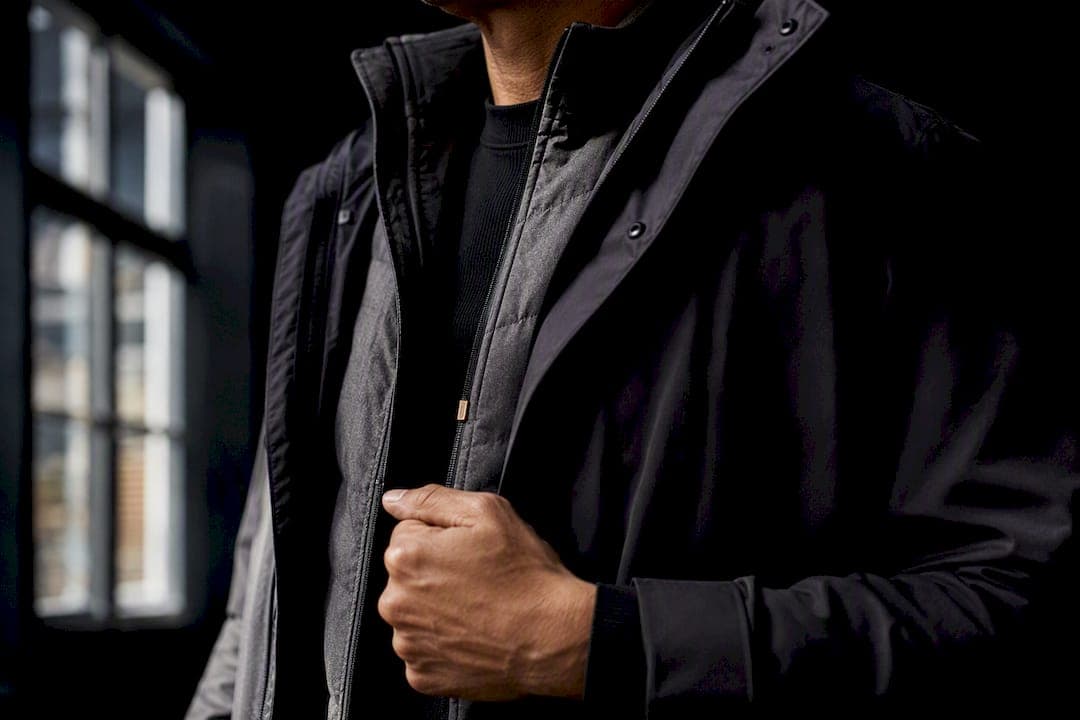
At 10°C, the simplest way to stay comfortable and look pulled together is a three-layer system: a breathable, moisture-wicking base, an insulating mid-layer like a wool sweater, and a light jacket or trench on top. Grab a thermal tee, a merino sweater, and a water-resistant outer layer, and you're set for most of the day. Wind, rain, and how much you're moving decide the fine-tuning, and that's exactly what comes next.
TL;DR:
- Layering separates is essential, with a moisture-wicking base, an insulating mid-layer, and a water-resistant outer to stay comfortable at 10°C.
- Fabric choice is critical, favoring merino wool and synthetics over cotton to regulate temperature and manage moisture effectively.
- Fit should allow each layer to slide smoothly over the one below, preventing compression and ensuring insulation performance.
- Outer shells with water resistance and windproof features must be prioritized, especially in rainy or windy conditions, with smaller, packable designs preferred.
- Replacing cheap clothing with durable, repairable layers is more cost-effective and environmentally friendly over time.
Table of Contents
- Your Instant Outfit Formula for 10°C
- How Layering Actually Works: Base, Mid, and Outer
- Wardrobe Staples Worth Owning for 10 Degrees
- Adjusting for Weather, Wind, and Activity
- Keeping Your Layers Performing Season After Season
- Six Outfits You Can Recreate This Week
- Why Weather-Adaptive Outfit Planning Beats Guessing Every Morning
- Let Mytenue Handle the 10-Degree Guesswork
- Sources
Your Instant Outfit Formula for 10°C
Forget guessing every morning. A modular formula handles the swing between a chilly commute and an overheated office better than any single "10-degree coat" ever will, because you're stacking pieces you can add or shed as the day moves.
Here's the checklist to run through before you walk out the door:
- Base: thin long-sleeve thermal or breathable tee, nothing cotton against the skin
- Mid: merino or wool sweater, cardigan, or fleece
- Outer: light jacket, trench, or packable shell
- Bottom: jeans, corduroy, or wool-blend trousers
- Feet: boots or high-top sneakers with a bit of tread
- Extras: thin scarf or beanie if mornings run colder than afternoons
If you're heading somewhere warm indoors, like a heated office or a packed café, fold the outer layer small enough to stuff in a bag. That one habit solves the single biggest complaint people have about dressing at this temperature: sweating through a coat you can't take off comfortably.
How Layering Actually Works: Base, Mid, and Outer
Each layer has one job. The base layer wicks sweat away from your skin so you don't get that damp, chilled feeling once you stop moving. The mid-layer traps warm air near your body. The outer layer blocks wind and rain from stripping that warmth away. Skip a layer, and the whole system breaks down.
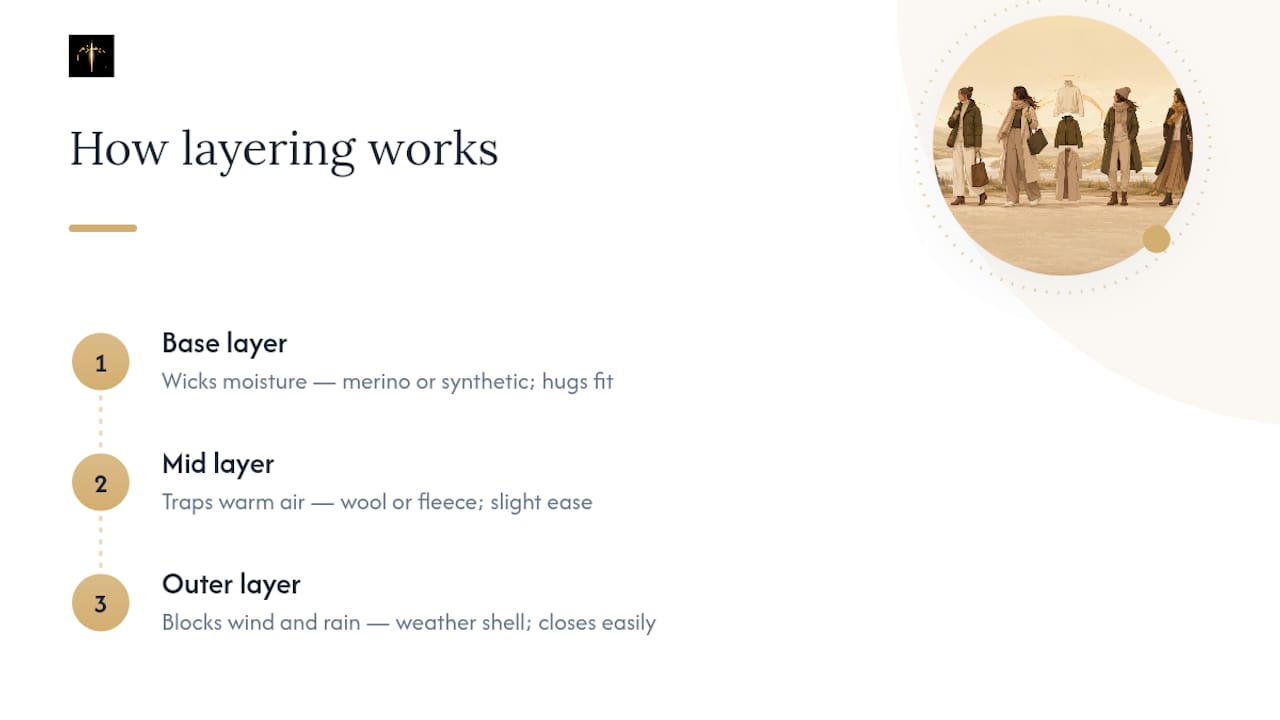
Fabric choice makes or breaks it. Merino wool and technical synthetics regulate temperature and manage moisture far better than cotton, which soaks up sweat and stays wet against your skin, turning a mild 10°C day into a genuinely uncomfortable one. Save cotton for the mid or outer layer, never the base. For insulation, wool or fleece both trap air efficiently without much bulk, and a synthetic or light down fill works well in the outer shell when the forecast turns wet.
Fit matters more than people assume. Each layer needs enough room to slide over the one beneath it. A base layer that's too tight compresses the insulation above it and cancels out the trapped-air effect that's doing the actual warming. Aim for a base that hugs, a mid that fits with a little ease, and an outer that closes without pulling across the shoulders.
Wardrobe Staples Worth Owning for 10 Degrees
A handful of well-chosen pieces cover almost every 10°C scenario without cluttering your closet. Build around these:
- Thin long-sleeve thermal: the foundation of every outfit below it
- Merino sweater: breathable, odor-resistant, and warm without bulk
- Light down or synthetic vest: adds core warmth without restricting your arms
- Trench or quilted jacket: the outer layer that does double duty for style and function
- Jeans or corduroy trousers: durable, weather-appropriate, and easy to dress up or down
- Boots or high-top sneakers: protect ankles and handle damp pavement
- Thin scarf or beanie: small, packable, and disproportionately effective at retaining warmth
When you're shopping for the outer piece, check for a water-resistant finish and a construction that packs down small. A waterproof rating considered suitable for frequent rain in cooler conditions is commonly recommended for jackets meant to handle regular rain without feeling like a rubber tent. Spend the real money on outerwear and one great mid-layer sweater. Everything else in this list can be a budget find.
Adjusting for Weather, Wind, and Activity
The formula bends depending on what you're doing and what's happening outside. REI's cold-weather guidance recommends lighter mid-layers and more breathable shells once your exertion level climbs, because a heavy sweater under a jacket turns a run or a fast bike commute into a sweat-soaked mess. For running or cycling, drop to a lighter base and mid, and let a breathable shell do the wind-blocking instead of extra insulation.
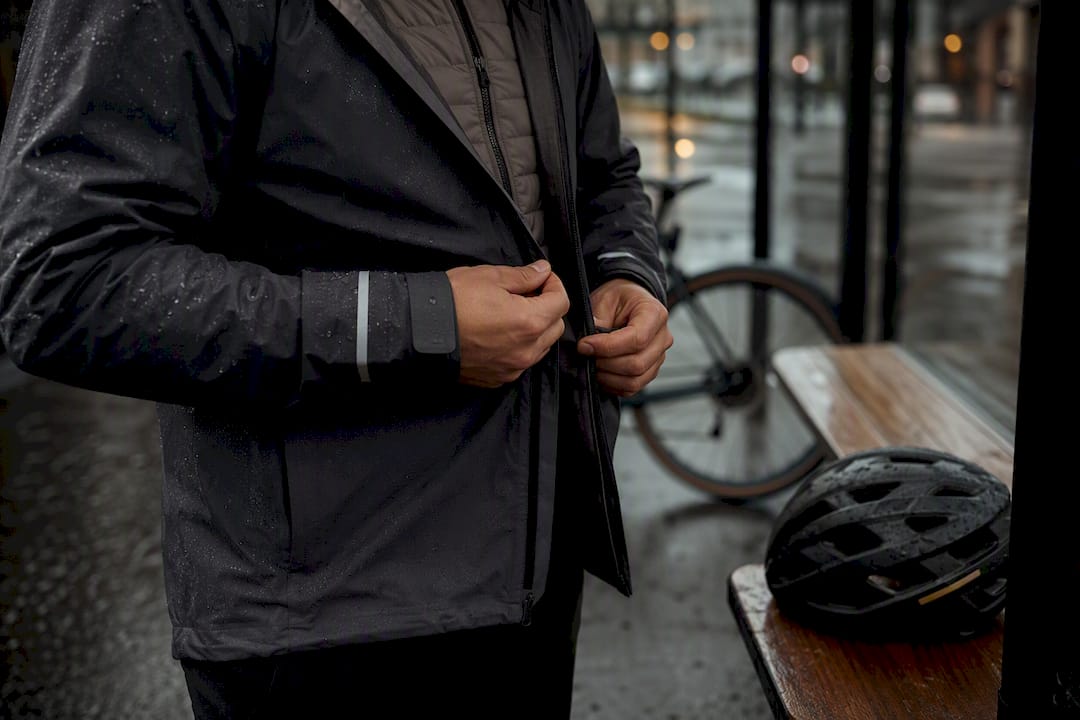
For everyday commuting, prioritize a packable outer layer over a bulky one, since you'll want it off the second you're on a warm train or in a heated lobby. Swap sneakers for boots with real tread once sidewalks get slick.
Rain and wind change the math more than the thermometer does. Check the forecast for wind speed and precipitation, not just the temperature, since a windy 10°C day feels noticeably colder than a still one. Favor a hood, a genuinely water-resistant shell, and a removable insulating layer underneath. A gilet designed for rainy conditions keeps your core warm without adding bulk to your arms, which matters if you're also carrying a bag or riding a bike.
Keeping Your Layers Performing Season After Season
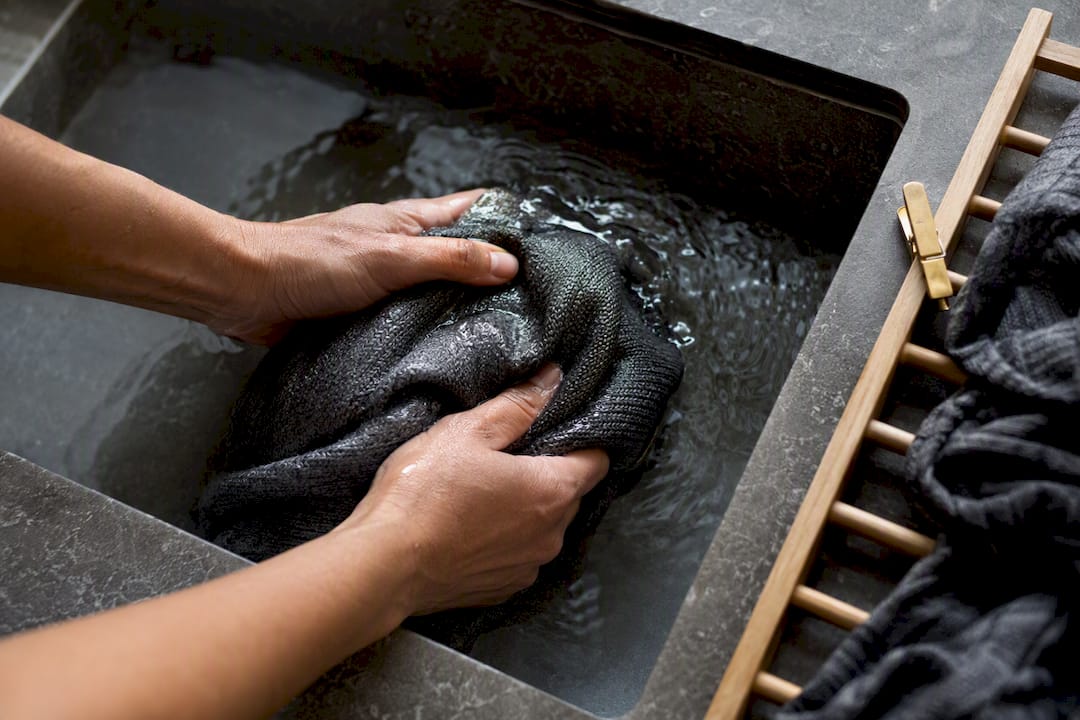
Wash merino and wool sparingly and on cool, gentle cycles. Frequent hot washing breaks down the fibers that make wool such a good insulator in the first place. Synthetics tolerate more frequent washing but still benefit from a lower heat setting to protect any waterproof coating.
When your shell stops beading water and starts soaking through instead, a reproofing treatment restores that water repellency rather than forcing you to replace the whole jacket. Pilling on a sweater is normal wear, not a reason to toss it. A fabric shaver handles that in minutes. Building a small rotation of durable, repairable layers costs less over several years than replacing cheap pieces every winter, and it keeps more clothing out of landfills in the process.
Six Outfits You Can Recreate This Week
- Everyday commute: thermal tee, merino crewneck, trench coat, straight-leg jeans, leather boots.
- Office day: button-down shirt, wool cardigan, tailored trousers, loafers, and a scarf for the walk in.
- Weekend errands: long-sleeve tee, quarter-zip fleece, packable rain shell, corduroy pants, high-top sneakers.
- Active or running: breathable base, thin windproof jacket, leggings or joggers, trail runners.
- Date night: turtleneck, tailored blazer, dark denim, ankle boots, no bulky outer if you're indoors most of the evening.
- Budget option: thrifted wool sweater, denim jacket over a thermal, straight jeans, canvas sneakers with wool socks.
Every look follows the same base, mid, and outer structure. Swap the outer piece for something waterproof if rain's forecast, and drop the mid-layer weight if you'll be walking fast or carrying bags for a while. For more combinations built the same way, Mytenue's mid-season outfit formulas and this roundup of smart-casual looks are worth a look, and Urbalenti's street style essentials offer another angle on layering staples for city dressing.
Why Weather-Adaptive Outfit Planning Beats Guessing Every Morning
Checking the forecast and rebuilding an outfit from scratch every day gets old fast, especially when 10°C can mean sun at 8 a.m. and drizzle by noon. That's the exact problem Mytenue's AI stylist was built to solve: it factors the day's weather into its outfit suggestions, so a rainy, windy 10°C morning automatically pulls a water-resistant shell and a packable mid-layer instead of the trench you'd have picked on instinct.
— Ahmed
Let Mytenue Handle the 10-Degree Guesswork
Mytenue is the shortcut for anyone tired of standing in front of a closet debating whether today needs a sweater or a shell. The app digitizes your wardrobe, then builds weather-adapted outfit suggestions daily, pulling from pieces you already own and flagging what's missing.

Instead of rebuilding the three-layer formula from memory every morning, you get a ready look based on the actual forecast, your personal style, and what's already hanging in your closet. It also generates images of each outfit, so you can see the combination before you commit to it. If you've got a big wardrobe and a small amount of patience for decision fatigue, start by digitizing your closet on Mytenue and let the app handle tomorrow's 10-degree dilemma before you've even checked the weather.
Sources
- Comment s'habiller quand il fait 10 degrés ? - Marque Vetement
- 10 degrès comment habiller ? - Linstructeur
- How to dress in cold weather - REI Expert Advice