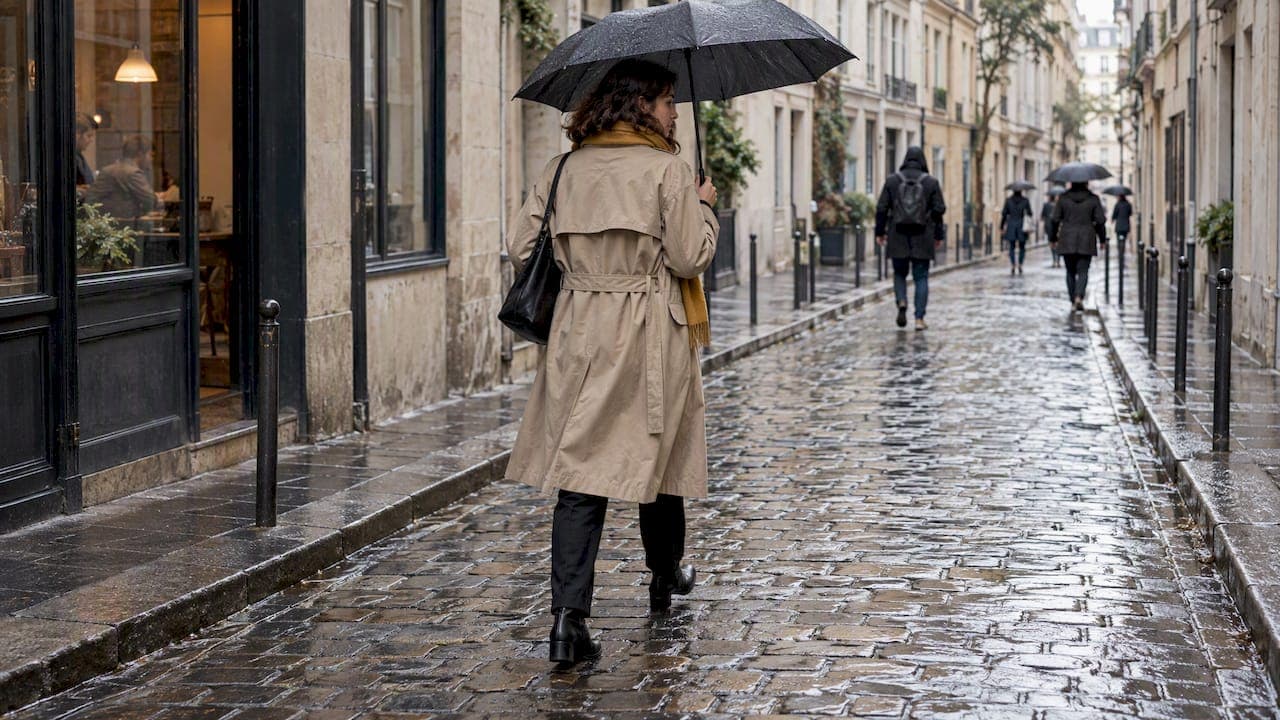
If Paris is sitting between 10°C and 15°C with clouds or a chance of rain today, wear a knit layer under a waterproof trench, straight-leg pants, and water-resistant sneakers or boots. Bring a compact umbrella and swap to a windproof shell if gusts pick up. Need something more personal? An app can turn today's forecast into a ready outfit from your own closet in seconds.
TL;DR:
- A compact capsule with a trench, two tops, a knit, two bottoms, grippy shoes, and rain gear covers five to seven day trips.
- Paris temperatures can swing from cool mornings to afternoons above 25°C, even in June, so choose breathable base layers and removable knits.
- For wet pavements and cobblestones, choose water resistant leather or treated canvas with rigid, non slip rubber soles; avoid suede and smooth leather.
- Check hourly rain and wind, since gusts can make a mild day feel colder; carry an umbrella and switch to a waterproof shell when needed.
Table of Contents
- Weather-band outfit quick guide for every Paris forecast
- Building a capsule wardrobe for a Paris trip or weekly rotation
- Layering, fabrics, and fit for Paris's oceanic climate
- Footwear and ground truth: what works on pavés and in wet streets
- Accessories that solve Paris weather problems fast
- Copyable outfit formulas by temperature band
- Daily bag checklist for Paris weather
- A Paris local's quick rituals for dressing by weather
- Let MyTenue dress you for today's Paris forecast
- FAQ
- Sources
Weather-band outfit quick guide for every Paris forecast
Paris weather rarely commits to one mood for a full day, so the fastest way to dress well here is to think in bands, not seasons. Pick your temperature range, grab the matching set, and adjust for rain or wind as needed.
Above 20°C: a breathable cotton or linen top, tailored shorts or a light midi skirt, and canvas sneakers or leather sandals. Carry a thin cardigan since terraces and shaded streets cool off fast once the sun dips.
15°C to 20°C: a short-sleeve top with a light knit or overshirt layered on top, straight-leg jeans or chinos, and leather sneakers. A cotton scarf works as both a style piece and a neck warmer once the breeze picks up near the Seine.
10°C to 15°C: a long-sleeve base layer, a mid-weight sweater, and a trench or packable waterproof jacket over it. Pair with ankle boots or water-resistant sneakers and straight trousers that move easily on the metro.
Below 10°C: a thermal or wool base layer, a heavier knit, and an insulated or wool coat with a water-resistant finish. Add a scarf, gloves, and lined boots, since damp cold here reads colder than the thermometer suggests.
Rain changes the math in every band: swap canvas or suede shoes for rubber-soled or treated leather options, and keep a packable shell in your bag even when the sky looks clear. Wind is the other variable Paris throws at you, since local forecasts often show gusts strong enough to make a mid-teen day feel several degrees cooler than it reads. This is why a windproof outer layer earns its spot in your bag even on a dry afternoon.
- Above 20°C: linen top, light bottoms, sneakers or sandals, thin cardigan for evening.
- 15°C to 20°C: layered top, jeans or chinos, leather sneakers, cotton scarf.
- 10°C to 15°C: base layer, sweater, trench or packable shell, ankle boots.
- Below 10°C: thermal layer, heavy knit, insulated coat, scarf and gloves.
Pro Tip: Keep one foldable trench in your bag from March through November so you never get caught between a sunny morning and a damp evening.
Building a capsule wardrobe for a Paris trip or weekly rotation
A tight, well-chosen set of pieces beats an overstuffed suitcase or closet, especially in a city where you walk more than you expect. The goal is coverage across temperature swings without duplicating function.
- A trench or lightweight waterproof coat, your single most versatile piece for three seasons out of four.
- Two neutral long-sleeve tops that layer easily under a sweater or jacket.
- One mid-weight knit in a color that pairs with everything else in the set.
- Two bottoms, one tailored and one casual, in fabrics with a little stretch for comfort on long walks.
- A pair of water-resistant shoes with a grippy sole for cobblestones and wet pavement.
- A packable rain shell that folds small enough for a daily tote.
- A scarf that works as both an accessory and a temperature regulator.
- A compact umbrella that fits in any bag.
This kind of 7 to 10 item set, built around a trench, a couple of tops, a knit, two bottoms, water-resistant shoes, a packable jacket, a scarf, and a compact umbrella, covers most five to seven day Paris itineraries while giving you enough layering options to handle an 8 to 20°C swing without checking a bag.
Stick to neutrals, navy, camel, gray, black, so every piece mixes with every other piece. Fabrics that layer flat, cotton, merino wool, and technical blends, pack smaller and dry faster than bulky knits, which matters when a Paris afternoon shower turns your morning layer damp by evening.

Layering, fabrics, and fit for Paris's oceanic climate
Paris sits under an oceanic climate pattern, which means mild but changeable weather where a single day can start cool, swing warm, and drop again by evening. Local climate summaries note that even a June morning can stay cool while the same afternoon climbs past 25 to 28°C, and winters tend to sit in a damp 3 to 8°C range rather than a dry, sharp cold. That kind of swing is exactly why layering isn't optional here: you need pieces you can add or remove without changing your whole outfit.
Your base layer should breathe, think cotton or a technical blend that wicks moisture, since humidity makes damp fabric feel colder than it is. Your mid layer carries most of the warmth: a lightweight wool sweater or a cotton overshirt holds heat without bulk. Your outer layer handles wind and rain, so a waterproof shell or a trench with a water-resistant finish does more work than a plain cotton jacket.
Fit matters as much as fabric. Oversized layers trap air and read sloppy once you add a scarf and a coat on top; slim but not tight pieces stack cleanly and keep you looking put together whether you're heading into a meeting or a café. Choosing pieces that layer flat, rather than puffy or structured, keeps the whole outfit elegant even with three pieces on.

Footwear and ground truth: what works on pavés and in wet streets
Paris streets are not forgiving to the wrong shoe. Cobblestones, wet tile in the metro, and long stretches of walking call for soles built for grip and support, not just looks.
- Choose shoes with a rigid, non-slip rubber sole, since smooth leather soles slide on wet pavés and metro stairs.
- Pick water-resistant leather or treated canvas over suede, which stains and warps quickly in rain.
- Keep a spray-on waterproofing treatment on hand for leather boots and sneakers, reapplied every few weeks during wet stretches.
- Pack a lightweight backup pair for days when your main shoes get soaked, especially during a multi-day trip.
- Switch to insulated, water-resistant boots once temperatures drop below 10°C or when forecasts show sustained rain.
Local weather providers flag hour-by-hour rain risk that shifts through the day, so a shoe that handles both dry pavement and a sudden shower saves you from carrying two pairs everywhere.
Accessories that solve Paris weather problems fast
A few small items do more for comfort than any single jacket. These are the pieces worth keeping in your bag every day, not just when rain looks likely.
- A compact umbrella beats a packable raincoat for quick city stops, since you can open it instantly outside a metro exit without changing your whole outfit.
- A scarf and a lightweight beanie or cap handle the gap between a mild afternoon and a cold evening without adding bulk.
- A pair of spare socks keeps you comfortable if your shoes get soaked during a sudden downpour.
- A waterproof phone sleeve protects your phone during rain without forcing you to duck under an awning every time you check directions.
- A small lint roller keeps wool coats looking sharp after a crowded metro ride.
Pro Tip: Store a folded scarf and a compact umbrella in the same pocket of your bag so you never have to dig for either when the weather turns.
Copyable outfit formulas by temperature band
These six formulas turn a forecast into a finished outfit without the back and forth most people do standing in front of a closet. Each one maps directly to a temperature band, and each one is the same logic behind the temperature-band formulas we use inside the MyTenue app.
- Above 23°C: linen top, light trousers or a midi skirt, leather sandals, thin cardigan for evening.
- 20°C to 23°C: cotton top, straight-leg pants, canvas sneakers, light overshirt for shaded streets.
- 15°C to 20°C: layered tee and knit, jeans, leather sneakers, cotton scarf.
- 10°C to 15°C: long-sleeve base, sweater, trench or packable shell, ankle boots.
- 5°C to 10°C: thermal base, wool knit, insulated coat, lined boots, scarf and gloves.
- Below 5°C: thermal base, heavy wool knit, down or wool coat, insulated boots, hat and gloves.
For rain on any band, we swap the outer layer for a waterproof shell and the shoes for a treated or rubber-soled pair, the same adjustment covered in our rain-specific case study built around real Paris forecasts.
Our internal workflows show that mapping Météo‑France hourly signals to these six outfit templates leads to faster packing decisions and fewer last-minute purchases during trips. Once a reader knows their band, the outfit decision takes seconds instead of a full closet search.
Daily bag checklist for Paris weather
A short, consistent checklist beats rethinking your bag every morning. Pack these items daily and you're covered for a sudden shower, a cool evening, or a long walk between arrondissements.
- A compact umbrella, since Paris showers arrive with little warning.
- A light layer, a cardigan or packable shell, for temperature drops after sunset.
- A spare pair of socks in case your shoes get wet.
- A reusable water bottle for long days on foot.
- A portable phone charger for extended time away from home or a hotel.
- A waterproof phone sleeve for sudden downpours.
Keep these in a dedicated pocket of your tote or a compact backpack so you can grab what you need without unpacking the whole bag. If you're commuting or sightseeing with valuables, keep your phone and wallet in a zipped inner compartment rather than an open top pocket, especially on crowded metro lines.
A Paris local's quick rituals for dressing by weather
I never leave home without a scarf and a foldable trench tucked into my bag, rain or shine, because Paris weather has a habit of turning on you mid afternoon. Writing about outfit planning for this guide, and looking at the kind of real outfit case studies we publish on the MyTenue blog, confirmed what years of walking this city already taught me: the outfit that wins here isn't the trendiest one, it's the one you don't have to think about twice. If you remember one thing from this guide, let it be this: dress for the band you're in, not the season on the calendar.
— Ahmed
Let MyTenue dress you for today's Paris forecast
We built an app to take the guesswork out of mornings like these. It reads your wardrobe, matches it against daily weather signals, and hands you a complete outfit before you've finished your coffee, no scrolling through old favorites or second-guessing a jacket choice.
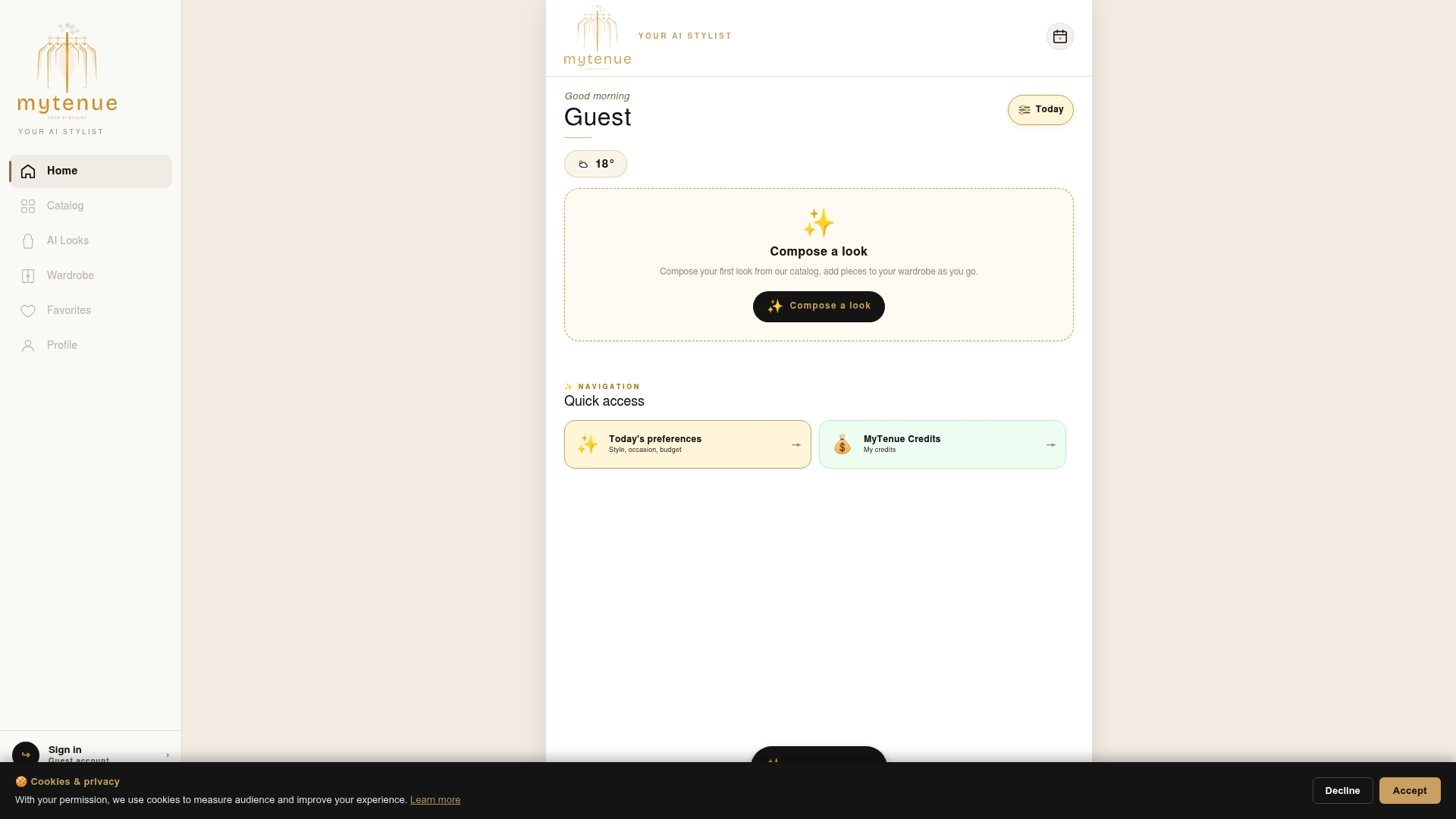
Here's what that looks like day to day:
- Digitize your wardrobe once, then get weather-adapted outfit suggestions every morning.
- See your outfit as an editorial flat-lay or try it on your personal avatar before you commit.
- Plan outfits ahead with a calendar view, useful for trips or busy weeks.
- Start free, then move up to paid subscription tiers as your wardrobe and needs grow; current prices are on the pricing page.
Open the MyTenue app and let today's forecast pick your outfit for you.
FAQ
How should I dress for Paris weather today?
Match your outfit to the current temperature band, light layers above 20°C, a knit and trench between 10 and 15°C, and insulated layers below 10°C, then add a compact umbrella or waterproof shell if rain is forecast. Checking an hourly forecast matters more than the daily high, since Paris conditions shift through the day.
How do people dress in Paris right now?
Parisians layer by default: a base top, a knit or overshirt, and a trench or shell that can come off as the day warms. Neutral colors and water-resistant shoes stay consistent regardless of season, since comfort on foot matters as much as style.
What should I wear when it's 15°C and raining?
Wear a long-sleeve base layer under a knit, add a waterproof trench or shell on top, and switch to water-resistant shoes with a grippy sole. Carry a compact umbrella rather than relying on the coat alone, since Paris rain can be steady rather than a quick shower.
How do I plan an outfit around the weather in general?
Start with the temperature band, then adjust for precipitation and wind before you choose your outer layer and shoes. Building a small capsule wardrobe with pieces that layer easily makes this decision faster regardless of what the forecast shows.
Sources
This guide draws on seasonal Paris dressing advice from local travel and style guidance, hourly forecast patterns from Ouest-France weather coverage, and rain-risk reporting from La Chaîne Météo, alongside outfit formulas published on the MyTenue blog. For families introducing kids to weather patterns during a Paris trip, this guide to weather activities for children offers simple ways to turn forecast-watching into a shared activity.
- Tenue pour visiter Paris selon saison & météo
- Météo. Quel temps est-il prévu à Paris et ses environs le jeudi 8 octobre 2026 ?