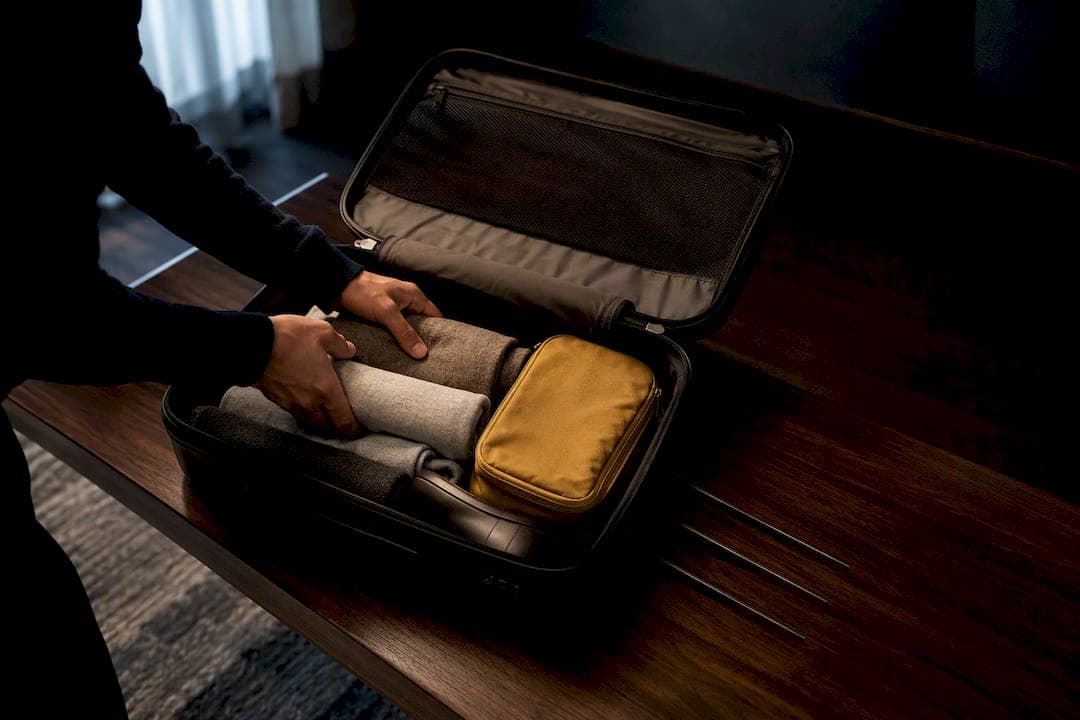
Pack a modular travel capsule: a three-color palette, a compact formula, and outfits built to mix and match. For most one-week trips, that means 9 to 12 core pieces, adjusted up slightly for longer stays or down for a quick weekend. Three priorities decide whether it works: pick pieces that pair with at least two others, choose fabrics that resist wrinkles, and cap your shoes at two pairs, three at most.
TL;DR:
- Packing 9 to 12 core pieces based on the 3-3-3 or 5-4-3-2-1 formula can cover trips up to 15 days with minimal overpacking.
- Use a strict three-color palette, focusing on interchangeability, to maximize outfit options from few items and avoid unnecessary duplicates.
- Prioritize wrinkle-resistant fabrics like jersey, crepe, or merino wool, and assign the bulkiest shoes for travel days to save space.
- Organize clothing using rolling, folding, and packing cubes tailored to your trip length and activity needs for quick access and organization.
- Remove pieces that do not pair with at least two others and keep essential travel documents, chargers, and a laundry kit easily accessible.
Table of Contents
- What Is the Best Formula for a Valise Tenue Voyage?
- How Do You Build a Capsule Wardrobe for Travel?
- How Should You Pack Your Suitcase for Easy Access?
- Packing Checklists for Every Trip Length
- What Should You Leave Out of Your Suitcase?
- Why the Capsule Approach Actually Works
- Let MyTenue Visualize Your Capsule Before You Fly
- Sources
- FAQ
What Is the Best Formula for a Valise Tenue Voyage?
Stylists rely on two formulas to answer the eternal question of what to put in a valise tenue voyage: the 3-3-3 method and the 5-4-3-2-1 method. Both work by limiting your wardrobe to a three-color palette and forcing every piece to earn its spot.
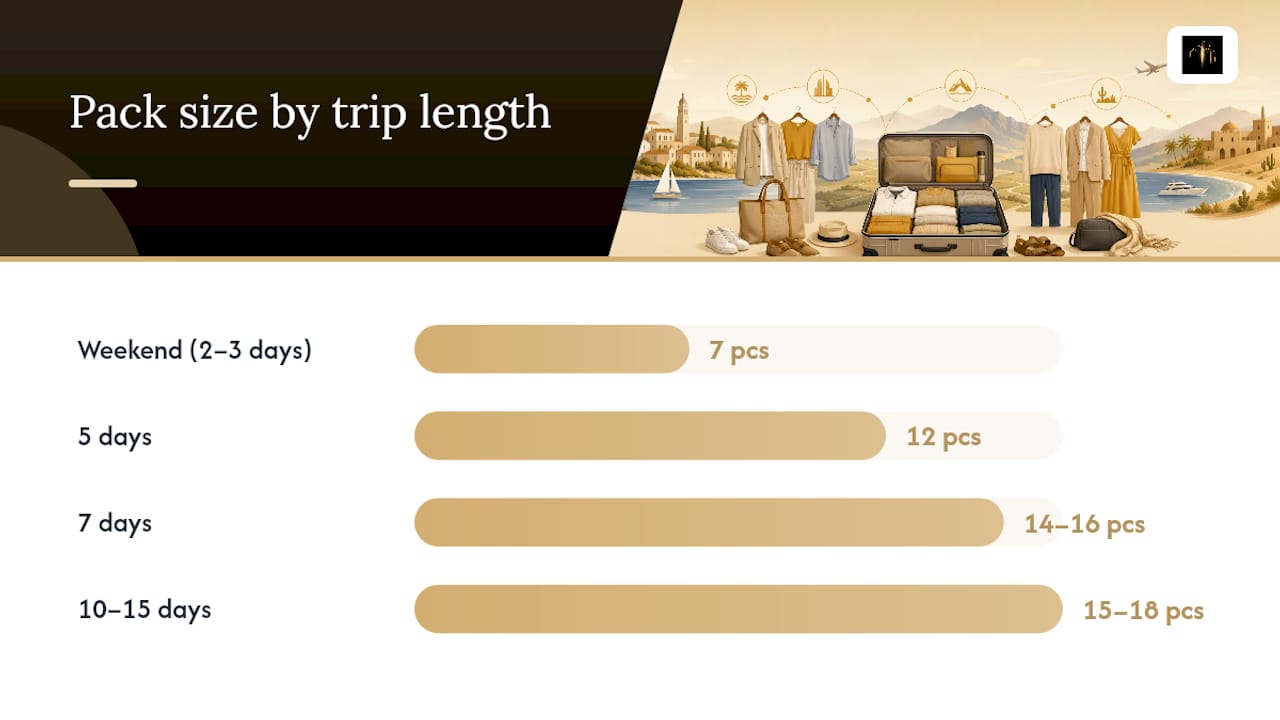
The 3-3-3 formula means 3 tops, 3 bottoms, and 3 layers, roughly 9 pieces total. It suits short trips or travelers who plan to do laundry along the way. The 5-4-3-2-1 formula scales up: 5 tops, 4 bottoms, 3 pairs of shoes, 2 layers, and 1 accessory type, closer to 15 pieces for longer or more varied itineraries.
Here's how those translate into real counts:
- Weekend (2 to 3 days): 3 tops, 2 bottoms, 1 layer, 1 pair of shoes worn on the plane.
- 5 days: 5 tops, 3 bottoms, 2 layers, 2 pairs of shoes.
- 7 days: 6 to 7 tops, 4 bottoms, 2 to 3 layers, 2 pairs of shoes.
- 10 to 15 days: same core as the 7-day list, plus one or two extra versatile pieces and a laundry plan.
Adjust for circumstances before you add volume:
- Traveling somewhere with laundry access (a rental, a hotel with a machine, a laundromat nearby)? Keep the 7-day count even for a two-week trip.
- Expecting mixed weather? Swap one top for a lightweight layer instead of packing extra of everything.
- Doing an activity-heavy trip (hiking, workouts, formal dinners)? Add one purpose-built outfit rather than duplicating your base wardrobe.
On shoes: wear your bulkiest pair while traveling and pack one spare. A third pair only makes sense for a specific need, like dress shoes for one formal event.
How Do You Build a Capsule Wardrobe for Travel?
Start with color, not garments. The rule stylists use is a strict three-color palette: roughly 50% one base neutral (navy, black, gray), 30% a complementary color, and 20% an accent tone for pops of interest. Every piece you pack has to work inside that palette, which is what makes a small suitcase produce dozens of outfits.
From there, build toward a 9 to 12 piece core. That typically breaks down as:
- 2 to 3 bottoms (one pair of pants, one skirt or shorts, one denim option)
- 4 to 5 tops that mix casual and slightly dressed up
- 2 to 3 layers (a cardigan, a light jacket, a structured blazer)
- 1 investment piece, like a trench or blazer, that elevates the rest
That kind of setup, chosen for interchangeability, can generate 20 or more outfit combinations from barely a dozen items. The math works because nothing is a one-outfit piece.
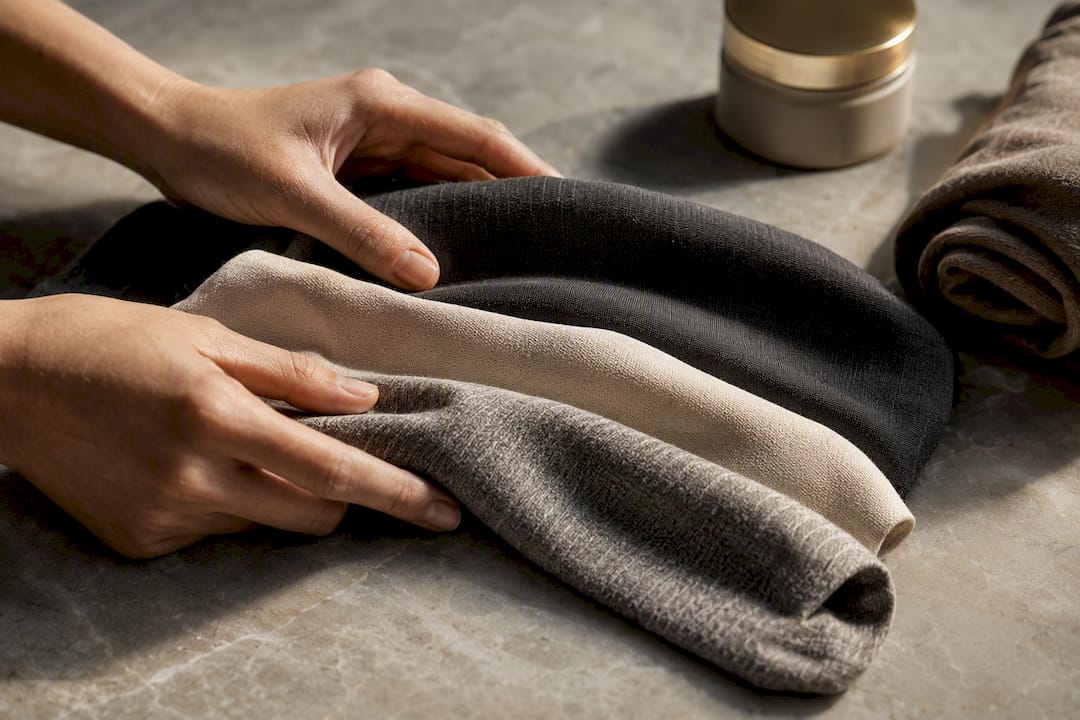
Fabric choice decides whether that math survives a real trip. Prioritize jersey, crepe, and merino wool. All three resist wrinkles and dry quickly, which matters more than how nice something looks folded in a drawer at home. Linen looks elegant in photos and wrinkles almost the moment you sit down, so treat it as an occasional accent rather than a core fabric. Merino also resists odor, which lets you stretch wear between washes on longer trips.
Before you zip the suitcase, run every piece through a simple test: does it pair with at least two other items already in the pile? If not, it doesn't belong. That single filter eliminates most of the "just in case" additions that quietly turn a carry-on into a checked bag.
Pro Tip: Wear-test every new piece before departure, including shoes, and photograph your outfit pairings a day or two ahead of packing. New clothes that haven't been worn can chafe or fit oddly once you're stuck in them for a full travel day, and a quick photo saves you from reinventing outfit logic at 6 a.m. in a hotel room.
If color pairing still feels tricky, a quick reference for outfit formulas and color combos can shortcut the guesswork.
How Should You Pack Your Suitcase for Easy Access?
Rolling, folding, and using packing cubes each solve a different problem, and mixing all three usually beats picking just one. Roll soft, casual pieces like T-shirts, jersey dresses, and workout gear. Rolling saves space and, done right, resists wrinkles better than a flat fold. Fold structured pieces instead: blazers, button-down shirts, and anything with a collar or seams that crease under pressure. A garment folder, even an improvised one using a plastic bag as a slip sheet, helps a blazer survive a suitcase intact.
Packing cubes solve organization, not magic compression. Compression and mesh cubes make items easier to categorize and access, which matters more once you're living out of a suitcase for a week. Two approaches work:
- By category: one cube for tops, one for bottoms, one for underwear and socks.
- By outfit: each cube holds a full look, top to shoes, so you grab one cube per day instead of assembling an outfit from three drawers.
Packing cube reviewers describe them primarily as an organization and access tool rather than a way to fit more clothes into the same suitcase, so set expectations accordingly.
Pack your first day's outfit last, near the top of the bag, so it's the first thing you touch after a long flight. Keep a spare cube empty or half full for laundry or souvenirs on the way home.
Packing Checklists for Every Trip Length
Trip length changes your strategy more than it changes your item count. Once you plan to wash or hand-wash clothes partway through, a two-week trip needs barely more than a one-week trip.
Weekend (2 to 3 days):
- 1 pair of shoes worn while traveling
- 3 tops, 2 bottoms, 1 versatile layer
- One outfit that doubles for dinner and daytime
5 days:
- 2 pairs of shoes
- 5 tops, 3 bottoms, 2 layers
- One slightly dressier option for an evening out
7 days:
- 2 pairs of shoes, 3 only if one is dedicated to a specific activity
- 6 to 7 tops, 4 bottoms, 2 to 3 layers
- One accessory set that can shift a casual look to something sharper
10 to 15 days:
- Keep the 7-day core intact and add just 1 to 2 extra versatile pieces.
- Plan one laundry session around day 6 or 7, whether that's a hotel service, a laundromat, or a sink and a travel detergent sachet.
- Prioritize merino or moisture-wicking layers, which regulate temperature and resist odor across multiple wears.
For business trips, layer in a few specific swaps: one blazer that pairs with everything else, two or three wrinkle-resistant shirts, and one pair of neutral shoes that works for both a client meeting and a dinner. A simple meeting-outfit formula, like the one in this workweek outfit planning checklist, keeps decision-making fast even on a packed schedule.
What Should You Leave Out of Your Suitcase?
Most overpacking comes from anxiety about hypothetical scenarios rather than the actual itinerary, and focusing on the destination's real climate and planned activities is the fastest fix. Skip multiple special-occasion outfits when one well-chosen option covers it, skip a second pair of near-identical shoes, and skip full-size toiletries when travel sizes exist.
One rule cuts most of the guesswork: if a piece doesn't pair with at least two others, leave it home, and never bring shoes you haven't broken in.
Before you leave, confirm you have:
- Travel documents and chargers
- A small first-aid or sewing kit for quick fixes
- A travel detergent sachet or sink-friendly soap for mid-trip washing
- Your day-one outfit packed last, easiest to reach
Why the Capsule Approach Actually Works
Most packing advice focuses on outfits. The better mental shift is thinking in systems: each piece is a node that has to connect to several others, not a standalone look. That reframing does more to prevent overpacking than any item count ever could, because it forces you to ask what a piece connects to, not just whether you like it.
In practice, testing pairings and photographing outfits before departure removes almost all the decision fatigue that hits mid-trip. Build the capsule, snap the combinations, and evaluate comfort once, at home, when you're not rushing to make a flight.
— Ahmed
Let MyTenue Visualize Your Capsule Before You Fly
Building the perfect capsule on paper is one thing. Seeing it on your own body, in every combination, before you've packed a single bag, is another. There are AI-powered stylist apps that digitize your wardrobe, generate outfit recommendations from existing pieces, and show them on a personal avatar so you can preview pairings before traveling.
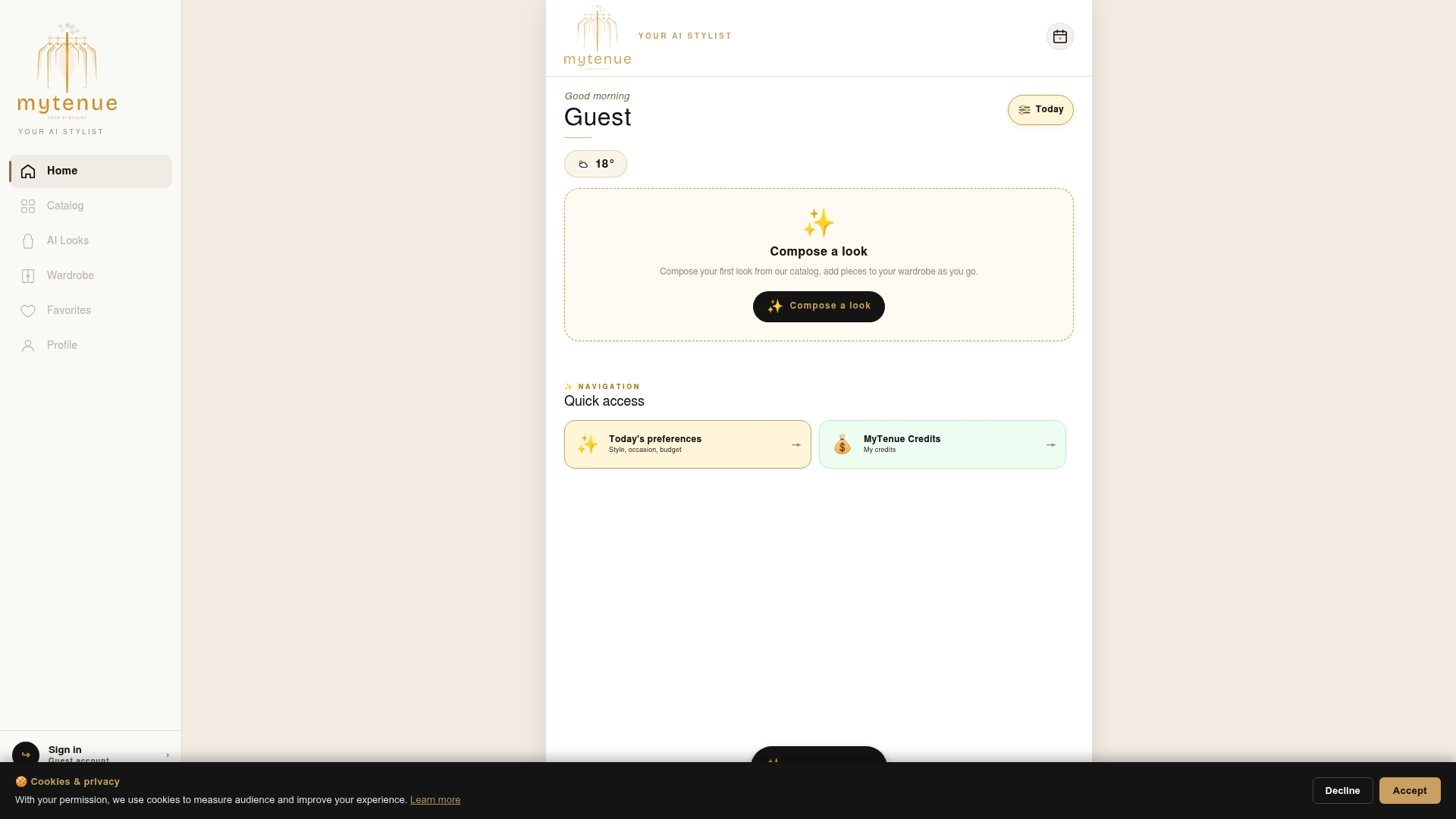
For travelers, the practical payoff is straightforward: upload your capsule pieces, get weather-adapted outfit suggestions for your destination, and calendar-plan a look for each day of the trip so mornings on the road involve zero decisions. It's an optional layer on top of the packing method in this guide, not a replacement for it. If you want to try it before your next trip, check out the app and start with the free tier to see how your current wardrobe holds up.
Sources
- Comment s'habiller en voyage chic : mes conseils de styliste pour allier confort et élégance
- Que mettre dans sa valise pour 1 à 3 semaines de vacances ?
- PackAway / packing cubes product page
FAQ
What Is the Best Outfit to Wear When Flying?
Choose comfortable, wrinkle-resistant layers in your travel palette, like jersey pants, a breathable top, and a light cardigan or jacket you can adjust for cabin temperature. Wear your bulkiest shoes on the plane to save suitcase space.
What Should You Never Forget to Pack?
Beyond documents and chargers, travelers most often forget a laundry sachet for mid-trip washing, a small sewing or first-aid kit, and a spare outfit accessible without unpacking the whole bag.
What Is the 5-4-3-2-1 Packing Method?
It's a formula of 5 tops, 4 bottoms, 3 pairs of shoes, 2 layers, and 1 accessory type, built around a three-color palette so every piece pairs with several others.
How Many Outfits Do You Need for 15 Days of Vacation?
You don't need 15 different outfits. A 7-day core wardrobe with one or two added versatile pieces, plus one laundry session around the midpoint of the trip, comfortably covers two weeks.