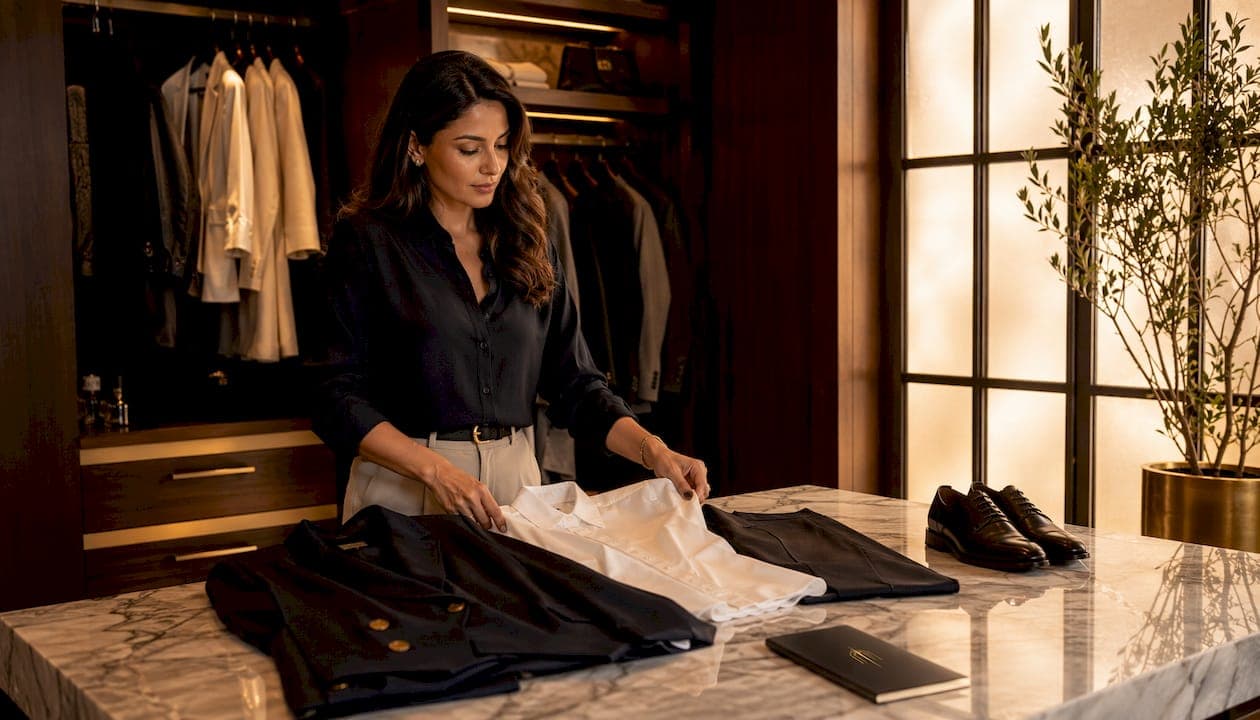
Build a professional capsule wardrobe by anchoring a few core pieces, adding supporting items, and finishing with a couple of accents. That combination produces multiple ready-to-wear outfits and cuts your morning decision time dramatically. The 80/20 wardrobe rule confirms it: five foundational anchor pieces typically handle about 80% of a standard work week’s needs. Start with a brief closet audit, identify your gaps, and upload your favorite pieces to Mytenue to generate your first outfit combinations before you spend a dollar.
Compact 10-outfit starter (half a dozen to around ten pieces): navy blazer, white button-down, tailored black trousers, one knit (merino crewneck), one dress or chino, neutral leather shoes, structured bag.
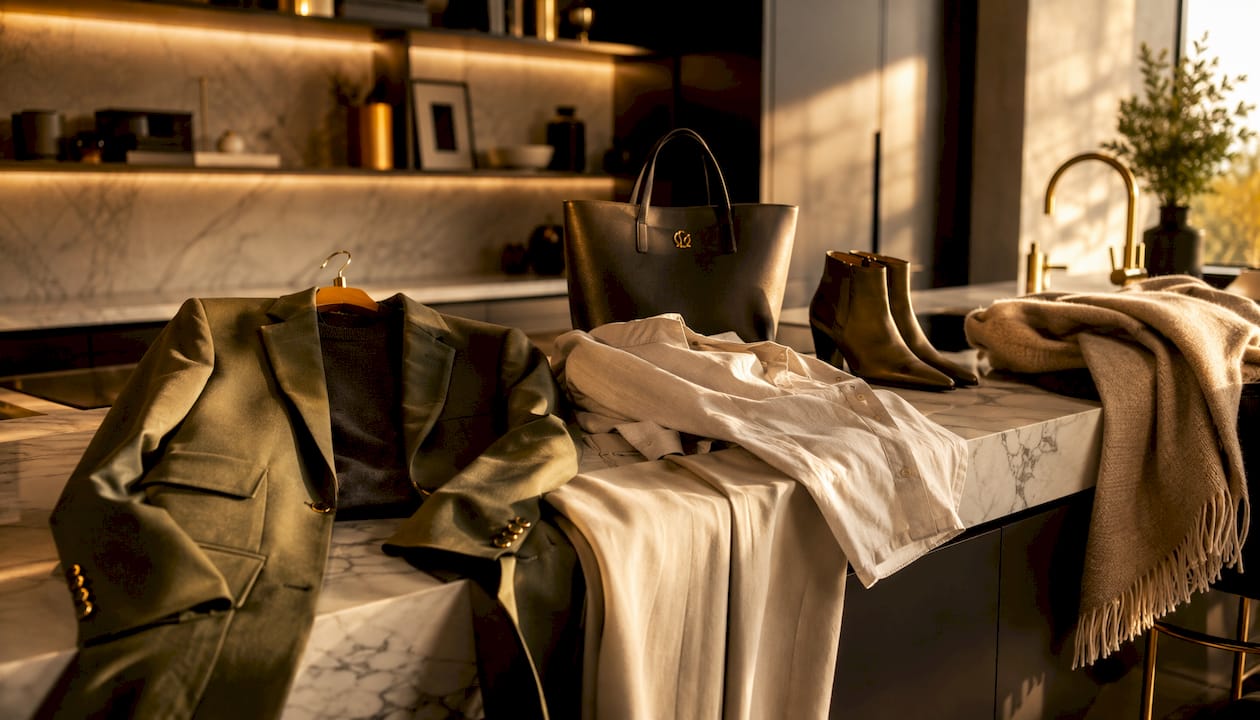
Fuller two dozen or so piece year-round capsule: add a second blazer (tan or charcoal), a second trouser silhouette, two blouses or dress shirts, a sheath or wrap dress, a lightweight coat, one accent scarf, a second shoe pair, and a few accessories. Most guidance recommends a work capsule in the 20–40 piece range; the common practical starting point is 25–35 items for year-round needs with seasonal mini-capsules layered on top.
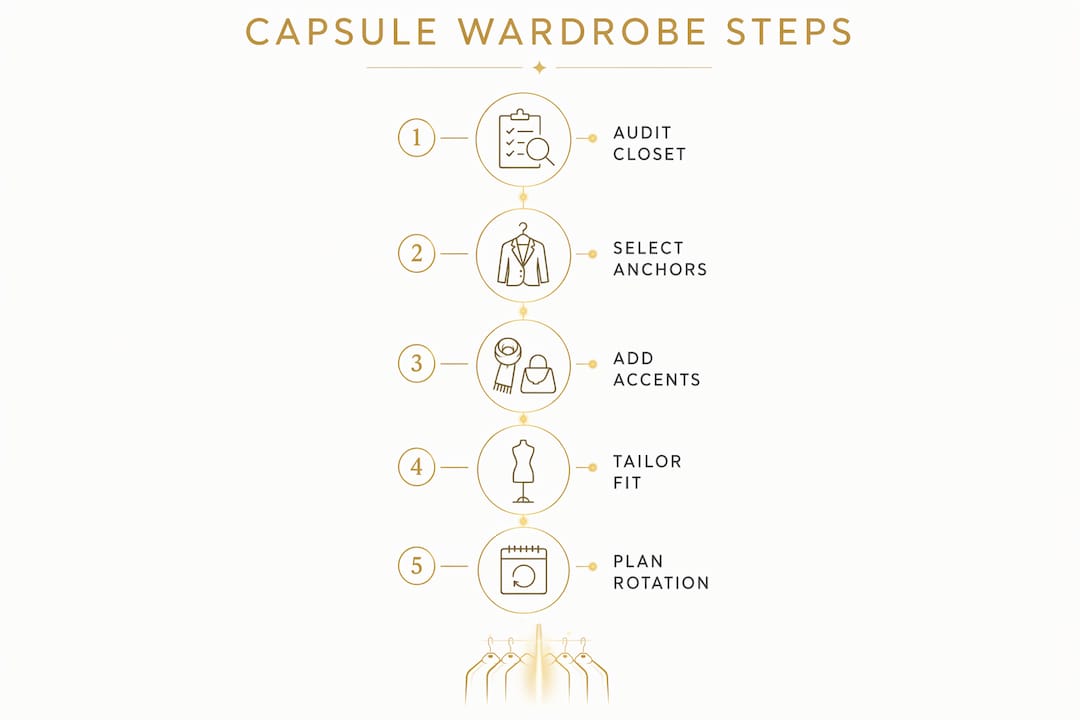
Your single next action: schedule a 60–90 minute closet audit this weekend. Pull everything out, sort into Keep / Tailor / Donate / Repair, and photograph what you keep. That photo set becomes your planning foundation, and the 10-item wardrobe concept shows exactly how far a tight starter set can stretch.
Table of Contents
- What goes into a complete professional capsule inventory?
- How do you turn 20 pieces into 15+ work outfits?
- What color palette and fit rules make everything coordinate?
- How should you prioritize shopping and budget your build?
- How do you keep a capsule looking sharp over time?
- How does Mytenue help you plan and visualize your capsule?
- Key Takeaways
- Why this system actually works for professionals
- Mytenue makes capsule planning faster and smarter
- Useful sources and further reading
What goes into a complete professional capsule inventory?
A well-built capsule isn't a random collection of neutrals. Every item earns its place through versatility. The table below covers both men's and women's variants, recommended counts, and the one-line rationale that justifies each slot.
| Category | Count | Rationale |
|---|---|---|
| Blazer / structured jacket | Two | One dark (navy/black) for formal; one lighter (tan/charcoal) for smart-casual. Together they cover nearly every work occasion. |
| Tailored trousers | Two or three | Black and navy as anchors; add charcoal or beige as a third. Women: one trouser + one pencil or midi skirt counts as two bottoms. |
| Dress shirts / blouses | Three or four | White, light blue, and one soft pattern or subtle print. Men: classic poplin button-down. Women: add a draped blouse for variety. |
| Knitwear (merino or fine cashmere) | Two | One crewneck, one V-neck or cardigan. Layers under blazers; works alone on casual Fridays. |
| Dresses (women) / chinos or second trouser (men) | One or two | Women: wrap dress and sheath cover boardroom to client lunch. Men: slim chinos in stone or olive extend into smart-casual. |
| Shoes | Two pairs | One formal (Oxford, pump, or block heel in black or nude); one smart-casual (loafer or clean leather sneaker). Invest here first. |
| Outerwear / coat | One or two | One tailored wool or wool-blend coat handles most seasons. Add a lightweight trench for travel or warmer months. |
| Structured bag | One | A tote or briefcase in black, tan, or cognac. Carries daily essentials and reads as polished in any meeting. |
| Belt | One or two | Match leather tone to shoes. One black, one brown/tan covers both shoe pairs. |
| Accent / statement pieces | One to three | Silk scarf, patterned tie, or a single bold blouse. Accents should interact with the neutral base, not compete with it. |
Non-negotiables: tailoring on at least your blazer and trousers, one high-quality leather shoe pair, and a structured bag. Quality markers to check before buying: natural or natural-blend fibers, finished interior seams, and buttons that feel solid (horn or metal, not hollow plastic).
Men mixing business casual should plan two trouser silhouettes: one slim-cut tailored pant and one relaxed chino. Women who prefer dresses over separates can swap one trouser slot for a second dress, keeping total piece count the same. The outfit stretching strategy principle applies here: each piece should pair with at least two others before it earns a slot.
How do you turn 20 pieces into 15+ work outfits?
The math is simple. Three blazers × three bottoms × three tops already produces 27 theoretical combinations. In practice, you filter for occasion and season, and you still land well above 15 wearable outfits. A disciplined 10-outfit system can reduce morning decision time by up to 75% and save executives about 4–8 minutes per morning on average.
Three core outfit formulas:
- Boardroom formula: blazer + tailored trousers + dress shirt/blouse + formal shoes
- Client-meeting formula: blazer + dress (or skirt) + neutral flat or low heel + structured bag
- Smart-casual formula: knit or blouse + chino or relaxed trouser + loafer + minimal accessories
15 example outfits by occasion:
- Navy blazer + black trousers + white button-down + Oxford shoes (boardroom)
- Charcoal blazer + navy trousers + light blue shirt + loafers (senior meeting)
- Black blazer + wrap dress + block heel (client presentation)
- Navy blazer + chinos + merino crewneck + clean leather sneaker (smart-casual Friday)
- Tan blazer + black trousers + white blouse + structured bag (networking event)
- Sheath dress + tailored coat + pumps (travel day, client city)
- White button-down + pencil skirt + loafers (internal team day)
- Charcoal blazer + black trousers + patterned blouse + belt (mid-week meeting)
- Merino V-neck + navy trousers + Oxford shoes (casual Friday, formal office)
- Wrap dress + cardigan + flat + scarf accent (conference day)
- Navy blazer + chinos + light blue shirt + loafers (business casual lunch)
- Black trousers + silk blouse + structured bag (no-blazer warm day)
- Tan blazer + midi skirt + tucked blouse + block heel (client dinner)
- Merino crewneck + tailored trousers + belt + loafer (travel, smart-casual)
- Blazer + jeans (dark, tailored) + knit + leather sneakers (creative office or Casual Friday)
For seasonal swaps, the logic is fabric, not silhouette. Summer: swap wool-blend trousers for cotton or linen-blend; swap the merino knit for a lightweight cotton cardigan; choose an unlined blazer. Winter: layer the merino under the blazer; add the wool coat; switch to heavier cotton or flannel shirts. A travel-specific 10-outfit capsule uses performance-blend fabrics and keeps accents to one piece to stay carry-on friendly.
Weekly rotation tip: on Sunday, pick five outfits from the list above, photograph each combination with your phone, and label the folder by day. Mytenue's outfit builder does this automatically, but a simple phone album works too. Document 10 tested outfits before you buy anything new. For a ready-made planning framework, the workweek outfit planning checklist walks through the Sunday prep routine step by step.

What color palette and fit rules make everything coordinate?
Color is the architecture of a capsule. Get it wrong and pieces that look fine individually refuse to work together. Get it right and even a 12-piece wardrobe feels like it has infinite combinations.
Recommended palette structure:
| Layer | Colors | Role |
|---|---|---|
| Base neutrals (2) | Navy, charcoal (or black) | Trousers, blazers, coats — the heavy hitters |
| Light neutral (1) | White, cream, or soft gray | Shirts, blouses, layering pieces |
| Accent (1–2) | Burgundy, soft blue, olive, blush | Scarves, one blouse, a tie, or a statement dress |
Stylists recommend this exact base-neutral-plus-accent structure because it maximizes interchangeability while preventing the closet from feeling monotonous. Accents should appear in at most 20–25% of your pieces; if everything is an accent, nothing is.
Fabric by garment and season:
- Blazers and coats: wool or wool-blend year-round; unlined linen-blend for summer
- Trousers: mid-weight wool-blend for fall/winter; cotton or cotton-linen for spring/summer
- Shirts and blouses: cotton-poplin for structure; silk or high-quality viscose for drape
- Knitwear: merino wool or lightweight cashmere; fine gauge reads more polished than chunky
Fit and tailoring checklist:
- Blazer: shoulder seam sits exactly at the shoulder point; sleeve shows 0.5 inches of shirt cuff
- Trousers: clean break at the shoe; no pulling across the seat
- Dress shirts: no pulling at the chest buttons; collar lies flat
- Dresses and skirts: hem length consistent with your workplace norms; no riding up when seated
Pro Tip: Spending $40–$60 on tailoring for a $150 moderately priced blazer consistently outperforms a $400 blazer that fits poorly. Fit multiplies perceived garment value more than any label does.
Budget $100–$200 for an initial tailoring pass on your anchor pieces. That single investment pays back every time you wear them.
How should you prioritize shopping and budget your build?
Treat every purchase as a business asset that must earn its place through versatility. The shopping priority order below prevents the common mistake of buying accents before anchors.
Shopping priority checklist (in order):
- Anchor blazer (navy or black) and tailored trousers
- Core shirts or blouses (white, light blue, one soft pattern)
- Quality shoe pair (formal first)
- Tailoring appointment for items 1–3
- Structured bag
- Second blazer and second trouser or dress
- Knitwear and outerwear
- Accents (scarf, tie, statement blouse)
Three build timelines:
- 1-month emergency build: Buy items 1–5 in the first two weeks. Prioritize fit over brand. Schedule tailoring in week three. You'll have 8–10 outfits by day 30.
- 3-month sensible build: Month 1 covers anchors and tailoring. Month 2 adds the second blazer, second bottom, and shoes. Month 3 fills knitwear, outerwear, and one accent. Result: a full 20-piece capsule with 15+ outfits.
- 12-month premium build: Buy one category per month, investing in the highest quality you can afford at each step. By month 12, every piece is intentional and cost-per-wear is low across the board.
Budget tiers per category:
| Category | Budget tier | Mid tier | Premium tier |
|---|---|---|---|
| Blazer | $80–$150 | $200–$400 | $400+ |
| Trousers | $40–$60 | — | $200–$400 |
| Dress shirt / blouse | $30–$60 | $80–$150 | $200+ |
| Shoes | $80–$150 | $100–$200 | $400+ |
| Tailoring (initial pass) | $60–$100 | $100–$200 | $200+ |
| Outerwear | $100–$200 | — | — |
Invest at mid-to-premium on blazers and shoes; quality indicators like natural fibers and finished seams outperform cheaper alternatives over time. Save on knitwear and blouses at the budget tier, especially early in the build. For budget-conscious tactics on making fewer pieces go further, the outfit stretching checklist is worth bookmarking.
Quality checklist before any purchase: natural or natural-blend fiber content, fabric weight that holds shape, clean interior seams (not raw edges), solid buttons, and a return policy of at least 30 days.
How do you keep a capsule looking sharp over time?
A capsule only works if the pieces stay polished. Neglected garments lose their shape, and a wrinkled blazer undermines every other investment you've made.
Weekly care routine:
- Steam or iron shirts and blouses the night before, not the morning of
- Hang blazers on wide, shaped hangers immediately after wearing; never fold them
- Rotate shoes: wear each pair no more than two consecutive days; use cedar shoe trees overnight
- Spot-clean trousers between dry-clean cycles to extend wear
Laundry rules by fabric:
- Cotton shirts: machine wash cold, gentle cycle, hang to dry
- Wool and merino knits: hand wash or machine on wool cycle; lay flat to dry (never hang, or shoulders distort)
- Blazers and wool trousers: dry-clean no more than twice per season; brush with a clothes brush after each wear
- Silk and viscose blouses: hand wash or dry-clean; never wring
Storage best practices: store off-season pieces in breathable cotton garment bags, not plastic. Fold knits on a shelf rather than hanging them. Cedar blocks deter moths without the chemical smell of mothballs. When you pull pieces out each season, check for loose buttons, thinning fabric at elbows or seat, and loss of shape at the waist.
Rotation and retirement triggers: the 80/20 wear rule means a few pieces get heavy use. Reserve a small quarterly budget ($20–$40) for repairs: replacing buttons, re-hemming trousers, or resoling shoes. Retire a piece when fabric thins visibly, the fit has shifted and can't be corrected, or the cost of repair exceeds 30% of replacement cost. A simple note in your phone tracking cost-per-wear makes retirement decisions obvious rather than emotional.
How does Mytenue help you plan and visualize your capsule?
Digital planning closes the gap between knowing what you own and actually using it. Mytenue functions as your AI stylist for exactly this: photograph your pieces, upload them to the platform, and it auto-generates outfit combinations from your existing wardrobe before you spend anything new.
How to use Mytenue for capsule planning:
- Photograph each garment flat or on a hanger in consistent lighting
- Upload to Mytenue and tag each item by category (blazer, trouser, blouse, etc.)
- Let the platform generate outfit combinations and flag which pieces are underused
- Use the mix-and-match simulation to test a potential new purchase against your existing items before buying
- Log wear frequency to track cost-per-wear and identify retirement candidates
Key benefits:
- Faster morning decisions: your outfit library is pre-built and visual
- Prevents redundant purchases: you see gaps, not wants
- Seasonal swap planning: filter by fabric weight to build your summer or winter sub-capsule
- Cost-per-wear tracking: know exactly which pieces earn their keep
EEAT note: this guide is authored by Ahmed, a fashion and wardrobe strategy editor who focuses on practical, system-based approaches to professional dressing. Mytenue is built around the same philosophy: sustainable, mix-and-match wardrobes that reduce waste and decision fatigue. The platform supports professionals who want a curated, intentional closet rather than a constantly rotating one.
Quick tip: before buying any new piece, document 10 tested outfits using only what you already own. If you can't reach 10, the gap is real. If you can, the new purchase may be redundant. For more on low-effort everyday dressing, Mytenue's editorial covers simple styling rules that complement the capsule approach.
Key Takeaways
A professional capsule wardrobe works because a small set of anchor pieces, a tight color palette, and one tailoring investment multiply into 15+ polished outfits that cover every work scenario.
| Point | Details |
|---|---|
| Start with a closet audit | A 60–90 minute Keep / Tailor / Donate / Repair sort reveals gaps and prevents redundant purchases. |
| Anchor pieces first | Buy blazer, trousers, and core shirts before accents; tailoring those three unlocks 8–10 outfits immediately. |
| Palette discipline | Two base neutrals plus one light neutral and 1–2 accents make every piece interchangeable without looking monotonous. |
| Tailoring ROI | A $40–$60 tailoring pass on a moderately priced garment outperforms an expensive ill-fitting piece every time. |
| Mytenue for planning | Upload 5 pieces to Mytenue to generate outfit combinations and identify gaps before spending anything new. |
Why this system actually works for professionals
The conventional advice on building a work wardrobe tends to focus on what to buy. The more useful question is what to stop buying. Most professionals already own enough clothing; the problem is that nothing coordinates, so the closet feels empty even when it's full.
The stepwise approach in this guide works because it forces sequencing. You anchor before you accent. You tailor before you expand. That order matters because fit and coordination are what make a wardrobe feel polished, not volume. A 12-piece capsule where every item fits and every color works together looks more put-together than a 60-piece closet of mismatched impulse buys.
The emphasis on tailoring isn't stylistic perfectionism. It's a productivity argument. When your clothes fit, you stop adjusting them during the day. You stop second-guessing the outfit at 7 AM. That mental bandwidth compounds over a year into something measurable. The time-saving outfit planning research backs this up: professionals who pre-plan outfits report fewer morning decisions and more consistent self-presentation.
One note on staying current without chasing trends: two accent pieces per season is enough. A burgundy scarf or an olive blouse signals awareness of the moment without dating your wardrobe in six months. The capsule stays classic; the accents keep it alive. Test 10 outfits before you add anything. If those 10 work, the system is working.
Mytenue makes capsule planning faster and smarter
You've built the framework. Now put it to work visually. Mytenue is your AI-powered outfit planner, built for professionals who want to see their wardrobe combinations before committing to them. Upload your anchor pieces, generate 10+ outfit options instantly, and track which combinations you actually wear.
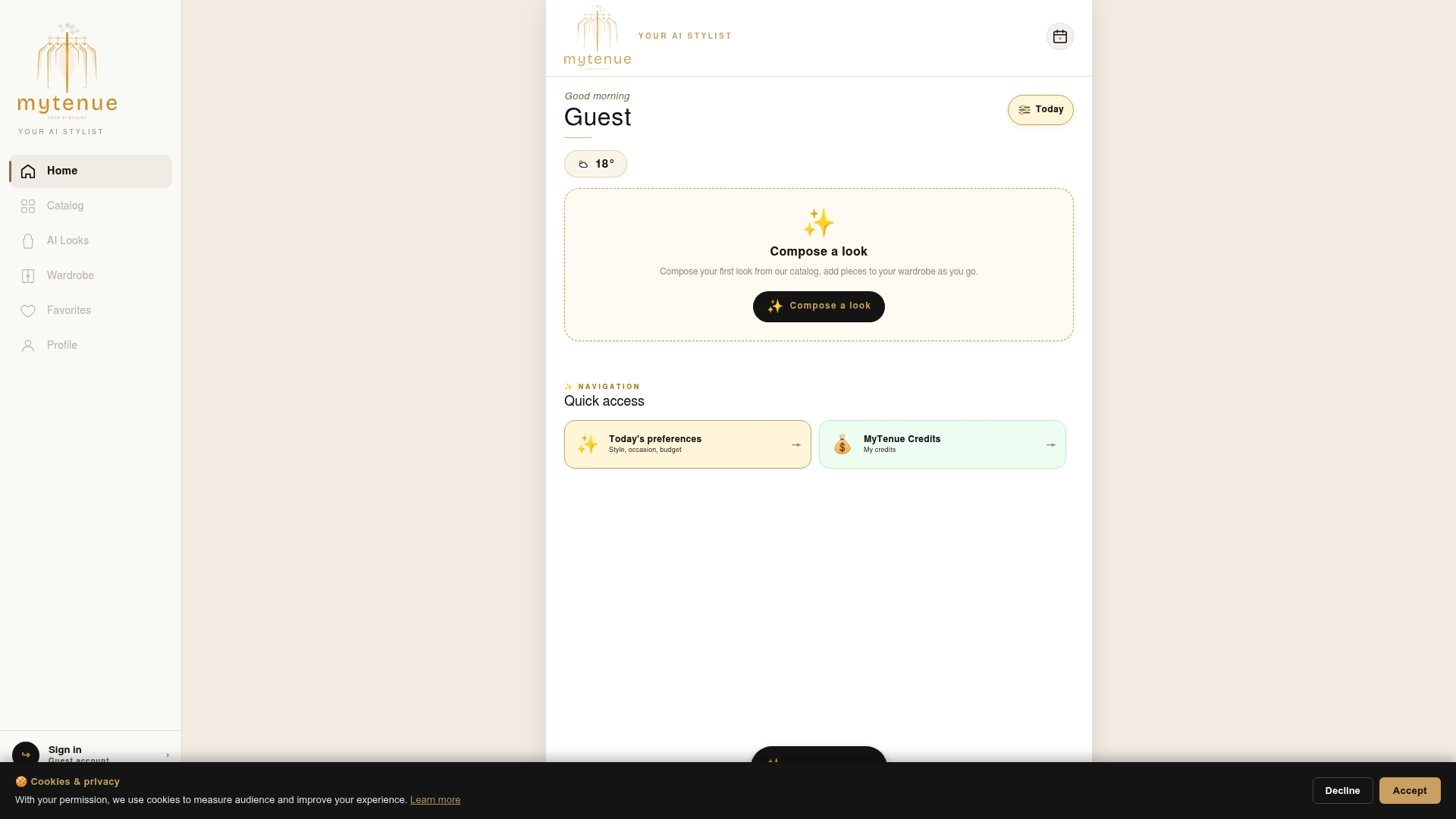
No guesswork. No redundant purchases. Just a clear, visual picture of your capsule working in real time. Mytenue also logs cost-per-wear so you know exactly which pieces earn their place and which ones are ready to retire. Whether you're starting a 1-month emergency build or a 12-month premium capsule, the platform adapts to where you are.
Ready to see your wardrobe differently? Start your outfit plan on Mytenue today and upload your first five pieces for free.
Useful sources and further reading
The claims and recommendations in this guide draw from the following sources. Each is worth reading for deeper context on capsule sizing, tailoring ROI, and outfit planning systems.
- The Business Case for a Capsule Wardrobe — Pantheonuk.org: Covers the productivity and financial case for capsule wardrobes, including the decision-fatigue research behind morning outfit choices.
- Capsule Work Wardrobe Guide for Men & Women — SuitShop: Practical piece-count guidance and the argument for 25–35 items as the year-round sweet spot.
- Capsule Wardrobe for Work: The Professional Woman's 30-Piece Office System — Linda Paige: Source for the closet-cull methodology and the 80/20 anchor-piece framework.
- How to Create a Work Wardrobe That Lasts — WMN Magazine: Practical tailoring advice and the $40–$60 tailoring investment benchmark.
- Building a Capsule Wardrobe for Work: Save Time and Money — Brandmag: The business-asset framing for wardrobe purchases and quality-indicator guidance.
- Capsule Wardrobe for Executives: 10-Outfit System — Workmate: Data on the 75% decision-time reduction and the travel-ready capsule variant.
- Workwear Capsule Wardrobe Guidance — CapsuleWardrobeStyle: Color palette strategy and the base-neutral-plus-accent formula.
- What Is an Everyday Capsule Wardrobe? — TheWhiteLabel: A broader perspective on capsule sizing and seasonal swap strategies for readers who want an alternative framework.
- Mytenue editorial resources: practical worksheets, outfit-stretching checklists, and morning planning guides are available at blog.mytenue.com for readers who want structured templates alongside this guide.