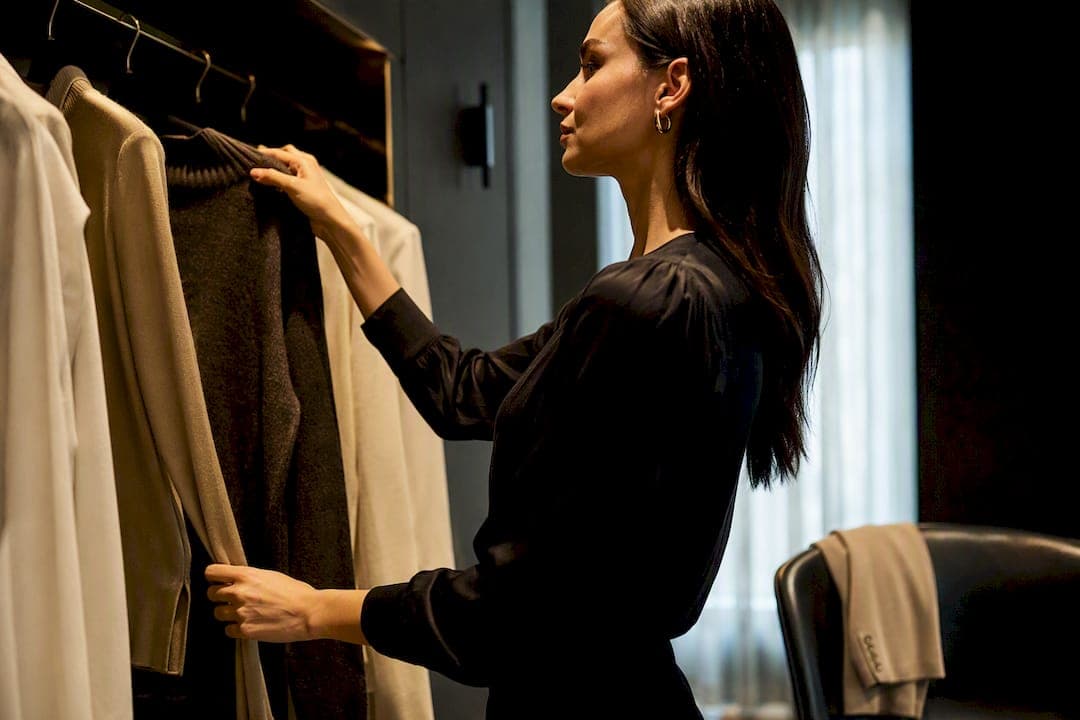
The best tenue télétravail follows one rule: dress up top, stay comfortable below. A structured top over soft, tailored bottoms makes you camera-ready in seconds while keeping your body relaxed for a full workday. Pair it with one accessory near your desk, and you're set. A digital tool can help you build and rotate that formula without buying a new wardrobe.
TL;DR:
- Wearing a camera-ready top and comfortable bottoms improves focus and signals professionalism during video calls, especially when using mid-tone, non-patterned fabrics.
- Building a capsule wardrobe of 8 to 10 versatile pieces simplifies daily choices, reduces decision fatigue, and allows quick outfit assembly for different work scenarios.
- Different workdays require tailored outfit templates: structured tops and accessories for video meetings, soft loungewear for focus days, and elevated looks for client pitches.
- Fabrics like ponte knit and cotton blends hold shape better on camera and should favor tailored silhouettes, mid-tone colors, and small patterns for best video appearance.
- Using an AI wardrobe app helps streamline outfit planning, reduces unnecessary buying, and ensures ready-to-wear looks for every workday or season.
Table of Contents
- What Is the "Top-Up, Comfort-Down" Formula for Remote Work?
- Building a Small Telework Capsule Wardrobe (8 to 10 Pieces)
- Outfit Templates for Video Calls, Focus Days, and Client Pitches
- Which Fabrics and Colors Actually Work on Camera?
- Your 90-Second Camera-Ready Rescue Kit
- How a digital stylist app helps you apply this system quickly and sustainably
- Is It Actually Okay to Telework in Pajamas?
- Adjusting Your Telework Wardrobe for Every Season
- Ahmed's Practical Habits and Quick Wins
- Try MyTenue for Faster, Smarter Telework Outfits
- Sources
What Is the "Top-Up, Comfort-Down" Formula for Remote Work?
Your brain treats clothing as a signal. Psychologists call this enclothed cognition: what you wear shapes how you think and act, and research on the phenomenon suggests dressing with intention nudges your focus toward work mode rather than couch mode. Your top half does that signaling on video calls. Your bottom half can stay soft.
Stylists distill this into a simple system: a camera-ready top, comfortable bottoms, and one intentional accessory for polish. For tops, rotate a structured knit, a crisp tee under an open cardigan, or a relaxed blazer. For bottoms, ponte joggers, straight-leg joggers, or soft knit trousers hold their shape without pinching at the waist for eight hours of sitting.
On camera, small choices matter more than you'd expect:
- Mid-tone colors (navy, olive, terracotta) read better than stark white or black, which can wash out your face or create harsh contrast.
- Skip busy patterns. Small checks and fine stripes strobe on compressed video.
- Frame yourself from mid-chest up, and put a light source in front of you, not behind.
Scale the formula up or down by your calendar. A quiet writing day calls for the softest version. A client pitch calls for swapping the cardigan for a blazer and tightening the color palette.
Building a Small Telework Capsule Wardrobe (8 to 10 Pieces)
A tight capsule beats a packed closet. Stylists commonly recommend 8 to 10 versatile pieces as the sweet spot for remote work, because fewer choices mean less morning decision fatigue and a more consistent on-camera look.
Here's a workable list to build from:
- Two structured knit tops in mid-tones (navy, terracotta)
- One crisp white or pale blue tee for contrast days
- One relaxed blazer that layers over anything
- One open cardigan for a softer alternative to the blazer
- Two pairs of ponte or straight-leg joggers
- One pair of knit trousers for slightly dressier days
- One knit dress or jumpsuit for one-and-done mornings
- One pair of comfortable flats or loafers
Mix these five ways: knit top with ponte joggers for a standard day; tee with blazer and knit trousers for a pitch; cardigan with joggers for deep-focus work; the dress alone for a packed meeting day; blazer over the dress when a client call pops up unannounced.
Before buying anything new, audit what you already own. A smart shopping approach means filling only real gaps, not replacing pieces that already work. That's better for your budget and for the planet.
Outfit Templates for Video Calls, Focus Days, and Client Pitches
Different telework days call for different setups, and having a template ready removes the guesswork.
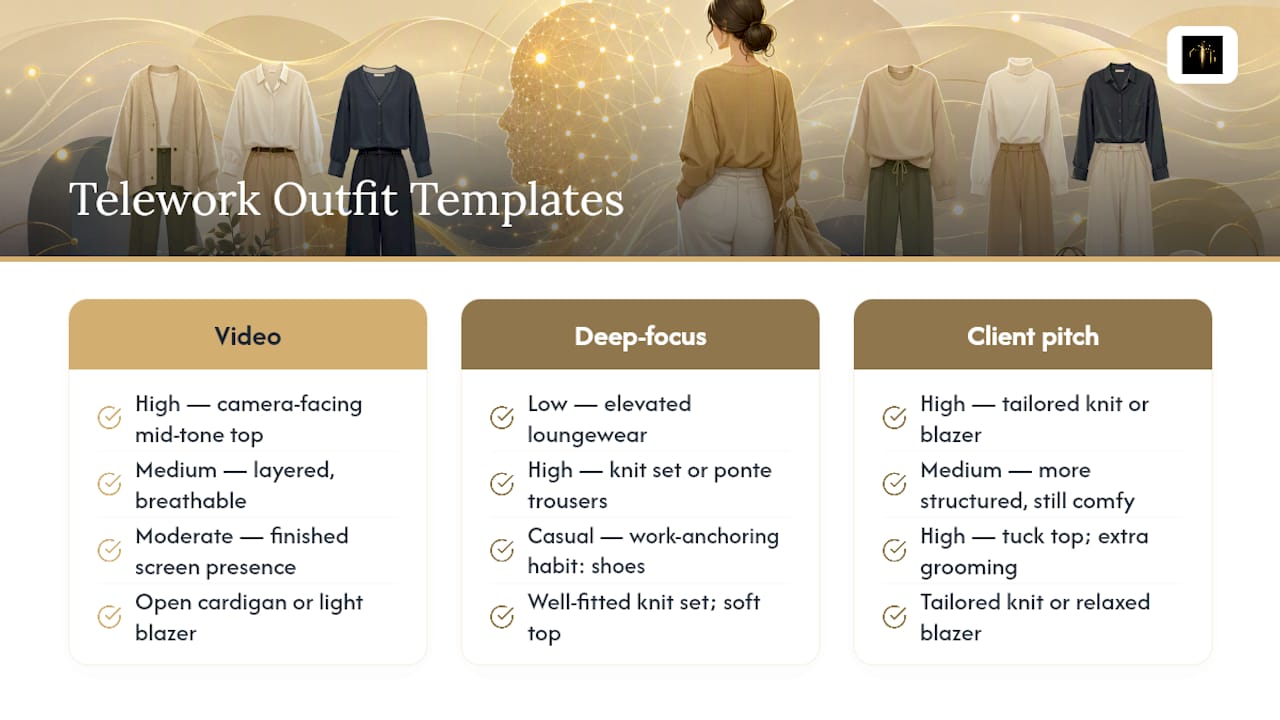
Video-heavy days. Wear a camera-facing top in a mid-tone shade, layered under an open cardigan or light blazer. Add one face-framing accessory, a pair of simple earrings or a scarf near the collar, since small accessories draw the eye upward and make a screen presence feel finished.
Deep-focus days. This is where elevated loungewear earns its keep. A well-fitted knit set or ponte trousers with a soft top gives you all-day comfort. Put on real shoes, even at home. That single habit anchors your brain in "work" rather than "rest."
Client pitches. Go one notch above your normal baseline. Swap the cardigan for a tailored knit or a relaxed blazer, tuck in the top, and spend thirty extra seconds on hair and grooming. These small, deliberate signals carry weight on a call where you're being evaluated.
Weather changes the math slightly. Swap ponte trousers for lighter joggers in summer, and add a structured cardigan in winter for warmth that still reads as intentional. If you want a broader library of ready-to-wear combinations to pull from, a set of smart casual looks gives you more templates to adapt.
Which Fabrics and Colors Actually Work on Camera?
Fabric choice decides whether an outfit survives a full workday. Ponte knit and cotton blends stretch with your body and hold their shape better than thin jersey, which tends to cling and wrinkle after hours of sitting. Elevated loungewear fabrics that combine stretch with structure are the best trade-off between softness and a tailored look.
A few fit and color rules to follow:
- Choose a tailored silhouette even in soft fabric. Cling reads as sloppy on camera; structure reads as put-together.
- Avoid anything that bunches at the waist when you sit for long stretches.
- Stick to mid-tones like olive, dusty rose, and navy. Stark white overexposes and pure black can flatten your features under indoor lighting.
- Test one small pattern before committing. Fine stripes and micro-checks often shimmer on video.
Your 90-Second Camera-Ready Rescue Kit
Surprise meetings happen. Keep a short checklist ready so you never scramble:
- Hang a blazer or structured cardigan on a hook near your desk.
- Keep a lint roller in the same drawer as your keyboard.
- Have one pair of simple earrings or a watch within reach.
- Keep a hairbrush and a neutral top folded nearby.
- Slip on real shoes before the call starts.
The blazer on the hook is your elevation piece: one layer that turns a soft outfit, client ready without a full change. Retail and stylist guides consistently point to this as the fastest fix for unplanned video calls.
Pro Tip: Keep your elevation piece on a hook you can see from your desk, not in a closet. If you have to walk to get it, you won't bother in a two-minute warning.
How a digital stylist app helps you apply this system quickly and sustainably
Building a capsule is one thing. Remembering which pieces you own and pairing them fast every morning is another. Some apps handle the second part by:
- AI outfit curation that suggests top-and-bottom pairings from your actual closet, following a top-up, comfort-down logic.
- Wardrobe digitization so you can see every piece you own in one place instead of guessing what's clean and ironed.
- Outfit calendars to plan a full workweek in advance, letting pitch days and focus days already have looks assigned.
Because such tools work from what you already own, most of your capsule needs zero new purchases. For structured planning support, the workweek outfit checklist pairs well with outfit calendar features.
Is It Actually Okay to Telework in Pajamas?
No French law bans working from home in pajamas, and legal commentary on the question confirms there's no statute dictating what you must wear at your kitchen table. What governs your outfit is your company's culture and internal dress code, not a legal requirement.
That said, "legal" and "advisable" are different things. If your role involves regular video calls, client contact, or a formal team culture, showing up in sleepwear sends a signal you probably don't intend, even if no one says anything. Some companies genuinely don't care what you wear as long as the work gets done. Others expect a business-casual standard on camera regardless of location, treating remote days the same as office days.
The safest approach: read your company's actual norms, not what you assume they are. Ask how leadership dresses on video calls. If your manager wears a blazer on Zoom, matching that expectation costs you little and protects your professional image. If your team is casual across the board, lean into comfort without worrying about it.
There's also a personal argument for dressing beyond pajamas even when no one's watching. Enclothed cognition suggests your own brain responds to the outfit, not just your coworkers' perception of it. Staying in sleepwear all day can blur the line between "working" and "resting," which makes it harder to switch off later.
Adjusting Your Telework Wardrobe for Every Season
Your capsule shouldn't stay static year round. Summer telework calls for lighter cotton blends and breathable knits up top, since a heavy structured blazer gets uncomfortable fast in a warm home office with no air conditioning running all day. Swap ponte joggers for lighter linen blend trousers, and keep your elevation piece as a lightweight cardigan instead of a full blazer.

Winter shifts the priorities toward warmth without bulk. Layering becomes your best tool: a fitted knit top under a structured cardigan gives you camera presence and warmth without the stiffness of heavier fabrics. Ponte trousers work especially well in colder months since the fabric has more weight and drapes better under a blanket at your desk.
Transitional seasons, spring and fall, are where a small rotating wardrobe actually earns its keep. You can mix summer tops with heavier bottoms, or add a light layer to a summer piece rather than committing to a full seasonal wardrobe swap. A seasonal capsule guide can help you plan which pieces to store and which to keep in weekly rotation as the weather turns.
One consistent rule across seasons: keep your camera setup and lighting in mind before choosing fabric weight. Heavier knits can look bulky under harsh overhead lighting, while very light fabrics sometimes wash out on older webcams. Test your outfit on camera once each season, not just in the mirror.
Ahmed's Practical Habits and Quick Wins
My own rule: pick the camera-ready top before anything else, then build the rest of the outfit around it. It removes the guesswork instantly. I also keep a blazer on a hook and a rescue kit within reach, because unplanned calls happen more often than any calendar admits. Small habits like these do more for your workday than any single expensive piece ever will.
— Ahmed
Try MyTenue for Faster, Smarter Telework Outfits
MyTenue turns your closet into a working system instead of a daily guessing game. It's an AI stylist that builds outfits from clothes you already own, matching the same top-up, comfort-down logic this guide walks through.
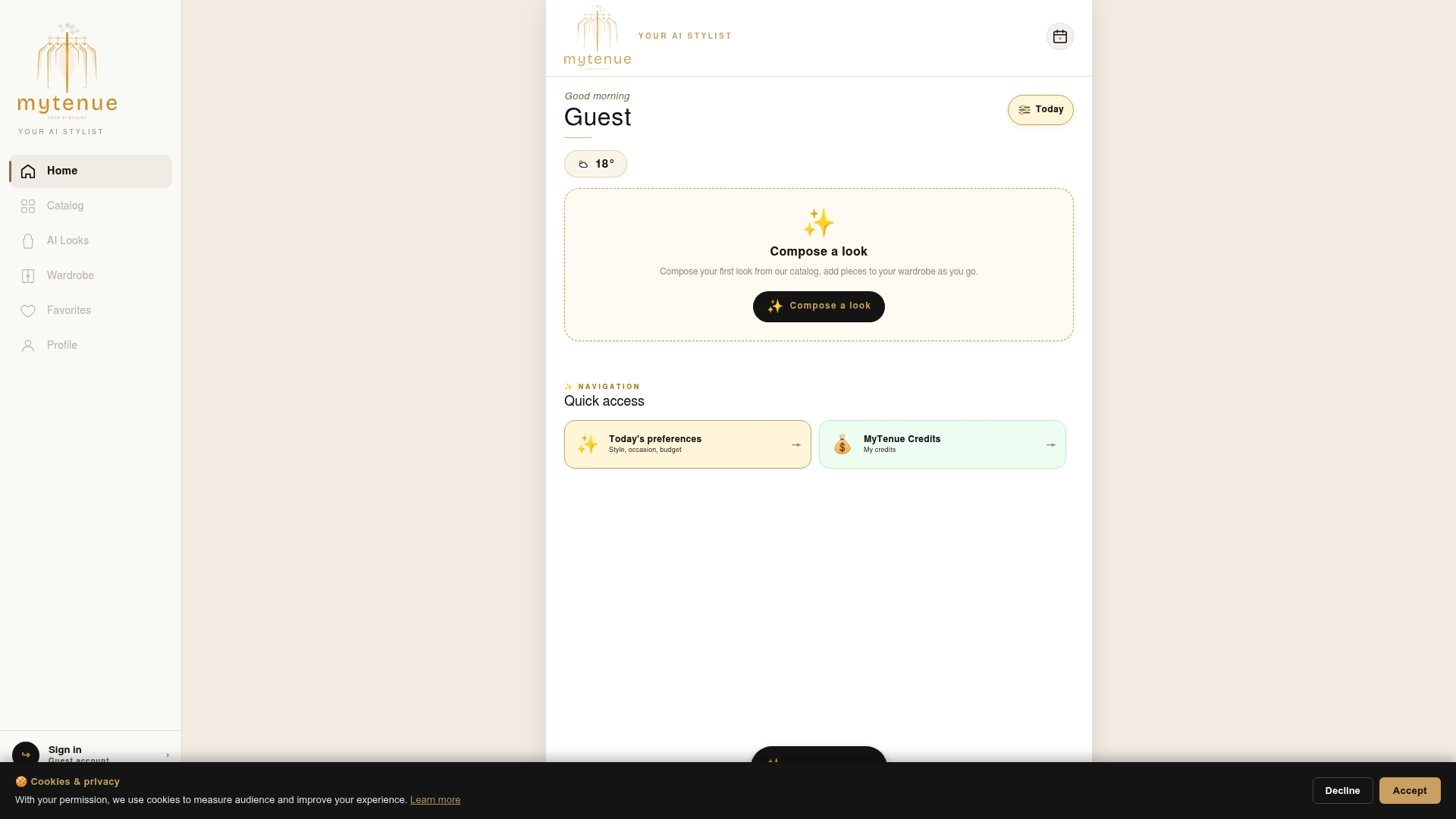
Two things change once you're using it. First, mornings get faster: the app suggests a full look in seconds instead of you standing in front of the closet debating a blazer versus a cardigan. Second, you buy less: because MyTenue works from your existing wardrobe first, new purchases fill real gaps instead of duplicating what you already own. The built-in outfit calendar also means your pitch days and focus days already have a look assigned before Monday even starts.
Try the free tier and build your first capsule plan at Mytenue.
Sources
- How a capsule wardrobe can inspire focus during long-term remote work — Fast Company
- A-t-on le droit de télétravailler en pyjama ? — Femme Actuelle
- The Remote Work Outfit Formula That Works — ExpressClothing