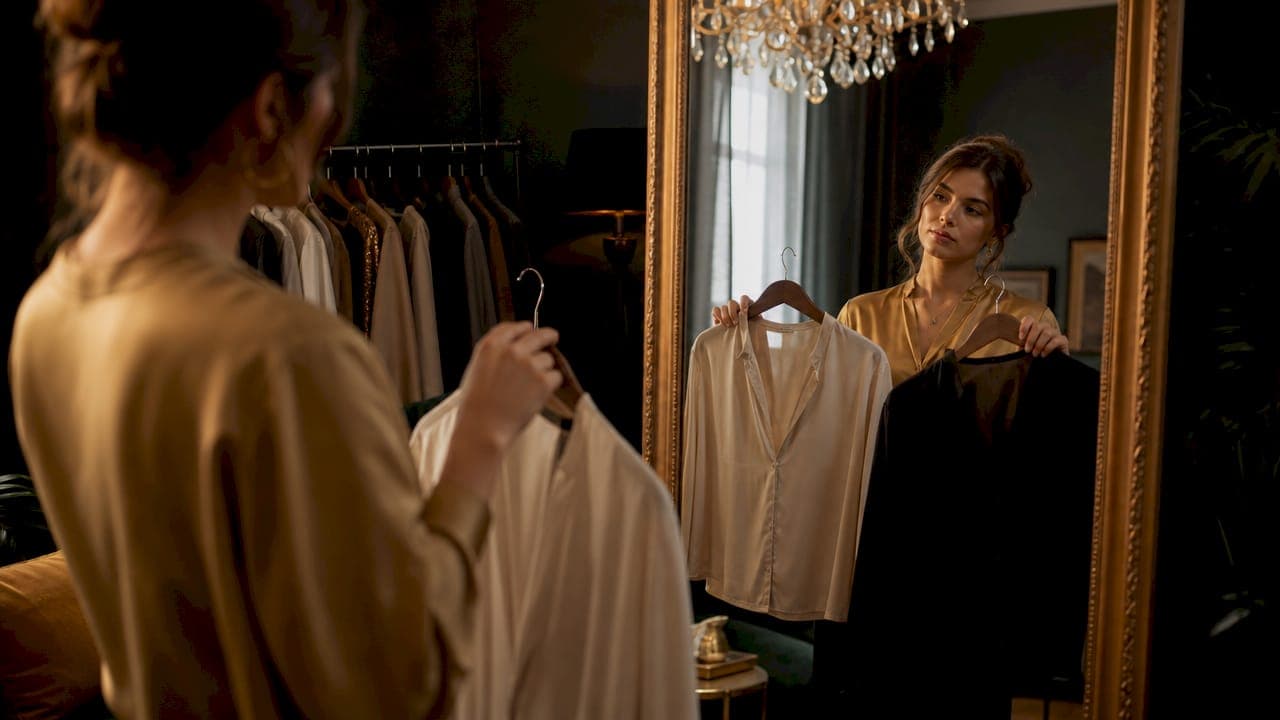
Outfit personalization is defined as the process of tailoring clothing choices to match your unique body shape, personal taste, and lifestyle needs. The industry term for this practice is "style customization," though outfit personalization has become the widely used phrase among fashion-forward individuals. It combines traditional tailoring methods with modern AI-driven tools to help you build a wardrobe that fits your life, not just your measurements. Platforms like Mytenue have made this process faster and more accessible, bringing professional-level styling to everyday wardrobe decisions.
What does outfit personalization mean and how does it work?
Outfit personalization means selecting, adjusting, or curating clothing specifically for your body type, color preferences, occasions, and lifestyle. It goes beyond buying clothes you like. It means building a wardrobe where every piece works for you, not just on a hanger.
The concept covers two broad approaches. The first is manual personalization, where you make deliberate choices about fit, fabric, and style based on self-knowledge. The second is technology-assisted personalization, where AI tools analyze your data and suggest outfits aligned with your preferences. Both approaches share the same goal: clothing that feels intentional and fits your real life.
Personalization differs from customization in one key way. Customization changes the physical product, like adding a monogram or altering a hem. Personalization changes the selection process, matching existing or new items to your specific profile. Understanding this distinction helps you use both methods more effectively.
What are the different methods of outfit personalization?
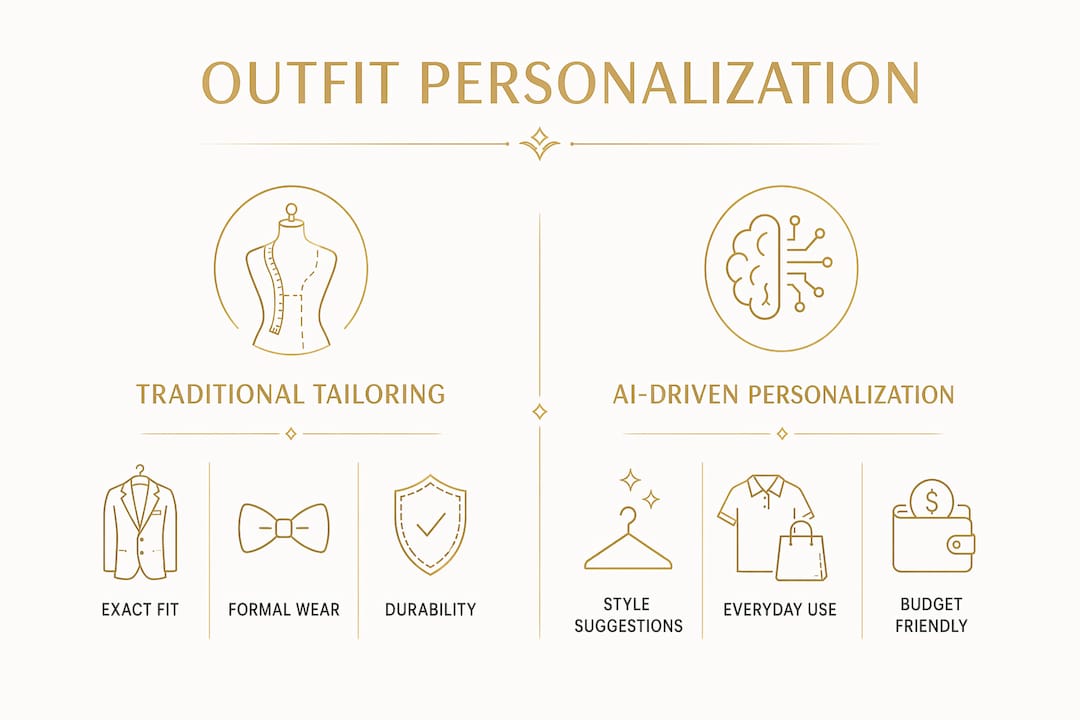
Traditional tailoring
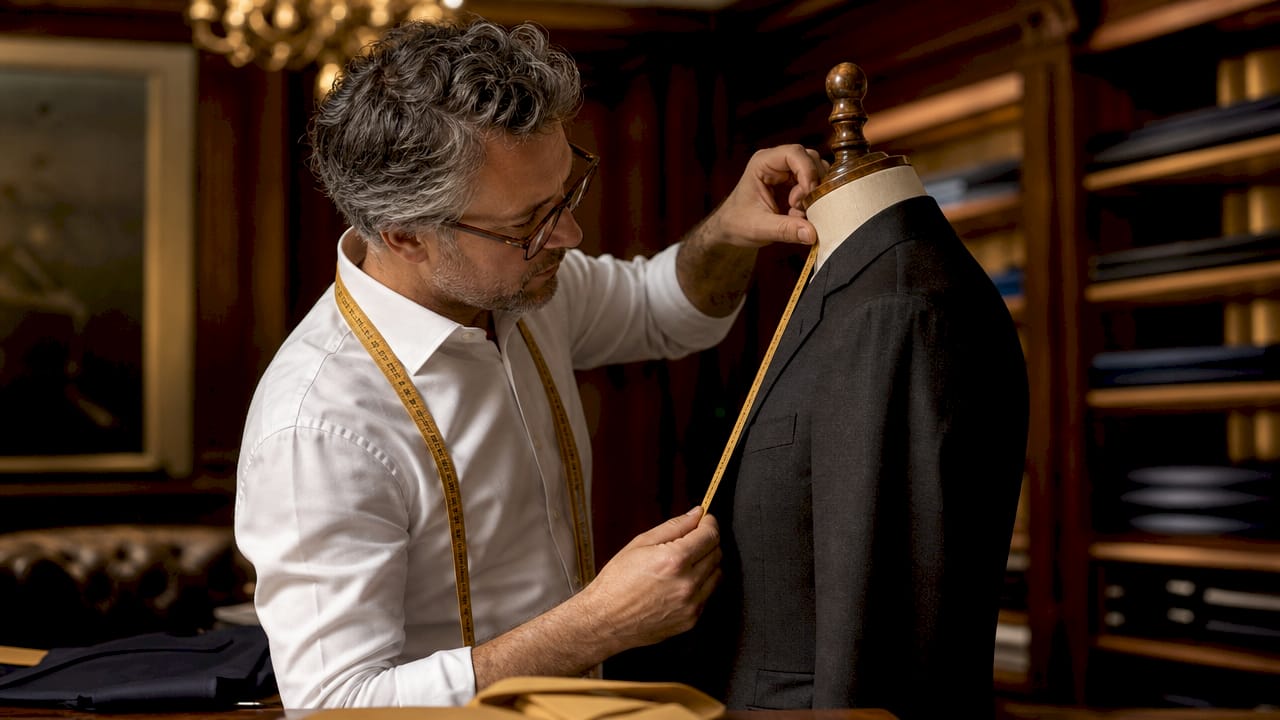
Personalized stitching tailors garments to exact measurements, solving fit issues that ready-made clothes simply cannot address. A blazer cut to your shoulder width and arm length fits differently than anything off the rack. That difference shows up in how you carry yourself and how long you wear the piece.
Traditional tailoring works best for wardrobe anchors: suits, dress shirts, formal wear, and structured pieces. The investment is higher, but the result is a garment built around your body rather than a size average. Women increasingly choose personalized stitching for comfort and style, particularly when addressing diverse body types that standard sizing ignores.
AI-driven personalization
AI-driven outfit personalization uses deep learning and recommendation engines to suggest outfits based on rich user data. Inputs include body measurements, style quizzes, purchase history, and browsing behavior. The system builds a profile and refines it with every interaction.
Mytenue applies this approach by letting you input your style preferences, occasions, and budget to receive curated outfit suggestions. The platform encourages mixing existing wardrobe items with new pieces, which also supports more sustainable shopping habits.
| Feature | Traditional tailoring | AI-driven personalization |
|---|---|---|
| Fit accuracy | Exact, based on measurements | Improves over time with feedback |
| Convenience | Requires appointments and wait time | Available instantly, any time |
| Cost | Higher per garment | Lower, often subscription or free |
| Uniqueness | Fully bespoke | Curated from existing inventory |
| Best for | Formal and structured pieces | Everyday and occasion-based outfits |
Pro Tip: Use traditional tailoring for the 3–5 anchor pieces in your wardrobe and AI personalization for everyday outfit building. The two methods complement each other well.
How does AI technology enhance outfit personalization?
AI improves outfit personalization by learning your preferences over time and matching or exceeding a human stylist's speed and relevance. Continuous learning refines fit and styling accuracy the more you interact with the system. This is the core advantage over static style guides or one-time consultations.
The main AI inputs and processes involved in outfit personalization are:
- Body measurements collected through self-reporting or photo-based scanning tools
- Style quizzes that capture aesthetic preferences, color palettes, and outfit occasions
- Purchase history that reveals what you actually buy versus what you browse
- Browsing behavior that signals emerging preferences before you consciously recognize them
- User feedback on suggestions, which teaches the system what to show more or less of
Combining AI data science with human styling expertise helps people visualize and adopt personalized looks more confidently. Some platforms create personalized outfit images showing how new clothes integrate with a client's existing wardrobe. That visual confirmation reduces purchase hesitation and helps you see your style more clearly.
Privacy is a real concern with AI personalization. Clear data-use notices and user controls build trust in AI personalization tools and improve purchase intentions. Transparency reduces the "black box" feeling that makes some people uncomfortable sharing their data. Mytenue addresses this directly through its privacy practices, giving users visibility into how their information is used.
Users want to influence AI curation rather than have it operate without their input. The best AI personalization tools treat you as a collaborator, not a passive recipient of suggestions.
Pro Tip: Rate every AI outfit suggestion, even the ones you dislike. Negative feedback trains the system faster than positive feedback alone.
What are examples and benefits of outfit personalization for everyday wardrobe choices?
Outfit personalization examples range from the simple to the sophisticated. A perfectly tailored blazer that fits your shoulders exactly is one example. An AI-curated capsule wardrobe built around your work schedule and weekend activities is another. A personalized color analysis that identifies which shades complement your skin tone is a third. Each example shows a different entry point into the same practice.
Custom clothing increases confidence and creates signature looks that improve personal style expression. This is not just aesthetic. When your clothes fit well and reflect your taste, you spend less mental energy on getting dressed. That reduction in daily friction is one of the most underrated benefits of outfit personalization.
Key benefits of outfit personalization include:
- Better fit. Clothes built or selected for your body shape look and feel more comfortable.
- Style consistency. A personalized wardrobe creates a coherent visual identity across occasions.
- Reduced waste. Buying pieces that work together means fewer impulse purchases that never get worn.
- Increased confidence. Wearing clothes that suit you changes how you present yourself.
- Fashion sustainability. Personalization encourages mixing existing items with new ones rather than replacing entire wardrobes.
| Factor | Personalized clothing | Ready-made clothing |
|---|---|---|
| Fit | Tailored to your body | Based on size averages |
| Style match | Aligned with your preferences | Generic, broad appeal |
| Longevity | Higher, worn more often | Lower, often discarded quickly |
| Sustainability | Encourages mix-and-match | Encourages volume buying |
| Confidence impact | High | Variable |
Personalization also prevents fashion fatigue. When your wardrobe reflects who you are, you stop cycling through clothes that feel wrong and start reaching for pieces you actually love.
How can you personalize your outfits effectively?
Effective outfit personalization starts with self-knowledge, not shopping. Follow these steps to build a wardrobe that genuinely works for you:
- Take your measurements. Get accurate measurements for chest, waist, hips, inseam, and shoulder width. These numbers are the foundation of every personalization decision you make.
- Define your style preferences. Identify 3–5 words that describe how you want to dress. Examples: minimal, structured, colorful, relaxed, polished. Use these as a filter when evaluating new pieces.
- Audit your existing wardrobe. Pull out everything you wear regularly and identify the patterns. Color, silhouette, and fabric preferences reveal your actual style, not your aspirational one.
- Use an AI styling tool. Input your measurements, preferences, and occasions into a platform like Mytenue. Let the system generate outfit combinations you might not have considered. Read about AI wardrobe best practices to get the most from these tools.
- Apply your own judgment. Even advanced AI cannot fully assess fit or comfort without your input. Treat every suggestion as a starting point, not a final answer.
- Invest in tailoring for key pieces. Identify the 3–5 items you wear most and have them professionally altered or made to measure. The cost is justified by how often you reach for them.
- Plan outfits by occasion. Use an occasion-based dressing system to organize your wardrobe around the actual events in your life, not hypothetical ones.
Balancing technology with personal judgment is the key principle here. AI tools accelerate the process and surface options you would not find alone. Your lived experience of comfort, fit, and identity is what makes the final call.
Key Takeaways
Outfit personalization works best when you combine traditional tailoring for key pieces with AI-driven tools for everyday outfit building, always applying your own judgment to the results.
| Point | Details |
|---|---|
| Definition matters | Outfit personalization means tailoring clothing to your body, taste, and lifestyle, not just buying what you like. |
| Two methods work together | Traditional tailoring and AI personalization serve different needs and complement each other effectively. |
| AI improves with feedback | Rating suggestions, both positive and negative, trains AI systems to deliver more accurate recommendations over time. |
| Personalization builds confidence | Custom and curated clothing improves fit, reduces decision fatigue, and creates a consistent personal style. |
| Consumer control is critical | The best AI personalization tools give you visibility and input into the process, not just automated outputs. |
Why I think most people are approaching outfit personalization backwards
Most style advice tells you to start with trends or seasonal collections. I think that is exactly wrong. The most effective personalization starts with your existing wardrobe, not a shopping cart.
After years of watching how people actually dress versus how they think they dress, the pattern is clear. People buy aspirationally and wear habitually. They own clothes for the person they imagine being and reach daily for the same five pieces that fit their real life. AI personalization tools are genuinely useful here because they surface what you actually wear and build from that reality, not from a fantasy version of your closet.
The privacy concern around AI styling tools is real but often overstated. Transparency from platforms matters. When you can see how your data is used and adjust what the system learns about you, the tool becomes genuinely collaborative. That consumer control is what separates a useful AI stylist from an intrusive one.
My honest prediction: outfit personalization will become a baseline expectation within the next few years, not a premium feature. The gap between generic ready-made clothing and a wardrobe built around your actual life is too obvious once you experience it. The people who adopt personalization practices now, whether through tailoring, AI tools, or both, will simply dress better with less effort than those who do not.
Start with your measurements. Audit what you already own. Then let technology help you see what you are missing.
— Ahmed
Mytenue makes outfit personalization practical
Outfit personalization sounds straightforward in theory. Putting it into practice every morning is a different challenge. Mytenue is an AI-powered styling platform that builds personalized outfit recommendations around your style preferences, occasions, and budget.
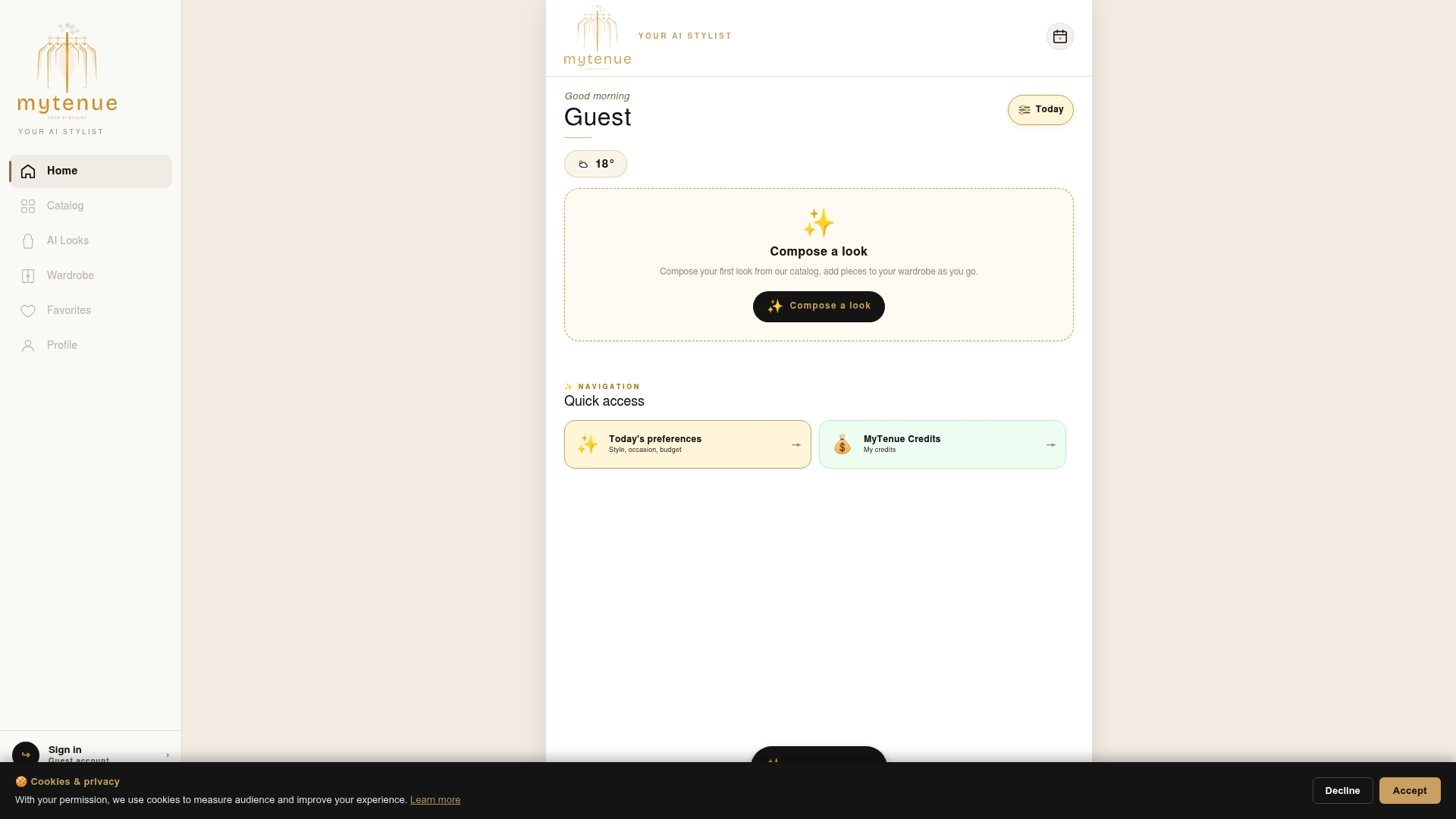
You input what you already own, what occasions you dress for, and what your style goals are. Mytenue generates complete outfit combinations, mixing your existing pieces with new suggestions. The platform is built for people who want to dress well without spending an hour deciding what to wear. Visit Mytenue to build a wardrobe that actually fits your life.
FAQ
What does outfit personalization mean exactly?
Outfit personalization is the practice of selecting or tailoring clothing to match your specific body shape, style preferences, and lifestyle needs. It uses both manual methods like tailoring and technology-based tools like AI recommendation engines.
How is personalization different from customization?
Customization changes the physical product, such as altering a hem or adding a detail. Personalization changes the selection process, matching existing or new items to your individual profile.
What data does AI use for outfit personalization?
AI personalization tools use inputs including body measurements, style quizzes, purchase history, and browsing behavior to build and refine your style profile over time.
Are AI outfit personalization tools safe to use?
Platforms that provide clear data-use notices and user controls are the most trustworthy. Look for tools that let you see and adjust what the system learns about you before sharing personal data.
What are the main benefits of outfit personalization?
The core benefits include better fit, improved style consistency, reduced decision fatigue, higher confidence, and more sustainable shopping habits through intentional wardrobe building.