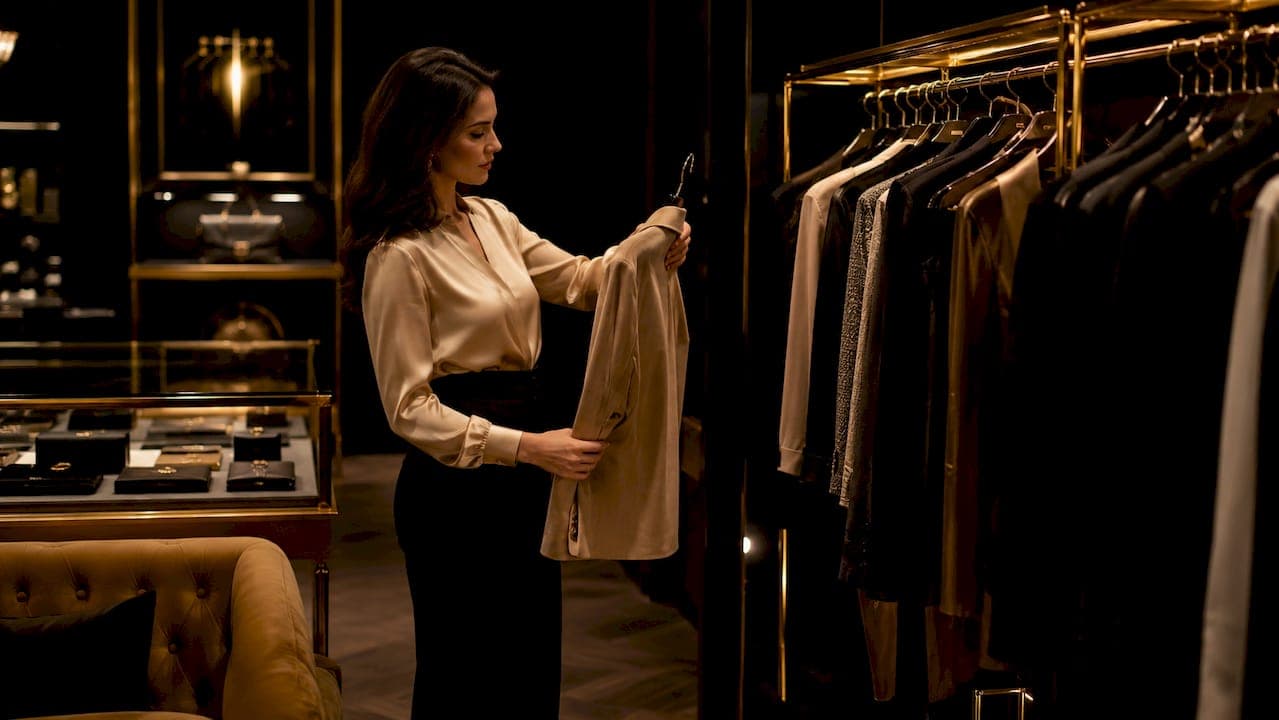
Wardrobe curation is defined as the intentional process of selecting, organizing, and maintaining a clothing collection around conceptual unity, functionality, and personal alignment. The term comes from the Latin curare, meaning to care for or manage, which signals stewardship over accumulation. A curated wardrobe is not just a full closet. It is a collection where every piece earns its place. Understanding what wardrobe curation means gives you a framework for dressing with purpose rather than habit, and it is one of the most practical shifts you can make in how you relate to your clothes.
What does wardrobe curation mean at its core?
Wardrobe curation is built on a set of principles that separate deliberate dressing from passive accumulation. The most important of these is the idea of a wardrobe thesis: a defined framework of style, fabric, and color palette that gives your collection coherence and continuity.
Professional curators apply museum logic to fashion, treating each garment as part of a larger, intentional collection rather than a standalone purchase. This means every item must "converse" visually and structurally with the others. A navy wool blazer, a white cotton shirt, and a pair of tailored trousers all speak the same visual language. A sequined party top bought on impulse does not.
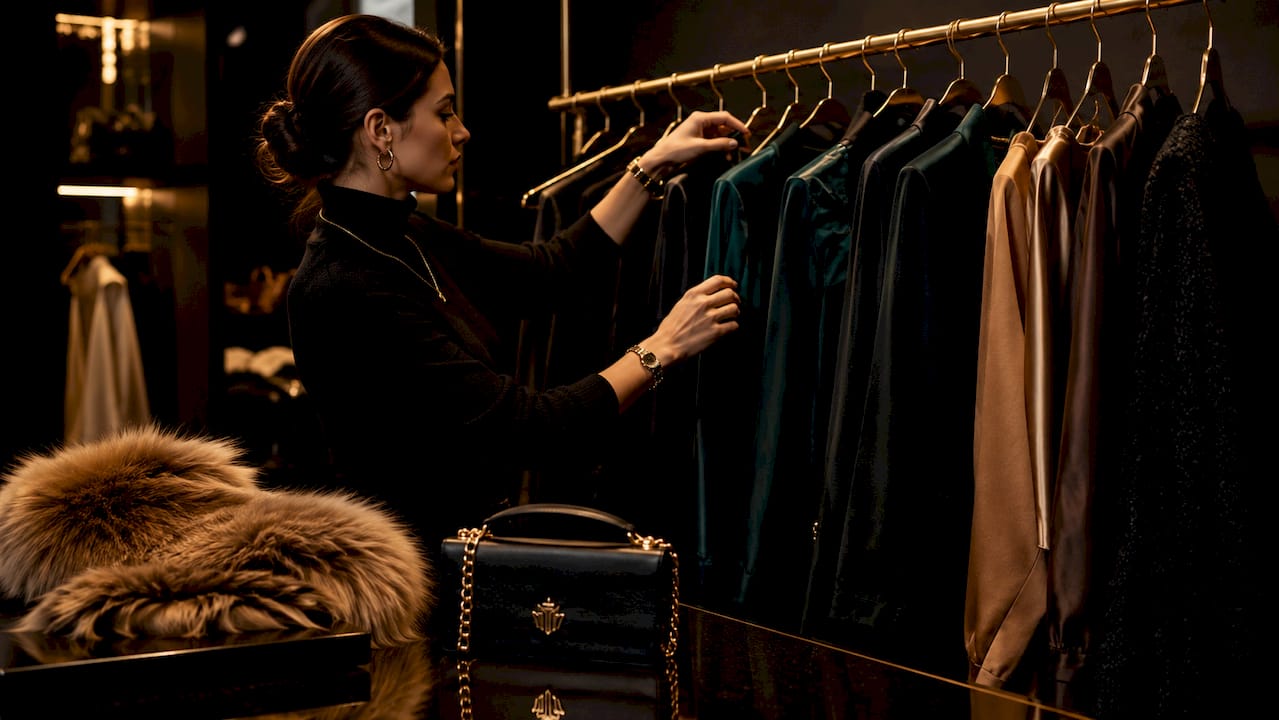
Quality is the second pillar. Fiber type and construction quality directly determine how long a garment lasts and how well it holds its shape. Wool, silk, and cotton are the fabrics most associated with curated wardrobes because they age well and coordinate easily. Synthetic blends often look dated faster and wear out sooner.
The third principle is functional cohesion. Every piece in a curated wardrobe should be able to create multiple distinct outfits. If a garment only works in one specific combination, it is a costume, not a wardrobe component.
Key principles that define a curated wardrobe:
- Wardrobe thesis: A defined aesthetic, palette, or style direction that guides every purchase
- Quality over quantity: Fewer, better-made pieces that last longer and coordinate more easily
- Visual coherence: Garments that work together across multiple outfit combinations
- Intentional acquisition: Buying to fill a specific gap, not to satisfy a momentary impulse
- Ongoing stewardship: Regular editing to keep the collection aligned with your current life
Pro Tip: Before buying anything new, ask whether it works with at least three items already in your closet. If it does not, it is likely a wardrobe orphan.
Is wardrobe curation just minimalism?
The biggest misconception about wardrobe curation is that it requires extreme minimalism. Stylist Lizzie Campbell is direct on this point: curation is about building a joyful, functional wardrobe that matches your real life, not about deprivation or a fixed item count.
A curated wardrobe for a creative director in New York will look very different from one built for a teacher in a small town. Both can be curated. The difference is not size. It is coherence and intentionality.
Another common misunderstanding is that curation is a one-time overhaul. Successful curation is iterative, requiring periodic editing as your lifestyle, body, and tastes evolve. A wardrobe that fit your life at 28 may not serve you at 35. Curation accounts for that shift.
What wardrobe curation is not:
- A fixed item count (there is no magic number)
- A ban on color, pattern, or personality
- A one-weekend project that stays done forever
- A rejection of personal creativity or self-expression
- A system only for people with large budgets
The closet-as-storage model treats clothing as things you own. The curated wardrobe model treats clothing as a collection you manage. That mental shift is where the real change happens.
How to curate your wardrobe in practical steps
Starting a curated wardrobe does not require buying anything new. The process begins with an honest assessment of what you already own.
-
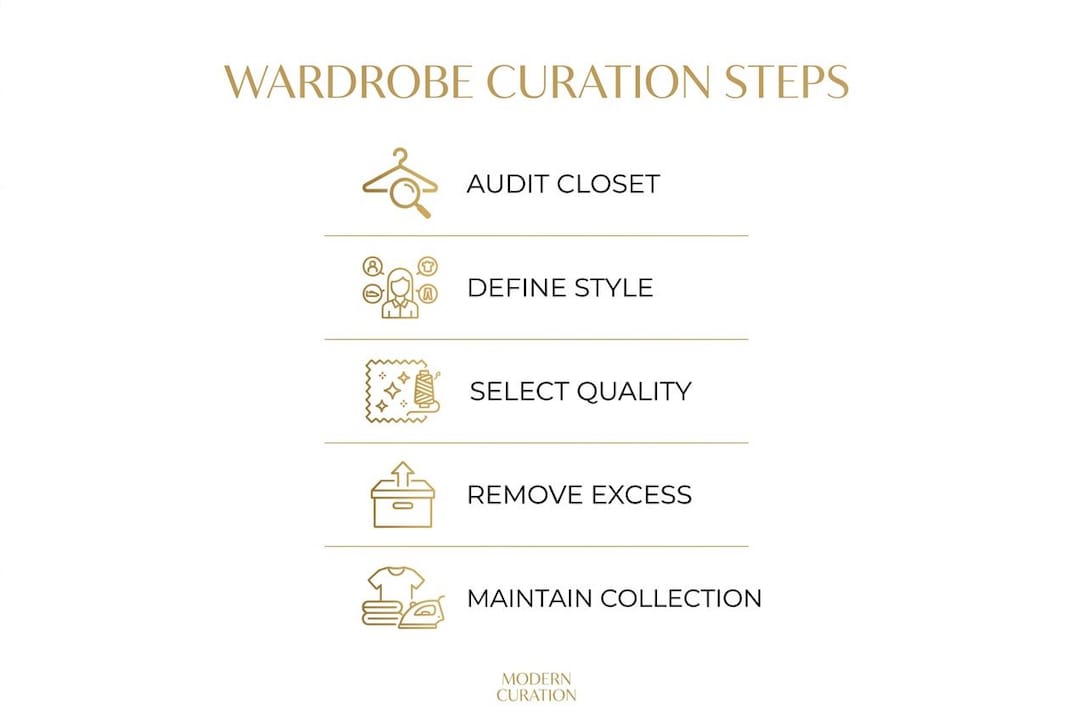
Audit your current closet. Pull everything out. Group items by category: tops, bottoms, outerwear, shoes. This gives you a clear picture of what you actually have versus what you thought you had.
-
Define 3–5 personal style keywords. Words like "relaxed," "structured," "earthy," or "classic" give you a filter for every future decision. Building a wardrobe from style keywords prevents impulse buys and keeps your collection coherent over time.
-
Edit with an outfit-first mindset. Any item that cannot create several distinct outfits or that you never naturally reach for should leave the collection. Donate, sell, or repurpose it. The edit-first habit is the core discipline of curation.
-
Identify real gaps, not fantasy gaps. A gap is something your lifestyle actually needs. A fantasy gap is something you imagine needing for a life you do not currently live. Buy for your Monday, not your hypothetical Saturday.
-
Build gradually with versatile pieces. Add one or two high-quality items at a time. Focus on pieces that expand your outfit combinations rather than ones that stand alone.
-
Use outfit formulas. Reliable combinations like "tailored trouser plus knit plus loafer" or "straight-leg jean plus button-down plus sneaker" reduce daily decision time and keep your style consistent.
-
Rotate seasonally and reassess. Each season, revisit what you wore and what you skipped. Items that stayed on the hanger for a full season are candidates for removal.
Pro Tip: Try a 10-item wardrobe experiment for two weeks. Limit yourself to ten pieces and track which combinations you actually wear. The results will tell you more about your real style than any quiz.
How does wardrobe curation improve your daily life?
The benefits of wardrobe curation extend well beyond a tidy closet. About 33% of people feel they have "nothing to wear" despite overflowing closets. That statistic points to a real problem: volume without coherence creates paralysis, not choice.
Psychological research confirms that excessive clothing choices increase cognitive fatigue. A curated wardrobe with cohesive, interchangeable pieces reduces the time and mental energy spent on outfit decisions each morning. That recovered energy compounds across a week, a month, and a year.
The benefits of a curated wardrobe, organized by category:
| Benefit | What it looks like in practice |
|---|---|
| Reduced decision fatigue | Fewer choices, all of them good, means faster and easier dressing |
| Greater personal satisfaction | Every item fits, flatters, and aligns with your style |
| Sustainable consumption | Buying less and buying better reduces waste and spending |
| Time savings | Coherent mixes and matches cut morning routine time significantly |
| Financial clarity | You stop buying duplicates or items that never get worn |
Wardrobe curation also supports a more sustainable approach to fashion. When you buy fewer, better-made pieces, you reduce the cycle of fast fashion consumption. Choosing quality fibers and construction means garments last longer and need replacing less often. That is a direct environmental benefit, not just a personal one.
The confidence boost is real, too. When your wardrobe reflects who you actually are, getting dressed feels less like a chore and more like a natural expression of your identity. That shift in daily experience is one of the most underrated benefits of personal style management.
Key Takeaways
Wardrobe curation is the ongoing practice of managing your clothing collection around a defined style thesis, quality standards, and functional coherence to reduce decision fatigue and increase daily satisfaction.
| Point | Details |
|---|---|
| Curation starts with a thesis | Define 3–5 style keywords to filter every purchase and keep your collection coherent. |
| Edit before you add | Remove items that cannot create multiple outfits before buying anything new. |
| Quality beats quantity | Choosing well-made fabrics like wool, silk, and cotton extends garment life and coordination. |
| Curation is ongoing | Reassess your wardrobe each season to stay aligned with your current lifestyle. |
| Benefits are practical | A curated wardrobe reduces morning decision time, spending, and the "nothing to wear" feeling. |
The shift I think most people miss
Most wardrobe advice focuses on what to buy. Curation flips that entirely. The real work is in what you remove and what you choose not to buy. That is a harder discipline, and it is the one that actually changes how you experience getting dressed.
I have seen people go through full wardrobe overhauls, spend money on new pieces, and end up exactly where they started six months later. The reason is almost always the same: they never defined a thesis. Without a clear sense of what their wardrobe is for, every sale and every trend becomes a valid reason to add something. The closet fills back up. The "nothing to wear" feeling returns.
The curators who get this right treat their wardrobe the way a good editor treats a manuscript. They cut more than they keep. They ask whether each piece serves the whole. They resist the pressure to add just because something is available or discounted. That editorial mindset is what separates a curated wardrobe from a well-organized one.
One more thing: curation is not a destination. Wardrobe stewardship is an ongoing practice, not a finished project. The people who sustain it are the ones who build the habit of regular editing into their routine, not the ones who do a big overhaul once and expect it to hold.
— Ahmed
Your style, made clearer with Mytenue
Wardrobe curation is easier when you have the right tools working with you.
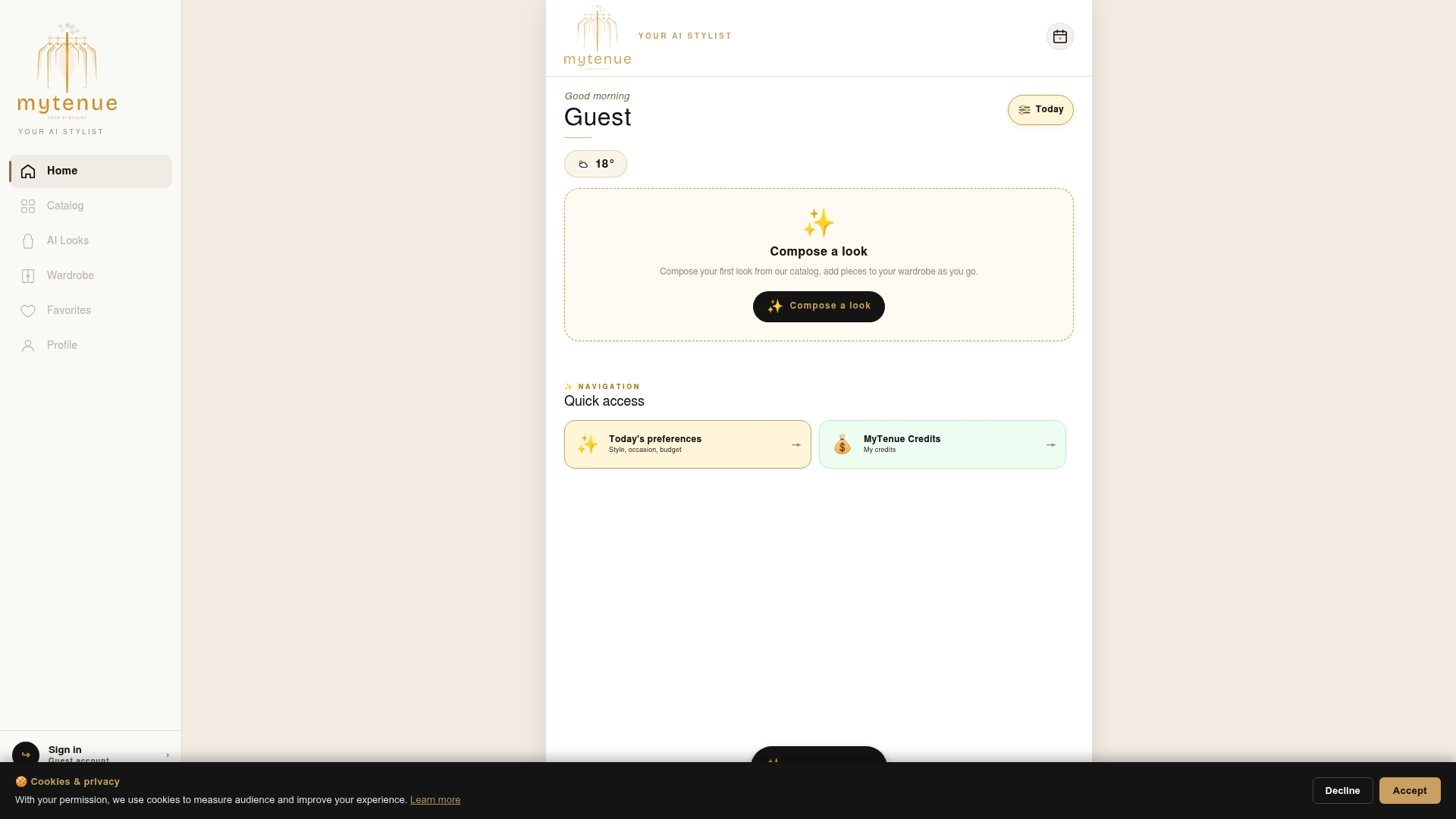
Mytenue is an AI-powered platform that helps you build and manage a personalized wardrobe based on your style preferences, occasions, and budget. You can create complete outfits, mix existing pieces with new ones, and get recommendations that actually match your real life. No more guessing whether something works. No more buying pieces that never get worn. Visit Mytenue and let your AI stylist help you put your curated wardrobe into practice, one outfit at a time.
FAQ
What does wardrobe curation mean?
Wardrobe curation is the intentional process of selecting, organizing, and maintaining a clothing collection around a defined style framework, quality standards, and functional coherence. It prioritizes stewardship over accumulation.
Is a curated wardrobe the same as a capsule wardrobe?
A capsule wardrobe is one specific format of curation, typically built around a small number of versatile pieces. Wardrobe curation is the broader practice that includes capsule wardrobes but is not limited to them.
How do I start curating my wardrobe?
Start by auditing what you own, defining 3–5 personal style keywords, and removing any item that cannot create multiple distinct outfits. Build from what remains before adding anything new.
How often should I edit my curated wardrobe?
A seasonal review, roughly four times a year, keeps your wardrobe aligned with your current lifestyle and prevents clutter from rebuilding. Any item untouched for a full season is a strong candidate for removal.
Does wardrobe curation save money?
Yes. By buying fewer, better-quality pieces and stopping impulse purchases, most people spend less over time. A curated wardrobe also reduces duplicate buying and eliminates items that never get worn.