
Personal style AI curation is defined as the use of artificial intelligence to analyze your wardrobe, body characteristics, and lifestyle factors to generate tailored outfit suggestions and styling guidance. The benefits of personal style AI curation go far beyond convenience. AI styling tools reduce decision fatigue, build genuine style knowledge, and promote smarter buying habits. Platforms like Mytenue put this technology directly in your hands, letting you create complete outfits based on your preferences, occasions, and budget without needing a human stylist. Whether you are a busy professional or a fashion-conscious individual, AI-driven wardrobe curation changes how you get dressed every day.
1. How AI curation saves time and cuts decision fatigue
The average person makes hundreds of small decisions before 9:00 AM, and choosing an outfit ranks among the most mentally draining. This cognitive load compounds over time, leaving you less focused for the decisions that actually matter. AI outfit curation solves this by reducing daily outfit decisions to a single tap.
AI digital closets work by cataloging every item you own and cross-referencing them against weather data, your calendar, and the occasion type. The result is a ranked list of ready-to-wear combinations pulled from what you already have. You stop staring at a full closet that feels empty.
AI outfit apps increase wardrobe utilization by surfacing forgotten items and identifying combinations you would never consider on your own. That blazer you bought two years ago suddenly pairs with three outfits you had not tried.
- Connect your calendar so the AI factors in meeting types and dress codes automatically.
- Sync local weather data for real-time fabric and layering suggestions.
- Tag items by occasion to speed up filtering on busy mornings.
- Review AI suggestions the night before to eliminate morning friction entirely.
Pro Tip: Start your digital wardrobe with just 20 core items. Upload photos of your most-worn pieces first. You will see outfit combinations within minutes and build confidence before adding your full closet.
2. Personalization that fits your body, color, and lifestyle
Generic style advice fails because it ignores the person wearing the clothes. AI personal styling tools fix this by building a profile around your specific body shape, coloring, and daily life. The result is advice that actually works for you, not for a hypothetical average person.

Body shape analysis is one of the first things a quality AI stylist performs. It identifies your silhouette type and recommends cuts and proportions that create visual balance. A pear-shaped person gets different trouser recommendations than someone with a rectangular frame, and the AI explains why.
AI tools use personal color analysis to define your palette, narrowing daily clothing choices significantly. Knowing whether you are a "warm autumn" or a "cool summer" removes guesswork from every purchase and every morning. This is one of AI styling's most impactful features for daily outfit personalization.
Lifestyle factors add another layer of precision:
- Profession: A teacher needs different outfit logic than a creative director or a remote worker.
- Climate: AI adjusts fabric weight and layering recommendations based on your city's seasonal patterns.
- Events: Upcoming occasions trigger specific outfit suggestions days in advance.
- Evolving taste: AI tools remember your feedback and refine recommendations over time, acting as a genuine style partner rather than a one-time quiz result.
Advanced AI styling tools also analyze fabric type, texture, and cultural context to refine recommendations beyond color and shape. This addresses real-world wearability and appropriateness in ways that generic advice never reaches.
3. Sustainability and cost savings through smarter wardrobe choices
The most underrated advantage of AI fashion curation is what it stops you from buying. Most people own far more than they wear, and impulse purchases fill gaps that do not actually exist. AI wardrobe tools fix this by making the true value of your closet visible.
The cost-per-wear metric is the clearest example. AI tools recalculate cost-per-wear for every item in your wardrobe, shifting your focus from price to value. A $200 coat worn 100 times costs $2 per wear. A $40 top worn twice costs $20. That reframe changes how you shop permanently.
Gap detection is the other major tool. AI scans your existing wardrobe and identifies what is genuinely missing versus what you already own in a slightly different form. This prevents duplicate purchases and directs spending toward items that unlock the most new combinations.
| Benefit | What AI does | Outcome |
|---|---|---|
| Cost-per-wear tracking | Calculates wear frequency per item | Shifts focus from price to value |
| Gap detection | Scans wardrobe for missing versatile pieces | Reduces duplicate and impulse buying |
| Combination maximization | Generates outfits from existing items | Extends wardrobe life before new purchases |
| Packing optimization | Digitized wardrobes plan travel outfits from minimal items | Reduces overpacking and forgotten items |
Retail brands that adopted AI outfit suggestion tools saw up to 40% improvement in shopper engagement. That number reflects how much people respond when styling feels relevant and personal rather than generic. The same logic applies to your own wardrobe: when you see your clothes working together, you buy less and wear more.
4. Building style confidence without a personal stylist
Style confidence comes from understanding why an outfit works, not just being told it does. AI wardrobe tools build that understanding by explaining their recommendations in plain language. You learn the principles behind the suggestions, and that knowledge stays with you.
AI wardrobe consultants provide honest fit and style feedback that overcomes typical peer bias. A friend might tell you an outfit looks great because they do not want to hurt your feelings. AI has no such filter. It evaluates proportion, color harmony, and occasion fit objectively, giving you feedback you can actually use.
"The future of AI styling is a style partnership that teaches rather than creates dependency. The goal is for you to understand your own wardrobe so well that you need less outside input over time, not more."
This contrasts sharply with curated subscription boxes, which deliver clothes chosen by someone else based on limited profile data. AI curation works with what you already own and teaches you to see it differently. The AI styling feedback loop builds your own eye over time.
Additional confidence benefits include:
- 24/7 availability: No appointment needed. You get styling input at 6:00 AM on a Tuesday or midnight before a big trip.
- Privacy: Your wardrobe data stays within the platform. No social judgment, no public sharing required.
- Rack bias elimination: Comparing outfit options with AI during in-store shopping reduces the tendency to choose items based on how they look on a hanger rather than on your body.
5. What to look for when choosing an AI styling tool
Not all AI styling tools deliver equal results. The difference between a tool you use daily and one you abandon after a week often comes down to three factors: ease of use, explainability, and trust.
A 2026 study of 375 shoppers found that perceived complexity reduces purchase intent for AI-personalized fashion recommendations. This means a tool that buries its logic in black-box outputs will lose you quickly. Look for platforms that explain why they recommend a specific combination, not just what to wear.
Trust and transparency matter just as much. User trust and clear data explanations directly raise adoption and recommendation intention. Before committing to any platform, check whether it explains how it uses your wardrobe data and whether you can control what it learns about you.
Practical features to prioritize when evaluating AI styling tools:
- Simple photo upload with automatic item tagging
- Occasion and weather filters that work without manual input
- Color palette generation based on your actual skin tone, not a generic quiz
- Clear reasoning behind each outfit suggestion
- Feedback loops that let you rate suggestions and improve future results
Pro Tip: Treat your first two weeks with any AI styling tool as an experiment. Rate every suggestion, even the ones you dislike. The feedback trains the AI faster and produces noticeably better results by week three.
The step-by-step AI outfit curation process matters more than the feature list. A tool with fewer features but a clear, guided workflow will serve you better than a feature-heavy platform that requires a learning curve before it becomes useful.
Key takeaways
AI personal style curation delivers the most value when it combines body analysis, color profiling, and cost-per-wear tracking into a single daily habit.
| Point | Details |
|---|---|
| Decision fatigue reduction | AI generates ready-to-wear outfits from your existing wardrobe, cutting morning mental load. |
| Deep personalization | Body shape, color palette, and lifestyle factors produce recommendations that generic advice cannot match. |
| Smarter spending | Cost-per-wear tracking and gap detection redirect spending toward items that add real wardrobe value. |
| Style education | AI explains its reasoning, building your own styling knowledge rather than creating dependency. |
| Tool selection matters | Choose platforms with clear explainability and transparent data use to maximize adoption and results. |
What I have actually learned from using AI curation daily
I was skeptical the first time I uploaded my wardrobe to an AI styling platform. My closet felt personal, and the idea of an algorithm understanding it seemed reductive. Within a week, I changed my mind.
The color palette feature surprised me most. I had been buying navy and black for years because they felt safe. The AI identified that I am a warm-toned person and showed me that olive, rust, and camel work significantly better with my complexion. I tested it. The feedback I got from people around me confirmed it immediately.
What I did not expect was how much it changed my buying behavior. Seeing cost-per-wear data for items I rarely touched made me uncomfortable in a useful way. I donated 30% of my wardrobe within a month because the AI made it obvious those pieces were not earning their space.
The limitation I hit was photo quality. Items photographed in poor lighting got tagged incorrectly, which threw off combination suggestions. The workaround is simple: photograph everything against a white wall in natural light. It takes 20 extra seconds per item and eliminates most errors.
My honest assessment is that AI curation works best as a wardrobe analysis tool you return to weekly, not a daily oracle you follow blindly. Use it to learn, then apply that knowledge independently. That is when it becomes genuinely useful.
— Ahmed
Your AI stylist is ready when you are
Mytenue brings together outfit curation, wardrobe analysis, and personalized style guidance in one place. You upload your items, set your preferences, and the platform generates complete looks based on your body type, color profile, occasions, and budget.
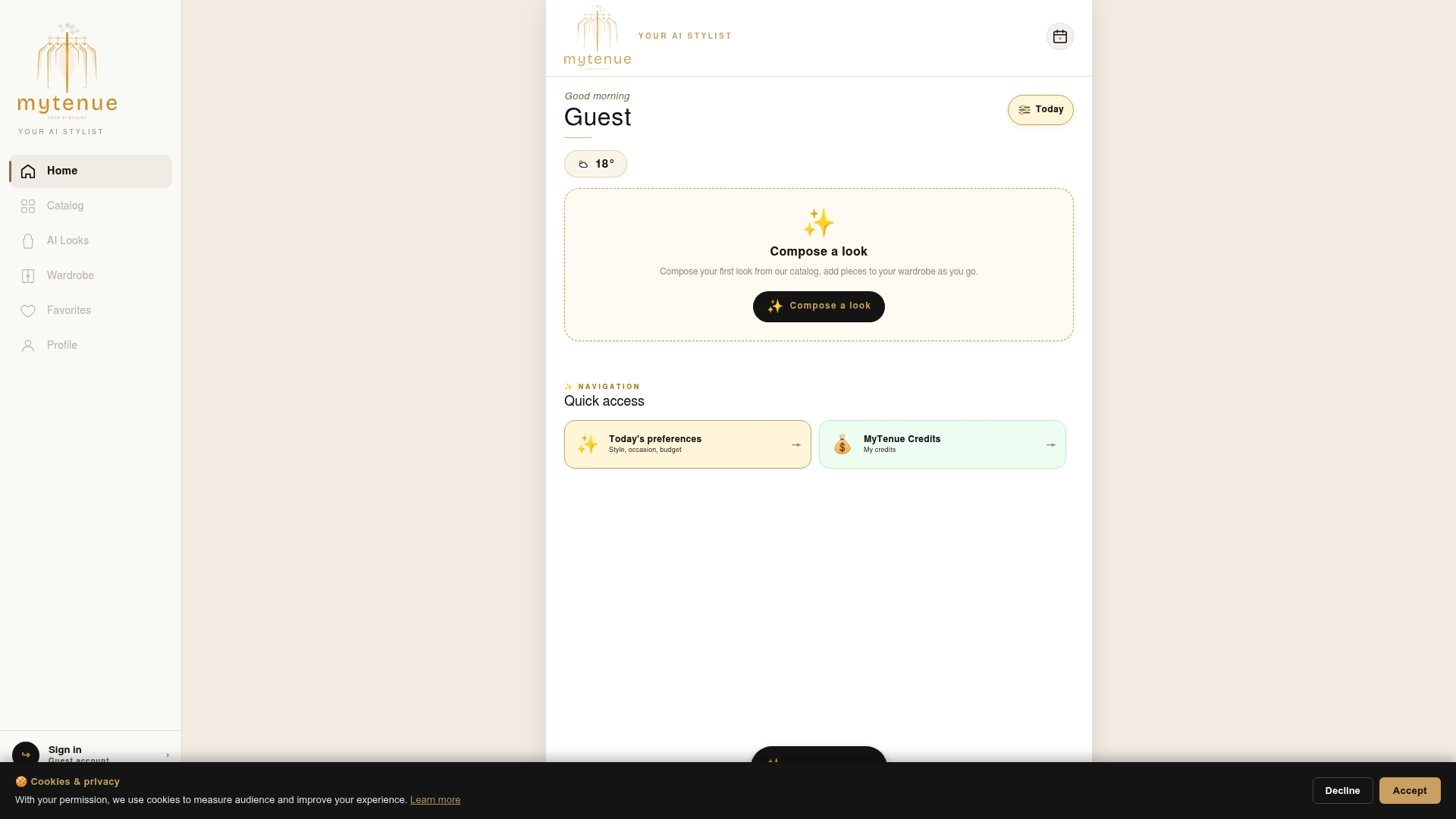
New users can start with as few as 10 wardrobe items and see real outfit combinations immediately. Mytenue's interface is built for people who are new to AI styling, with clear explanations for every recommendation and simple controls for refining results. If you are ready to get more from the clothes you already own, start with Mytenue and see what your wardrobe is actually capable of.
FAQ
What are the main benefits of personal style AI curation?
AI curation reduces decision fatigue, personalizes outfit suggestions to your body and color type, tracks cost-per-wear to guide smarter purchases, and builds your styling knowledge over time.
How does AI personalize outfit recommendations?
AI analyzes your body shape, personal color palette, lifestyle factors, and occasion needs to generate outfit combinations that fit your specific profile rather than a generic average.
Can AI styling tools help me shop more sustainably?
Yes. AI tools calculate cost-per-wear for existing items and detect genuine wardrobe gaps, which reduces impulse buying and directs spending toward pieces that add real versatility.
What should I look for in an AI outfit app?
Prioritize tools with clear explainability, simple photo upload, color palette generation, and transparent data use policies. A 2026 study confirmed that perceived complexity and unclear explanations reduce user adoption significantly.
Is AI styling useful for professionals with specific dress code needs?
AI styling tools are particularly effective for professionals because they factor in occasion type, dress code, and workplace context to generate appropriate outfit combinations from your existing wardrobe.