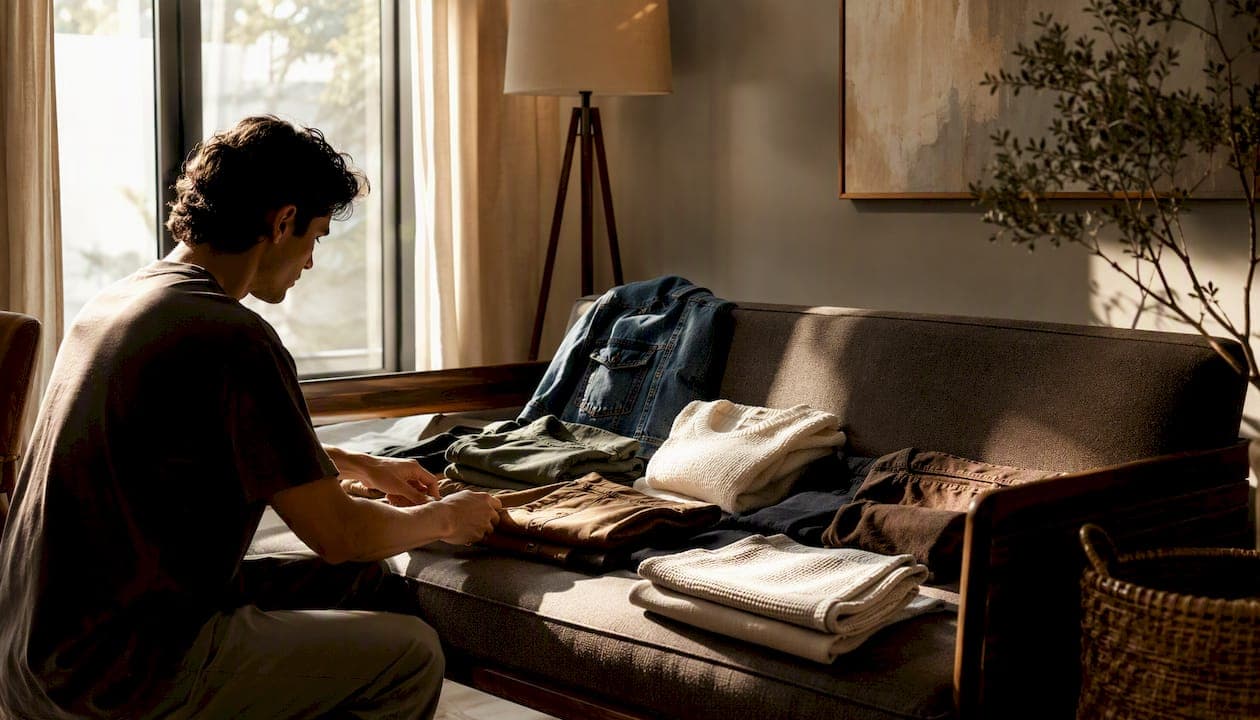
A student minimal wardrobe is a small, intentional set of versatile pieces you can mix and match for every campus situation. Aim for 15–30 core items as your starting range. That count excludes underwear, socks, workout gear, and heavy seasonal coats, which live in a separate category. If your dorm closet is tight, a 15-piece capsule built around an 8-4-1-2 formula (eight tops and layers, four bottoms, one dress or versatile piece, two pairs of shoes) covers roughly 10–12 days of outfits between laundry runs.
Your one action right now: spend 10 minutes pulling everything out of your closet and setting aside anything you haven't worn in the past month. What's left is your starting capsule.
Key Takeaways
A student minimal wardrobe works best when it's built from proven pieces, sized to your laundry schedule, and supported by a simple outfit system you can execute in under two minutes every morning.
| Point | Details |
|---|---|
| Start with 15–30 pieces | Size your capsule to your closet space and laundry frequency, not an arbitrary number. |
| Audit before you shop | A 30-day hanger-turn audit reveals your real wardrobe heroes before you spend a dollar. |
| Use the 8-4-1-2 formula | Eight tops and layers, four bottoms, one dress, two shoes covers 10–12 days between laundry. |
| Prioritize shoes and outerwear | Buy high-wear, high-cost items first; add statement pieces last when the budget allows. |
| Mytenue digitizes and plans | The app turns your capsule into daily AI-generated outfits with weather and calendar sync. |
Table of Contents
- Why a minimal wardrobe makes student life easier
- How do you build a student capsule wardrobe step by step?
- What rules help you size and balance your capsule?
- Sample capsule wardrobes for different student types
- Daily outfit formulas you can reuse every week
- How to pack for move-in and adjust across semesters
- Laundry, mending, and storage habits that keep a small wardrobe working
- How to set a clothing budget and shop smart as a student
- Common mistakes students make with minimal wardrobes
- How wardrobe apps and AI tools simplify your student capsule
- The 30-day capsule experiment is worth trying
- Mytenue makes your capsule wardrobe work smarter
- Sources
Why a minimal wardrobe makes student life easier
The practical case for a minimalist wardrobe for students isn't about aesthetics. It's about your actual daily constraints.
- Less decision fatigue. Choosing an outfit from 80 items at 7:45 AM before an 8 AM lecture drains mental energy you need for class.
- Fits a dorm closet. Most residence hall closets offer roughly 36–48 inches of hanging rod. A 15–20 piece capsule fits without overflow.
- Saves laundry money and time. Fewer items means fewer loads. On a shared campus laundry system, that's real quarters and real hours back each week.
- Stretches your budget further. Buying fewer, better pieces costs less over a semester than constant impulse buys that wear out fast.
- Supports sustainability. The fashion industry generates enormous textile waste globally. Owning less and wearing each piece more is one of the most direct ways to reduce your personal contribution.
Consider the week before finals: you're not thinking about clothes. A capsule means you grab a clean, pre-planned outfit in under two minutes. Same logic applies to move-in day, a surprise internship interview, or a Saturday morning practice followed by an afternoon study session. The wardrobe just works.
How do you build a student capsule wardrobe step by step?
A Wear-First approach builds your capsule from pieces you already use most, delaying purchases until gaps are real and proven. Here's the full workflow:
- Audit what you actually wear. Turn every hanger backward. After 30 days, anything still facing backward gets donated or stored. This hanger-turn audit reliably surfaces your "wardrobe heroes" — the pieces you reach for automatically.
- Choose a 2–3 color palette. Pick one neutral base (black, navy, camel, or gray), one secondary neutral, and one accent color. Every piece you keep or buy should work with at least two others in the palette.
- List core pieces by job. Group items by what they do: class, gym, errands, events, sleep. Fill each job category with the minimum number of pieces that gets you through a week.
- Set a target count. Start with 20–30 pieces if you have a standard closet, or 15 if space is tight. Laundry access, climate, and your actual routine should drive the final number, not an arbitrary rule.
- Trial the capsule for 2–4 weeks. Pack away everything outside the capsule. Live with only those pieces. Note what you reach for, what you skip, and what's missing.
Checklist for each piece you keep:
- Does it fit well right now (not "when I lose five pounds")?
- Is it in good condition (no stains, broken zippers, or pills)?
- Does it work with at least three other pieces in the capsule?
- Does it cover a real need in your weekly routine?
Pro Tip: Don't buy anything new until you've completed the 2–4 week trial. Gaps that feel urgent on day one often disappear by week three. Buy one high-impact piece at a time, only after the palette is fixed.
What rules help you size and balance your capsule?
Simple heuristics make it easier to decide how many pieces to own and how to balance basics against personality.
The 3-3-3 rule
Pick 3 tops, 3 bottoms, and 3 layers or shoes for a defined period (a week, a trip, or a trial month). For a student, that might look like: two T-shirts and a button-down, two jeans and one trouser, a hoodie, a denim jacket, and a blazer. The constraint forces you to choose only pieces that work together, which is the whole point.
The 70/30 rule
Seventy percent of your capsule should be neutral, versatile basics. Thirty percent can be personality pieces: a bold-colored sweater, a printed skirt, a statement sneaker. For students, this ratio keeps the wardrobe functional Monday through Friday while leaving room for weekend expression or a themed event.
Capsule size guidelines
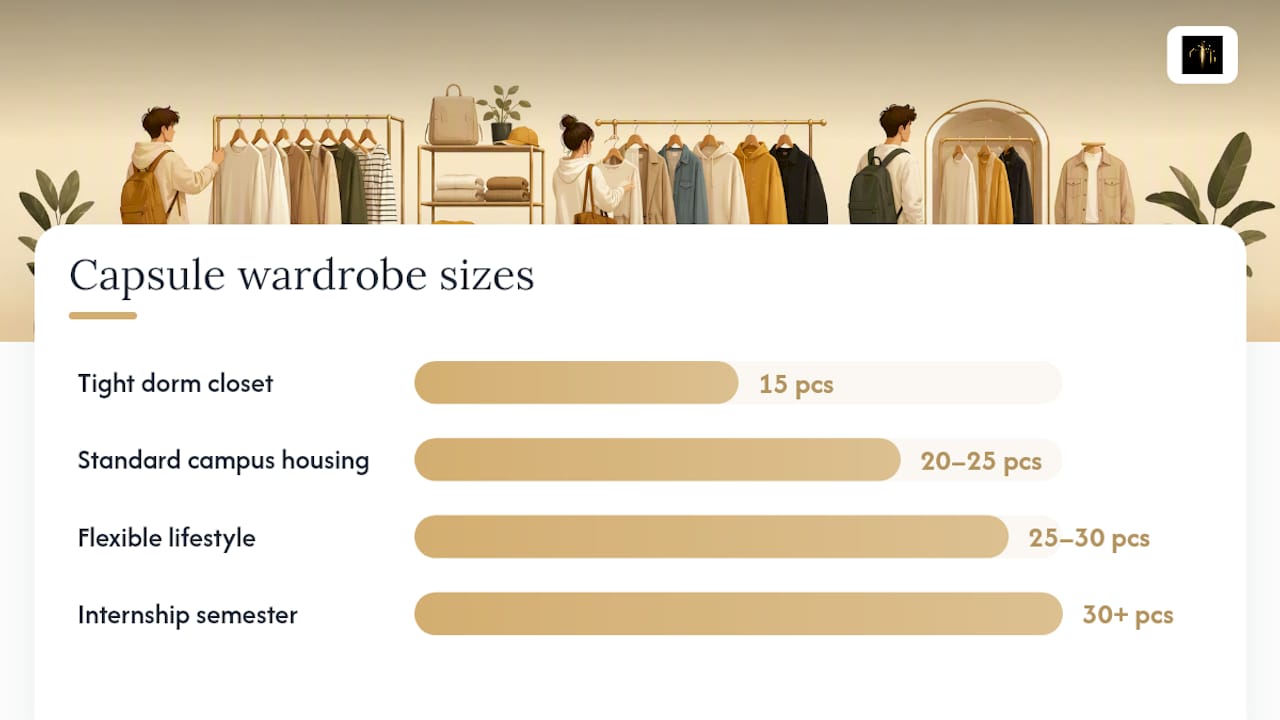
| Situation | Suggested piece count | Reasoning |
|---|---|---|
| Tight dorm closet | 15 pieces | Fits a single rod; covers 10–12 days between laundry |
| Standard campus housing | 20–25 pieces | Room for seasonal variation and one event category |
| Flexible lifestyle (commuter, off-campus) | 25–30 pieces | More storage space; wider range of activities |
| Internship semester | 30+ pieces | Professional category adds 5–8 dedicated work pieces |
As the minimalist wardrobe guide from CoutureGaze notes, minimalism is a broader lifestyle approach focused on quality and intentional ownership, while a capsule is a practical subset built for interchangeability. You don't need to commit to a single number forever. Shrink the capsule during finals week, expand it slightly when internship season starts.
Sample capsule wardrobes for different student types
Four tops across four bottoms already yields 16 base outfit combinations before you add a single layer. Adding 2–4 reliable layers multiplies that number without requiring extra closet space. Here's how that plays out across common student profiles.
Commuter student (22 pieces)
- 4 tops (2 T-shirts, 1 long-sleeve, 1 blouse)
- 2 jeans, 1 chino, 1 casual skirt
- 1 hoodie, 1 denim jacket, 1 light puffer
- 1 dress or jumpsuit
- 1 sneaker, 1 loafer or flat
- 2 bags (backpack + tote)
- 1 belt, 1 scarf
Commuters often dress at home, so a slightly larger count is manageable. The puffer handles unpredictable weather between parking lots and buildings.
On-campus resident (15 pieces)
- 3 tops (2 T-shirts, 1 button-down)
- 2 jeans, 1 sweatpant or jogger, 1 casual skirt
- 1 hoodie, 1 cardigan
- 1 dress
- 1 sneaker, 1 sandal or flat
Tight closet, shared laundry. The 8-4-1-2 formula fits this profile exactly. Everything must earn its rod space.
Student-athlete (20 pieces)
- 3 casual tops, 1 blouse or button-down
- 2 jeans, 1 chino, 1 casual skirt
- 1 hoodie, 1 zip-up jacket
- 1 dress
- 1 sneaker (non-sport), 1 sandal
- 4 athletic pieces (2 leggings, 2 sport tops) stored separately
Athletic gear lives outside the main capsule count. The casual capsule handles everything off the field.
Internship-ready student (28 pieces)
- 3 casual tops + 3 professional blouses or shirts
- 2 jeans + 2 trousers + 1 professional skirt
- 1 hoodie, 1 blazer, 1 structured coat
- 1 dress (day-to-evening)
- 1 sneaker, 1 loafer, 1 low heel or oxford
The professional capsule wardrobe adds a dedicated work layer without doubling the total count. The blazer does double duty: it upgrades a casual outfit for class presentations and anchors a full professional look for the office.
Daily outfit formulas you can reuse every week
The goal is a reliable formula you can execute in under two minutes. One high-impact piece can generate multiple distinct looks when you swap what surrounds it.
10 formulas that work for most student schedules:
- T-shirt + jeans + hoodie + white sneakers (class default)
- Button-down + chinos + loafers (presentation or office visit)
- Blouse + casual skirt + cardigan + flats (class to dinner)
- Long-sleeve + joggers + zip-up + sneakers (early morning or gym-adjacent day)
- T-shirt + jeans + blazer + loafers (interview or club meeting)
- Dress + denim jacket + sneakers (weekend errand or brunch)
- Dress + blazer + low heel (internship or formal event)
- Button-down + jeans + puffer + sneakers (cold campus commute)
- Blouse + trousers + cardigan + flats (library-to-lecture day)
- T-shirt + casual skirt + light jacket + sandals (warm weather default)
One-top, two-bottom example: A white button-down paired with dark jeans reads casual-smart for class. The same shirt tucked into tailored trousers with loafers works for an internship presentation. Add a blazer and it handles a formal event. Three distinct looks, one piece.
Swapping a scarf, belt, or bag shifts the formality register without touching the core outfit. A tote bag reads campus; a structured crossbody reads professional. That's the leverage point accessories give you in a small capsule.
How to pack for move-in and adjust across semesters
Move-in packing checklist:
- Lay out your full capsule on the bed before packing.
- Check each piece: clean, in good repair, fits now.
- Pack only what covers the first 4 weeks of your actual schedule (not hypothetical events).
- Leave bulky seasonal items (heavy winter coat, rain boots) at home until the weather demands them.
- Bring one "just in case" outfit for an unexpected formal event, then stop.
What to leave at home: Anything you haven't worn in 60 days, duplicate basics (three black T-shirts is two too many), and clothes that only fit one specific event that hasn't been scheduled yet.
Seasonal swap timeline:
- Move-in (August/September): Bring your warm-weather capsule plus 1–2 transitional layers.
- Thanksgiving break: Swap out summer pieces for winter ones. Bring the heavy coat back.
- Winter break: Full seasonal swap. Assess what you actually wore and donate what you didn't.
- Spring break: Reverse the swap. Lighter layers return; heavy knits go home.
For seasonal wardrobe adjustments, a single under-bed storage bin handles out-of-season pieces in most dorm rooms. Vacuum storage bags compress bulky knits and coats to a fraction of their normal size. Shoes rotate on a two-pair-out, two-pair-stored basis so the floor stays clear.
Pro Tip: Check your campus laundry schedule before finalizing your capsule count. If laundry runs every 10 days, you need at least 10 days of outfits. If you can do laundry twice a week, 7–8 pieces of clothing covers the basics.
Laundry, mending, and storage habits that keep a small wardrobe working
A small wardrobe has no redundancy. One ruined piece is a real gap.
Basic laundry rules:
- Wash jeans every 3–5 wears, not after every use. Over-washing fades denim fast.
- Turn dark items inside out before washing to preserve color.
- Read care labels before the first wash, not after something shrinks.
- Air-dry anything with spandex or delicate knits. Dryer heat degrades elastic fibers quickly.
- Separate whites from everything else, always.
A loose button fixed in five minutes stays in rotation. Left unrepaired, it becomes a piece you stop wearing, which defeats the whole capsule logic.
Pro Tip: Keep a fabric shaver (lint remover) in your desk drawer. Pilling on sweaters and fleeces makes quality pieces look worn-out fast. A 30-second pass restores the surface and extends the life of basics that cost real money.
Storage for small spaces:
- Hang structured pieces (blazers, button-downs, dresses) to preserve shape.
- Fold knits, T-shirts, and jeans vertically in drawers (file-fold method) so you can see every item at once.
- Store shoes in their original boxes or clear stackable bins under the bed.
- Use the back of the door for hooks: bags, scarves, belts, and light jackets.
How to set a clothing budget and shop smart as a student
Prioritize in this order: shoes and outerwear first, basics second, statement pieces last. Shoes and a good coat have the highest wear-count and the highest replacement cost. Getting those right early saves money over the full semester.
Where to shop:
- Thrift stores and campus clothing swaps for basics, denim, and outerwear. Brands like Goodwill and local consignment shops regularly stock quality pieces at a fraction of retail.
- Outlet and mid-market basics (think Uniqlo, Target's A New Day line, or similar) for T-shirts, layering pieces, and underwear where fit and durability matter more than brand.
- Student discounts at retailers like Madewell, J.Crew, and ASOS (typically 10–15% with a valid .edu email) for pieces you'd buy at full price anyway.
- Careful fast-fashion buys for trend-driven statement pieces only. A $15 printed skirt that you wear 10 times is fine. A $15 blazer that loses its shape after two wears is not.
For more on dressing well on a student budget, the principle is simple: spend the most on the pieces you wear the most. Prioritize durable basics early since those items carry the highest wear-count and replacement cost.
How to judge value before buying:
- Does it fit perfectly right now, off the rack?
- Is the fabric natural or a durable blend (cotton, wool, denim, linen)?
- Are the care instructions realistic for your laundry setup?
- Can you picture at least five outfits using this piece with what you already own?
If the answer to any of those is no, put it back.
Common mistakes students make with minimal wardrobes
The mistakes:
- Overpacking for move-in. Bringing 60 items "just in case" defeats the purpose and fills the closet before you know what campus life actually requires.
- Ignoring laundry frequency. A 15-piece capsule with weekly laundry works. The same capsule with laundry every three weeks doesn't.
- Buying poor-quality basics. A $6 white T-shirt that goes gray after four washes costs more per wear than a $25 one that lasts two years.
- Forgetting fit. Ill-fitting pieces don't get worn, no matter how versatile they are on paper. Test fit before every purchase.
- Treating the capsule as permanent. Your needs change semester to semester. Review and adjust every 3–4 months.
Quick do/don't checklist for move-in and shopping:
| Do | Don't |
|---|---|
| Audit before you pack | Bring "maybe" items |
| Buy shoes and outerwear first | Start with statement pieces |
| Test fit in the store | Buy for a future version of yourself |
| Check care labels | Ignore washing instructions |
| Wait 48 hours before impulse buys | Shop while stressed or rushed |
| Donate what you didn't wear last semester | Hold onto items "just in case" |
For an even more compact approach, the 10-item wardrobe concept shows the trade-offs of going extremely minimal and is worth reading before you set your final count.
How wardrobe apps and AI tools simplify your student capsule
Digitizing your wardrobe takes about 20 minutes and pays off every morning. The workflow: photograph each piece, tag it by category and color, then use the app to generate outfit sets and schedule them against your calendar.
Features worth looking for in a wardrobe app:
- Calendar sync so you can plan outfits around class schedules, internship days, and events
- Weather-aware suggestions that adjust layers automatically
- Mix-and-match scoring that shows which pieces combine most efficiently
- Virtual try-on so you can test combinations before getting dressed
- Wardrobe digitization that prevents duplicate purchases by showing what you already own
Mytenue offers all of these in one place. The app lets you photograph and tag your existing pieces, then uses AI to generate outfit recommendations based on your style preferences, occasion, and the day's weather. The virtual try-on feature uses a personal avatar, so you can see how combinations actually look before committing. For students managing an internship wardrobe alongside a casual campus capsule, the calendar sync keeps both categories organized without mental overhead. Digitizing your wardrobe also prevents the most common capsule mistake: buying a piece you already own in a slightly different shade.
The 30-day capsule experiment is worth trying
The most useful thing you can do with this article is not read it. It's run the experiment. Pack away everything outside your chosen 15–25 pieces, set a 30-day timer, and live with only those items. Track how many mornings you felt stuck. Track how much time you saved. Note which pieces you reached for every single week and which ones sat untouched.
The hanger-turn audit works because it removes the hypothetical. You stop imagining what you might wear and start seeing what you actually wear. After 30 days, the capsule practically edits itself. Outfit repetition stops feeling like a limitation and starts feeling like a decision you already made, which is the whole point.
Mytenue makes your capsule wardrobe work smarter
Your capsule is only as good as your ability to use it. Mytenue gives you an AI stylist in your pocket that turns a digitized wardrobe into daily outfit plans, weather-adapted suggestions, and a visual calendar so you're never starting from scratch each morning.
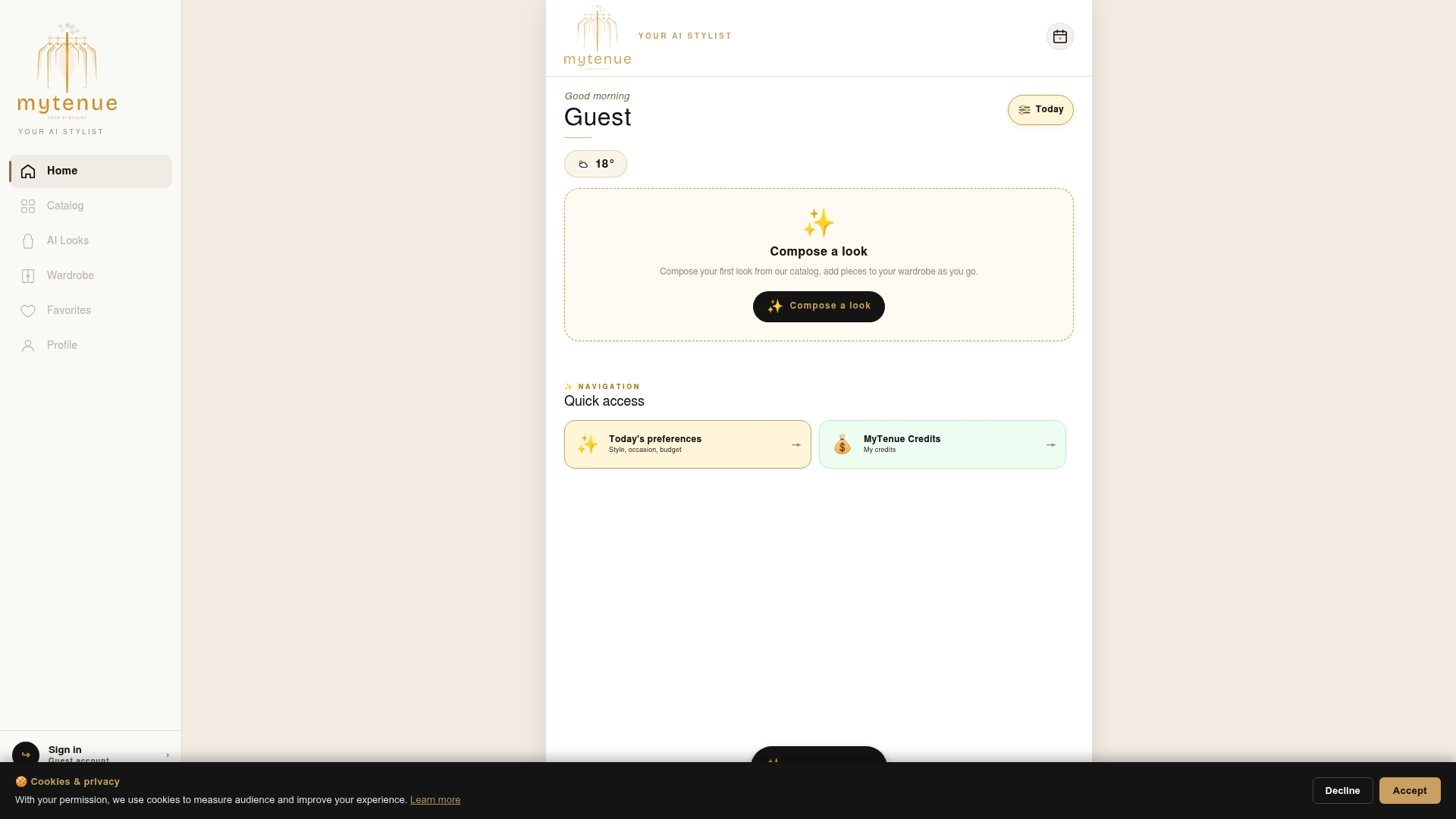
- Wardrobe digitization: Photograph your pieces once; the app organizes and tags them so you always know what you own.
- AI outfit generation: Get personalized outfit recommendations based on your style, occasion, and the day's forecast.
- Virtual try-on: See how combinations look on your personal avatar before you get dressed.
- Calendar sync: Plan outfits for internship days, presentations, and weekend events in advance.
Available on iOS and Android. Download Mytenue and connect your capsule to an AI stylist that works with what you already own.
Sources
- Capsule Wardrobe for College: 15 Pieces, One Semester
- College Capsule Wardrobe Guide 2026
- How To Build A Capsule Wardrobe That Stands The Test Of Time | Capsulee Wardrobe
- How To Build A Capsule Wardrobe That Stands The Test Of Time | British Vogue
- Minimalist Wardrobe Guide: How to Own Less and Wear More