
A capsule wardrobe cuts decision fatigue and multiplies your outfit options, and you can start today. In wardrobe-audit research, combinability mattered most to participants, and Project 333 popularized a fixed item count. So pull everything out, try each piece on, and keep only what works with at least three other items.
TL;DR:
- Choose 20, 33, or 35 to 55 pieces according to laundry frequency and daily dress codes; Project 333 sets 33 items for three months.
- Participants in the wardrobe audit owned 169 garments on average, used 138 in the past year, and considered 90 essential.
- After sorting, assemble five complete outfits for work, casual wear, dressier occasions, activity, and bad weather; shop only for gaps those outfits reveal.
- Before keeping a new item, confirm that it creates at least two outfits with clothes you own, matches your palette, and fills a documented gap.
Table of Contents
- What belongs in a 20 to 55 item capsule?
- How do you audit your closet in two hours?
- Which outfit formulas make a few pieces go far?
- How do you keep a capsule working through the seasons?
- How do you shop for gaps without impulse buying?
- How do you care for capsule pieces so they last?
- Why I audit first and plan second
- Is a smaller wardrobe really the goal?
- How MyTenue turns your closet into a ready-made capsule planner
- FAQ
- Sources
What belongs in a 20 to 55 item capsule?
Pick a size first, then fill it. Your laundry rhythm and your daily roles decide the number, not a rule from a blog.
- Compact, about 20 items: for students, travelers and anyone who does laundry weekly. Fewer pieces, tighter color range.
- Classic, 33 items: a format used by Project 333, which prescribes 33 items for three months. A good fit for office plus weekend life.
- Flexible, 35 to 55 items: for people who juggle work, sport and social events, or who dress for very different dress codes in one week.
Whatever size you choose, anchor it with neutrals (black, navy, white, camel, gray) and add one or two accent colors. That is the whole palette rule. Everything else is detail.
Staple pieces by category
- Tops: two or three plain tees, one or two button-up shirts, two knits (one fine, one chunky).
- Bottoms: dark jeans, tailored trousers, one skirt or shorts depending on your climate.
- Outerwear: a blazer, a trench or light coat, and one warm winter layer.
- Shoes: white sneakers, one pair of boots, one dressier pair (loafers, flats or heels).
- Accessories: a belt, a scarf in your accent color, a bag that works day and night.
The combinability rule
Aim for each piece to match at least three others. A blazer is the classic multiplier: it turns tee plus jeans into a meeting outfit, shirt plus trousers into a client lunch, and a knit dress into an evening look. A trench does the same job on top. If a piece only works with one thing in your closet, it is a gap in disguise, not a capsule item.
This matches the research. Across the wardrobe-audit study, people owned 169 garments on average, used 138 of them in the past year, and called 90 essential. Combinability ranked as the top selection criterion, ahead of quality. Pieces that mix easily earn their place.
Three sample capsules to copy
Student capsule (about 20 items):
- Three plain tees (white, gray, navy)
- One oversized sweatshirt
- One cardigan
- Dark jeans
- Black joggers or relaxed pants
- One casual skirt or shorts
- Denim jacket
- Lightweight rain jacket
- White sneakers
- Ankle boots
- Tote bag or backpack in a neutral shade
- One scarf in your accent color
If you want a tighter, student-focused checklist, we wrote one in Minimal Wardrobe for Students.
Professional capsule (about 30 items):
- Two tailored blazers (navy, charcoal)
- Three button-up shirts (white, light blue, one pattern)
- Two fine knits
- Two pairs of trousers
- One pencil or midi skirt
- One knit or wrap dress
- Trench coat
- Loafers and a dressier pair
- Structured work bag
- Belt and a simple watch
For full outfit plans on this one, see our guide to a professional capsule wardrobe.
Weekend-focused capsule (about 25 items):
- Four tees and one striped long-sleeve
- Two relaxed shirts
- Two knits
- Two pairs of jeans (one light, one dark)
- One pair of chinos
- Casual dress
- Field jacket
- Sneakers, sandals and boots
- Crossbody bag
- Cap or hat
How do you audit your closet in two hours?
An audit turns a cluttered closet into a tested capsule, and it stops you from buying things you already own in a different shade. Set aside some time, put on music, and follow these stages.
- Empty: Take everything out. Bed, floor, whatever. You cannot judge what you cannot see.
- Try-on: Put on each piece. Check fit, comfort and mood in the mirror. Anything you keep tugging at goes in the "no" pile.
- Frequency check: For each item, ask when you last wore it. If you cannot remember, that is your answer.
- Condition note: Flag missing buttons, loose hems, pilled knits and faded dark pieces.
- Box or store: Out-of-season pieces and borderline maybes go into a labeled box.
- Sort into piles: keep, mend, sell, donate.
The numbers explain why this works. In the audit study, only about 53% of garments counted as essential, and 81% had been used in the past year. Most closets hold a lot of pieces that never do any work.
The decision checklist
Run every item through six questions:
- Does it fit now, not "after the diet"?
- Is it comfortable enough to wear all day?
- Is the condition good, or is it mendable?
- Does it match at least three other pieces?
- Have you worn it in the past year?
- Do you love it for a real reason, not guilt?
Here is a quick wear-versus-replace matrix:
| Situation | Decision |
|---|---|
| Fits, good condition, worn often | Keep |
| Fits, small damage | Mend, then keep |
| Fits, worn out, you use it weekly | Replace with a better version |
| Does not fit, no plans to alter | Sell or donate |
| Fits, never worn, no outfit match | Box for one season, then decide |
Build five core outfits
From your kept pile, build five complete outfits: one work, one casual, one dressy, one active, one weather backup. Write down what is missing. That list is your gap analysis, and it is the only shopping list you need. Our wardrobe gap analysis walks through the method in detail.
The testing rule
Never commit to a new piece until it works in at least two outfit formulas with items you already own. If it does not, return it.
Pro Tip: Photograph each of your five core outfits on your phone. A visual record shows you at a glance which pieces carry the most weight and which just sit there.
Which outfit formulas make a few pieces go far?
Formulas remove the guesswork. You do not invent an outfit each morning. You pick a formula and swap one element.
- Formula 1: shirt + jeans + blazer. Swap the shirt for a knit, or the jeans for trousers, and you have a new outfit.
- Formula 2: knit + skirt + boots + scarf. Change the boots to sneakers for a weekend version.
- Formula 3: tee + trousers + trench. The easy workday default. Add loafers to dress it up.
- Formula 4: dress + denim jacket + sneakers. Swap the denim jacket for a blazer and the sneakers for flats to shift from errands to dinner.
- Formula 5: sweatshirt + relaxed pants + coat. Comfort without looking careless. The coat does the polishing.
- Formula 6: tee + shorts or midi skirt + cardigan. A warm-weather standby.
Swapping a single piece in each formula gives you different variations. These formulas can help you create many outfits from a handful of items. For more tactics, see how to get more outfits from the closet you already have.
Color and texture rules
Use an 80/20 split: about 80% neutrals, 20% accent. Pick one accent color and repeat it across the capsule, in a scarf, a knit and a bag, so everything feels related. Match fabric weights too. A chunky knit with a flimsy skirt looks off-balance, while a fine knit with tailored trousers looks deliberate. Mix textures within the same weight class: denim with cotton, wool with leather.
Layering for in-between weather
Think in three thin layers instead of one thick one: a base (tee or shirt), a mid layer (knit or cardigan), and an outer layer (blazer, trench or jacket). Remove one as the day warms up. Your accent color often does its best work in the mid layer, where it stays visible.

Plan visually
Lay outfits flat on your bed, or build a digital moodboard before you buy anything. Seeing pieces side by side exposes clashes and shows whether a new item truly fits your palette.
Constraints also help creativity. A case study of a capsule wardrobe project found that participants became more aware of their buying habits and more inventive with styling. Fewer pieces can mean more ideas, not fewer.
Here is the point worth remembering: combinability was the top selection criterion, ahead of quality, in the wardrobe-audit study. If a piece cannot mix, it is not a capsule piece, however nice it is on its own.
How do you keep a capsule working through the seasons?
You have two options, and both work.
Full seasonal swap: you store one capsule and bring out another. It keeps closets tidy and each season feels fresh. The downside is storage space and the risk of buying duplicates because you forgot what is in the box.

Core staples plus seasonal layers: you keep a year-round base (jeans, tees, trousers, sneakers) and add or remove layers as weather shifts. It needs less storage and fewer purchases. The trade-off is a slightly more crowded closet in transition months.
For most readers, the second approach wins, because it keeps your best combinations intact. Our seasonal capsule guide gives item lists for each season.
Quarterly review schedule
Set a reminder at the start of each season. Spend some time on a review. Use this six-step swap checklist:
- Store: pack away out-of-season pieces, clean and dry, in a breathable container.
- Add: bring out the pieces for the coming season.
- Test: wear each returning piece once in your first week back. If it does nothing for you, move it on.
- Check condition: look for moth holes, stretched hems and stains before they set.
- Update the gap list: write down what your five core outfits now lack.
- Photograph: record the new lineup so you can plan visually.
Continuity tips
Keep at least one neutral anchor (a coat, trousers or a bag) and one accent that returns every season. That repetition preserves your outfit combinations and prevents the common mistake of building four unrelated mini-wardrobes in one year.
How do you shop for gaps without impulse buying?
Treat shopping as a response to your gap list, not a hobby. Buy one high-impact piece at a time, and test it right away against your existing outfits. If a new jacket creates several new looks, it earned its place. If it creates just one, send it back.
Quality, price, and other routes
Spend more on pieces you will wear weekly: shoes, a coat, jeans. Spend less on trend-driven items and rarely worn pieces. Consider secondhand or rental for occasional needs like a wedding outfit or a formal coat. Secondhand also often gets you better fabrics at a lower price.
Longevity is a useful yardstick. Clothing researchers recommend measuring garments by number of wears for daily items and by years of service for occasion wear. One survey-based analysis estimated an average of about 76 wears per garment in its sample. Ask yourself whether the item in your hand will beat that number.
Test before you keep
- Can you build at least two outfits with it from items you already own?
- Does it match your neutrals or your single accent color?
- Does it fill a spot on your gap list?
- Would you still want it if it were not on sale?
- Is it a trend piece? If so, give yourself time to decide whether you still want it.
Pro Tip: Carry a note on your phone with your palette and your gap list. When you are in a store, check the note before you check the price tag.
How do you care for capsule pieces so they last?
A small wardrobe only works if the pieces survive. Fewer garments mean each one gets worn more, which means more washing and more wear.
- Wash less: spot clean and air out between wears, especially knits, jeans and outerwear.
- Use cool water: it protects color and fibers.
- Air dry when you can: the dryer is the fastest way to shrink and age fabrics.
- Fix early: reattach a button or close a seam before it becomes a tear.
- Store well: hang tailoring, fold knits, and use breathable bags.
Repair and collection options
In France, repair is supported by public programs. The government has confirmed a textile Extended Producer Responsibility scheme and a "malus" on ultra-fast fashion that takes effect on September 1, 2026, with a penalty capped at €12 in 2026. The same official page points consumers to the Bonus Réparation, which helps pay for repairs at certified shops. The public guidance on what to do with used clothes says to repair when possible, and to give or drop off clean, dry garments at textile collection points. For a practical walkthrough, Refashion's repair pathway guide explains how care and repair programs fit together.
End of life
When a piece truly reaches the end of its run, donate it, resell it, or use a textile collection point. Track wears per garment as your own sustainability metric: a simple note in your phone is enough. Clothing researchers say wears and years of service are the two numbers worth measuring.
Why I audit first and plan second
The audit is the highest-leverage step because it replaces opinions with evidence. You find out what you wear, what fits, and what mixes. Then you can test a capsule for one season with real data instead of hopes.
Choose your item count by your roles and your laundry cadence. Do laundry regularly and wear one dress code? A compact wardrobe can be plenty. Juggle office, gym and social events? Aim higher. Start with one season, review it honestly, and adjust. Our own app approach grew from this same logic: we help you see what you own before you decide what to add.
Is a smaller wardrobe really the goal?
No, and this is where much capsule advice goes wrong. The number is a tool, not a trophy. A 33-item limit that leaves you wearing the same three outfits is worse than a 55-item capsule you actually mix. In the wardrobe-audit study, participants rated combinability above quality, and 81% of garments had been used in the past year. The problem in most closets is not volume. It is pieces that do not connect.
Conventional advice also overrates the big purge and underrates the small test; for styling tips including hair layers that complement capsule wardrobes, see how to get personalized, chic layers at the salon here. Do not throw out half your closet in one emotional afternoon. Box the maybes, wear your five core outfits for a few weeks, and let real use settle the debate.
Prioritize first: the audit, then the gap list, then one purchase at a time. Everything else is decoration.
— Ahmed
How MyTenue turns your closet into a ready-made capsule planner
Doing this on paper works. Doing it with a tool is faster. We built MyTenue to handle the slow parts of capsule planning, so the audit can take less effort.
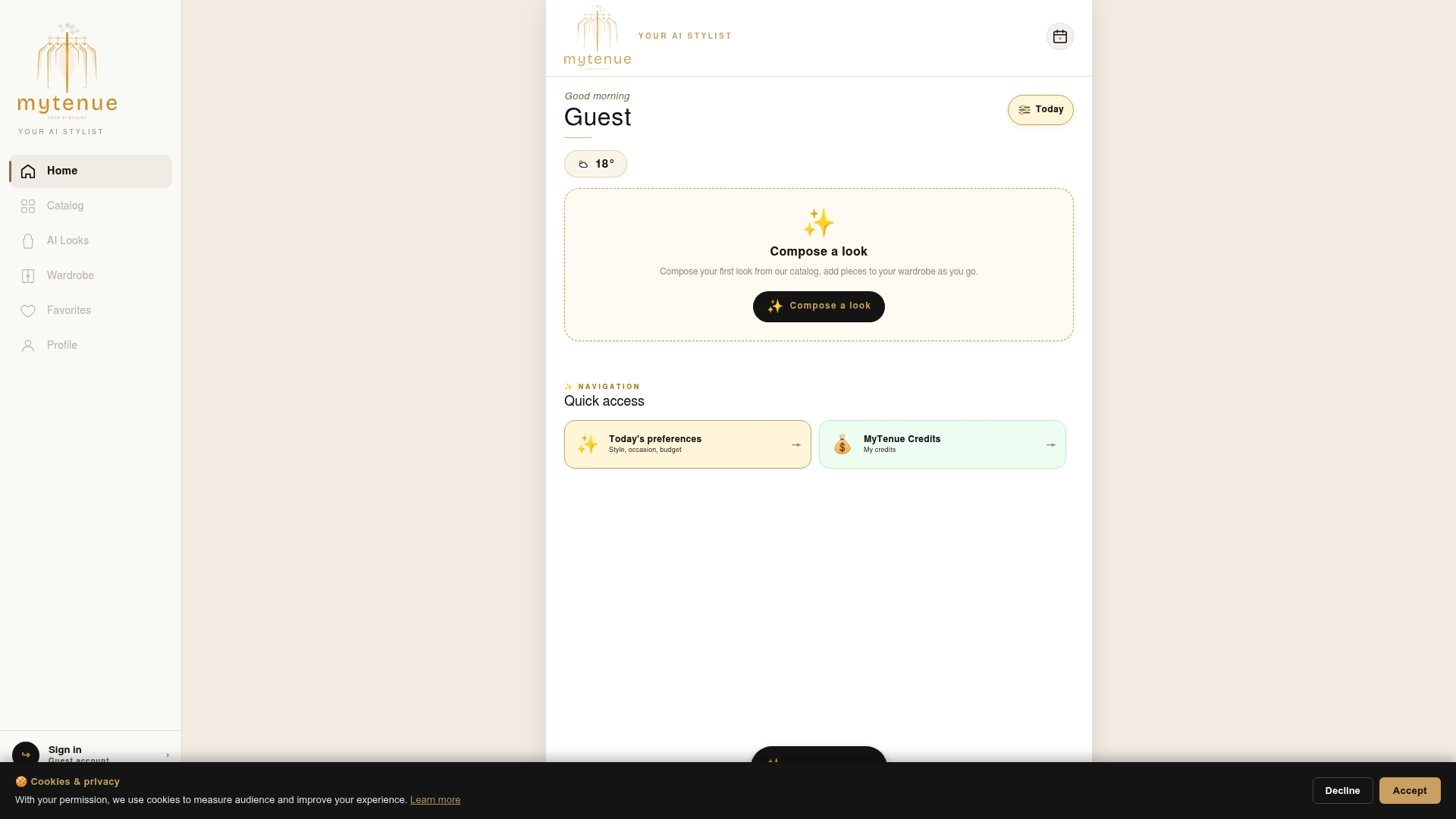
- Wardrobe digitization: organize your pieces and see your closet in one place.
- AI outfit suggestions: we generate looks from what you already own, scored for color, fabric and occasion.
- Outfit calendar: plan the week ahead and stop deciding at 7 a.m.
- Virtual try-on: test a possible purchase on your own avatar before you buy.
- Weather-based daily ideas: outfits that match the forecast.
Start with the Free plan, then move up to Basic at 5.99 € per month, Premium at 9.99 € per month, or Gold at 16.99 € per month when you want more. Try the MyTenue app.
FAQ
What are the essentials for a capsule wardrobe?
Start with neutral basics: tees, a button-up shirt, a knit, dark jeans, tailored trousers, a blazer, a coat, white sneakers and boots. Add one or two accent pieces in a single color. Each item should match at least three others.
What is the 5-4-3-2-1 capsule wardrobe?
It is a popular shorthand for a small, structured wardrobe, with set counts of items by category. Definitions vary from one source to another, so treat it as a template and adjust the numbers to your own routine rather than following it literally.
What is the 70/30 wardrobe rule?
The split is similar to the 80/20 neutral-to-accent split we use above. Pick the ratio that keeps your outfits easy to mix.
How many items should a capsule wardrobe have?
Most people land between 20 and 55 items. Project 333 uses 33 items for three months, but your laundry cadence and daily roles matter more than any fixed number.
Sources
- Presse
- From excess to essential
- Clothing Lifespans: What Should Be Measured and How
- Clothing Lifespans: What Should Be Measured and How
- Que faire de ses vêtements usagés ? Donner, réparer ou déposer dans un conteneur dédié