
You can dress for an internship without overspending by building around one safe, repeatable outfit formula: a neutral blazer, a tucked-in blouse or collared shirt, and tailored trousers or a midi skirt. The logic is capsule thinking: fewer, smarter pieces that earn their place every single day.
Your first-week baseline, by dress code:
- Business formal (law firms, finance, consulting): Dark tailored trousers + white button-down + structured blazer + closed-toe flats or low heels. Budget: €80–€150 total.
- Business casual (most corporate offices, marketing, HR): Chino-style trousers or a midi skirt + neat blouse + light cardigan or unstructured blazer. Budget: €50–€100 total.
- Smart casual / startup: Clean dark jeans + a pressed shirt or knit top + loafers or clean white sneakers. Budget: €40–€80 total.
Dressing slightly above the office median the first week is the safest move. Once you read the room, you can dial back. Buying more than one week's worth of outfits before day one is where most interns waste money.
Key Takeaways
A 7–9 piece capsule wardrobe, assembled mostly from secondhand sources in France, covers a full week of internship outfits for €50–€220 depending on where you shop.
| Point | Details |
|---|---|
| Start with one safe outfit | Neutral blazer + blouse + tailored trousers covers most French office settings from day one. |
| Build a 7–9 piece capsule | Use the 3-3-3 rule to generate six or more distinct looks from a small set of pieces. |
| Shop secondhand first | Vinted, Emmaüs, and local friperies cut total wardrobe cost significantly; blazers from €10–€30. |
| Invest in shoes and a blazer | These two pieces show quality and wear daily; buy them new or from a reputable secondhand source. |
| Use Mytenue to plan | Mytenue's AI identifies which pieces you already own and which single purchase unlocks the most new combinations. |
Table of Contents
- What should you pack for a week of internship outfits?
- How do you read a company's dress code before day one?
- How does a 7–9 piece capsule wardrobe work for internships?
- Where can you buy affordable workwear in France?
- Smart ways to spend less beyond just shopping
- How Mytenue helps you plan your internship wardrobe for free
- The case for keeping it simple and confident
- Mytenue makes your internship wardrobe work harder
- Sources
What should you pack for a week of internship outfits?
A tight, week-ready checklist beats a full suitcase every time. The goal is seven distinct looks from nine pieces or fewer, with laundry happening once mid-week or over the weekend.
Most conservative / business formal pack:
- 2 tailored trousers (one black, one navy or grey)
- 2 blouses or collared shirts (white + one soft color)
- 1 structured blazer (neutral: black, camel, or navy)
- 1 midi skirt (optional swap for a second trouser)
- 1 pair of closed-toe flats or low block heels
- 1 lightweight trench or smart coat (for commuting)
- 1 simple tote or structured bag
Startup / relaxed business casual pack:
- 2 clean dark jeans or chinos
- 2 knit tops or pressed shirts
- 1 unstructured blazer or cardigan
- 1 casual dress (midi length, solid color)
- 1 pair of loafers or clean sneakers
- 1 lightweight jacket
Pro Tip: Buy two identical neutral tops in different colors. Washing one overnight while wearing the other doubles your rotation without doubling your spend. A wardrobe-stretching checklist can help you map exactly which pieces cover which days.
How do you read a company's dress code before day one?
You rarely get a clear answer from the offer letter alone. Read these signals instead:
- The email language: Formal, structured phrasing usually signals a formal dress culture. Casual sign-offs and emoji suggest the opposite.
- LinkedIn photos: Search the company name and look at employee profile pictures. What are people wearing in office shots?
- Job function: Client-facing roles (sales, consulting, legal) almost always run one formality level above internal roles.
- Campus ambassador or recruiter tone: If your campus contact wore a blazer to the info session, the office likely expects the same.
If signals are mixed, ask directly. Short, confident phrasing works best:
- "Could you give me a quick sense of the typical dress code for the team?"
- "Is there anything I should keep in mind for what to wear the first week?"
No recruiter will judge you for asking. They will notice if you show up wildly under- or over-dressed.
First-week rule: Dress up a little relative to what you think the average is. Aim for the top 20–25th percentile of what people wear. After the first week, you'll have enough context to calibrate. Avoid bold prints, strong logos, or anything you'd wear to a party. Save personality for small details: a watch, a scarf, interesting socks.
How does a 7–9 piece capsule wardrobe work for internships?
A professional capsule wardrobe of 7–9 pieces generates far more outfit combinations than most interns expect. Here's the core list:
- Neutral blazer (black or camel): the single highest-leverage piece you own
- 2 tops (one white/cream, one in a soft solid color)
- 2 bottoms (one trouser, one midi skirt or second trouser in a different shade)
- 1 dress (solid color, midi length, works alone or under a blazer)
- 1 pair of shoes (loafers, block heels, or clean leather sneakers)
- 1 outer layer (trench, light wool coat, or structured cardigan)
The 3-3-3 rule and how it multiplies your looks
The 3-3-3 rule groups your capsule into three tops, three bottoms (or bottom-equivalent pieces), and three layering or shoe options. Each combination produces a distinct outfit. Three tops × three bottoms alone gives nine looks before you even change the outer layer. Swap the blazer for a cardigan and those nine looks shift register entirely.
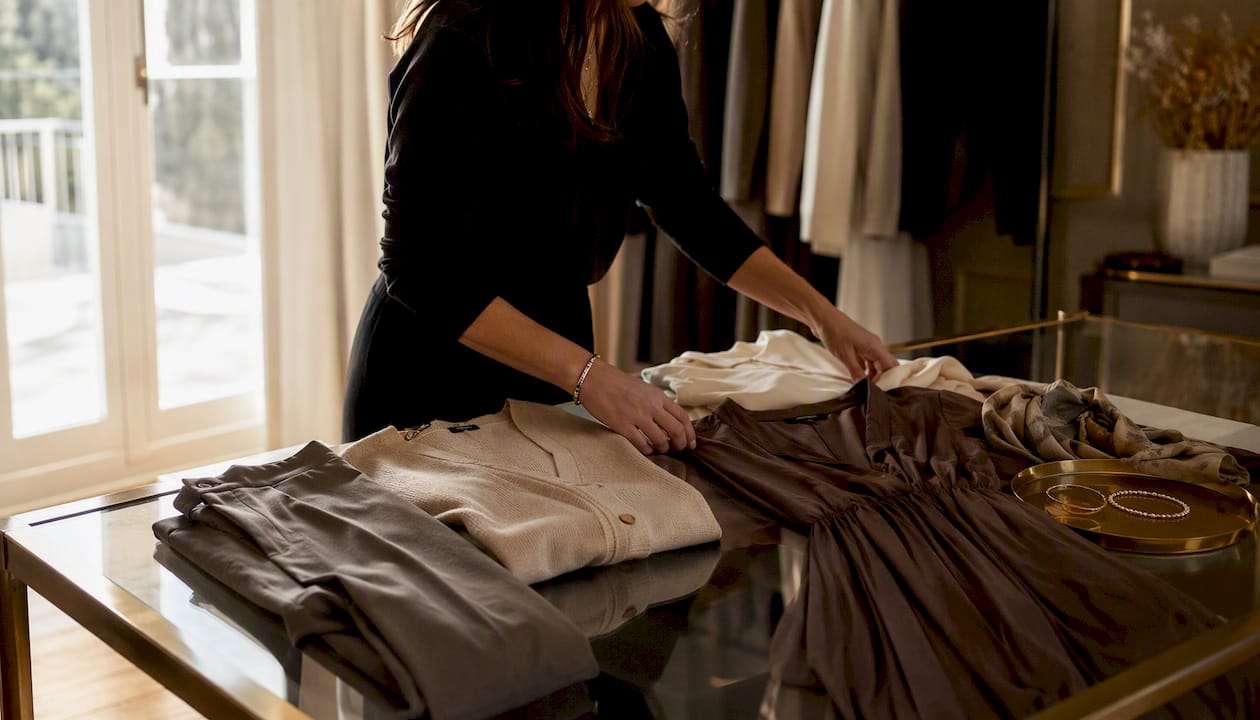
For summer internships, swap heavy trousers for breathable linen or cotton versions and add a linen blazer. The midi dress earns its place here: it handles both the commute heat and the cold office AC without requiring a layer change. Keep one structured piece in the bag at all times.
Price-band callout: A full 7-piece capsule assembled at H&M, Zara, or Mango in France typically runs €120–€220. The same capsule sourced mostly from Vinted or a friperie drops to €50–€100, with the blazer and shoes being the only pieces worth buying new.
Where can you buy affordable workwear in France?
France has a solid mix of high-street and secondhand options for building an internship wardrobe on a budget.
High-street retailers (new):
- H&M: Blouses €15–€30, trousers €25–€45, blazers €40–€70
- Zara: Slightly higher quality, trousers €30–€60, blazers €50–€90
- Mango: Good blazer cuts, €40–€80; frequent sales
- Uniqlo: Excellent basics, Oxford shirts €30–€40, trousers €40–€60, and their linen pieces hold up well through a French summer
- Kiabi: Budget-first option, blouses from €10, trousers from €20
Secondhand platforms in France:
- Vinted: Search "blazer femme taille 38" or "pantalon de bureau" and filter by condition. Blazers from €10–€30, trousers from €8–€25.
- Le Bon Coin: Less curated but often cheaper; good for shoes and coats.
- Friperies (local thrift stores): Physical browsing required, but quality finds are common. Paris neighborhoods like Pigalle, Oberkampf, and the Marais have strong options.
- Emmaüs: Nonprofit thrift chain across France; prices are very low and stock rotates weekly.
Consignment and vintage stores consistently yield high-quality blazers and shoes at a fraction of retail. The key is knowing what to search for and inspecting seams, zippers, and fabric before buying.
Where to spend vs. where to save:
| Piece | Spend here | Save here |
|---|---|---|
| Blazer | Yes (€40–€80 new or €15–€30 thrifted) | No — fit and structure matter |
| Shoes | Yes (€40–€80; comfort counts daily) | No — cheap shoes show fast |
| Blouses / tops | No | Yes — buy basics at Kiabi or Vinted |
| Trousers | Moderate (€30–€50) | Thrift if you find good fit |
| Outer layer | Moderate | Emmaüs or Le Bon Coin for coats |
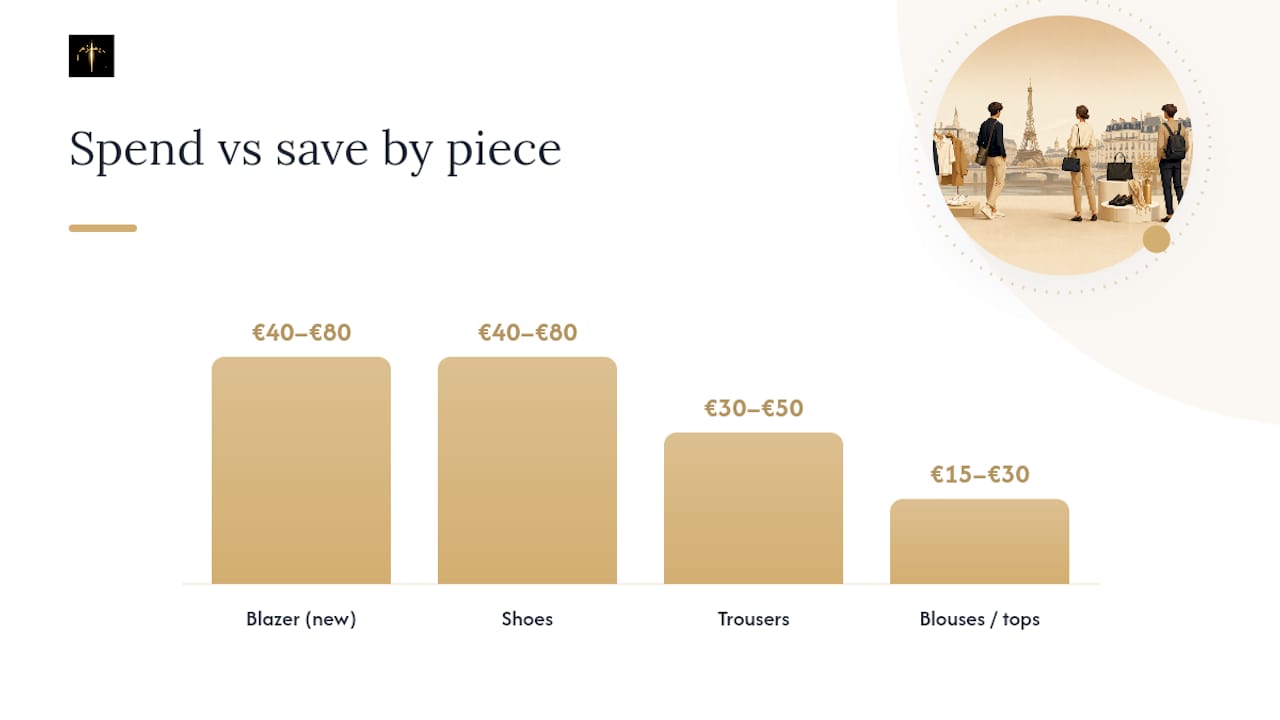
Investing in a few higher-quality staples like a blazer, trousers, and shoes reduces cost per wear over time. The blouses and basics are where you save.
Smart ways to spend less beyond just shopping
Thrifting is the biggest lever, but it's not the only one. These tactics compound quickly.
Thrift-shopping checklist for workwear:
- Check seams at the shoulders and underarms first (hardest to repair)
- Test zippers on trousers and skirts before buying
- Look for natural fabrics (wool, cotton, linen): they press better and last longer
- Search keywords: "blazer de bureau," "pantalon de tailleur," "chemise classique"
- Avoid anything with pilling, fading at the knees, or stretched waistbands
Student discounts and savings tactics in France:
- Use your student card at Mango, Zara, and ASOS for 10–20% off
- Sign up for H&M's loyalty program (H&M Member) for sale-preview access
- Check Vinted's "Boost" listings on Sunday evenings when new stock tends to appear
Behavioral habits that save money:
- Plan your outfits for the week every Sunday. Five minutes of planning prevents panic buying on Monday morning.
- Swap pieces with friends or classmates before buying new. A blazer you borrow for two weeks is a blazer you don't need to buy.
- Mend before replacing. A loose button or a small hem takes ten minutes and costs nothing.
Pro Tip: Washing clothes inside out in cold water and air-drying them instead of tumble-drying extends fabric life significantly, especially for blazers and structured trousers. See the full seasonal wardrobe guide for care tips by fabric type.
How Mytenue helps you plan your internship wardrobe for free
Mytenue's AI wardrobe planner takes the guesswork out of building an internship capsule. Here's how to use it:
- Upload your closet: Photograph or catalog the pieces you already own in the app. Mytenue's AI analyzes color, fabric, and style compatibility.
- Set your occasion: Select "internship" or "professional" as the context. The app filters suggestions to office-appropriate combinations only.
- Set your budget: Enter what you're willing to spend on new pieces. Mytenue identifies the gaps in your existing wardrobe and suggests the minimum purchases needed.
- Get a weekly outfit calendar: The app generates a seven-day outfit plan, showing you exactly what to wear each day and flagging which pieces do double duty.
The outcome: you see how many looks your current wardrobe already covers, which single purchase would unlock the most new combinations, and what you can skip entirely. That last point is where most interns save the most money.
Mytenue's AI outfit curation helps you mix what you already own with a small set of new purchases, so you build a full internship wardrobe without buying more than you need. The app is available in both French and English, making it practical for students across France.
Mytenue's blog also covers outfit ideas under €50 and a full guide on dressing well for less, both written specifically for students and young professionals navigating tight budgets.
The case for keeping it simple and confident
The conventional advice about internship dressing tends to overcomplicate things. Lists of 30 "must-have" pieces, color-theory breakdowns, and trend-driven capsule guides all push interns toward spending more than they need to.
The real insight is simpler: fit and versatility beat volume every time. One blazer that fits perfectly does more work than three that don't. A midi skirt in a neutral color will carry you through a summer internship, a presentation, and a client lunch without a second thought. You don't need a different outfit for every day of the week. You need a small set of pieces that work together, that you feel confident in, and that you can maintain without effort.

The payoff isn't just financial. Fewer decisions in the morning means more mental energy for the work itself. That's the real return on a well-built capsule.
Mytenue makes your internship wardrobe work harder
Your existing wardrobe probably covers more internship looks than you think. Mytenue shows you exactly which ones, then tells you the one or two pieces worth buying to fill the gaps.
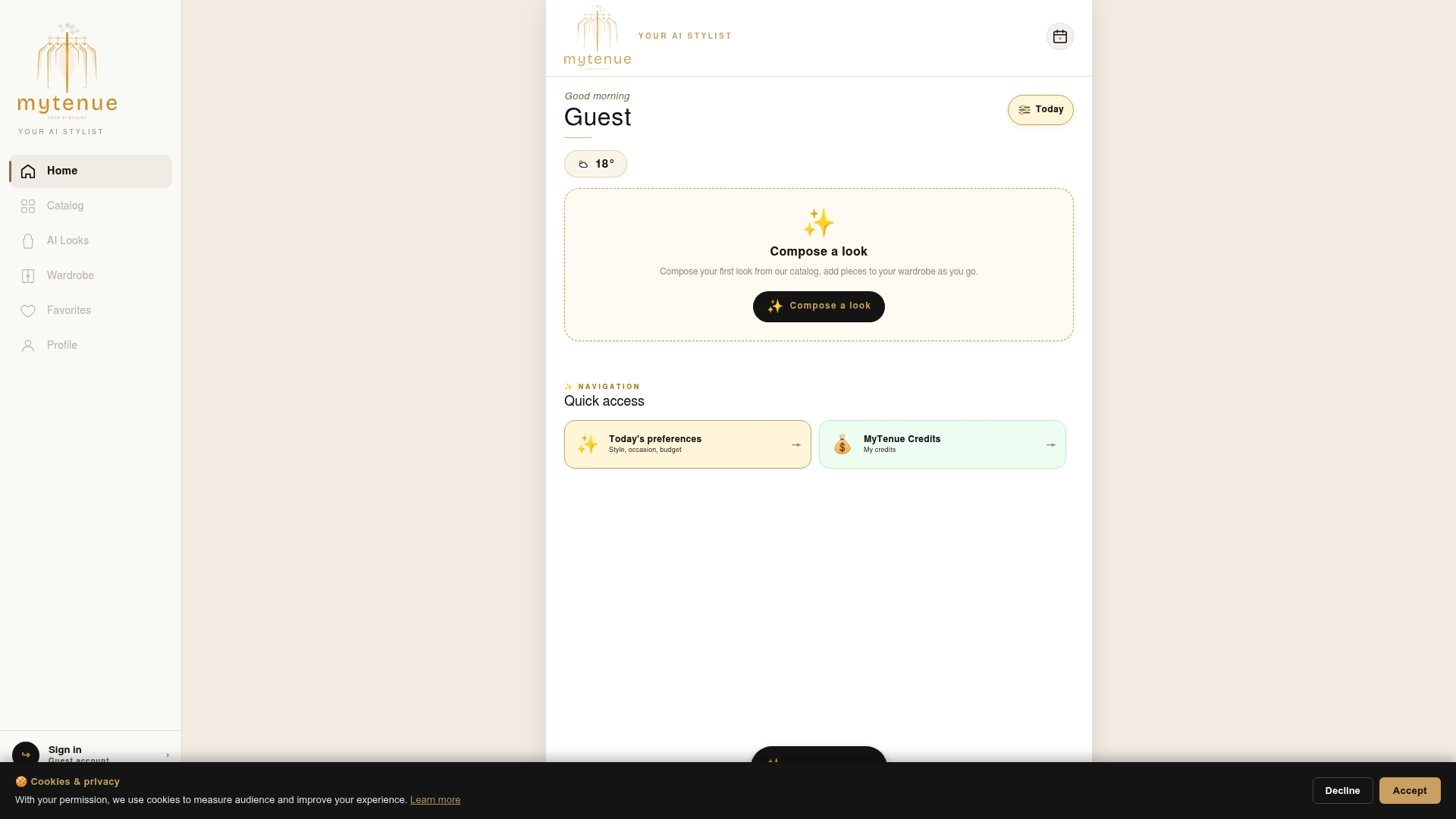
The app runs in French and English, works on iOS and Android, and includes a free tier so you can digitize your wardrobe and generate your first week of outfits before spending a cent. It factors in your budget, the French weather, and your occasion so every suggestion is actually wearable. For students building an internship wardrobe on a tight budget, that kind of clarity is worth more than any shopping list.
Start with your closet. Try Mytenue free and see how many internship-ready looks you already own.
Sources
- What Should I Wear to My First Internship? | The Strategist
- Summer Internship Outfits for Hot Commutes and Cold Offices - Uniqistic
- 24 Best Places to Buy Women's Workwear for the Office - Business Insider