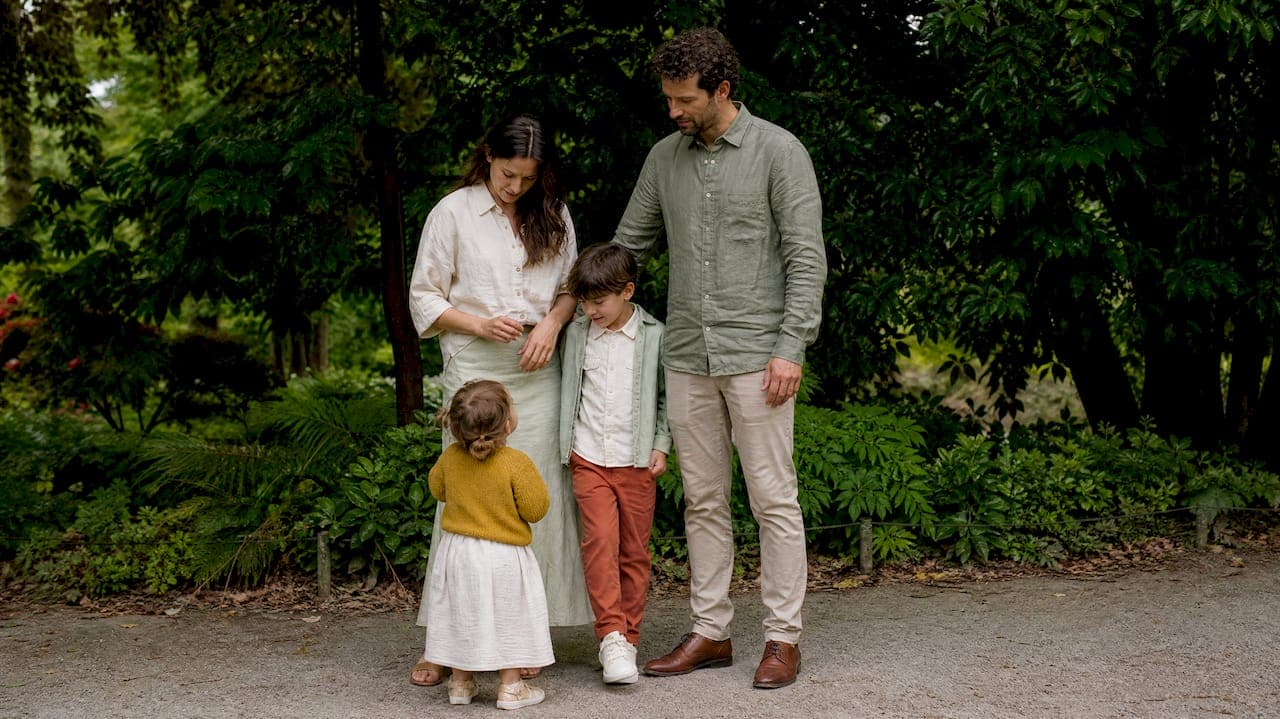
The best family photo outfits coordinate but never match. Pick one main color and two neutrals, vary textures and cuts, and choose clothes everyone can move in. Start with the hardest person to dress, then build the rest around that single piece. Below you'll find the method, palettes by setting, ideas by family size and a simple plan for getting everyone ready without a meltdown.
TL;DR
- Use the 3-color method: one dominant shade plus two neutrals, as French family photographers recommend.
- Coordinate, don't match. Identical jeans and white tees look flat. Different shades, textures and cuts look richer.
- Comfort comes first. A scratchy collar or a too-tight top shows in every frame.
- Let the setting guide the palette: earthy tones outdoors, structured and neutral looks in a studio.
- Try everything on together before the shoot day. A virtual try-on can do the first pass.
Table of Contents
- Why coordinated beats matching
- The 3-color method, step by step
- Start with the hardest person to dress
- Family picture color schemes that work
- Add depth with texture, not pattern
- Comfort decides the photo
- Outfit ideas by family size
- Match the outfit to the season and place
- Our perspective: the family wardrobe, planned once
- Plan the whole shoot in one evening
- Try the looks before shoot day
- Mistakes that show up in the photos
- FAQ
- Sources
Why coordinated beats matching
The classic family mistake is dressing everyone the same: jeans and a white T-shirt on every person. French photographers now steer families toward a palette of two or three colors, with varied fabrics and cuts so each person keeps their own personality. The result looks more natural and ages better than uniformity.
A US photographer's guide says the same thing in one line: choose a palette of two or three colors, dress everyone inside it, mix textures instead of matching exactly, and keep the loudest patterns away from the faces you most want to feature.
Think of it as a family wardrobe, not a uniform. Mom in a dusty green dress, Dad in a cream sweater, kids in beige and brown: nobody matches, everyone belongs.

The 3-color method, step by step
The easiest rule to remember: one dominant color and two neutrals. It prevents visual clutter and gives the picture a unified feel. Neutrals that work well include beige, off-white, light gray and brown.
- Choose the dominant color. Pick a shade you already own in at least two pieces: sage green, navy, terracotta, dusty blue.
- Add two neutrals. Cream and camel is a safe pair. Light gray and brown works for cooler looks.
- Assign each person a different mix. One wears mostly the dominant color, another mostly neutrals, a third both.
- Check the group together. Lay the pieces side by side, or photograph them on a bed, and squint. Does anyone jump out? Does anyone vanish?
If you want more on how colors pair, our guide to outfit formulas and color combos covers more than 30 combinations you can adapt to the whole family.
Start with the hardest person to dress
Here is the simplest way to avoid stress: begin with the family member who is hardest to dress, often the youngest or the pickiest. Build the family palette around that one outfit.
If your toddler only tolerates one soft mustard sweater, mustard becomes your accent. If your teenager refuses anything but black, black becomes a neutral and the rest of you add cream and rust. You get a plan in minutes instead of a week of arguments.

Family picture color schemes that work
Here are palettes you can copy. Each one follows the one-dominant, two-neutral logic.
| Palette | Dominant color | Neutrals | Best setting |
|---|---|---|---|
| Earth | Terracotta or rust | Cream, camel | Fields, forests, autumn parks |
| Soft coast | Dusty blue | White, sand | Beach, lakeside, summer |
| Garden | Sage green | Off-white, light brown | Gardens, spring |
| Classic | Navy | Light gray, beige | Studio, city, any season |
| Warm winter | Burgundy | Cream, dark brown | Indoor, holidays |
| Graphic | Black | White, light gray | Studio, modern interiors |
Photographers in France suggest earthy tones outdoors because they complement nature. In a studio or indoors, structured, black or very neutral outfits give a more graphic, timeless result.
For a deeper look at how to pick shades that suit your own coloring, see our 20-minute colorimetry guide.
Colors to keep off the faces
Avoid neon and very bright colors. A bright red dress held against a child's face can tint their skin in photos. Muted tones catch light without bouncing it back.
If you love bold colors, use them far from the face: a scarf, shoes, a bag. Or keep the bold shade small and let neutrals do the heavy lifting.
Add depth with texture, not pattern
Textures are underrated. Mixing linen, cotton, chunky knit and velvet adds depth without distracting patterns, all while staying inside one color story.
A few combinations that photograph well:
- Chunky cream knit with a linen shirt and a corduroy skirt.
- Velvet dress in burgundy with a wool cardigan in oatmeal.
- Cotton tee in sand with a denim jacket for the youngest.
If you're unsure which fabrics sit well together, try our three-minute method to mix fabrics.
Patterns can work too, but limit them. One small pattern per group, such as a fine stripe or a soft floral, is plenty. Everyone else wears solids.
Comfort decides the photo
Professional photographers agree that the goal isn't perfect clothes. It's feeling at ease. A child scratching a collar or an adult tugging at a tight top ruins the spontaneous feel of a session. Movement helps too: twirling dresses and soft sweaters bring images to life.
Before the day, run a quick test:
- Sit, squat, hug and lift a child in each outfit.
- Check that tags, seams and waistbands don't bother anyone.
- Make sure shoes are comfortable enough for a walk across a field.
Another photographer puts it plainly: because she shoots many candid frames, you shouldn't be adjusting your clothing and you should feel good in what you wear.
Outfit ideas by family size
Family of three
With fewer people, each outfit carries more weight. Let the parents anchor the palette and dress the child as the accent. Example: Mom in a sage midi dress, Dad in a cream shirt and beige chinos, toddler in a soft rust knit.
Family of four or five
Use the same dominant color on two or three people and neutrals on the rest. Spread the dominant shade across the group so the eye travels. Don't cluster all the color on one side.
Large or multigenerational groups
Keep the palette tight: one dominant, two neutrals, no exceptions. Give grandparents the neutrals they feel confident in, then add the dominant color in smaller pieces such as scarves or cardigans. Group shots fall apart when too many shades compete.
The easy fallback
Need something fast? A photographer in France points to a white top with jeans as the base most people already own, bright and fine in a studio or outdoors. Add texture and one shared accent color and you're set.
Match the outfit to the season and place
Season changes both the light and the clothes.
- Spring: soft pastels, light layers, florals kept to a single piece.
- Summer: simple henleys and button-ups for men and boys, light chinos, airy dresses for women and girls. Linen is your friend.
- Fall: rust, olive, mustard and camel, with chunky knits. Our friends in the photography world call it the easiest season to dress for.
- Winter: deep burgundy, forest green, wool and velvet. Add scarves and coats to the palette.
For neutral looks that stay cohesive, this guide to tone-on-tone neutral outfits is a handy reference for the dads and teens in your group. And if you want to see how a palette is built from the ground up, these color combinations show what works together.
Our perspective: the family wardrobe, planned once
We see the same pattern again and again. Families don't lack clothes. They lack a plan. Most of what you need is already in your closets, and the stress comes from not seeing how pieces fit together before the day.
That is why we built our approach around your own wardrobe. Digitize what you own, test combinations on a virtual avatar, and only then decide whether you need one new piece. You buy less, waste less and walk into the shoot knowing it works.
Our advice for any family session: choose the palette first, shop second. Pick the hardest outfit, fix the three colors, then fill the gaps. For busy parents, our family-friendly wardrobe guide explains how to keep that planning to a few minutes.
— Ahmed
Plan the whole shoot in one evening
Here's a realistic schedule for the week before your session.
- Day 1 evening: Choose the setting and the dominant color. Start with the hardest person to dress.
- Day 1, 20 minutes: Pull candidate pieces from each wardrobe. Lay them out by person.
- Day 2: Photograph the group lineup. Remove anything too bright, too logo-heavy or too matchy.
- Day 3: Try everything on, with shoes. Sit, move, hug.
- Day before: Iron, pack a spare layer for each child, and set the outfits out.
The same logic works for other photo moments too. See our guide on professional photo outfits or birthday photo looks.
Try the looks before shoot day
Our app, Mytenue, is an AI stylist for iOS and Android. Photograph your wardrobe once, and it suggests outfits from what you own. You can try them on your personal avatar, see a flat-lay of the full look and plan the date on a calendar.
Plans: Free (no published price), Basic at €5.99 per month, Premium at €9.99 per month and Gold at €16.99 per month. See the plans and download the app.
Want a quick start on palettes first? Read our wardrobe color palette guide.
Mistakes that show up in the photos
- Everyone in identical outfits. It flattens personalities. Vary shades and cuts.
- Neon or very bright tops. Color can reflect onto skin, especially on children.
- Too many patterns. Keep at most one per group.
- New shoes or stiff clothes. Discomfort shows in posture and expression.
- Ignoring the setting. Bright prints that suit a studio can fight a forest background.
- Skipping the try-on. The mismatch you spot the night before is cheap to fix. On the day, it isn't.
FAQ
What is the best color to wear for family photos?
There is no single best color, but neutrals and muted tones are the safest. Beige, off-white, light gray and brown pair with almost anything. Add one dominant shade such as sage, dusty blue or rust, and avoid neon.
Should family members wear matching outfits?
No. Coordinate rather than match. Use a shared palette of two or three colors, then vary textures, cuts and shades so each person keeps their own look.
What should we wear for family photos outdoors versus in a studio?
Outdoors, earthy tones such as rust, olive and camel blend with nature. In a studio, more structured, neutral or black outfits give a graphic, timeless result. In both cases, comfort matters most.
How do I choose outfits when one family member is picky?
Start with that person's outfit. Whatever they will happily wear sets the first color, and you build the rest of the family palette around it. It's faster and avoids last-minute fights.
Sources
- Quelle tenue pour votre séance photo famille, Histoires d'Aline
- Tenue familiale pour séance photo, Bébécool
- The Perfect Outfits For Fall Family Photos, Jasmyn Sambac Photography
- What to Wear for Family Photos: A Photographer's Guide by Season, Shoott
- What to Wear in a Family Photo, Little Branch Photography
- Tenue séance photo famille, Marine Brun Photographe
- What To Wear For Family Photos, Jaimie Dee