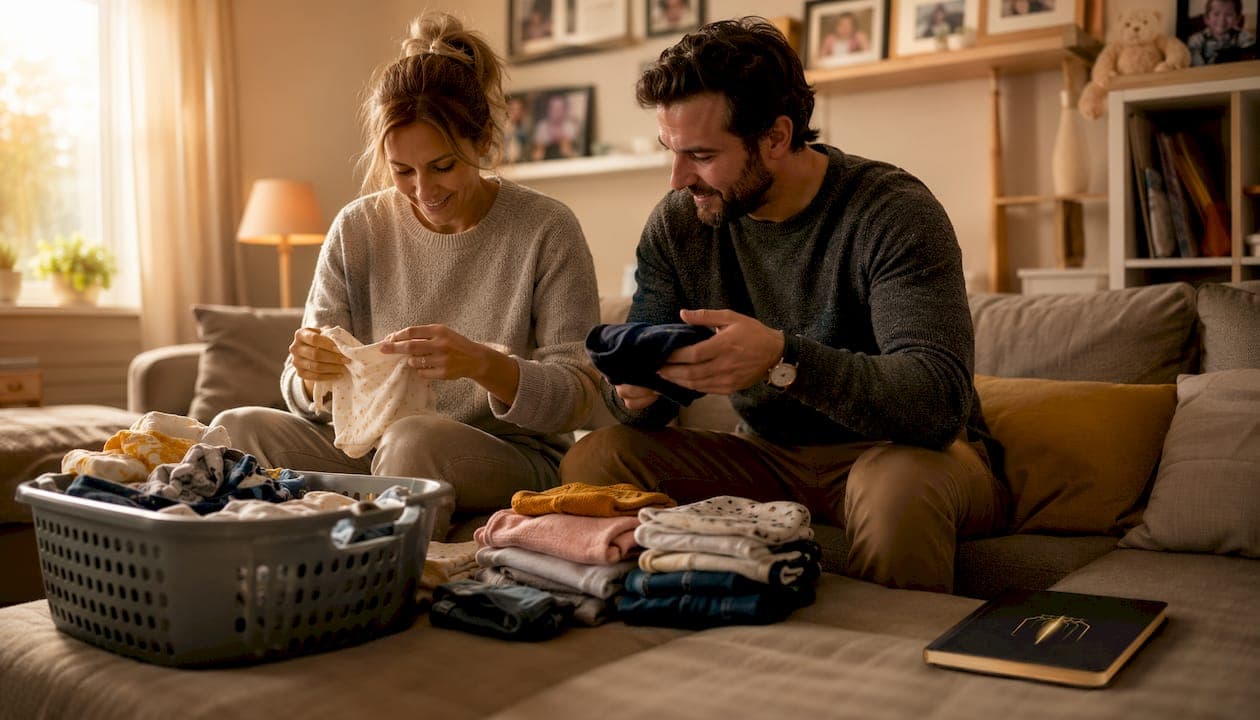
A family-friendly wardrobe is a purpose-driven, easy-care closet system of modular pieces that handle everyday family life — from playground play to school pickup — while minimizing decision fatigue. Think fewer items, more combinations, and zero morning panic.
Your TL;DR checklist:
- Build around modular basics that each pair with at least three other pieces
- Stick to a neutral color story (navy, white, gray, one accent)
- Choose durable fabrics: French Terry for kids, stretch-blend for parents
- Match your item count to your actual laundry cadence, not an idealized number
- Target a modest number of everyday pieces per person as a starting point
- Digitize and plan outfits with Mytenue so AI handles the mix-and-match logic
The system works because versatile pieces get worn repeatedly, which lowers cost-per-wear and cuts impulse buys. That's the whole premise.
Table of Contents
- Why does a family-friendly wardrobe save time, money, and stress?
- What are the core principles of a family-friendly wardrobe?
- How do you audit your family's wardrobe step by step?
- What are the essential pieces for common family lifestyles?
- What should you spend on and what should you skip?
- How do you keep a family wardrobe functional week to week?
- How long does building a family wardrobe take, and what does it cost?
- How does Mytenue use AI to simplify wardrobe planning?
- Quick outfit formulas your family can use today
- How do you build a sustainable, long-lasting family wardrobe?
- How do you involve the whole family in wardrobe choices?
- How do you adapt the wardrobe for different ages and genders?
- How do you manage clutter as kids grow and needs change?
- Key Takeaways
- Why the "number" obsession misses the point
- Your AI stylist is ready for your family wardrobe
Why does a family-friendly wardrobe save time, money, and stress?
Mornings are faster when every piece already goes with everything else. No hunting for the matching sock, no realizing the only clean shirt has a stain. A modular closet removes those friction points by design.
The cost argument is just as strong. Versatile clothing worn repeatedly across scenarios costs far less per wear than trend pieces worn twice. Families that build intentionally also buy less reactively, which compounds savings over a school year.
Three practical payoffs:
- Time: Faster mornings, fewer emergency purchases, less mental load
- Cost: Higher use rates per item, fewer duplicates, smarter resale cycles
- Sustainability: Less clutter as kids grow, easier hand-me-down transitions, reduced textile waste
For low-effort stylish dressing, the capsule approach is the most direct path.
What are the core principles of a family-friendly wardrobe?
Five rules decide whether a piece belongs.
Modularity is the non-negotiable. If an item can't pair with at least three other pieces in your closet, it's a liability. Test every potential buy against this before checkout.
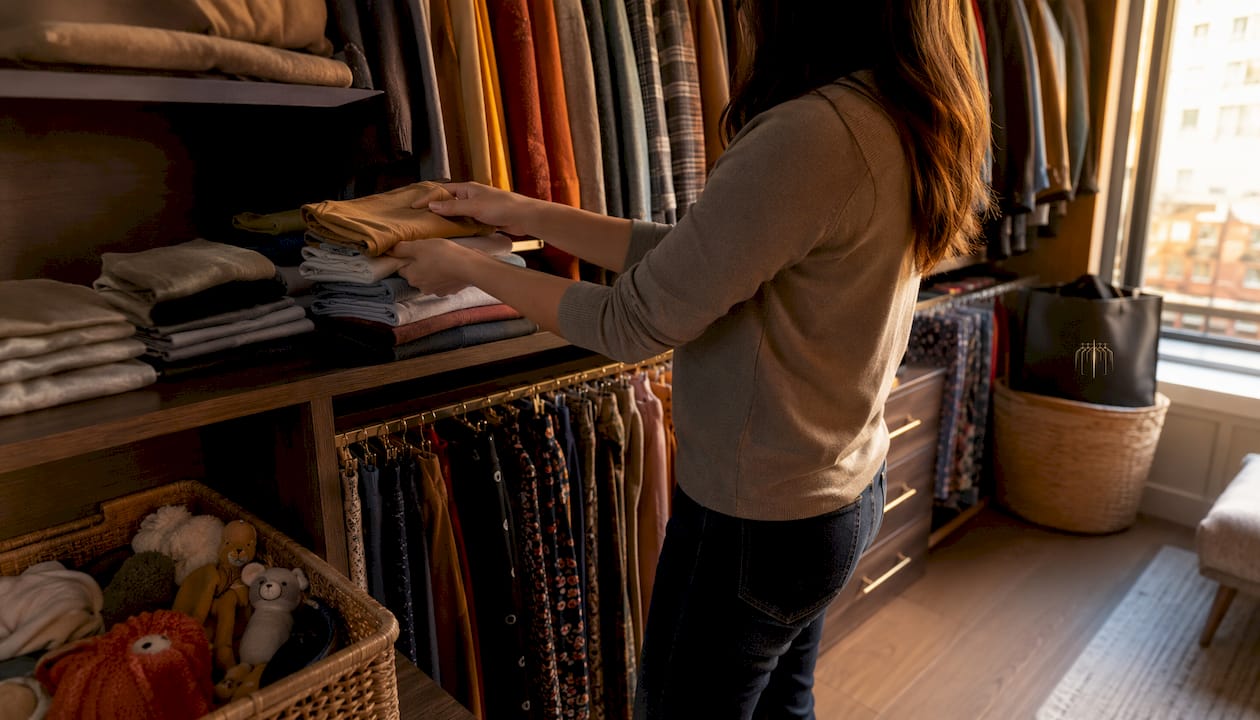
Versatility means one piece covers multiple contexts: school pickup, a quick errand, a casual brunch. Layering potential matters here. A fitted crewneck that works under a blazer and over a tee earns its place. A novelty top that only works one way doesn't.
Durability and easy care are where fabric choices make or break the system. For kids, French Terry balances mid-weight warmth with wash resilience. Bamboo blends with four-way stretch and tagless construction handle sensitive skin and daily play without degrading. For parents, stretch-blend fabrics that don't wrinkle under a car seat are worth every extra dollar.
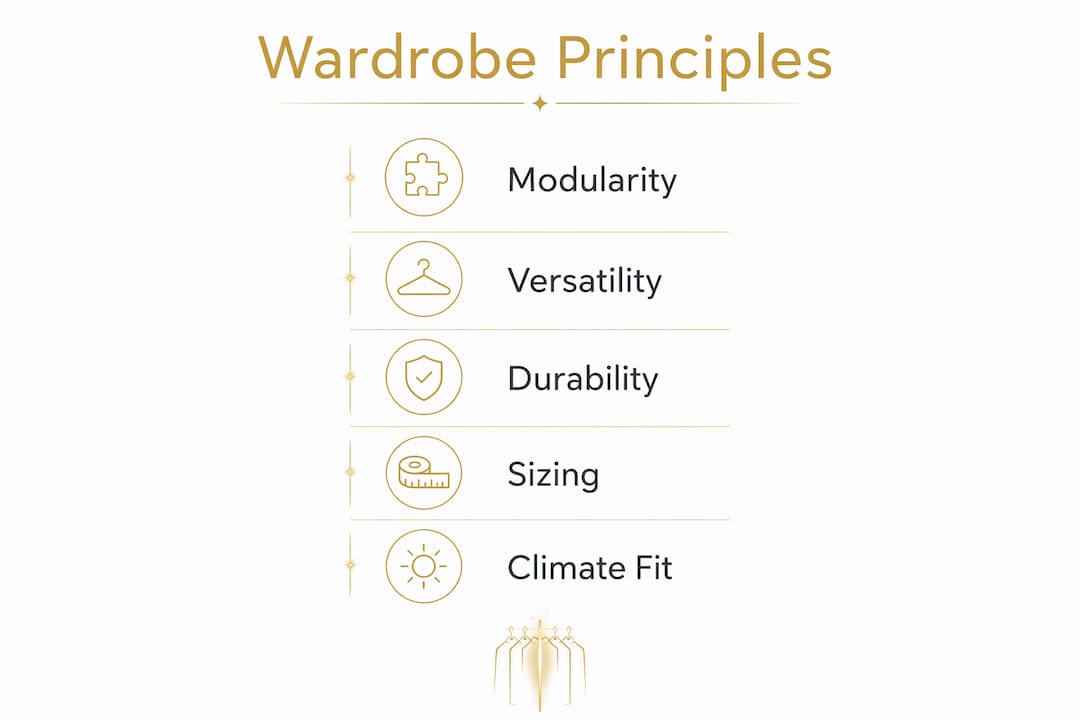
Sizing for kids should run slightly roomy. Adjustable waistbands and cuffable hems extend the wear window by a full season.
Climate fit means your capsule reflects where you actually live, not a Pinterest board from a different region.
Pro Tip: Before buying any new piece, run the "three-pair" test: name three specific items already in your closet it works with. If you can't, skip it.
How do you audit your family's wardrobe step by step?
- Inventory. Photograph or list every piece. Note fabric, condition (good / worn / replace), and which other items it pairs with.
- Activity match. Tag each item: school, errands, play, work, special occasion. Items with only one tag are candidates for removal.
- Laundry cadence calculation. Use this formula: (days between washes × outfits per day) + 3 spares. Washing weekly with two outfits per day means you need at least 17 items. The typical starting range for a kids' capsule wardrobe is 15–30 everyday pieces, though the right number depends on your family's laundry cadence and routine.
- Gap identification. Flag missing categories: temperature layers, rain-ready outerwear, spill-proof kids' pieces, a second pair of school shoes. Label each gap as "need," "nice," or "no."
| Category | Count | Condition | Replacement Priority |
|---|---|---|---|
| Tops (parent) | Good / Worn / Replace | Need / Nice / No | |
| Bottoms (parent) | Good / Worn / Replace | Need / Nice / No | |
| Outerwear | Good / Worn / Replace | Need / Nice / No | |
| Kids tops | Good / Worn / Replace | Need / Nice / No | |
| Kids bottoms | Good / Worn / Replace | Need / Nice / No | |
| Shoes (kids) | Good / Worn / Replace | Need / Nice / No |
Pro Tip: Keep your gap list inside Mytenue so the AI can suggest complementary items rather than duplicates when you browse the premium catalog.
What are the essential pieces for common family lifestyles?
Three lifestyle profiles cover most families. Adapt the counts to your laundry cadence.
Stay-at-home or hybrid parent
- 5 neutral tees or tanks, 2 casual button-downs, 3 stretch pants or jeans, 1 zip hoodie, 1 light jacket, 2 pairs of versatile shoes (sneakers + slip-ons)
- Kids: 5 French Terry or bamboo-blend tops, 4 bottoms, 1 fleece layer, 1 waterproof shell, 2 pairs of shoes
- Sample outfits: stretch pants + tee + zip hoodie; jeans + button-down + sneakers; joggers + tank + light jacket
On-the-go parent (school + errands)
- Add 2 polished tops and 1 structured layer to the base above; swap one casual shoe for a clean leather sneaker or loafer
- Kids: prioritize machine-washable uniforms or dark-wash jeans that hide scuffs; tagless construction reduces morning complaints
- Sample outfits: dark jeans + polished top + structured layer; joggers + clean sneaker + hoodie for pickup
Active family (outdoor-focused weekends)
- 2 moisture-wicking tops, 1 fleece mid-layer, 1 waterproof shell, 2 pairs of trail-ready shoes per person
- Kids: bamboo-blend base layers, fleece zip, waterproof shell, trail sneakers
- Climate swaps: Hot regions replace fleece with a linen layer; rainy climates prioritize a packable waterproof shell over a structured jacket
Neutral palettes (navy, white, gray, one accent) make mix-and-match outfit formulas work across all three profiles.
What should you spend on and what should you skip?
Spend more on:
- Outerwear (worn daily, visible, takes the most weather abuse)
- Core shoes for kids (fit and durability directly affect foot development)
- Multi-use parent essentials: one great stretch trouser, one structured layer
Save on:
- Trend pieces and seasonal novelties
- Single-occasion items kids outgrow in weeks
- Anything that requires dry cleaning
Fabric checklist for kids: machine-washable, stain-resistant, stretch construction, tagless. French Terry and bamboo blends check all four. For parents, prioritize easy-press or wrinkle-resistant fabrics that survive a day in a car seat.
Sizing strategy: buy kids' pieces one size roomy with adjustable waistbands. For fast-growing toddlers, resale and swap groups cut cost significantly without sacrificing quality. Use smart shopping strategies to track cost-per-wear mentally before committing.
How do you keep a family wardrobe functional week to week?
Routines extend garment life more than any single purchase decision.
Laundry: Sort by fabric weight, not just color. Wash kids' items on a gentle cycle with cold water to preserve stretch fabrics. Wash French Terry inside out to reduce pilling.
Repairs and stain treatment: Treat stains within 24 hours. A simple kit (stain stick, needle and thread, iron-on patches) handles 80% of family wear issues. Replace only when repair cost exceeds replacement value.
Rotation and storage: Use labeled seasonal bins for kids' off-season pieces. Rotate by size, not just season, so hand-me-downs stay organized. Custom closet systems make this significantly easier to maintain long-term.
Digital sync: Photograph items, tag by activity, and keep an outfit calendar in Mytenue. The app's rotation suggestions keep cost-per-wear high and flag pieces that haven't been worn in 30 days.
Pro Tip: Schedule a 30-minute weekly "wardrobe check" with your family. Handle fixes, swap out worn pieces, and sync the week's outfit plan in Mytenue.
How long does building a family wardrobe take, and what does it cost?
A phased build over 1–3 months is realistic and avoids the financial shock of a full overhaul.
| Phase | Timeline | Focus | Approach |
|---|---|---|---|
| Audit + priorities | Week 1–2 | Identify gaps, remove non-wearers | Free |
| High-impact buys | Month 1 | Outerwear, core shoes, 2–3 parent essentials | Quality-first |
| Gap fills | Month 2 | Kids basics, secondary layers, accessories | Budget-friendly |
| Seasonal swaps | Month 3 | Climate-specific additions, resale integration | Mixed |
Budget ranges vary widely by household size and approach. A budget-refresh strategy (resale + targeted new buys) costs less than a quality-first build, but both outperform unplanned shopping over a 12-month period. Seasonal sales, resale platforms, and Mytenue's app-curated recommendations all lower effective cost-per-wear. For wardrobe upgrade strategies that work incrementally, a phased plan beats a single shopping haul every time.
How does Mytenue use AI to simplify wardrobe planning?
Here's a reproducible workflow any family can follow.
- Digitize. Photograph each item and upload it to Mytenue. Tag fabric, activity, and condition. Ten items takes about 15 minutes.
- AI match. Mytenue's AI analyzes color, fabric, style, and occasion compatibility, then generates mix-and-match outfit suggestions and flags missing pieces in your capsule.
- Calendar integration. Schedule outfits for school days, workdays, and weekend activities. The app adjusts suggestions based on daily weather.
- Review and rotate. Use Mytenue's rotation suggestions weekly to keep every piece in active use and avoid the "number trap" of owning items you never actually wear.
Busy families who digitize even a partial capsule in Mytenue report faster morning routines and fewer last-minute clothing decisions, because the AI handles the combination logic they used to do manually every night.
The number trap is real: owning 15–30 items per child is common, but the specific count must match your laundry schedule and daily needs; for many families, the lower end may be insufficient with weekly laundry. Mytenue's calendar view makes this visible immediately.
Pro Tip: Use Mytenue's outfit rotation feature to surface pieces you haven't worn recently. It's the fastest way to spot duplicates and low-performers before your next shopping trip.
Quick outfit formulas your family can use today
10 parent outfit recipes:
- White tee + dark jeans + clean sneakers + light jacket
- Stretch trouser + fitted crewneck + loafers
- Joggers + zip hoodie + slip-ons (errands)
- Dark jeans + polished top + structured blazer (school pickup)
- Linen pants + tank + sandals (hot weather)
- Leggings + longline tee + sneakers + crossbody bag
- Chinos + button-down + white sneakers
- Midi skirt + fitted tee + ankle boots
- Joggers + turtleneck + puffer vest (cold weather)
- Jeans + striped tee + trench coat + loafers
8 kid outfit recipes:
- French Terry sweatshirt + matching joggers + sneakers
- Bamboo-blend tee + dark jeans + slip-on sneakers
- Fleece zip + leggings + trail sneakers (outdoor day)
- Striped long-sleeve + chino pants + white sneakers
- Graphic tee + shorts + sandals (warm weather)
- Bamboo base layer + fleece + waterproof shell + boots (cold/rainy)
- Polo shirt + dark jeans + clean sneakers (school)
- Hoodie + joggers + sneakers (weekend play)
Each recipe uses one-item versatility as its backbone. Swap the outer layer for a seasonal variant and the core outfit stays intact.
How do you build a sustainable, long-lasting family wardrobe?
Quality where it extends life, budget where growth makes it irrelevant. That's the rule.
Where quality pays off: outerwear, kids' shoes, and parent core pieces. A well-made waterproof shell lasts 3–5 years. A cheap one lasts one season.
Swap and resale strategies: hand-me-down bins organized by size (not age) keep style cohesion intact. Resale platforms work best for outerwear and shoes, where condition holds value. Swap groups in local parent communities are underused and genuinely effective for fast-growing toddlers.
Sustainability in buy-or-skip decisions: ask whether the piece survives 50 washes, pairs with three existing items, and fits the next size up with minor adjustments. If two of three answers are no, skip it.
Pro Tip: Track cost-per-wear mentally for every new purchase. A $60 jacket worn 80 times costs $0.75 per wear. A $20 top worn twice costs $10. The math changes every buying decision.
How do you involve the whole family in wardrobe choices?
Buy-in from every family member makes the system stick. Without it, the capsule falls apart within a month.
For kids, give them constrained choices: "Do you want the navy or the gray?" Both options work with the capsule. They feel heard; you stay in control of the system. For school-age children, involve them in the audit. Let them flag what they actually wear versus what sits untouched. Their feedback is more accurate than any parent's guess.
For partners, focus on the practical wins: faster mornings, fewer "what do I wear" conversations, less laundry chaos. Show the outfit calendar in Mytenue. Seeing a week planned visually is more persuasive than any explanation.
Assign simple maintenance roles. One person handles the weekly wardrobe check; another manages the kids' seasonal bin rotation. Shared ownership means the system doesn't collapse when one person is busy.
How do you adapt the wardrobe for different ages and genders?
Toddlers (ages 2–5) need maximum stretch, tagless construction, and easy on/off closures. Elastic waistbands and snap closures beat buttons for this age group. Bamboo blends and French Terry handle the wash frequency this stage demands.
School-age kids (ages 6–12) start developing style preferences. Build the capsule around their input, but anchor it in neutrals. Dark wash jeans, solid-color tees, and one statement piece per season keeps them happy without breaking the system.
Teens need autonomy within a framework. Give them a per-season budget and the capsule rules (three-pair test, neutral anchor). They'll make better choices than you expect when the constraints are clear.
For gender-diverse families, unisex silhouettes in neutral palettes simplify the whole system. Straight-leg pants, crewneck sweatshirts, and zip hoodies work across genders and hand down cleanly.
Adult wardrobes within the family follow the same modularity rules, but the activity split shifts. Parents with office days need one polished layer that elevates the casual base. Parents at home full-time can lean further into comfort fabrics without sacrificing the three-pair rule.
How do you manage clutter as kids grow and needs change?
The closet fills itself. Managing outflow is the active work.
Set a one-in, one-out rule for kids' clothing. Every new purchase triggers a review of what's been outgrown or worn out. This prevents the slow accumulation that makes closets unusable.
Size-labeled bins are the single most effective storage tool for growing kids. When a child outgrows a size, the bin goes directly to the next child, a swap group, or resale. No sorting required mid-season.
Schedule a back-to-school organization review every August. Pull everything out, assess condition, and rebuild the capsule for the new school year. This one annual session prevents the mid-year clutter spiral.
For parents, the trigger is lifestyle change, not season. A new job, a new baby, or a move to a different climate all warrant a mini-audit. Mytenue's wardrobe calendar makes these transitions visible: you'll see immediately which pieces no longer fit the new routine.
Key Takeaways
A family-friendly wardrobe works when every piece is modular, easy-care, and matched to your actual laundry cadence, not an idealized item count.
| Point | Details |
|---|---|
| Match count to laundry cadence | Use the formula: (days between washes × outfits per day) + 3 spares to set your minimum. |
| Apply the three-pair rule | Every piece must pair with at least three others already in your closet before you buy it. |
| Prioritize durable fabrics | French Terry and bamboo blends with four-way stretch handle daily family wear and frequent washing. |
| Phase the build over 1–3 months | Audit first, buy high-impact items in month one, fill gaps in month two, add seasonal pieces in month three. |
| Use Mytenue to digitize and plan | Upload 10 items, let the AI generate outfit combinations, and schedule a 7-day plan to cut morning decision time. |
Why the "number" obsession misses the point
Most family wardrobe guides get stuck on the item count. Fifteen pieces. Twenty pieces. Twenty-five. The number becomes the goal, and families either feel they've failed for owning more or feel virtuous for owning less, regardless of whether the system actually works.
The real measure is friction. Does getting dressed in the morning take five minutes or twenty? Does the family regularly run out of clean options mid-week? Are there items in the closet that haven't been worn in three months? Those questions matter more than any count.
What actually works is matching the wardrobe to the family's real rhythm: their laundry schedule, their climate, their activity mix, and the ages of their kids. A family that washes twice a week in a cold climate with a toddler and a teenager needs a completely different capsule than a family that washes daily in a warm climate with school-age kids. No fixed number covers both.
The audit worksheet and the laundry cadence formula in this guide exist precisely to replace the number obsession with a calculation that's specific to your household. Use them, then let Mytenue's AI handle the combination logic so you're not doing it manually every morning.
Your AI stylist is ready for your family wardrobe
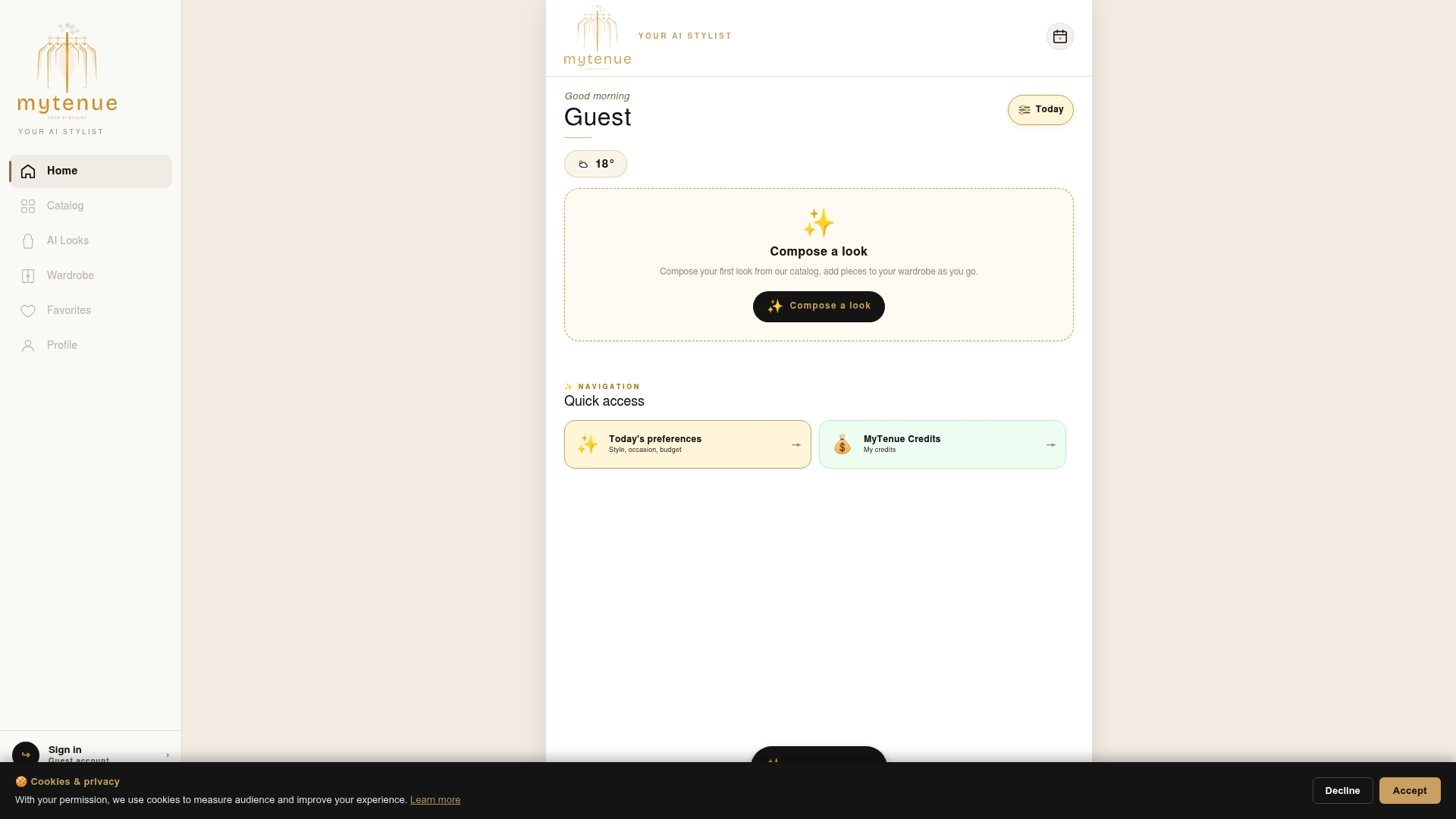
Mytenue takes the audit you just did and turns it into a working outfit system. Upload your first 10 items, and the AI immediately starts generating mix-and-match combinations, flagging gaps in your capsule, and scheduling outfits around your week's weather and activities. The free tier covers digitization and basic outfit suggestions. Premium unlocks the outfit calendar, virtual try-on with your personal avatar, and the curated catalog with loyalty credits.
No more "I have nothing to wear" at 7 AM. No more buying duplicates of things you already own. Just a wardrobe that works, planned in minutes. Start your free trial at Mytenue and build your family's capsule today.