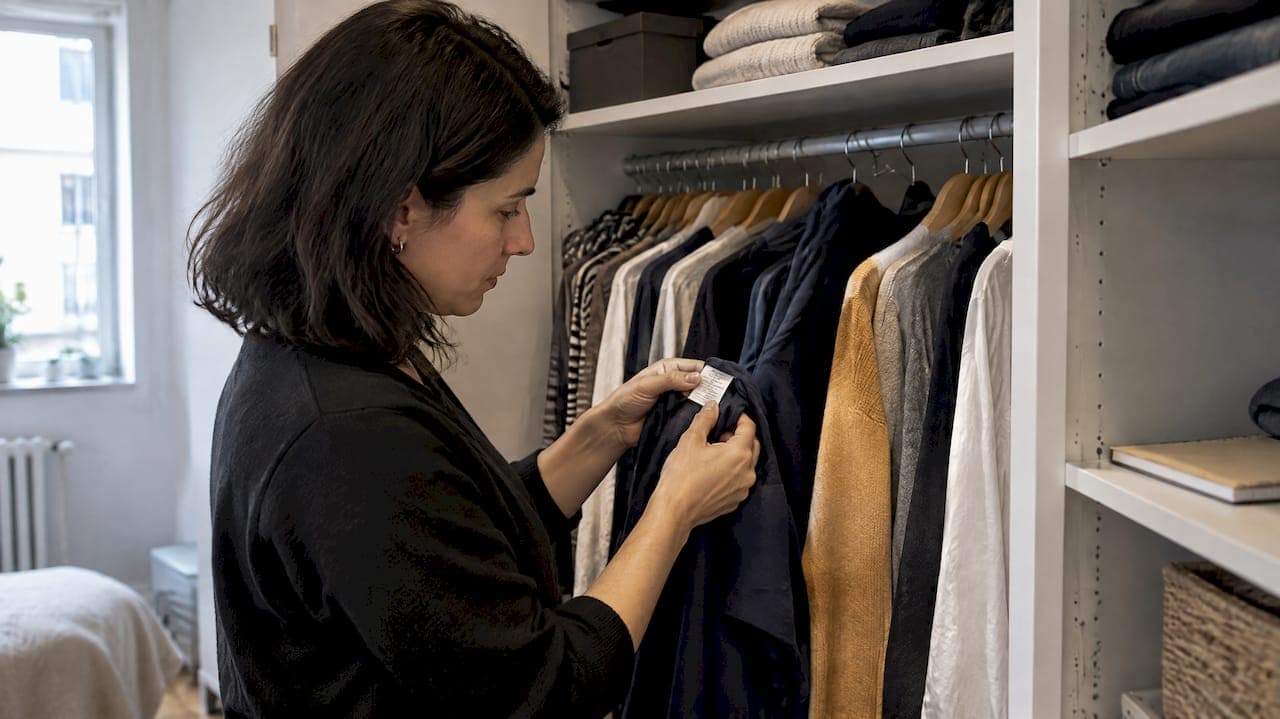
A garde-robe durable is a small set of clothes you actually wear, repair, and keep in rotation instead of replacing every season. The fastest way to start is a 20-minute inventory: pull everything out, sort by frequency of wear, and flag three items to repair, keep as-is, or replace. That single step reveals the real gaps your wardrobe has, before you buy anything new.
TL;DR:
- A garment worn 400 times instead of 109 can reduce its environmental footprint per wear by up to 60%, according to Woolmark research.
- Log outfits for one month before buying; the record shows which pieces you reach for and which categories need no replacement.
- Replace high use, fragile pieces first: jeans worn three times weekly with a failing zipper deserve attention before a rarely worn jacket.
- Garments made from one fiber and little elastane are easier to recycle than complex blends; environmental labels should break ties, not decide purchases alone.
- Wash clothes only when visibly dirty or odorous, use cold cycles, and air dry; merino sweaters can go 14 wears between washes when aired.
Table of Contents
- The core principles behind a sustainable wardrobe
- A step-by-step checklist to curate your wardrobe today
- Wardrobe essentials and what to check before buying
- Which fibers and labels to trust
- Laundry, storage, and repair habits that extend garment life
- A 6 to 24 month roadmap to rebuild your wardrobe gradually
- How MyTenue and small daily habits support the plan
- A realistic take on sustainable style
- Try MyTenue as your wardrobe planning tool
- FAQ
- Sources
The core principles behind a sustainable wardrobe
A durable wardrobe comes down to a few decision rules you apply every time you shop or sort through your closet. Wear frequency matters more than any label: a garment that gets worn 100 times beats one that gets worn ten times, no matter what it's made of. Versatility, repairability, and simple single-material construction all extend a piece's useful life and make it easier to recycle later.
- Choose pieces that pair with at least three other items you already own.
- Check seams, buttons, and zippers before buying: loose threads now mean a repair bill in a month.
- Favor natural fibers or recycled synthetics over blends that mix many materials.
- Use environmental labels as a tiebreaker, not the only factor.
A piece worn 400 times instead of 109 can cut its environmental footprint per wear by up to 60%, according to Woolmark's durability research. That single number explains why buying fewer, better pieces beats chasing trends.
A step-by-step checklist to curate your wardrobe today
Turning these principles into action starts with a structured pass through your closet, not a vague intention to "declutter someday."
- Inventory everything you own. Note wear frequency, damage, fit, and any care needs for each piece.
- Map your real contexts. List work days, weekends, and special occasions, then count how many outfits each actually requires.
- Build a core palette. Pick two or three neutral colors and one accent, then test it for a week before buying anything new.
- Prioritize replacements. Start with high-use, fragile items: the jeans worn three times a week with a failing zipper outrank a rarely worn jacket.
Pro Tip: Log your outfits for one month before buying anything new: you'll see which pieces you reach for daily and which ones you forgot you owned.
For a faster entry point, our guide to low-maintenance capsule wardrobes walks through a compact version of this process.
Wardrobe essentials and what to check before buying
A handful of staples carry most of the outfit combinations in a durable wardrobe, so they deserve the most scrutiny before purchase.
- A plain white or light shirt: works for both casual and dressed-up looks, targets roughly 40 wears according to wear-count research from ABC News; check collar stitching and button reinforcement.
- A well-made T-shirt: aim for around 45 wears per the same research; look for double-stitched hems and a fabric weight that holds shape after washing.
- Sturdy jeans or trousers: a daily-wear staple with a target near 70 wears; check the rivets, fly stitching, and fabric density.
- A tailored blazer: a multi-season layer with lining that should sit flat, not pucker, at the shoulders.
- A durable knit: wool or wool-blend sweaters can reach high wear counts with proper care, as Woolmark's guidance notes.
- Outerwear and shoes: jackets target around 100 wears; check sole construction and seam reinforcement at stress points.
One or two personality pieces, a bold print, a statement accessory, keep the wardrobe from feeling flat, as shown in examples of single-item wardrobe transformations.
Which fibers and labels to trust
Fiber choice shapes both how long a garment lasts and how easily it gets recycled at the end of its life.
- Cotton: breathable and durable, but choose recycled or organic versions where available to reduce water and chemical use.
- Linen: ages well and gets softer with wear, though it wrinkles easily.
- Wool: naturally odor-resistant and long-wearing, ideal for knits and outerwear.
- Tencel or lyocell: a lower-impact alternative to conventional viscose, with a smooth drape.
- Recycled synthetics: useful for activewear and outerwear, though they shed microfibers during washing.
Single-fiber garments with low elastane content are easier to recycle at end of life than complex blends. In France, an environmental display system for clothing has shown an Ecobalyse-based environmental cost score on product pages and labels since October 1, 2025, though brand participation remains voluntary. Since July 8, 2026, a law on ultra fast-fashion defines the category by release volume and applies an ecological malus to qualifying products, a useful signal when comparing brands.
Laundry, storage, and repair habits that extend garment life
How you care for clothes matters as much as what you buy. ADEME's guidance is blunt: wash less, wash cold, and skip the tumble dryer when you can.
- Wash only when visibly dirty or odorous, not after every single wear.
- Use cold cycles to preserve fabric structure and color.
- Air dry instead of tumble drying to avoid shrinkage and fiber breakdown.
- Learn basic repairs: reattaching a button or darning a small hole takes minutes and saves a garment.
- Use a tailor for structural repairs: a failing zipper or a torn seam near a pocket is worth professional attention.
Pro Tip: Merino wool sweaters can go 14 wears between washes with proper airing, cutting both water use and wear on the fabric.
Repair networks in France benefit from a repair bonus that lowers the cost of professional fixes, and repair success rates run high: nearly 95% of textiles brought to Repair Cafés across Europe could be successfully repaired in 2025.

A 6 to 24 month roadmap to rebuild your wardrobe gradually
A durable wardrobe doesn't happen in one shopping trip; for practical capsule start techniques, see how to build a capsule wardrobe starting with socks from an eco-friendly basics brand How to Build a Capsule Wardrobe Starting with Socks – Breevar. Spread the work across a realistic timeline instead.
- Months 1 to 3: repair what's fixable, donate what you no longer wear, and buy one high-impact replacement for your most-used fragile item.
- Months 4 to 9: replace other high-use, low-durability pieces one at a time, and consolidate your palette so new purchases pair with what you already own.
- Months 10 to 24: invest in outerwear, shoes, and a relationship with a trusted tailor, the pieces that reward a higher upfront cost with the longest service life.
Track your wears along the way: a simple log shows which categories actually need investment. Our stepwise upgrade strategies guide breaks this timeline down further, and budget-aware shopping tactics help pace the spending.
How MyTenue and small daily habits support the plan
Turning a roadmap into a habit is easier with the right tools. We built MyTenue to digitize your wardrobe, generate outfit suggestions from what you already own, and plan outfits on a calendar, so gaps show up before you shop, not after.
A 10-item trial, wearing only ten pieces for two weeks and logging each outfit, exposes which categories get real use and which ones you can skip entirely. Pairing that habit with the roadmap above turns abstract sustainability advice into a routine you can actually follow.

A realistic take on sustainable style
Perfection isn't the goal here. Small habits, one repair, one thoughtful purchase, one honest inventory, beat a dramatic closet purge that burns out in a month. Sustainable style bends to your actual life: a second-hand find, a repair café visit, or a two-week capsule experiment all count as progress.
— Ahmed
Try MyTenue as your wardrobe planning tool
A durable wardrobe takes tracking, and that's exactly where we come in. The app digitizes your wardrobe, suggests outfits from pieces you already own, and lets you plan looks on a calendar, so you buy only what actually fills a gap.
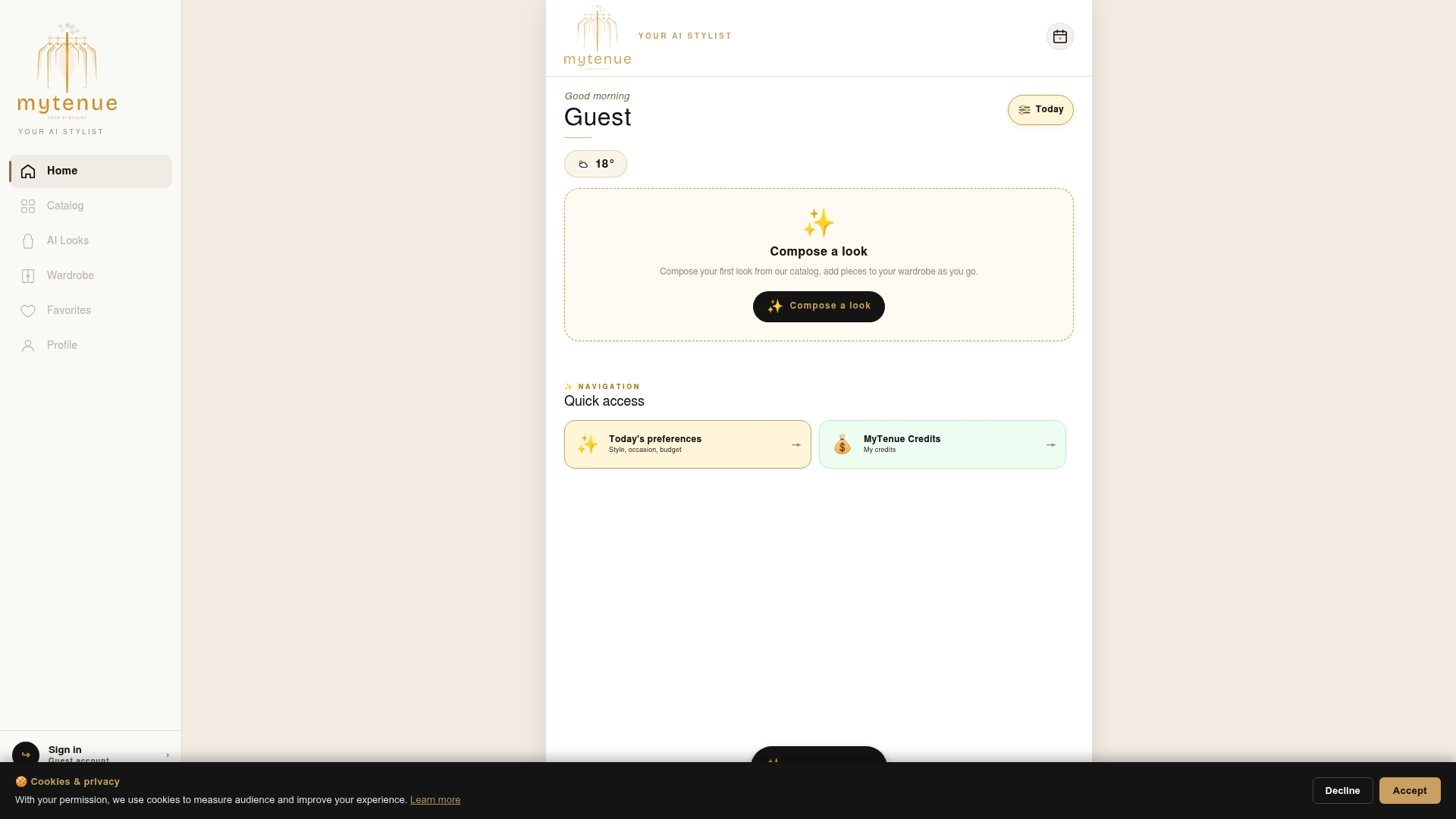
Start free and explore the MyTenue app, with Basic, Premium, and Gold tiers available as you need more. We work alongside second-hand shopping and repair, not instead of them, as one more tool for getting more wears out of what you own.
FAQ
How often should I wash my clothes to make them last longer?
Wash only when visibly dirty or odorous, using cold cycles and air drying where possible. ADEME's guidance recommends washing less and avoiding the tumble dryer to reduce fiber wear and energy use.
How many pieces should a sustainable wardrobe have?
There's no universal number: wear-count research shows sustainability depends on how often you actually wear each piece, not on hitting a fixed item count. Logging your outfits for a month gives you a personalized target instead of following a generic rule.
Which fabrics hold up best over time?
Wool, linen, and recycled or organic cotton tend to wear well when cared for properly, while complex blends with high elastane content wear out faster and recycle poorly. Single-fiber garments generally last longer and are easier to repair or recycle at the end of their life.
Is buying second-hand actually more sustainable?
Second-hand shopping helps only when it replaces a new purchase rather than adding to an already large wardrobe. ADEME's guidance on second-hand buying recommends treating it as a deliberate replacement strategy, not a way to accumulate more.
How can I check if a brand's sustainability claims are credible?
Look for a documented environmental score rather than vague marketing language. In France, the environmental display system shows an Ecobalyse-based cost score on participating product pages, factoring in elements like repairability and product range width.
Sources
- ADEME — 10 solutions to choose and care for clothes
- Ministry for Ecological Transition — Policies to reduce the textile industry's environmental impact (law of July 8, 2026)
- ABC News — The maths behind a sustainable wardrobe