
Personal branding through fashion is the deliberate use of style as a visual language to communicate your professional identity before you speak a single word. The role of personal branding fashion goes far beyond choosing nice clothes. It shapes how colleagues, clients, and hiring managers read your competence, values, and ambition. 70% of hiring managers use digital presence to screen candidates before interviews. That number tells you one thing clearly: your visual identity is already working for or against you, whether you manage it or not. The industry term for this practice is visual identity development, and it sits at the intersection of psychology, career strategy, and personal style.
How does fashion influence personal and professional perception?
Fashion shapes perception through a well-documented psychological process called enclothed cognition. Enclothed cognition shows that clothing influences how people think, feel, and behave, affecting both the wearer's mindset and how others read them. Put simply, what you wear changes how you perform, not just how you look.
This effect runs deeper than first impressions. Young consumers increasingly treat clothing as cultural branding, using style to signal values, affiliations, and professional intent. A lawyer who consistently wears structured, neutral tones signals precision and reliability. A creative director who favors bold color and unconventional silhouettes signals originality. Neither choice is accidental in a well-managed personal brand.
The trust dimension is equally significant. 82% of people are more likely to trust companies whose senior executives maintain a coherent and visible personal brand. That trust does not come from expensive clothes. It comes from consistency, which trains observers to recognize and rely on your visual identity.
"Style signals proof, not autobiography. Your personal brand should demonstrate taste, reliability, and business fluency at a glance — before any conversation begins."
The key mechanism here is cognitive load. Visual consistency reduces the mental effort observers spend categorizing you, which speeds up subconscious recognition and builds trust faster than frequent style changes ever could. Repetition is the engine of recognition.
What strategies build a strong personal fashion brand?
Building a strong personal fashion brand requires intention, not a large budget. The most effective fashion branding strategies share three qualities: consistency, authenticity, and forward signaling.
Here are the core strategies that work:
- Choose a signature color palette. Selecting two to four colors you wear repeatedly trains your audience to recognize you visually. Consistent use of a signature palette increases memorability and trust in personal brands. Think of it as the visual equivalent of a logo.
- Build a capsule wardrobe. A capsule wardrobe built for consistency reduces decision fatigue and keeps your brand messaging legible over time. Fewer, better-chosen pieces create a clearer identity than a closet full of trend-driven items.
- Dress for the role you want, not the one you have. Dressing for your aspirational role is a nonverbal strategy that primes stakeholders to see you as ready for advancement. Your wardrobe should signal where you are going, not just where you are.
- Avoid trend chasing. Trends shift every season. A personal brand built on trends reads as reactive, not authoritative. Authenticity outlasts any runway moment.
- Use repetition deliberately. Auction house executive Lydia Fenet built her public profile through consistent, repeated visual choices that made her instantly recognizable in her field. Repetition is not boring. It is branding.
Emma Grede, co-founder of Good American, describes personal branding as a proof system that signals taste, reliability, and business fluency to ease professional collaborations. The implication is direct: your style should prove something about your professional competence, not just express your personality.
Pro Tip: Pick three words that describe your desired professional image, such as "authoritative, approachable, creative," and audit every item in your wardrobe against those words. Remove anything that contradicts them.
How can young professionals integrate fashion branding across physical and digital profiles?
Your personal brand does not live only in the room where you are standing. It lives on LinkedIn, Instagram, and every photo attached to your name online. Consistency across all of these touchpoints is what separates a managed brand from a scattered impression.
91% of fashion industry professionals feel pressure to maintain a consistent social media presence that links personal identity to professional outcomes. That pressure reflects a real market reality: your digital image is your first handshake with most professional contacts.
Practical steps for cross-platform consistency include:
- Align your profile photos. Use the same color palette and styling tone across LinkedIn, Instagram, and any professional website. Mismatched photos across platforms create cognitive dissonance for anyone researching you.
- Curate, do not just post. Every photo you share publicly contributes to your visual identity. Ask whether each post reinforces or dilutes the three words you chose to define your brand.
- Match your in-person style to your digital presence. When someone meets you after seeing your online profile, the visual match builds instant credibility. A mismatch creates doubt.
- Use your style to attract the right opportunities. Consistent personal branding across platforms increases trust and recognition, which leads directly to more professional opportunities and collaborations.
The goal is not to perform a character. The goal is to make your authentic professional identity legible and repeatable across every context where people encounter you.
What practical steps can you take to develop your personal brand through fashion?
Fashion identity development does not require a stylist or a large wardrobe budget. It requires a clear process and the discipline to follow it.
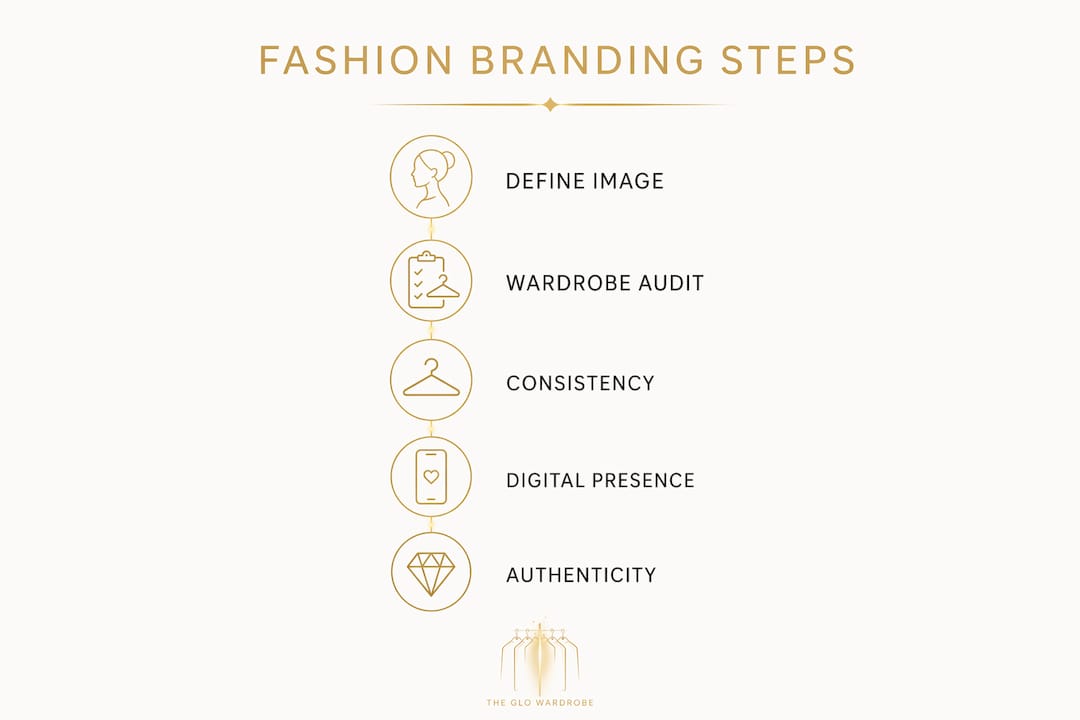
- Define your brand in words first. Write down three to five adjectives that describe how you want to be perceived professionally. Examples: polished, creative, grounded, bold, approachable. These words become your filter for every style decision.
- Audit your current wardrobe. Pull out every item and ask whether it reflects those adjectives. Items that do not align are diluting your brand, regardless of how much you paid for them.
- Build a budget-friendly capsule. You do not need to spend more to brand better. Dressing well on a budget is entirely achievable when you prioritize consistency over quantity. Ten well-chosen pieces that align with your brand beat thirty mismatched ones every time.
- Incorporate visual styling tools. Digital tools that help you plan outfits in advance reduce the daily friction that leads to off-brand choices. Visual styling tools support professional image management by making intentional dressing a habit, not a chore.
- Update strategically, not reactively. Your brand should evolve with your career, not with every trend cycle. Review your wardrobe twice a year and ask whether your style still signals the role you are pursuing.
Pro Tip: Before buying any new piece, ask: "Does this fit my three brand words?" If the answer is no, skip it. This single filter prevents impulse purchases that fragment your visual identity.
Here is a quick comparison of two approaches to building your fashion brand:
| Approach | Result |
|---|---|
| Trend-driven wardrobe | Frequent changes, low recognition, high cost |
| Capsule wardrobe with signature palette | High recognition, lower cost, consistent brand signal |
| Random digital photos | Fragmented online identity, reduced trust |
| Consistent cross-platform styling | Stronger credibility, more professional opportunities |
Hyper-personalized styling takes this process further by tailoring outfit recommendations to your specific career context, body type, and brand goals, making the entire system more precise and repeatable.
Key Takeaways
Personal branding through fashion is the most immediate and repeatable way to communicate professional credibility, and consistency is the single factor that makes it work.
| Point | Details |
|---|---|
| Fashion signals before words | Enclothed cognition proves clothing shapes both self-perception and how others read your competence. |
| Consistency builds trust | 82% of people trust leaders with a coherent personal brand more than those without one. |
| Capsule wardrobes reduce noise | A small, consistent wardrobe keeps your brand message clear and cuts decision fatigue. |
| Digital and in-person must match | Mismatched online and offline styling creates doubt; alignment builds instant credibility. |
| Dress for the role you want | Forward-signaling through style primes stakeholders to see you as ready for advancement. |
Why I think most people get fashion branding completely wrong
Most advice on personal branding through fashion stops at "dress for success," which is nearly useless without a framework. After years of watching professionals build and lose credibility, the pattern I keep seeing is this: people treat style as decoration and then wonder why their brand does not stick.
The professionals who build the most durable personal brands treat their wardrobe the way a company treats its visual identity. They pick a small set of signals and repeat them relentlessly. They do not reinvent themselves every season. They do not chase what is trending on social media. They decide what they want to communicate and then dress that way, every single day, until people associate the look with the person automatically.
The uncomfortable truth is that authenticity alone is not enough. You can be completely authentic and still be visually incoherent. Authenticity needs structure. The three-word filter I described earlier is not a creative exercise. It is a discipline that forces you to make your inner professional identity legible to the outside world.
The other mistake I see constantly is treating digital and in-person branding as separate projects. They are the same project. The person who shows up polished on LinkedIn but inconsistent in the office is sending a signal that their brand is a performance, not a reality. Coherence across every context is what makes people trust you enough to give you the next opportunity.
Fashion is communication. Treat it that way, and your career will reflect it.
— Ahmed
Your personal brand, made consistent with Mytenue
Building a consistent fashion brand takes clarity about what you want to communicate and the right tools to make it repeatable.
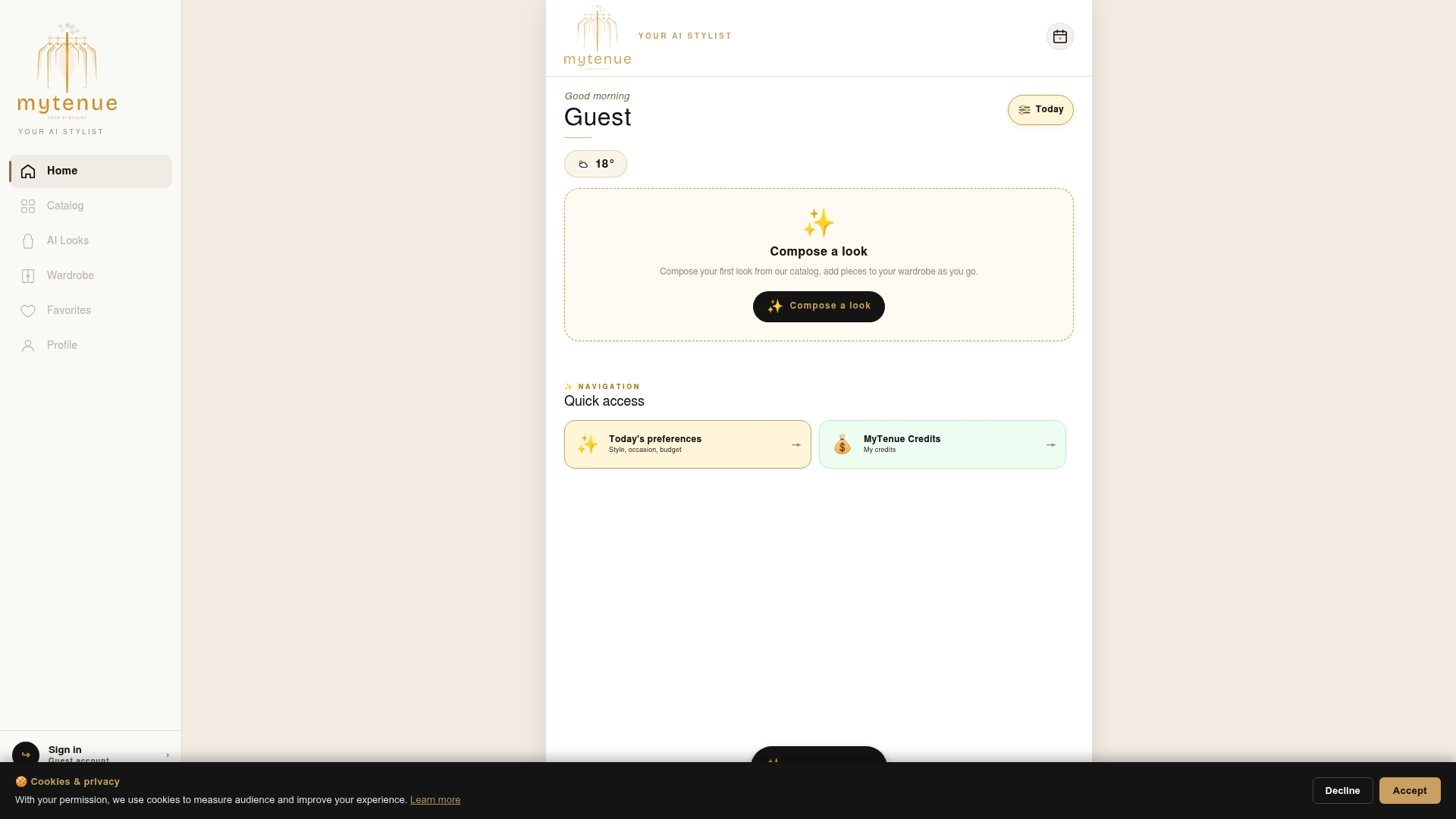
Mytenue is an AI-powered styling platform that helps you create complete outfits aligned with your style preferences, occasions, and budget, all in one place. Whether you are building a capsule wardrobe from scratch or refining an existing one, Mytenue gives you personalized outfit recommendations that keep your visual identity coherent across every context. The platform also encourages mixing existing wardrobe pieces with new ones, which keeps your brand consistent without requiring constant spending. Your style, your brand, your way.
FAQ
What is the role of personal branding in fashion?
Personal branding in fashion is the deliberate use of style to communicate professional identity, values, and ambition visually. Consistent style choices build trust and recognition faster than any verbal introduction.
Why does fashion matter for professional perception?
Enclothed cognition research shows that clothing directly affects how others perceive your competence and how you perform mentally. A coherent visual identity signals reliability and increases the likelihood that others trust and remember you.
How do I start building my personal fashion brand?
Define three to five words that describe your desired professional image, then audit your wardrobe against those words. Remove items that contradict your brand and build a small, consistent capsule around the ones that align.
How important is social media for fashion personal branding?
91% of fashion professionals report pressure to maintain consistent social media branding. Your digital photos and posts form your first impression for most professional contacts, making platform consistency as important as in-person style.
Does personal branding through fashion require a large budget?
No. A capsule wardrobe built around a consistent color palette and a few well-chosen pieces delivers stronger brand recognition than a large, trend-driven closet. Consistency, not cost, is what makes a personal brand memorable.