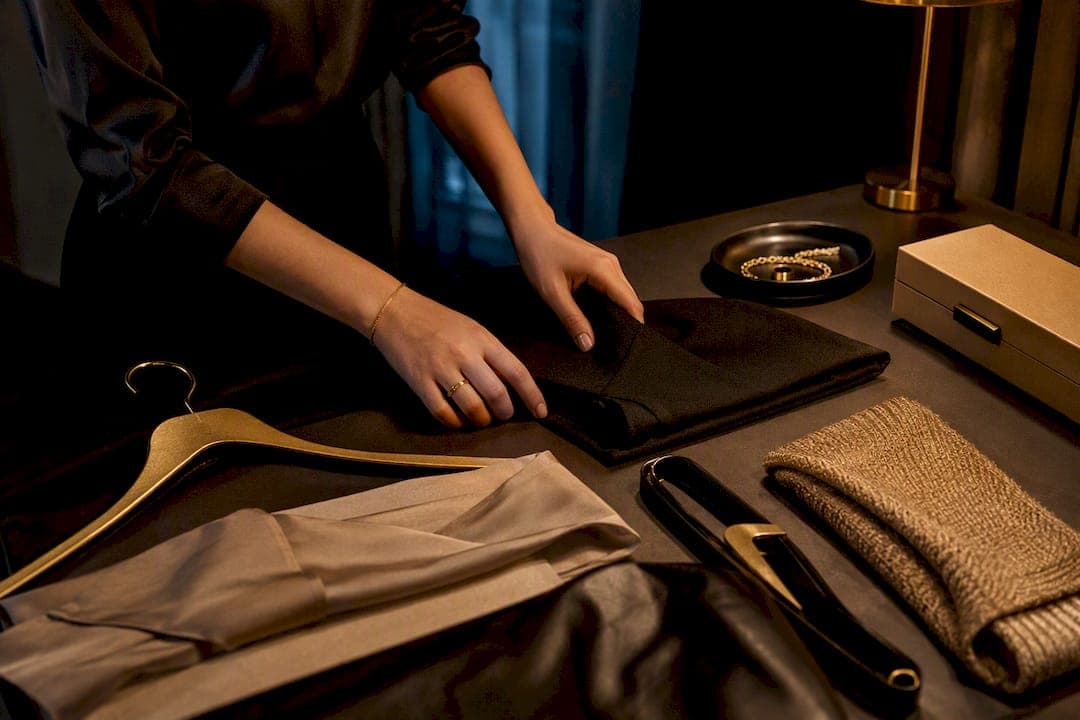
Pick a complete outfit tonight: clothes, shoes, accessories—all of it. Set it out somewhere visible before you go to bed. That single move solves tomorrow morning before it even starts, because your brain no longer has to make a decision it's too tired to make well. Below is a five-minute checklist, six outfit formulas, and a few fixes for the nights you're too drained to plan.
TL;DR:
- Preparing outfits the night before reduces morning decision fatigue by enabling quick, consistent outfit choices based on weather and schedule.
- Using fixed outfit formulas for different occasions simplifies planning and minimizes the need for daily inventiveness.
- Keeping prepped clothing and accessories in a dedicated, visible spot speeds up nightly selection and reduces clutter-related delays.
- Incorporating a core outfit with one swap option allows flexibility for mood or weather changes without overcomplicating preparation.
- Automating outfit planning with apps like MyTenue can further streamline the process and help maintain the habit consistently.
Table of Contents
- The 5-minute evening checklist for a full outfit
- Six outfit formulas you can reuse without overthinking
- Setting up a space that makes nightly prep effortless
- Catching stains, wrinkles, and forgotten items before they become a problem
- Building flexibility into your prepped outfit
- Why this actually works, according to the research
- A realistic way to actually keep this habit
- Let MyTenue handle the planning for you
- Sources
- FAQ
The 5-minute evening checklist for a full outfit
This ritual works because it follows a fixed order every time. You're not designing an outfit from scratch each night, you're running a checklist, and checklists don't require willpower.
Start with your calendar and the weather app, not your closet. Ten seconds tells you whether tomorrow needs a blazer, a rain layer, or nothing more than a T-shirt. According to a practical style guide on stress-free mornings, checking the forecast before choosing pieces is one of the fastest ways to cut morning friction.
- Check your calendar and the forecast. Note any meetings, commutes, or events that change what "appropriate" means tomorrow.
- Choose your base layer first. Undergarments, then top, then bottom, then outer layer if needed.
- Add shoes last, but choose them now. Shoes decided the night before save the "which pair goes with this" scramble.
- Gather accessories into one pile. Belt, jewelry, scarf, bag: keep them next to the outfit, not scattered across drawers.
- Do a 30-second visual check. Look for stains, loose buttons, or wrinkles that need a quick steam or iron pass.
- Set the whole outfit in one visible spot. A hanger on the closet door, a chair, or a labeled bin all work, as long as it's the same spot every night.
The order matters more than the speed. Undergarments first means you never discover at 7 AM that every clean bra is in the wash. Shoes decided early mean you're not standing in your closet in socks, staring at four black pairs that all look slightly different in bad light.
A time-saving outfit planning guide recommends keeping this whole process under ten minutes. If it's taking longer, you're probably overthinking a decision you already made when you checked the calendar in step one.

Six outfit formulas you can reuse without overthinking
Formulas remove the need to invent something new every night. Pick the situation, apply the formula, done.
- Work day: tailored pants, a fitted top, a blazer, and one pair of closed-toe shoes. Swap the blazer for a cardigan if the office runs casual.
- Casual day: straight-leg jeans, a simple tee, sneakers, and a light jacket for temperature swings.
- Interview: a monochrome base, one structured piece, and minimal jewelry so nothing distracts from what you're saying.
- Evening out: one statement piece, either the top or the shoes, paired with everything else kept plain.
- Rainy day: water-resistant shoes, a cropped rain layer over your normal top, and a bag that closes fully.
- Low-effort day: a single-color outfit, top to bottom, which reads as put-together with almost no matching decisions.
Weather changes the formula, not the outfit. Add a thin layer for cold mornings that warm up by noon, swap sneakers for boots when it's wet, and keep one packable jacket ready for days the forecast can't decide.
Fabric choice does more work than most people give it credit for. Knits and blends resist wrinkles overnight better than pure linen or cotton, and a study on how clothing affects mood notes that pairing neutral bases with a single accent color makes outfits both faster to match and more likely to lift your mood in the morning.
Pro Tip: Keep one accent piece, a scarf, a bold pair of shoes, or a statement necklace, ready to drop onto any basic outfit when you want it to feel less plain.
Setting up a space that makes nightly prep effortless
The system only works if the setup makes prep faster than skipping it. A cluttered closet turns a five-minute ritual into a fifteen-minute hunt.
- Dedicated hanger or hook. One spot, always the same, holds tomorrow's full outfit including accessories.
- Chair or valet stand. Works well for people who prefer laying items flat rather than hanging them.
- Labeled bins for multiple days or people. Useful for parents prepping kids' outfits or anyone planning a full week at once.
- Vertical stackable fabric bins. Good for small closets where floor and hanger space run out fast.
The 3-3-3 capsule rule pairs well with this setup. The idea is simple: three tops, three bottoms, and three pairs of shoes per season, mixed and matched instead of treated as fixed outfits. Fewer pieces means fewer possible combinations to weigh each night, which is exactly the point. Readers who want a deeper walkthrough on downsizing a wardrobe without losing options can check this guide to building a capsule wardrobe.
Rotate your prepped bins or hangers with the season. What counts as a "base layer" in January isn't what counts in July, and a guide to seasonal wardrobe essentials is worth a look if you're rebuilding your basics from scratch. Swap out the winter layer options for lighter fabrics every few months so the system never falls out of step with what's actually outside.
Catching stains, wrinkles, and forgotten items before they become a problem
A prepped outfit only helps if it's actually wearable in the morning. A three-minute inspection now prevents the worst version of tomorrow: discovering a coffee stain while you're already running late.
- Check for stains and loose buttons. Hold each piece up to the light for thirty seconds; small spots are easier to spot at night than under bathroom lighting.
- Steam or iron anything wrinkled. A quick pass now beats a rushed one tomorrow.
- Pair socks and place shoes together. Set both by the door or next to the outfit so nothing gets left behind.
- Pack your bag with essentials. ID, keys, charger, and wallet go in tonight, not during the morning scramble.
If the forecast looks uncertain, add one contingency piece: a folded umbrella by the door or an extra layer draped over the hanger. That single addition covers most weather surprises without requiring a second outfit.
Pro Tip: Keep a small sewing kit and a travel steamer within reach of your prep spot. Most stain or wrinkle fixes take under two minutes if you catch them the night before.

Building flexibility into your prepped outfit
Rigid systems break the first time your mood or your schedule shifts. The fix is preparing a core outfit plus one swap option, not a second full outfit.
- Set a core outfit, then pick one swap piece. A second top or a different accessory covers most mood changes without extra planning.
- Keep components modular. Choose pieces that pair with more than one top or bottom so a swap doesn't unravel the whole outfit.
- Prepare two options with different vibes if you resist routines. One polished, one relaxed, both ready, so the choice takes seconds instead of minutes.
- Have a rapid re-layering rule. If the weather shifts, add or remove one layer rather than rebuilding the outfit.
This isn't about perfect planning. It's about giving yourself a fast way out when the plan from last night doesn't match how you feel this morning.
Why this actually works, according to the research
The case for prepping outfits at night isn't just convenience. It's backed by how decision-making actually functions under fatigue.
- Decision fatigue is real. A piece connecting Steve Jobs, Einstein, and Zuckerberg's clothing habits to cognitive science explains that removing a routine choice like "what to wear" preserves mental energy for decisions that actually matter.
- What you wear affects how you feel. The concept of enclothed cognition, covered in research on clothing and mood, suggests that deciding your outfit in advance, when you're calm, tends to produce better choices than deciding it half-asleep.
- It's a trait, but also a habit. Psychologists quoted on the habit of prepping outfits the night before link it to conscientiousness, and note it's a habit that can be built deliberately rather than something you're simply born with.
An app mirrors this checklist by providing AI-curated outfit suggestions from a user's wardrobe, weather-based recommendations adjusted to the forecast, and an outfit calendar for planning several days in advance instead of starting from scratch each night. For a broader look at how automation fits into this habit, see why AI reduces daily outfit decision fatigue or the full practical guide to outfit planning for busy mornings.
A realistic way to actually keep this habit
Don't aim for perfect. Aim for seven nights in a row, tied to something you already do, like brushing your teeth or setting an alarm. That's enough for the ritual to stop feeling like an extra task and start feeling automatic.
Parents and shift workers need a different version of this: prep happens whenever the "evening" actually is for you, not necessarily at 10 PM. And when you miss a night, you haven't broken anything. You just do the ten-minute version tomorrow morning instead, and you're back on track the next evening.
— Ahmed
Let MyTenue handle the planning for you
Everything in this ritual, the calendar check, the weather adjustment, the mixing of pieces you already own, is exactly what MyTenue automates. The app builds outfit suggestions from your own digitized wardrobe, adjusts them to tomorrow's forecast, and lets you plan a full week on a calendar instead of repeating the checklist from memory every night.
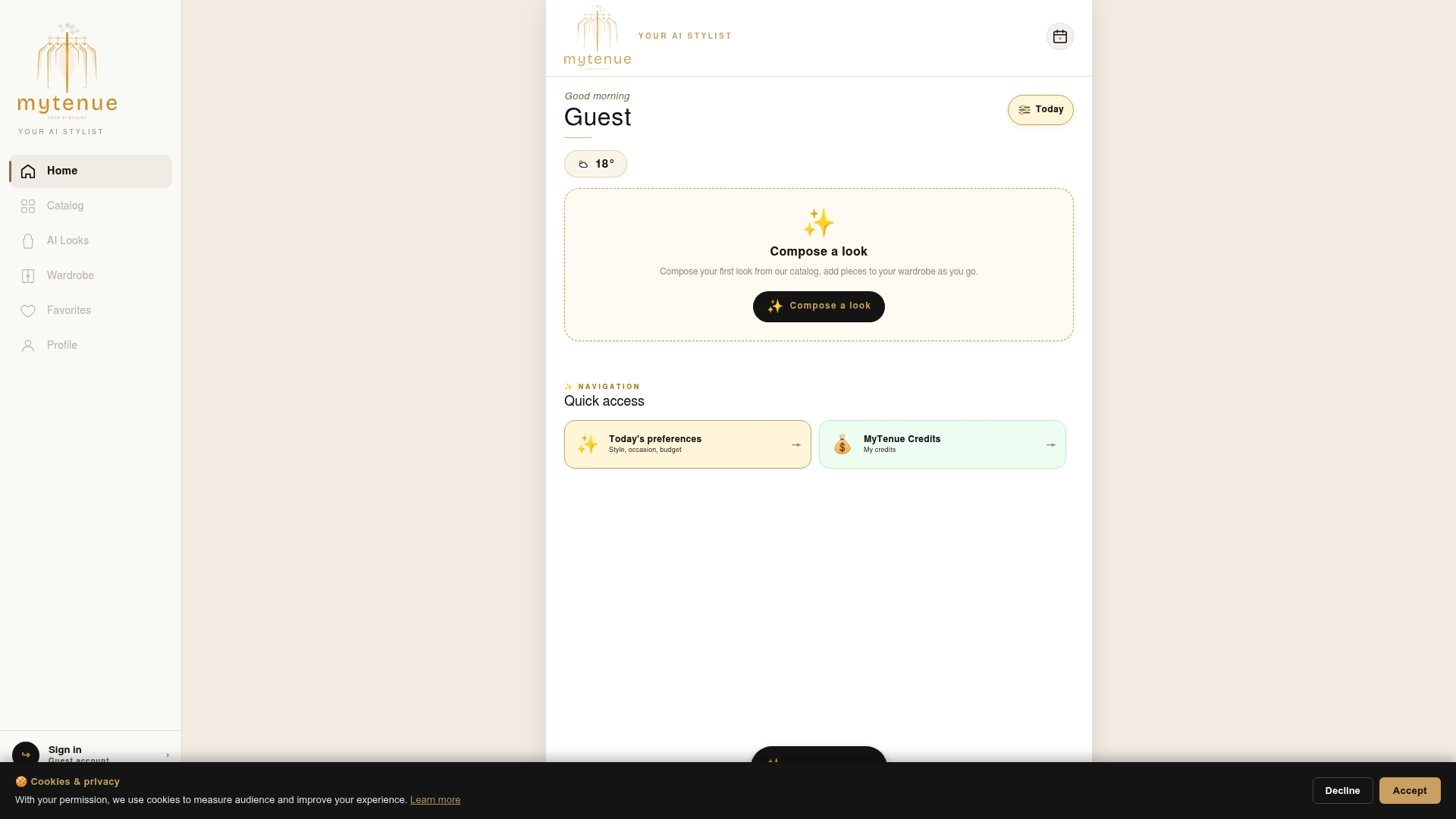
If ten minutes a night sounds better than twenty rushed minutes every morning, the MyTenue app is worth a look, with Free, Basic, Premium, and Gold plans depending on how much styling support you want.
Sources
For more on the psychology behind this habit and hands-on wardrobe systems, see the Psychologies and the 3-3-3 capsule rule breakdown.
- Steve Jobs, Einstein et Zuckerberg : la science explique pourquoi les grands esprits portent la même tenue tous les jours
- Impact des vêtements sur l'humeur : étude et conseils pour améliorer l'humeur grâce à sa tenue
- Magasindemode
- Psychologies
FAQ
What is the 3-3-3 rule for clothes?
The 3-3-3 rule is a capsule wardrobe method built around three tops, three bottoms, and three pairs of shoes per season, mixed and matched instead of worn as fixed outfits. The 3-3-3 capsule guide explains it as a way to cut down the number of choices you face each morning.
What are outfits to avoid after age 50?
This article doesn't cover age-specific style rules, and no source here defines a fixed list of outfits to avoid at any age. Personal style guidance tends to vary widely by body type, climate, and occasion rather than following one universal rule.
What is the 7-point outfit rule?
Definitions of a "7-point rule" vary across style guides, and none of the sources used here define a single standard version. If you've seen it referenced elsewhere, treat it as one style framework among several rather than a fixed industry standard.
How should I dress between 60 and 68 degrees Fahrenheit?
That range usually calls for one light layer over a basic top, since it's warm enough to skip heavy coats but cool enough that a bare arm feels chilly by evening. A cardigan, light jacket, or long-sleeve layer paired with regular shoes covers most days in that range without overdressing.
Does preparing an outfit the night before actually save time?
Yes. Checking your calendar and weather, then laying out a full outfit including shoes and accessories, removes the guesswork that usually slows down mornings, according to a practical guide on stress-free morning routines. The habit works best when it's tied to an existing nightly routine so it becomes automatic rather than another task to remember.