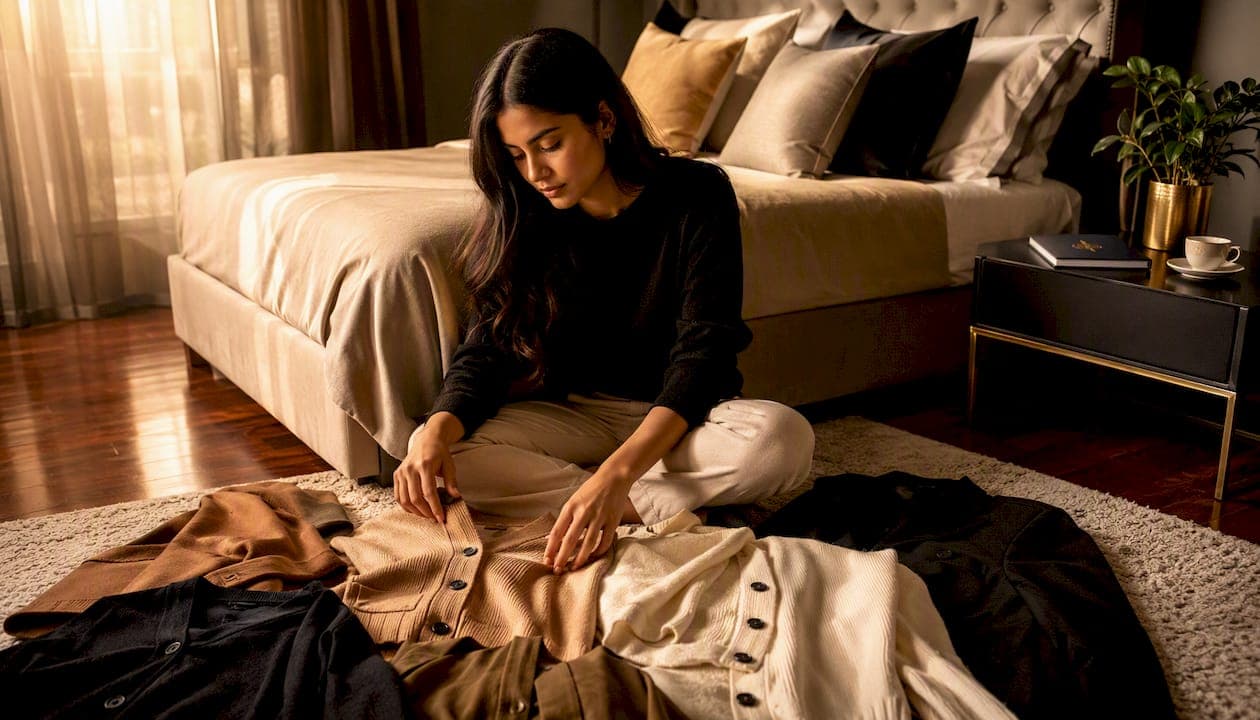
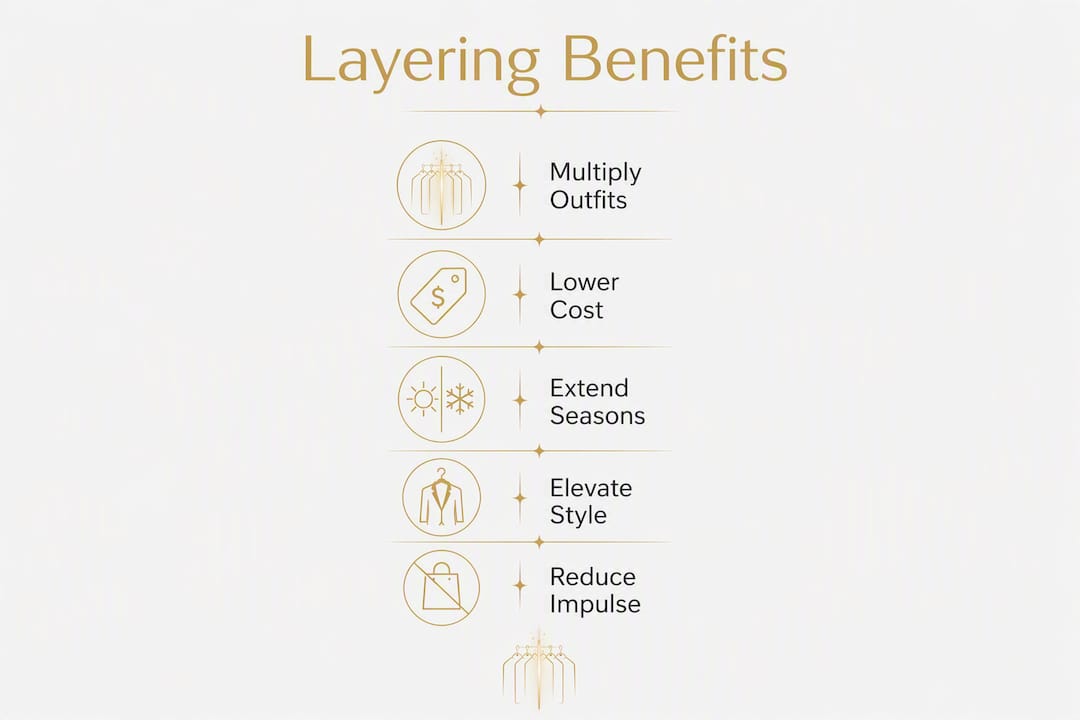
Yes, layering outfits saves money. A small set of garments becomes dozens of distinct looks, your cost-per-wear drops with every additional use, and the urge to buy something new fades when your existing pieces already feel fresh. According to SoFi's analysis of U.S. Bureau of Labor Statistics data, the average American household spends approximately $1,945 per year on apparel as of the latest figures. A layering-first approach chips away at that figure from three directions at once:
- Outfit multiplication: a handful of basics combines into far more looks than their count suggests
- Lower cost-per-wear: pieces worn more often cost less per use, making quality staples the smarter buy
- Fewer impulse purchases: when your wardrobe already generates new-feeling outfits, trend buys lose their pull
Table of Contents
- Why layering outfits saves money: the core mechanisms
- How to build a practical layering system
- How to audit your wardrobe and shop for layering staples
- Outfit formulas that show you the combinatorics
- What the U.S. apparel spending numbers actually tell you
- Your 7-step checklist to start saving with layering today
- Key Takeaways
- The case for layering as a financial habit, not just a style trick
- Mytenue makes your layering system work harder
- Useful sources
Why layering outfits saves money: the core mechanisms
The savings are not accidental. They follow directly from how layering changes the math of getting dressed.
Outfit multiplication is the most immediate effect. Add one mid-layer to three different base tees and you have three new looks before you've touched your outer pieces. The combinatorics compound fast. Capsule wardrobe practitioners consistently show that a modest set of tees, mids, and outers yields dozens of permutations without adding a single item.
Cost-per-wear is the metric that makes quality purchases rational. A $90 merino crewneck worn 60 times costs $1.50 per wear. A $25 fast-fashion pullover worn 8 times before it pills costs $3.13 per wear. Fashion math experts argue this calculation should drive every purchase decision, and layering accelerates it by multiplying how often each piece gets used.
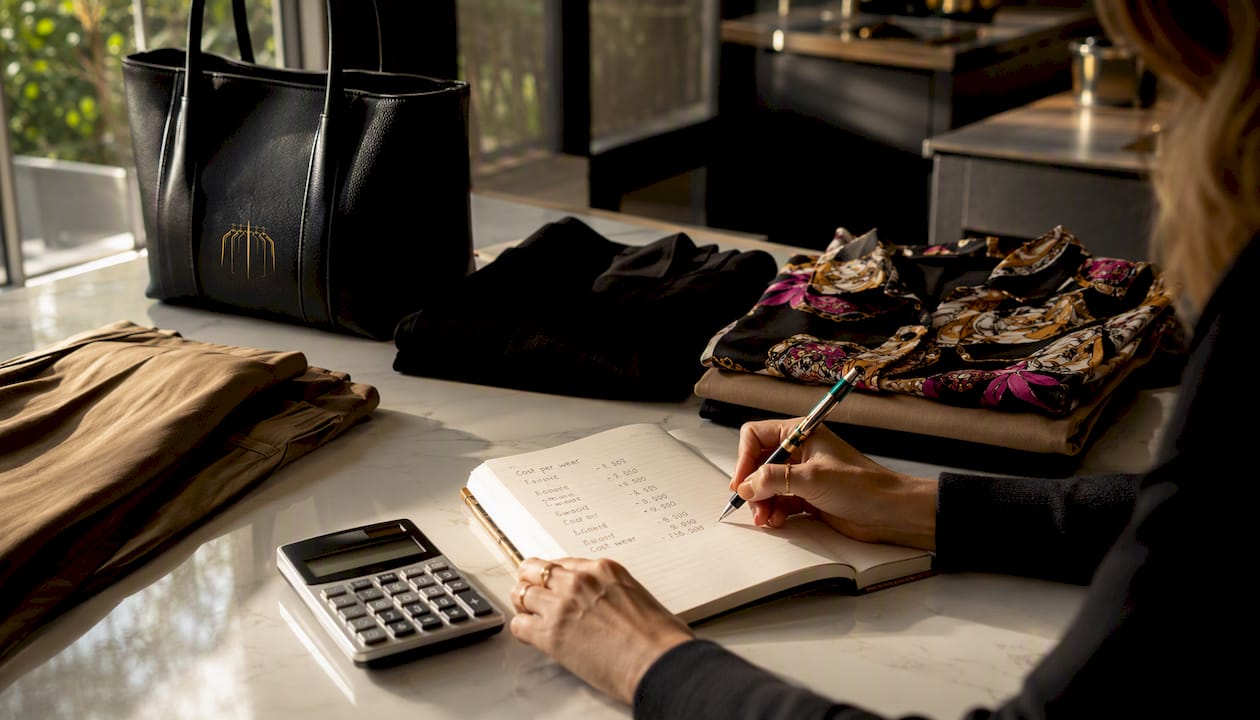
Season stretching extends the useful life of garments across calendar boundaries. A lightweight linen shirt worn alone in July becomes a base layer under a flannel in October. Pieces cross seasons instead of sitting in storage, which means fewer off-season purchases to fill gaps.
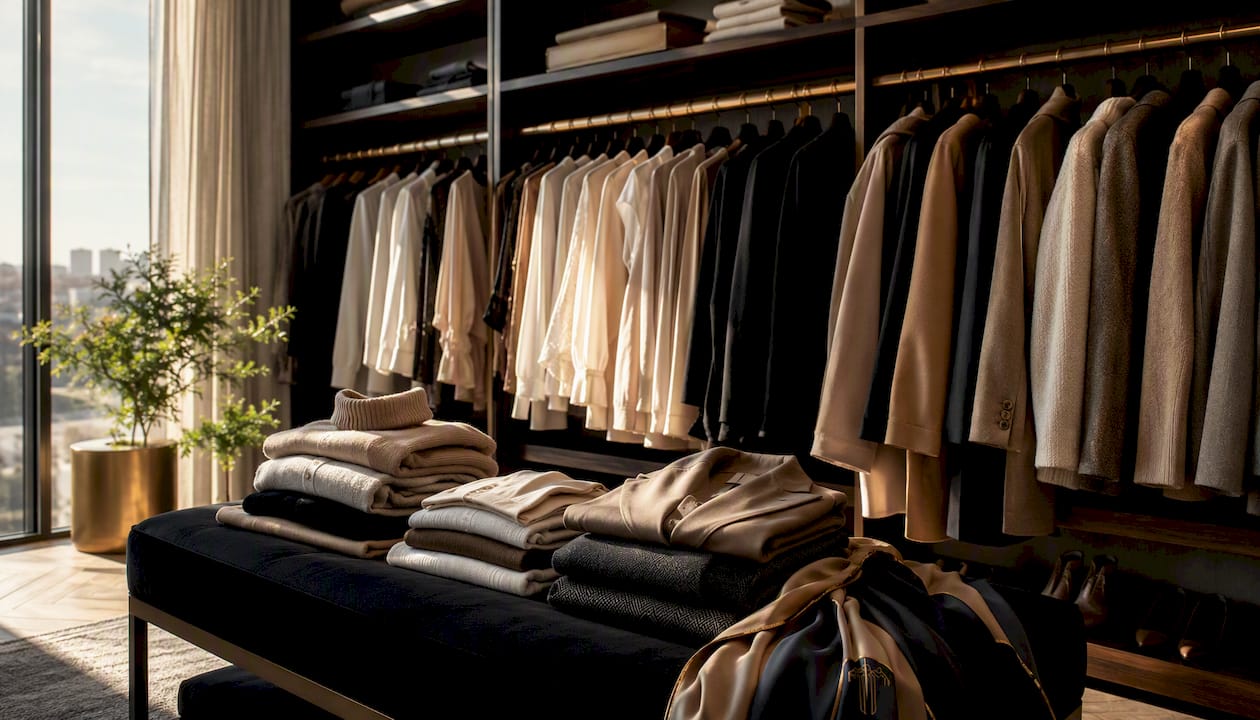
Behavioral savings are quieter but real. Styling experts note that one well-placed layer flips an outfit from basic to intentional, which reduces the psychological pull toward buying something new. When your existing wardrobe already looks considered, you stop browsing out of boredom.
Pro Tip: Scan your closet for "layering leverage" items: neutral-color base tees, lightweight knits, and open-front cardigans. These are the pieces that multiply every other item they touch. If you own three of them, you already have the engine of a layering system.
How to build a practical layering system
The base-mid-outer framework is the most reliable structure for building versatile, budget-friendly outfits. Each layer has a job.
- Base layer: sits against the skin, manages moisture, and sets the outfit's foundation. Think fitted cotton tees, ribbed tanks, and lightweight long-sleeves.
- Mid layer: adds warmth, texture, and visual interest. Flannels, lightweight knits, denim shirts, and zip-up fleeces all work here.
- Outer layer: provides weather protection and the outfit's strongest style statement. A trench coat, a structured blazer, or a faux-leather jacket each shifts the entire look.
- Accessories: scarves, belts, and hats act as micro-layers that change an outfit's register without adding bulk or cost.
Fabric and weight rules matter. Move from light to heavy as you add layers, and vary texture so pieces read as intentional rather than accidental. A smooth cotton base under a textured knit mid under a woven outer creates visual depth. Breathable fabrics like cotton and merino wool are worth prioritizing because they work across seasons and wash well repeatedly.
Proportion and length prevent the "bundled up" look. Stagger hem lengths so each layer is visible: a longer tee peeking below a cropped flannel, or a mid-length coat over a slightly longer knit. Practitioner guides identify staggered lengths as one of three rules that convert basics into weeks of distinct looks.
Pro Tip: Build your wardrobe around two or three neutral anchor colors (navy, camel, white, or charcoal) plus one accent. Every piece in those tones combines with every other piece, which means your combination count stays high even as your item count stays low.
How to audit your wardrobe and shop for layering staples
A wardrobe audit takes about 30 minutes and immediately shows you what you have, what you're missing, and what you're duplicating.
Step-by-step audit:
- Pull everything out and sort by layer type: bases, mids, outers, accessories.
- Mark duplicates (three near-identical gray tees) and gaps (no lightweight mid for spring).
- Check each piece for condition. Worn-out basics cost more per wear than a fresh replacement.
- Identify your highest-versatility items: pieces that combine with at least five others stay; single-use items go.
Shopping checklist for layering staples:
- Does this piece work as at least two layer types (e.g., a denim shirt as a mid or an outer)?
- Does it fit the color palette you already own?
- Is the fabric durable enough for 50+ wears?
- Does it fill a genuine gap, or does it duplicate something you already have?
Wardrobe digitization tools make this audit faster and more accurate. Photographing each item and organizing it by layer type surfaces combinations you'd otherwise miss and prevents buying duplicates you forgot you owned.
Cost-per-wear decision table:
| Scenario | Item cost | Estimated wears | Cost per wear |
|---|---|---|---|
| Keep and re-style existing blazer | — | — | —.00 |
| Buy new quality merino crewneck | $90 | 60 | $1.50 |
| Buy fast-fashion pullover | $25 | 8 | $3.13 |
The repair and re-style rows almost always win. A new purchase only beats them when the existing piece is genuinely beyond use or fills a real gap in the layering system.
Outfit formulas that show you the combinatorics
The math becomes convincing when you see it applied to a real capsule. Take this small set: three base tees, three mid-layers, and two outer pieces combine to create many distinct layered combinations, before accessories enter the picture. Add two scarves and the count climbs further.
Outfit formulas by lifestyle:
| Formula | Items used | Outfit count | Style note |
|---|---|---|---|
| Commute | 1 base tee + 1 flannel + 1 trench | 3 | Swap flannel for knit to shift from casual to polished |
| Weekend | 1 ribbed tank + 1 open cardigan + 1 denim jacket | 3 | Layer all three for cold mornings, drop the jacket by noon |
| Meeting | 1 fitted tee + 1 blazer | 2 | Add a silk scarf to move from business casual to dressed up |
| Travel warmth | 1 base layer + 1 zip fleece + 1 packable puffer | 3 | Each layer works alone in warmer destinations |
| Casual-to-dressy swap | 1 white tee + 1 blazer + swap jeans for trousers | 2 | Same top, different bottom, entirely different register |
One-item wardrobe transformations consistently show that a single versatile piece (a white tee, a neutral blazer) generates more outfit value than three trend-specific items combined. The swap ideas above require zero new purchases.
Pro Tip: Photograph three outfits you build today from existing pieces. Seeing them side-by-side makes the combination potential concrete and gives you a reference when you're tempted to buy something "to complete" a look you already own.
What the U.S. apparel spending numbers actually tell you
The average U.S. household spends $1,945 per year on apparel. A layering-first approach targets the impulse and trend-purchase portion of that spend, which is where most discretionary clothing money goes.
The cost-per-wear framework makes the savings concrete. Here's how the numbers compare across two buying approaches:
| Approach | Annual item purchases | Avg. item cost | Avg. wears per item | Annual cost-per-wear avg. |
|---|---|---|---|---|
| Trend-driven (no layering system) | multiple items | moderate cost | moderate wears | moderate cost per wear |
| Layering-first (quality staples) | fewer items | higher cost | many wears | lower cost per wear |
The layering-first column spends less in total ($560 vs. $800) and gets dramatically more use per dollar. The assumptions here are conservative: 55 wears per quality staple is realistic for a merino knit or a well-made trench worn across two seasons per year for three years.
Cost-per-wear thinking shifts the decision frame from "how much does this cost?" to "how much will each wear cost?" That shift alone tends to redirect spending away from fast-fashion impulse buys toward durable pieces that anchor a layering system. Off-season shopping and prioritizing durable staples extend those savings further by reducing the per-item acquisition cost.
Your 7-step checklist to start saving with layering today
- Do a five-minute closet scan. Pull out every base tee and every mid-layer you own. Count them.
- Identify your three most versatile pieces. These are your layering anchors. Everything else supports them.
- Build three outfits right now using only what you have. Photograph each one.
- Mark one gap. One layer type you're genuinely missing (not a duplicate of something you own).
- Calculate cost-per-wear on your next potential purchase before buying. Use the table in the audit section above.
- Set a 30-minute outfit-planning session for the weekend. Use it to build a week's worth of layered looks from your existing wardrobe.
- Track combinations using outfit photos or a wardrobe app so you stop forgetting what you already own.
Pro Tip: A wardrobe app with AI outfit suggestions does steps 3 and 7 automatically. It surfaces combinations you'd overlook manually and flags when a potential purchase duplicates something you already have, which is exactly where impulse spending hides.
Key Takeaways
Layering outfits saves money by multiplying outfit combinations, lowering cost-per-wear, and replacing impulse purchases with smarter use of what you already own.
| Point | Details |
|---|---|
| Cost-per-wear is the core metric | A $90 quality staple worn 60 times costs $1.50 per wear vs. $3.13 for a $25 fast-fashion piece worn 8 times. |
| Outfit multiplication compounds fast | Three bases, three mids, and two outers yield 18 layered combinations before accessories. |
| Audit before you buy | A 30-minute wardrobe sort by layer type reveals gaps and duplicates, preventing wasteful purchases. |
| Season stretching extends garment life | Pieces that cross seasons get more wears per year, which lowers their cost-per-wear automatically. |
| Mytenue finds combinations you'd miss | Mytenue's AI wardrobe digitization and outfit suggestions surface layering opportunities from what you already own. |
The case for layering as a financial habit, not just a style trick
Most budget advice stops at "buy less." That's incomplete. The real lever is using what you own more creatively, and layering is the most reliable method for doing that. What strikes me about the cost-per-wear framework is how quickly it reframes a $90 purchase as the cheaper option. People resist spending $90 on a crewneck and then spend $25 four times on pullovers that pill after two months. The math is not close, yet the $25 price tag keeps winning at the point of purchase.
The behavioral piece matters just as much. Layering elevates affordable pieces to look considered and refined, which directly reduces the desire to buy something new for the sake of novelty. When your existing wardrobe already generates fresh-looking outfits, the psychological trigger for impulse shopping weakens. That's a structural change in spending behavior, not just a styling tip.
The 3-3-3 rule (three bases, three mids, three outers) is a useful starting constraint for anyone building from scratch. It forces you to choose pieces that combine, rather than pieces that only work as standalone items. The result is a wardrobe that feels larger than it is, costs less to maintain, and requires fewer emergency purchases when you can't find anything to wear.
Mytenue makes your layering system work harder
Your wardrobe already contains more outfit potential than you're using. Mytenue's AI stylist surfaces it. Upload your pieces, and Mytenue generates layered outfit combinations tailored to your color palette, the occasion, and the day's weather. No more staring at a full closet and feeling like you have nothing to wear.
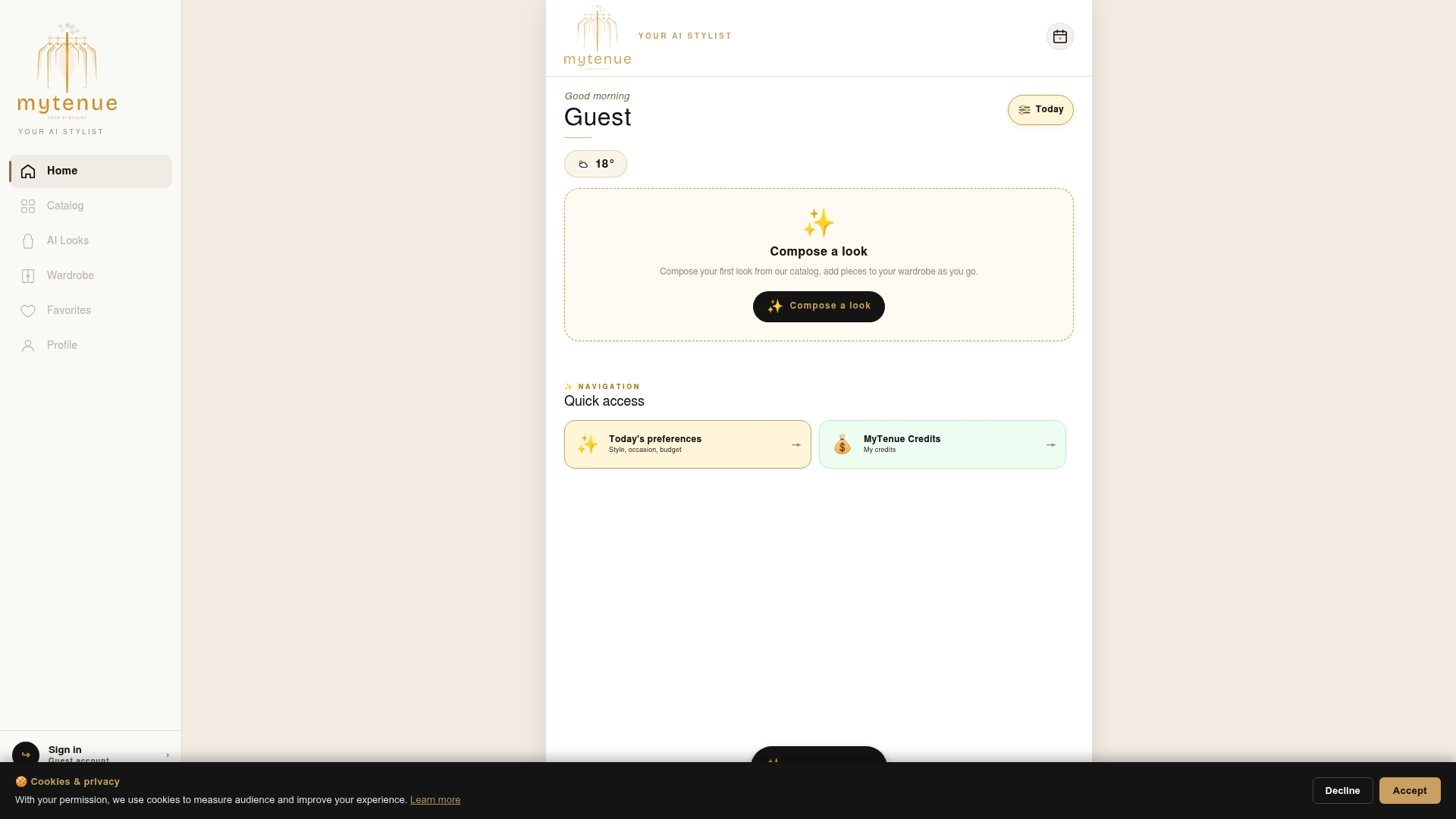
The cost-per-wear tracker and wardrobe calendar help you plan ahead, spot gaps before they become impulse purchases, and see exactly which pieces are earning their keep. Mytenue's freemium tier gets you started at no cost, with premium tiers available for full AI outfit curation, virtual try-on with your personal avatar, and editorial flat-lay images. It's the practical next step for anyone who wants to put the layering system to work without doing the math manually every morning.
Useful sources
- Average U.S. household apparel spend — SoFi
- Cost-per-wear and fashion math — Emma Irene Cavanagh
- Layering as a styling multiplier — Jenn Hallak
- Base-mid-outer framework — REI Expert Advice
- Mytenue wardrobe digitization and outfit planning