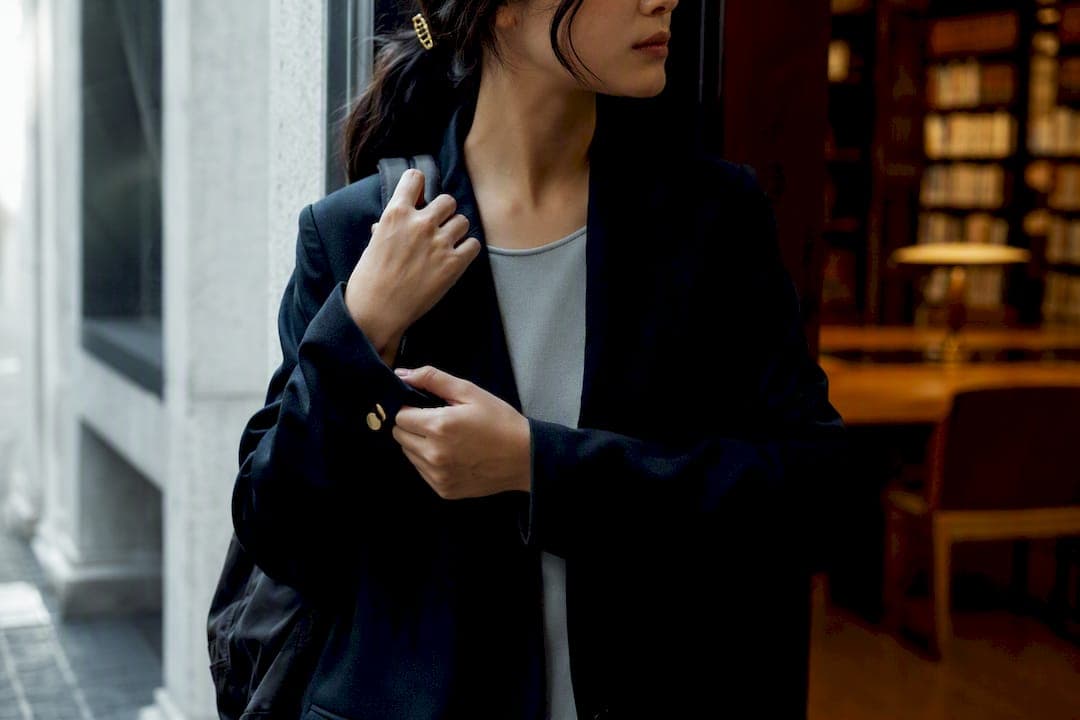
Your best bet for class today: well-cut jeans, a basic tee, neutral sneakers, and a lightweight jacket. That's it. Comfort comes first, then you add one elevated piece (a blazer, a structured overshirt) to keep things polished. Save the business-casual swap, like trading sneakers for loafers, for presentations or interviews.
TL;DR:
- Well-fitted jeans, basic tees, and a lightweight jacket are key staples, but an elevated piece like a blazer transforms simple outfits into intentional looks.
- Layering with a breathable base, an insulator mid-layer, and a removable outer layer ensures comfort in unpredictable campus buildings and weather.
- Shoes and bags should prioritize function, with sneakers, weatherproof boots, and backpacks that fit your tech and essentials, avoiding excess style fuss.
- A capsule wardrobe of ten carefully chosen pieces can generate over 30 outfits, reducing decision fatigue and simplifying daily dressing.
- Dressing for presentations and formal events calls for swapping sneakers for loafers, adding blazers, and ensuring garments are tidy and accessories minimal.
Table of Contents
- What Makes a Great Tenue Cours Université?
- Five Ready-Made Campus Outfit Formulas to Copy
- How Do You Layer for Unpredictable Lecture Halls?
- Which Shoes and Bags Actually Earn Their Spot?
- How to Build a 10-Piece Student Capsule Wardrobe
- What Should You Wear for Presentations and Interviews?
- Ahmed's Practical Styling Notes for Students
- What This Article's Research Actually Supports
- Try Mytenue for Faster, Smarter Outfit Planning
- Sources
What Makes a Great Tenue Cours Université?
A solid tenue cours université comes down to three things: comfort you can sit through a three-hour lecture in, pieces that mix without effort, and one item that signals you put in five minutes of thought. That's the whole formula. University class attire doesn't need to be complicated, and the students who look effortlessly put-together aren't spending more time getting dressed. They're just working from a smarter base.
Here's what actually earns a spot in a functional student wardrobe:
- Well-fitted jeans — straight or slightly tapered, they anchor almost every outfit and hide wrinkles better than trousers.
- Basic tees in 2 to 3 colors — white, black, and a neutral like sage or oatmeal cover 90% of your combinations.
- An overshirt or blouse — throw it open over a tee for instant structure, or button it up for a cleaner look.
- A sweatshirt or hoodie — for the days you have three back-to-back classes and zero patience for anything fitted.
- A lightweight jacket — denim, bomber, or a light trench, something that survives being stuffed in a locker.
- Neutral sneakers — white or off-white goes with everything and doesn't scream "gym."
- A functional tote or backpack — more on this later, because bag choice matters more than people think.
Stick to cotton, modal, or jersey blends. They stretch, breathe, and survive being balled up in your bag between classes without looking destroyed. A quick tip: hang knits instead of folding them to avoid stretched-out collars, and wash jeans inside out on cold to keep the color from fading fast.
Once those basics are covered, pick one elevated item, a blazer or a satin blouse, and treat it as your wildcard. Quality basics that hold their shape longer make a bigger visual difference than a closet full of cheaper pieces, and that one polished piece is what turns a t-shirt-and-jeans combo into something that looks intentional.
Five Ready-Made Campus Outfit Formulas to Copy
You don't need to reinvent your look every morning. These five formulas cover almost every scenario a semester throws at you, and each one flexes for weather or occasion with a single swap.
- The everyday uniform. T-shirt, straight jeans, sneakers, overshirt worn open. This is your default, the outfit you build every other look from. Cold-day variant: swap the overshirt for a wool-blend coat. Accessory swap: a canvas belt bag instead of a tote for a sportier edge.
- The comfort-first study day. Hoodie or sweatshirt, straight-leg jeans, chunky sneakers. Built for library marathons and back-to-back seminars where you want to disappear into fleece. Warm-weather variant: swap the hoodie for a lightweight zip-up. Accessory swap: add a crossbody bag to keep your hoodie pockets free.
- The presentation-friendly look. A blouse or structured shirt, tailored trousers, loafers. This is the formula that reads as effort without reading as costume. Cold variant: layer a fine-knit vest underneath. Accessory swap: a slim watch instead of anything sporty.
- The one-piece win. Midi dress, cardigan, white sneakers. Zero decision-making required, and it photographs better than most outfits you'll assemble from separates. Cold variant: add opaque tights and ankle boots. Accessory swap: a delicate necklace to dress it up for a seminar presentation.
- The sporty study session. Leggings, oversized tee, bomber jacket. This one is built for days you're moving between the gym, the library, and a 9 a.m. class. Warm variant: drop the bomber for a cropped denim jacket. Accessory swap: a baseball cap if you skipped washing your hair.
Pro Tip: Keep one "elevated" accessory, gold hoops, a silk scarf, a structured watch, in your bag at all times. It turns any of these five formulas into something presentation-ready in under 60 seconds.
For more combinations built the same way, browse these smart casual outfit combinations for ideas you can adapt to your own closet.
How Do You Layer for Unpredictable Lecture Halls?
Layering is the single most useful skill for campus dressing, full stop. Buildings run either freezing from air conditioning or stifling from bad heating, and you rarely know which until you're already sitting in a 90-minute lecture. The fix is a three-part sequence: a breathable base layer, an insulating mid-layer, and a removable outer layer you can strip off and stuff in your bag.
- Base layer: a fitted tee or thin long-sleeve that won't bunch under anything else (for tips on integrating fitted basics into your outfits, see how to style bodysuit lingerie as outerwear).
- Mid layer: a sweater, cardigan, or overshirt that adds warmth without adding bulk.
- Outer layer: a jacket or coat you can shed the second the room heats up.
On hot days, drop the mid-layer entirely and stick to breathable cotton or linen cuts that don't cling. On cold days, add a second mid-layer (think a thin merino sweater under a bulkier one) rather than one thick piece, since it's easier to regulate temperature by removing a layer than by sweating through a single heavy sweater. This approach also solves the classic wardrobe-regret problem: you never show up either overdressed or freezing, because you built in the flexibility from the start. For a deeper breakdown of pieces that carry across seasons, check this wardrobe essentials for every season guide.
Which Shoes and Bags Actually Earn Their Spot?
Shoes and bags do more heavy lifting than any other part of your outfit, mostly because you're wearing and carrying them for eight hours straight.
For footwear, prioritize based on your day: clean white sneakers for standard classes, ankle boots when the forecast turns and you need something more weatherproof, and flats for the rare day you're dressing up without going full heels. Rotate between at least two pairs so nothing gets destroyed by daily wear.
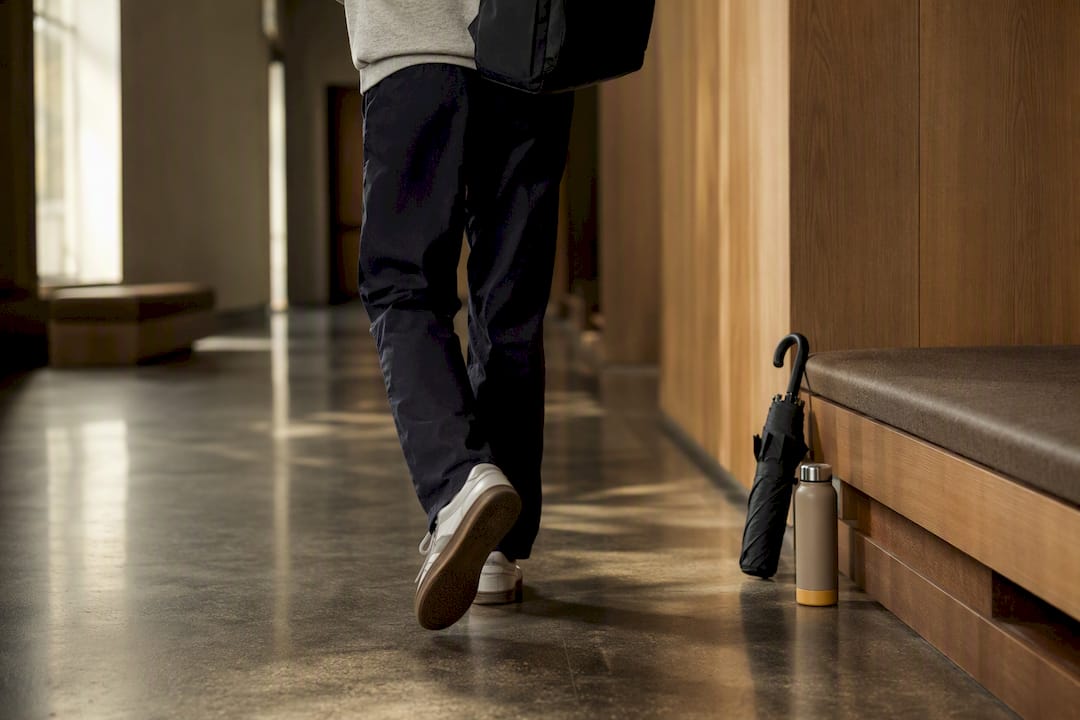
Your bag matters just as much. Look for a laptop compartment that actually fits your laptop, straps that distribute weight evenly across your shoulders, and enough capacity for notebooks, chargers, and whatever snack emergency you're planning for. A tote works well for lighter days; an ergonomic backpack is the better call when you're hauling textbooks or walking long distances between buildings.
Small accessories round things out without adding effort: a simple watch, a thin gold or silver necklace, or a scarf you can knot around your bag strap instead of your neck. None of these require thought each morning, but they're what separates "thrown together" from "put together."
How to Build a 10-Piece Student Capsule Wardrobe
A capsule wardrobe isn't about owning less for the sake of it. It's about owning the right ten pieces so you stop standing in front of your closet every morning.
- 3 tops: one basic tee, one blouse or structured shirt, one sweatshirt.
- 2 bottoms: one pair of jeans, one pair of tailored trousers.
- 1 dress: a midi dress that works alone or layered under a cardigan.
- 1 jacket: something weather-appropriate and neutral enough to match everything.
- 2 pairs of shoes: sneakers for daily wear, loafers or boots for polish.
- 1 bag: a tote or backpack you'll actually use every day.
Mixed correctly, these ten pieces generate more than 30 distinct outfit combinations across a semester. Organize your closet into "zones," casual, polished, cold-weather, so you can grab a full look without digging through unrelated pieces. For a step-by-step breakdown of how to build this out, this guide on a minimal wardrobe for students walks through the exact process.
What Should You Wear for Presentations and Interviews?
Most classes call for nothing more than smart-casual, but the moment you're presenting, interviewing, or attending a formal campus event, the rules shift. University dress expectations vary heavily by faculty and occasion, and career-oriented events generally call for more polished or business-casual attire than a typical Tuesday lecture.
The fastest way to upgrade any capsule outfit:
- Swap sneakers for loafers or clean flats.
- Add a blazer over your existing tee or blouse.
- Trade jeans for tailored trousers if you have five extra minutes.
Beyond clothing, grooming cues do a lot of the work: pressed (not wrinkled) fabric, tidy hair, minimal jewelry. Even one of your capsule pieces, that midi dress or structured shirt, can become presentation-ready with just the blazer swap. For internship-specific guidance, this piece on affordable internship outfits covers budget-friendly ways to look the part without buying a new wardrobe.
Ahmed's Practical Styling Notes for Students
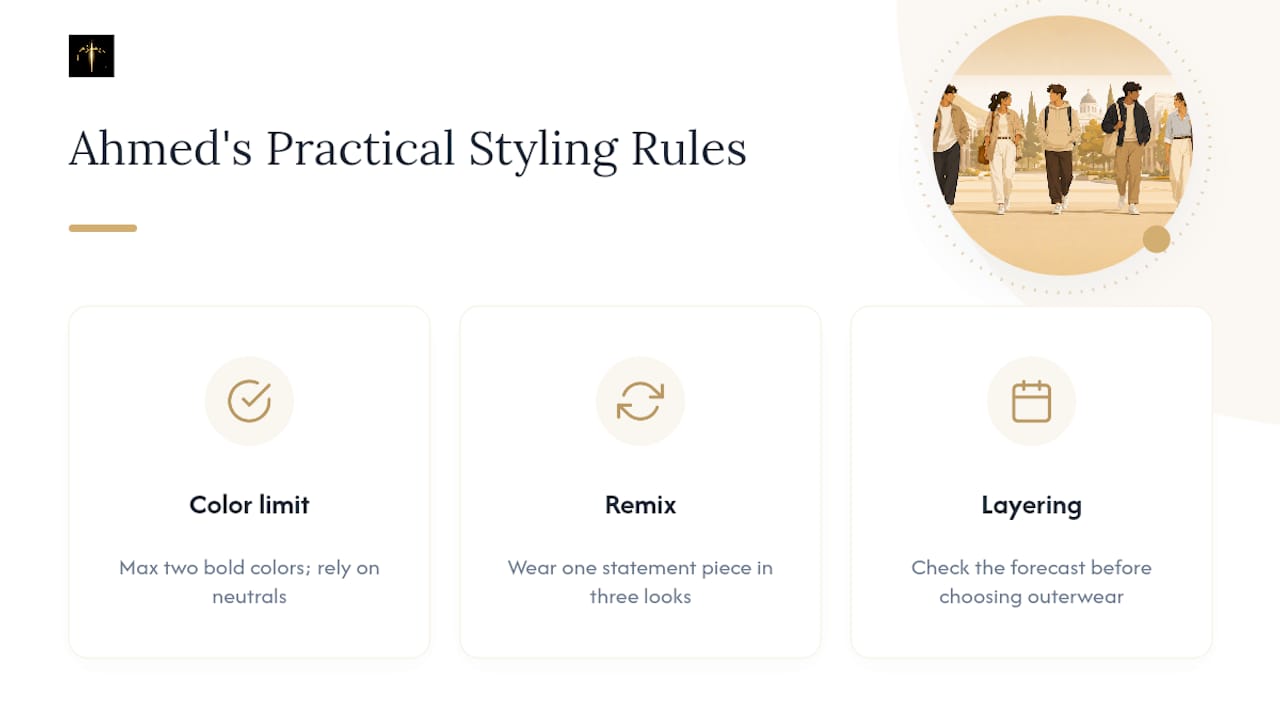
Three rules that change everything: pair no more than two bold colors per outfit (let neutrals do the rest of the work), remix one statement piece across three different looks before buying anything new, and always check the forecast before committing to an outer layer. That last one sounds obvious until you're stuck carrying a coat you never needed.
Wardrobe digitization tools, like the kind Mytenue builds around, help here because they let you see every piece you own laid out at once, instead of relying on memory. Weather-aware outfit suggestions solve the layering guesswork entirely, and an outfit calendar means you're not rebuying items you forgot you already had.
On sustainability: buy fewer pieces, but buy ones you'll actually remix. Secondhand shops are underrated for structured shirts and blazers specifically, since those pieces are built to outlast fast-fashion trends anyway.
What This Article's Research Actually Supports
Most style advice for students overcomplicates a genuinely simple problem. The research here points to one conclusion: outfit quality on campus comes from having a few reliable pieces, not a large closet. Students who struggle with getting dressed usually own too much, not too little, and end up decision-paralyzed by options that don't actually combine well.
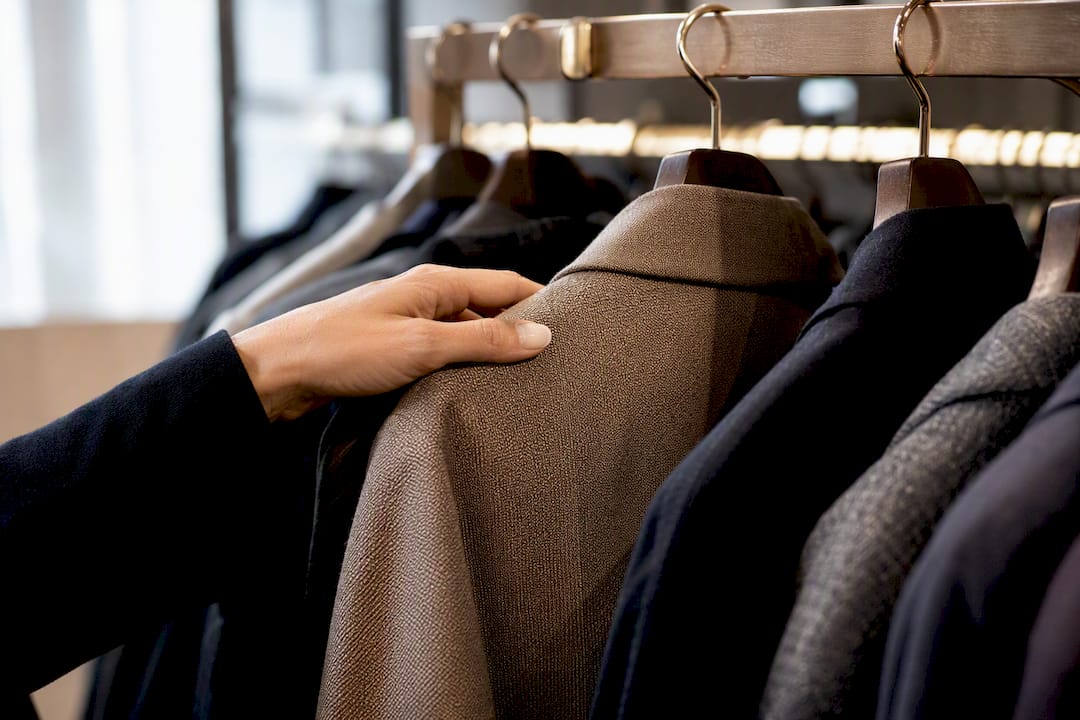
The conventional wisdom to be skeptical of is the "invest in trends" advice pushed by a lot of style content. Trend pieces age out fast and rarely remix. What holds up, based on everything covered here, is the boring stuff: good jeans, a couple of neutral basics, one blazer. Prioritize that before anything else. Then, once the basics are locked in, spend your energy on the one elevated piece that makes the whole rotation look considered rather than thrown together.
— Ahmed
Try Mytenue for Faster, Smarter Outfit Planning
This app digitizes your wardrobe so you can see every piece you own in one place, then builds outfit suggestions based on your actual clothes, the weather, and whatever you've got planned that day.
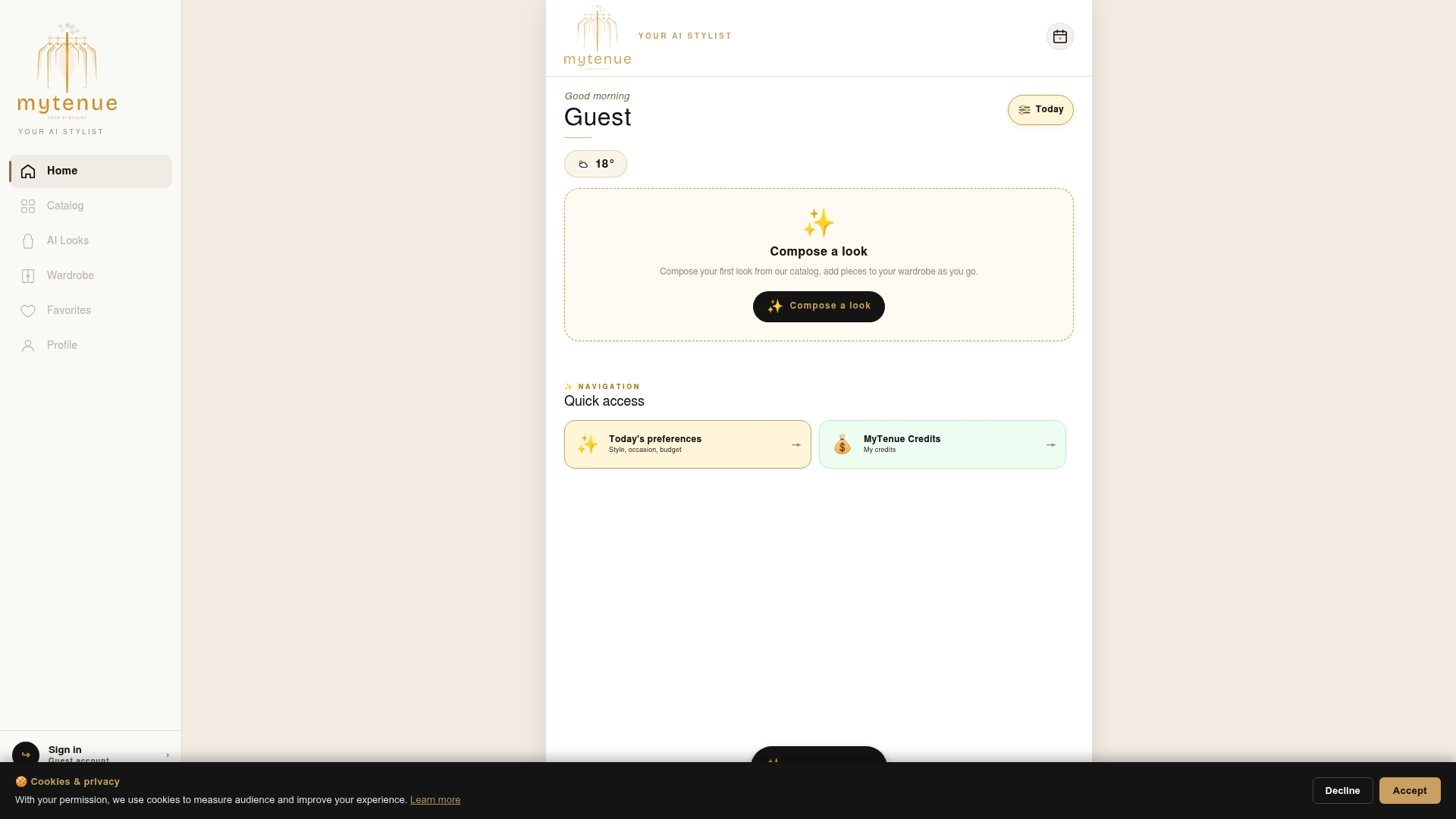
Students juggling early lectures and late study sessions save real time by letting the outfit calendar handle repetitive decisions instead of rebuilding the same five looks from memory each week. If the ten-piece capsule above sounds good in theory but tedious to organize on your own, a wardrobe app can help with this. For more low-effort dressing strategies built the same way, check out low-effort stylish everyday dressing, or head to Mytenue to start building your digital wardrobe today.
Sources
- 5 Tenues Confortables et Stylées pour Aller en Cours (Sans Effort) - Salon Caroline Coiffure
- Is There a University Dress Code? What to Wear to Class in the US - Shorelight