
A stylish tenue froide comes down to one repeatable formula: a moisture-managing base layer, an insulating mid layer, and a protective outer layer. Stack those three pieces correctly and you stay warm without looking bundled. Add a capsule wardrobe and the 3-3-3 method, and mornings stop being a guessing game. An experienced stylist has built entire outfit formulas around this exact structure for readers who want warmth and style from clothes they already own.
TL;DR:
- The three-layer system for winter dressing includes a moisture-wicking base, an insulator, and a wind- or water-resistant outer layer, each suited for specific conditions.
- Avoid bulk by pairing fitted and loose pieces creatively, using contrast and defining details like belts or tucking to create intentional layered looks.
- A winter capsule wardrobe typically contains 20 to 30 core pieces, with the 3-3-3 method enabling dozens of outfits from just nine key items weekly.
- Waterproof shells and moisture-wicking socks are crucial for staying warm and dry in wet cold, while cotton should be avoided entirely in damp environments.
- Down insulation provides excellent warmth when dry but becomes ineffective when wet, whereas synthetic fills perform better in rainy or snowy conditions.
Table of Contents
- What Is the Three-Layer System for Staying Warm?
- How Do You Layer Without Looking Bulky?
- How Many Pieces Do You Actually Need for Winter?
- What Should You Wear at Each Temperature Range?
- Which Accessories Make the Biggest Difference?
- Down or Synthetic: Which Outerwear Fill Actually Works?
- How Do You Keep Winter Clothes Working All Season?
- How Should You Adjust Your Outfit for Different Activities?
- How Do You Stay Dry and Warm in Wet Cold?
- What Are the Warning Signs You're Dressed Wrong for the Cold?
- Why Outfit Formulas Beat Buying More Clothes
- Let MyTenue Build Your Cold-Weather Outfits for You
- Sources
- FAQ
What Is the Three-Layer System for Staying Warm?
The base, mid, and outer layer each do a distinct job, and skipping one usually means either shivering or overheating in an elevator. The standard rule for cold weather dressing is a moisture wicking base layer, an insulating mid layer, and a protective outer layer, which lets you regulate temperature by adding or removing pieces as the day's conditions change.
Your base layer sits against skin and its only job is managing moisture, not bulk. Merino wool, silk, and thermal blends work better than cotton, which holds sweat and turns cold fast.
Your mid layer traps warm air. Cashmere sweaters, wool cardigans, and quilted vests all work, but weight matters more than thickness. A fine-gauge merino sweater under a coat often insulates better than a chunky knit that fights the outer layer for space.
Your outer layer blocks wind and wet. Pick based on conditions:
- Wool coat: best for dry cold and office days, polished but not waterproof
- Puffer jacket: best for wind and deep cold, especially down or synthetic fill
- Trench or shell: best for rain-prone cold above freezing
If you're sweating on public transit, your mid layer is too heavy for the trip; swap a sweater for a lighter knit and keep the coat as your buffer.
How Do You Layer Without Looking Bulky?
Bulk usually comes from stacking similar volumes, not from wearing too many layers. Fashion editors describe cold-weather dressing as three tiers that should mix textures and lengths rather than repeat the same silhouette twice, which is what actually keeps a stack of clothing looking like an outfit instead of padding.
The fix is contrast: fitted base with a looser mid layer, or a slim mid layer under a roomy coat. Never let two loose pieces sit next to each other.
- Pair a fitted turtleneck with an oversized cardigan, not two oversized pieces stacked
- Use a cropped sweater over a longer button-down to create visible layers at the hem
- Try a half-tuck on your base layer to break up a straight silhouette
- Roll mid-layer sleeves back if a coat sleeve makes the arm look overstuffed
- Cinch a belt over a cardigan or coat to reintroduce a waistline
Styling experts recommend using one point of definition, like a belt or a tucked hem, so a heavy layered look reads intentional instead of accidental, a principle that applies just as well to natural fiber choices as it does to silhouette.
Pro Tip: Mix a structured piece with something soft, like a leather jacket over a knit sweater, so the eye reads two distinct layers instead of one shapeless mass.
For more on pairing textures and prints without clashing, A style guide on matching colors and patterns covers the same proportion logic in more detail.
How Many Pieces Do You Actually Need for Winter?
A functional winter capsule runs 20 to 30 core pieces, small enough to know every combination without thinking about it. That range covers 2 to 3 coats, several sweaters in different weights, a handful of bottoms, and layering basics like turtlenecks and thermal tops, based on capsule wardrobe frameworks built specifically for cold-weather dressing.
The 3-3-3 method turns that capsule into a weekly system:
- Pick 3 tops that work as base or mid layers for the week ahead.
- Pick 3 bottoms that pair with all 3 tops without exception.
- Pick 3 pairs of shoes suited to that week's weather and activities.
That combination alone produces dozens of usable outfits from nine items, which is the entire point. You're not buying more clothes, you're rotating what already works.
Plan the week on Sunday against the forecast: cold and dry gets the wool coat rotation, wet and windy gets the puffer and boots rotation. MyTenue's capsule wardrobe guide breaks this down further if you want a seasonal starting list.
What Should You Wear at Each Temperature Range?
Temperature bands change the math on layering, not just the number of pieces. Here are ten formulas built from common wardrobe items, organized from mild to genuinely cold.
10°C to 5°C (mild cold):
- Silk came base, oversized wool cardigan, straight trousers, loafers, and a light scarf. Keep the cardigan open to avoid overheating indoors.
- Fitted long-sleeve tee, denim jacket, wide-leg jeans, sneakers, and a beanie. Cuff the jeans to balance the jacket's boxiness.
- Turtleneck, blazer, midi skirt, ankle boots, and a cross-body bag. The turtleneck's slim fit keeps the blazer from reading oversized.
- Cotton shirt, cropped sweater vest, tailored pants, and loafers. This layers without a jacket at all on drier days.
5°C to 0°C (cold):
- Merino base layer, chunky knit sweater, wool coat, jeans, and lined boots. This is the workhorse combination for most winter commutes.
- Thermal top, quilted vest, trench coat, corduroy pants, and sneakers with wool socks. The vest adds warmth without stealing sleeve room from the trench.
- Long-sleeve base, cashmere sweater, long tailored coat, tailored trousers, and leather boots. Fashion coverage consistently points to a long coat as the outer piece that pulls a layered look together while keeping a clean silhouette.
- Silk blouse, wool blazer, puffer vest over the top, straight-leg pants, and boots. Three visible layers, none of them bulky on their own.
Below 0°C (very cold):
- Thermal base top and bottom, heavy wool sweater, insulated down coat, thermal-lined pants, and waterproof insulated boots.
- Merino base layer, fleece mid layer, technical puffer with a hood, wind-resistant pants, and snow boots with wool socks.
For six more formulas built around one specific band, a guide to six outfits at 10 degrees shows how a single three-layer structure stretches across a whole week without repeating the same look twice.
Which Accessories Make the Biggest Difference?
Accessories close the gaps a coat can't cover, and they usually matter more than people expect. Hats, gloves, and socks lose the most heat first because extremities and the head have less insulating fat and muscle than the torso.
- A wool or cashmere scarf traps heat at the neck, one of the fastest places body heat escapes
- Lined leather or wool gloves keep hands functional in true cold, unlike thin fashion gloves
- Thermal or merino wool socks matter more than boot thickness for keeping feet warm
- Insulated, waterproof boots protect against both cold and wet, which is what actually causes numb feet
- A hat that covers the ears traps more heat than a beanie that sits above them; for tips on protecting your hair and styling under winter hats, see jak dbać o włosy zimą – praktyczne porady na mroźne dni.
Stack a thin neck buff under a scarf on the coldest days for double insulation without extra bulk around the shoulders. If your boots or gloves aren't waterproof, a spray-on treatment reapplied each season keeps them functional through slush and rain.
Wool and cashmere accessories need gentle hand washing or dry cleaning; machine washing flattens the fibers that trap heat in the first place. A hat that's been through a hot dryer loses loft the same way a sweater does, and that loft is most of what keeps your head warm.
Down or Synthetic: Which Outerwear Fill Actually Works?
Insulation type matters more than brand or price point once temperatures drop below freezing. Down fill, made from goose or duck feathers, offers the best warmth-to-weight ratio of any common insulation, which is why it dominates serious winter coats and packable jackets alike.
Down has one real weakness: it loses almost all insulating power when wet, since the feathers clump instead of trapping air. That makes it a poor choice for wet climates unless the shell is treated with a water-resistant finish.
Synthetic insulation, usually polyester fibers designed to mimic down's structure, keeps insulating even when damp and dries faster. It's heavier and less compressible than down for the same warmth, but it's the more reliable choice for commuters walking through rain or snow rather than skiing in dry powder.
For a wool coat, weight and weave density matter more than any fill rating. A heavier wool with a tight weave blocks wind far better than a lightweight wool blend, even if both look similar on a hanger. If you live somewhere genuinely cold and wet, a down or synthetic-filled coat with a waterproof shell will outperform even a good wool coat for daily wear. Save the wool coat for dry cold days when you want the sharper silhouette.
How Do You Keep Winter Clothes Working All Season?
Insulation degrades with poor care long before the fabric itself wears out. Down coats lose loft when compressed for storage or washed incorrectly, and wool sweaters stretch out of shape when hung instead of folded.
Wash down jackets only with a down-specific detergent and dry them on low heat with clean tennis balls to redistribute the feathers and restore loft. Never dry-clean down unless the care label specifically allows it, since dry-cleaning chemicals strip the natural oils that keep feathers water-resistant.
Fold sweaters and knits instead of hanging them; a hanger stretches shoulders and necklines over a season of use. Store cashmere and wool with cedar blocks or lavender sachets rather than mothballs, which leave a smell that lingers for weeks.
Brush wool coats after each wear to lift dirt before it embeds in the fibers, and spot-clean rather than washing a full coat unless the care label says otherwise. Reproof waterproof shells once a season with a spray-on treatment once water stops beading on the surface, a sign the factory coating has worn off.
How Should You Adjust Your Outfit for Different Activities?
A commuting outfit and an outdoor activity outfit solve different problems, even at the same temperature. Commuting means moving between heated indoor spaces and cold outdoor stretches, so your outfit needs to come apart in layers as easily as it goes together.
For commuting, favor a coat you can remove entirely once inside, paired with a mid layer light enough to work on its own at a desk. A puffer vest under a coat works well here since it can stay on indoors without overheating you the way a full sweater would.
For outdoor sports or long walks, sustained movement changes the equation. You generate more body heat, so a slightly lighter mid layer than you'd wear standing still usually works better, paired with a wind-resistant or waterproof outer shell rather than a wool coat that traps moisture.
For standing outdoors, like watching a game or waiting for transit, add more insulation than you'd wear while moving. This is where a heavier mid layer and insulated boots matter most, since you don't have movement generating extra warmth.
How Do You Stay Dry and Warm in Wet Cold?
Wet cold is more dangerous to comfort than dry cold at the same temperature, because moisture pulls heat away from skin far faster than air does. That's why a waterproof or water-resistant outer shell matters as much as insulation once rain or snow enters the picture.
Check that your coat's shell fabric is genuinely waterproof, not just water-resistant. Water-resistant fabrics bead water briefly but soak through in sustained rain, while waterproof shells use a sealed membrane or coating that holds up longer.
Feet and hands need the same attention. Waterproof boots with a sealed sole, paired with wool or synthetic socks that wick moisture rather than holding it, prevent the slow chill that comes from damp feet in cold weather. Lined leather gloves with a water-resistant treatment do the same job for hands.
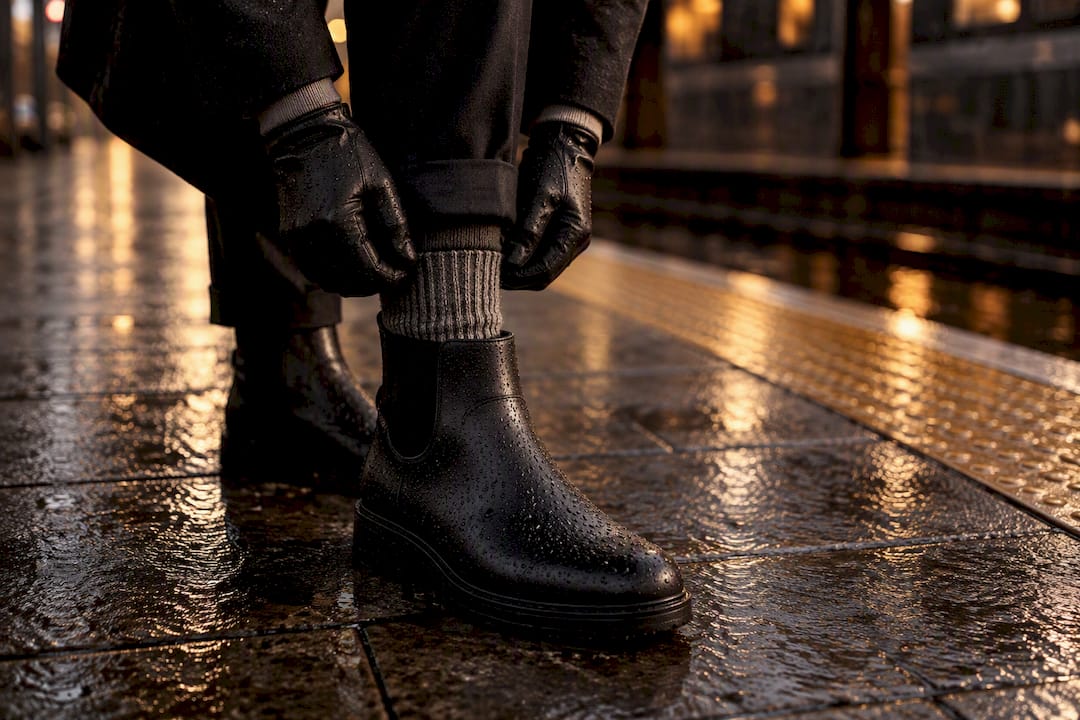
Avoid cotton entirely in wet cold. It absorbs water, holds it against skin, and stops insulating almost immediately once damp, which is the opposite of what you want in a base or mid layer during snow or rain.
What Are the Warning Signs You're Dressed Wrong for the Cold?
Persistent shivering that doesn't stop after a few minutes indoors is the first sign your layers aren't doing their job. Numbness in fingers, toes, or the face signals reduced blood flow to extremities, a sign to get warm immediately rather than push through.
Confusion, slurred speech, or unusual clumsiness are warning signs of hypothermia and require immediate medical attention, not more layers. These symptoms mean core body temperature has already dropped to a dangerous level.
Visibility matters too, especially for commuters walking or cycling in early darkness during winter months. Choose an outer layer with lighter colors or reflective details when you're outside near traffic in low light, since dark wool coats and black puffers disappear against evening streets.
If you're layering for extended time outdoors rather than a short commute, always have a backup layer you can add if temperatures drop faster than forecast. A packable extra layer folded into a bag costs nothing in comfort and prevents the slow decline from mild cold into a genuine risk.
Why Outfit Formulas Beat Buying More Clothes
Many people respond to cold weather by shopping, when the better move is building formulas from what's already hanging in the closet. Some outfit guides, including four layered outfits built for extreme cold and formulas designed around a single ten-degree range, advocate this approach.
The math favors formulas over purchases. A 20-piece capsule run through the 3-3-3 method produces dozens of combinations, none of which require buying new clothes. That's sustainability in the practical sense, not the marketing sense: fewer items, more outfits, less waste.
The gap between knowing the three-layer rule and actually using it every morning is where most people fall short. Formulas close that gap because they remove the decision entirely.
— Ahmed
Let MyTenue Build Your Cold-Weather Outfits for You
A wardrobe-digitizing app can generate three-layer outfit recommendations pulled from pieces you already own, matched to the day's actual weather rather than a generic forecast.

An AI feature checks color, fabric, and occasion compatibility automatically, providing fitted-base-loose-mid balance without manual calculation. There are free and paid plans offering features like virtual try-on and premium catalog access, so you can preview looks before committing.
If mornings are where the three-layer system falls apart for you, that's exactly the problem MyTenue was built to solve. Try the app and let it build tomorrow's cold-weather outfit tonight.
Sources
- How to layer clothes for cold weather — Today
- Nine
- How to layer clothes for cold weather — InStyle
- How to dress in cold weather — The Guardian
FAQ
What Is the Best Formula for a Tenue Froid?
The most reliable formula is three layers: a moisture-wicking base, an insulating mid layer like wool or cashmere, and a protective outer layer such as a coat or puffer. This structure lets you add or remove pieces as temperature or indoor heating changes through the day.
How Do I Layer Clothes Without Looking Bulky?
Pair a fitted piece with a looser one instead of stacking two loose layers together, and add one point of definition like a belt or a tucked hem. Mixing textures and lengths, such as a cropped sweater over a longer shirt, also keeps a layered look reading as intentional rather than padded.
What Is the 3-3-3 Method for Winter Dressing?
The 3-3-3 method means picking 3 tops, 3 bottoms, and 3 pairs of shoes for the week that all work together, which produces dozens of outfit combinations from just nine pieces. It's a practical way to shrink a 20 to 30 piece capsule wardrobe into fast daily decisions.
Does MyTenue Help With Cold-Weather Outfit Planning?
Yes. MyTenue generates outfit recommendations directly from your digitized wardrobe, adapts suggestions to the day's weather, and checks color and fabric compatibility so layered looks come together automatically. The Free plan is available now, with Basic, Premium, and Gold tiers adding features like virtual try-on on the MyTenue app.
Is Down or Synthetic Insulation Better for Cold Weather?
Down offers better warmth for its weight but loses most of its insulating power when wet, making it better suited to dry cold. Synthetic insulation keeps working even when damp, so it's the more practical choice for rainy or snowy commutes.