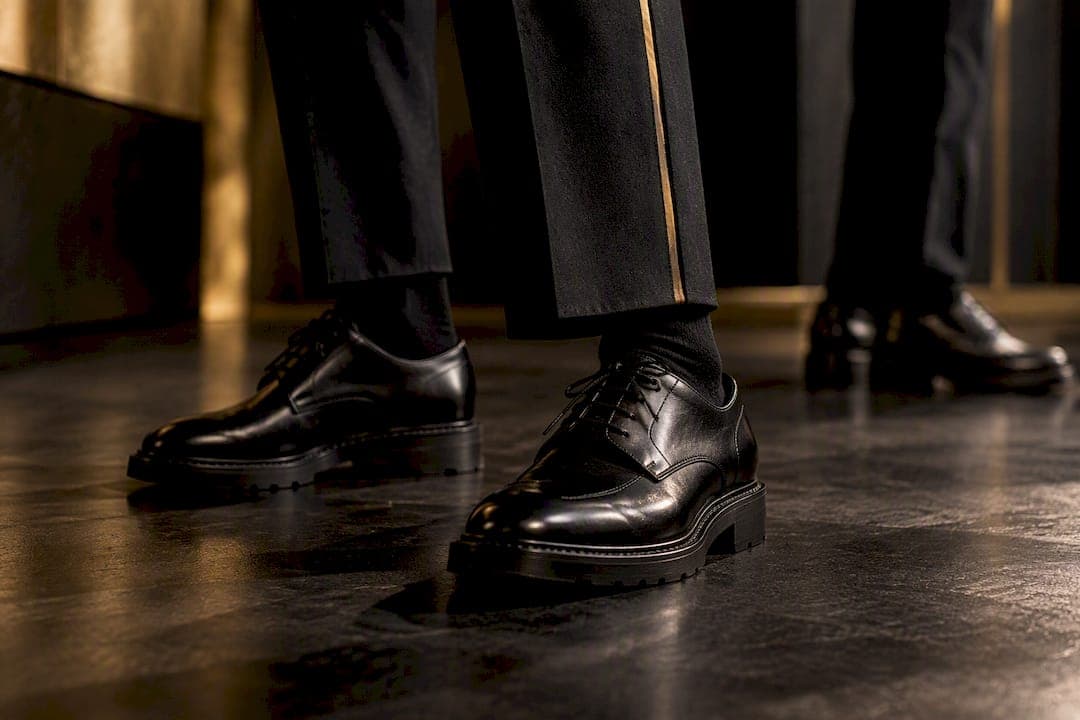
Match formality first, color second. Pick a shoe as dressy (or as casual) as your pants, then decide whether to go tone-on-tone for a longer leg line or contrast for a focal point. Mytenue's AI stylist and this guide from Ahmed cover the rest, from denim to dress trousers.
TL;DR:
- Choosing shoes that match the formality of your pants is essential, as no amount of color coordination can override a mismatch in dressiness.
- Dark wash jeans pair best with structured leather shoes like Chelsea boots, while light wash or distressed jeans suit suede sneakers or chukkas.
- Socks should generally match the color of your pants to elongate the leg line, with patterned socks reserved for deliberate style breaks.
- Proper hem length is crucial; hems should show a clean break or a sliver of sock to avoid-looking sloppy or unbalanced.
- An AI stylist can automate outfit pairing by analyzing your wardrobe's formality, color, and fabric weight, improving daily dressing decisions.
Table of Contents
- What Are the Quick Rules for Matching Shoes and Pants?
- How Do You Pair Shoes With Different Pant Styles?
- What's the Right Way to Color-Match Shoes and Pants?
- Why Do Some Outfits Look Off Even When the Colors Match?
- What Outfit Formulas Work for Different Occasions?
- Why Balance Beats Boldness in Everyday Outfits
- Test These Pairing Rules in Minutes, Not Hours
- Sources
- FAQ
What Are the Quick Rules for Matching Shoes and Pants?
Four checks decide whether an outfit reads as put-together or mismatched, and you can run through all of them in about ten seconds.
- Formality: dress trousers call for polished leather; denim and cotton pants call for sneakers, loafers, or boots.
- Color: tone-on-tone (navy pants, navy-ish shoes) visually lengthens the leg, while a deliberate contrast, like cognac loafers under gray trousers, gives the eye somewhere to land.
- Weight: heavy fabrics need shoes with real presence. A raw denim jean drowns a delicate loafer, but it holds up fine against a chunky derby or boot.
- Finishing: get the pant break right, coordinate socks to the pant rather than the shoe, and keep the belt leather close to the shoe leather in both color and finish.
None of these rules outrank each other except the first one. Formality is the gatekeeper. If a shoe is too dressy or too casual for the pant, no amount of color coordination saves the outfit.
Pro Tip: Stand in front of a mirror and cover everything above the knee. If the shoe and pant look like they belong to two different outfits when isolated like that, they probably are.
How Do You Pair Shoes With Different Pant Styles?
Trouser type does more to dictate shoe choice than color ever will, because fabric and cut set the formality baseline before you even think about hue.
- Dark wash jeans pair naturally with structured leather. A Chelsea boot or a clean derby dresses denim up without fighting its casual DNA.
- Light wash or distressed jeans want something looser. Suede chukkas or white sneakers keep the outfit relaxed instead of forcing a mismatch between rugged denim and formal leather.
- Chinos in navy or khaki are the most forgiving pant on the list. Brown or cognac loafers are the safe, tone-matched route, while a clean white sneaker gives the same trouser a sportier finish.
- Suit trousers in black, navy, or gray belong with black or dark oxblood dress shoes, and the formality of the shoe should match the formality of the trouser every time, not just for weddings and interviews.
- Linen and other summer trousers need lighter footwear. A heavy leather oxford looks wrong under airy linen. Lighter suede loafers or espadrille-style shoes match the season's weight.
- Wide-leg pants can carry a chunkier sole because there's more fabric volume to balance. Slim or tapered legs look best in a sleeker, lower-profile shoe, since a bulky boot under a narrow hem tends to overwhelm the silhouette.
Hem length changes all of this. A wide leg cropped too short exposes too much sock and breaks the proportion the cut was designed for. A slim leg left too long puddles over the shoe and hides the exact detail you picked it for.
What's the Right Way to Color-Match Shoes and Pants?
Tone-on-tone and contrast aren't competing strategies. They're two tools for two different goals.
Going tone-on-tone, navy pants with navy-adjacent shoes, or gray trousers with a gray-toned suede, creates one continuous line down the leg that reads as taller and more streamlined. Contrast does the opposite job on purpose: navy trousers with cognac shoes, or light gray with dark brown, gives the outfit a visual anchor point instead of blending everything together. Neither is more correct; you're choosing whichever effect the outfit needs.
A short reference matrix covers most closets:
- Navy pants: cognac, brown, or black shoes.
- Light gray: brown or tan works well; black can look heavy.
- Mid to dark gray: black, oxblood, or dark brown.
- Tan or khaki: brown, cognac, or white sneakers.
- Olive: brown suede or tan works better than black.
- Black pants: black shoes for formal wear; dark brown for a softer daytime look.
Black tends to stay close to navy, gray, and charcoal in formal settings, while brown and cognac cross over into nearly every casual palette, including tan and olive. Oxblood is the wild card that bridges warm and cool tones, which is why so many stylists treat it as a safe third option when black feels too stark and brown feels too casual. If you're still unsure which undertones you gravitate toward, running a quick color palette check makes the matrix above easier to apply to your actual wardrobe.
Why Do Some Outfits Look Off Even When the Colors Match?
Color rarely breaks an outfit. Proportion and texture do.
A shoe's visual weight needs to match the pant's fabric weight, not just its color. Raw denim, with its thickness and structure, calls for a chunky boot; put a thin, delicate loafer underneath and the whole leg looks unbalanced no matter how well the colors coordinate. Linen works in reverse. A heavy leather sole under airy linen trousers looks like you got dressed for the wrong season.
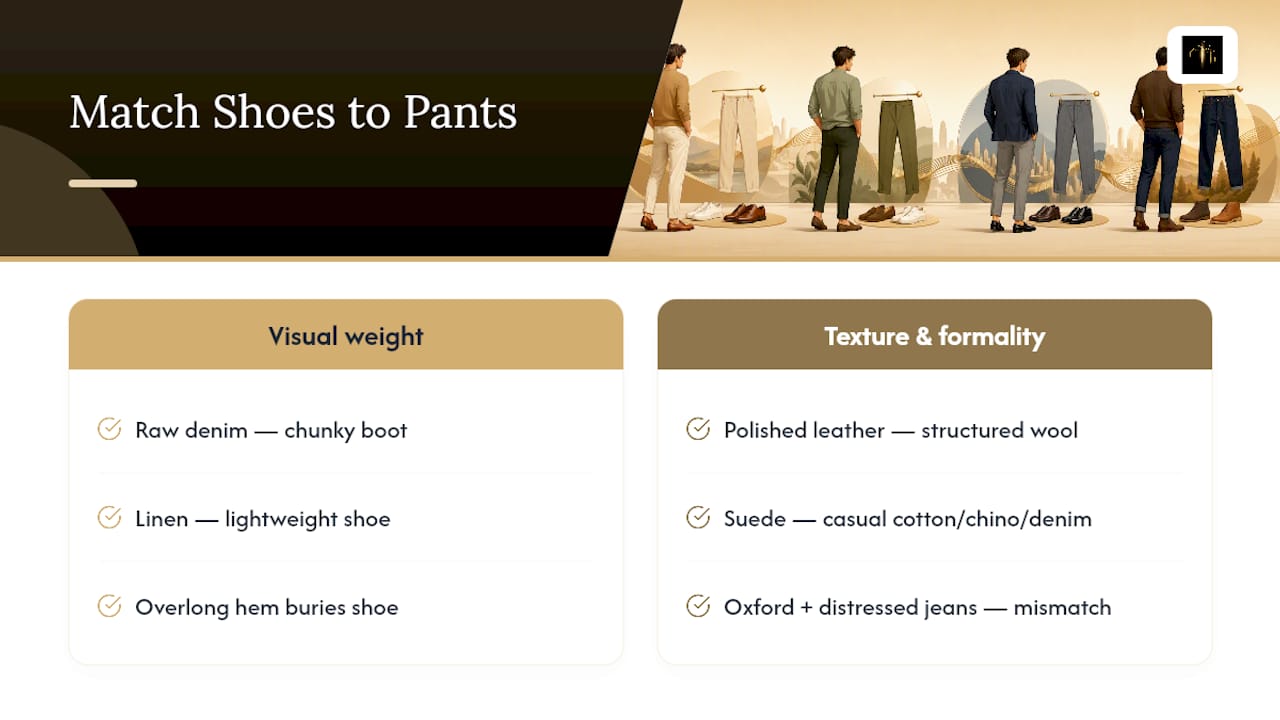
Texture works the same way. Polished, structured leather belongs with structured wool trousers, while suede and other textured leathers sit more comfortably with casual cotton, denim, and chino. Mixing a formal, high-shine oxford with distressed jeans creates the same friction as mixing a sneaker with a tailored suit, just in the opposite direction.
Pant break matters more than most people realize. A clean, modern break, or a slight crop, shows off the shoe and makes the pairing look intentional. An overlong hem that pools over the shoe hides the exact detail you chose it for and tends to read as sloppy rather than relaxed.
Socks finish the job. Matching your socks to your pants rather than your shoes keeps one visual line running from waist to shoe, which lengthens the leg the same way tone-on-tone dressing does. Save patterned or contrasting socks for moments where you want a deliberate break in that line, not as a default.
Pro Tip: If you own one pair of statement shoes you never wear, check your hem length before blaming the shoe. A break that's even a half inch too long can bury a great pair of boots completely.
What Outfit Formulas Work for Different Occasions?
Four formulas cover almost every situation you'll actually get dressed for.
- Casual: dark jeans, clean white sneakers, a simple leather belt. The dark denim keeps things sharp, the white sneaker adds contrast without trying too hard, and the belt just needs to not clash.
- Smart casual: navy chinos, brown loafers, socks that pick up a color already in the outfit. Swap loafers for suede desert boots in cooler weather and the formula still holds. Browse more smart casual combinations if you want ready-made variations on this exact pairing.
- Business casual: tailored trousers, a derby or loafer, socks matched to the pant rather than the shoe, belt leather matched to the shoe. This is the formula most business casual wardrobes are built around.
- Formal evening: suit trousers, black oxfords, a belt and trouser sock in the same dark family as the shoe. Nothing here should introduce contrast; the goal is one unbroken formal line.
Seasonal tweaks are minor but worth remembering: swap in lighter suede or loafers for summer fabrics, and let chunkier boots carry the weight of heavier winter wool and raw denim.
Why Balance Beats Boldness in Everyday Outfits
Most style advice fixates on color, but color is rarely what makes an outfit fail. Proportion does the damage. A perfectly color-matched shoe and pant still look wrong if the shoe is too delicate for the fabric weight above it, or if the hem buries the one detail that was supposed to stand out. Stylists know this, which is why the real conversation is about balance, not boldness.
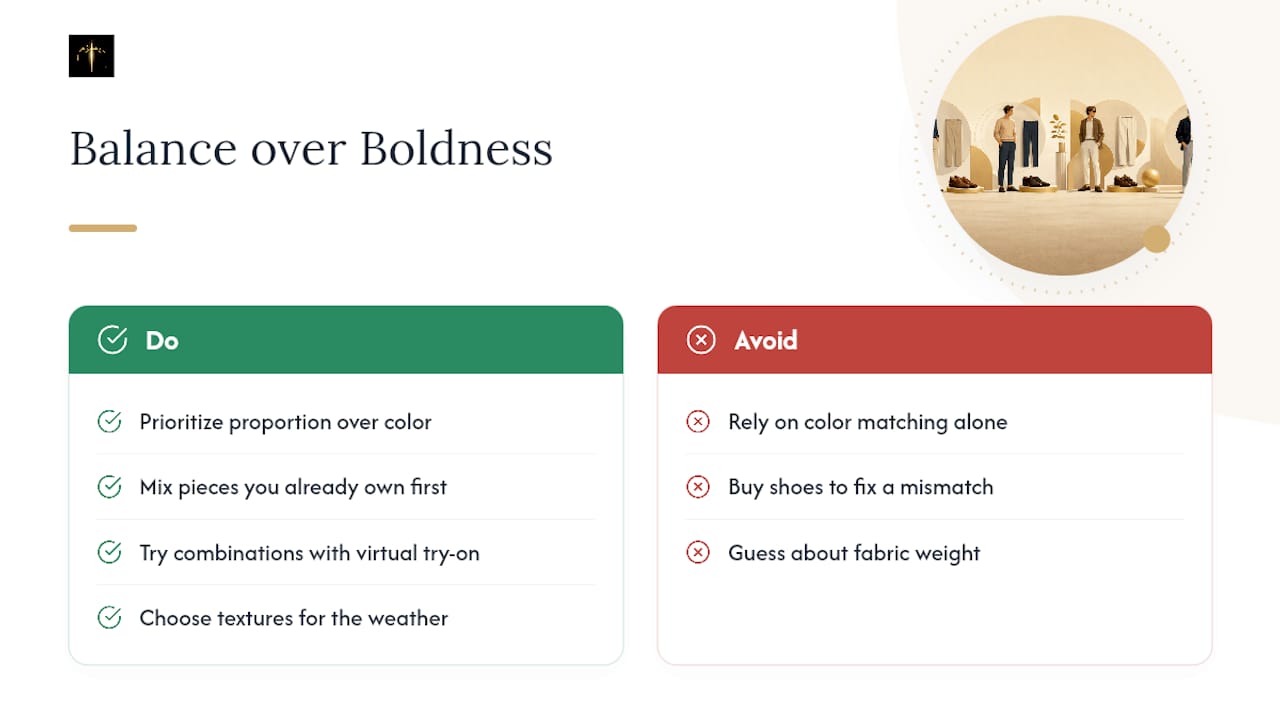
That's also where a tool actually earns its keep instead of just being a novelty. An AI stylist can look at what's already in your wardrobe, generate outfit combinations from those pieces, and show them through a virtual try-on before you commit to anything. Weather-adapted suggestions handle the seasonal texture swap automatically, so you're not guessing whether today calls for suede or leather.
The more useful habit isn't buying new shoes to fix a mismatch. It's mixing what you already own first and testing combinations before adding anything new to the closet.
— Ahmed
Test These Pairing Rules in Minutes, Not Hours
This approach turns everything above into a decision you make in seconds instead of a mental checklist you run every morning. Upload your wardrobe once, and an AI stylist can build outfit combinations from the shoes and pants you already own, checking formality, color, and weight against each other automatically.

Weather-adapted suggestions mean you're not stuck guessing whether today's forecast calls for suede loafers or something heavier, and a virtual try-on can show you the pairing on your avatar before you leave the house. That combination of wardrobe digitization and daily outfit generation is exactly the kind of second opinion this guide has been arguing for: less second-guessing, more outfits built from what's already in your closet. The free tier is the fastest way to see it work on your own wardrobe, with Basic, Premium, and Gold plans available if you want the full catalog and styling credits.
Sources
- Comment assortir chaussures et vêtements sans faute (Interchaussures)
- What Color Shoes to Wear With Any Pants and Suit – SARTORO
- Match Shoes to Pants: The Ultimate Men’s Outfit Guide – Just Men's Shoes
- How To Match Shoes With Pants: Do's, Don'ts, And Style Coordination Guide – FootOnBoot
FAQ
What Shoes Go Best With Beige Pants?
Brown, tan, or cognac shoes work best with beige pants because they stay in the same warm color family. White sneakers are a solid contrast option for a casual look, while black shoes tend to look too stark against beige for most daytime outfits.
What Shoes Should You Wear With Jeans?
Dark wash jeans pair well with structured leather like Chelsea boots or derbies, while light wash or distressed jeans suit suede chukkas or white sneakers better. The shoe's formality should roughly match how dressed up or casual the jean itself looks.
Should Socks Match Your Pants or Your Shoes?
Socks should generally match the pants, not the shoes, since that keeps one visual line running down the leg and makes it look longer. Save contrasting or patterned socks for moments when you actually want a break in that line.
How Do I Know if My Pants Are Too Long for My Shoes?
If the hem pools over the top of the shoe or hides the toe box entirely, the pant is too long. A clean break, or a slight crop that shows a sliver of sock, keeps the shoe visible and makes the pairing look deliberate rather than accidental.
Can Mytenue Help Me Match Shoes to Pants?
Yes. Mytenue's AI stylist generates outfit combinations from your existing wardrobe, including shoe and pant pairings, and shows them through a virtual try-on before you decide. The free tier is available on the app page, with Basic, Premium, and Gold plans for expanded features.