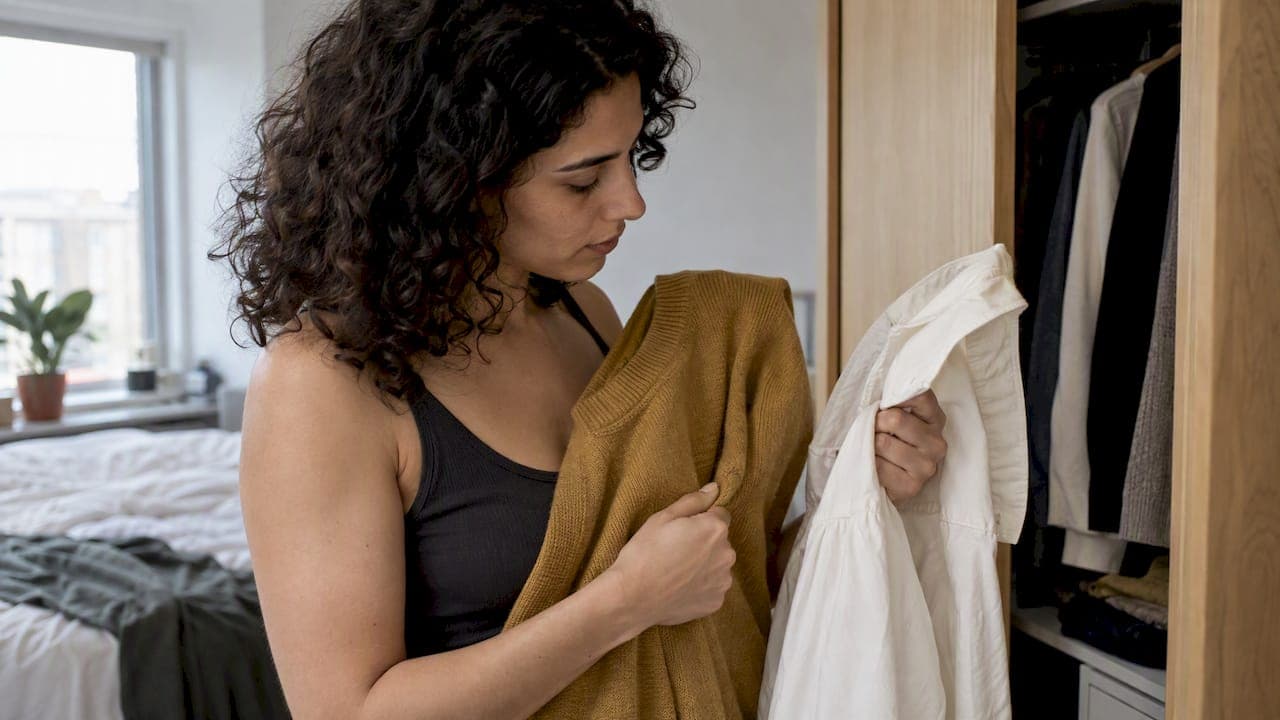
Short answer: neither wins everywhere. Merino wins on moisture, odor, temperature swings and longevity. Cotton wins on price, dry heat, easy care and availability. The smart move is to know what each does best, then wear it where it counts.
Merino is not a type of cotton. It is an animal fiber from the fleece of Merino sheep. Cotton is a plant fiber made of cellulose. Different origin, different behavior. That gap explains everything below.
TL;DR
- Merino absorbs up to 35% of its weight in moisture, against about 24% for cotton. It stays insulating when slightly damp. Cotton does not.
- Merino resists odor, so you wash it less. Cotton needs washing more often but tolerates hot machine cycles.
- Superfine merino (under 22 microns) is usually not itchy. Coarse wool is the culprit.
- Cotton is cheaper and cooler in dry summer heat. Organic cotton has a much lower footprint than conventional cotton.
- Best wardrobe: both. Merino for layers, travel and variable weather. Cotton for warm days and easy basics.
Table of Contents
- What each fiber actually is
- Moisture and temperature: where merino pulls ahead
- Where cotton still wins
- Itch, skin and sensitivity
- Durability and lifespan
- Odor and washing frequency
- Sustainability: it is not a simple answer
- Care: wool vs cotton, side by side
- How to choose by situation
- Our take: build with both
- Try it on your own wardrobe
- A quick buying checklist
- FAQ
- Sources
What each fiber actually is
Merino comes from a sheep breed bred for very fine wool. The IWTO notes that more than 1,000 sheep breeds exist. Merino and Rambouillet produce the fine wools used mainly for apparel. Coarser breeds go into rugs and interiors.
Cotton grows in a boll on the cotton plant. The fiber is short, soft and absorbent. Most of the T-shirts, jeans and bed linen in a French wardrobe are cotton.
Two structures, two personalities:
- Wool fibers are crimped and springy. They trap air. They also have a water-loving core and a surface that sheds liquid droplets.
- Cotton fibers are flat and twisted. They soak up water and hold it.
That is why a wet cotton tee feels cold and heavy, and a slightly damp merino tee still feels fine.
Moisture and temperature: where merino pulls ahead
The IWTO says wool can absorb up to 35% of its own weight in moisture and release it as vapor. Its figures put cotton at 24%. In practice, merino worn next to the skin keeps a steadier microclimate. The IWTO describes a more stable temperature and humidity between skin and garment than with other fabrics.
What that means on a normal day:
- A brisk walk to the metro in October. You warm up, then step into a heated carriage. Merino buffers the change. Cotton gets clammy.
- A cold morning, a warm office. One merino layer works across both.
- A light drizzle. Cotton loses its insulating value once wet. Merino keeps more of it.
Sleep: one study worth knowing
A 2019 study in Nature and Science of Sleep tested sleepwear fibers in warm conditions. Adults aged 50 to 70 fell asleep faster in wool than in cotton: sleep onset dropped from 26.7 minutes in cotton to 12.4 minutes in wool at 30°C. It is a small study with a specific group. Treat it as a promising signal, not a guarantee for everyone.
Where cotton still wins
Be honest. Cotton is great at several things.
- Dry heat. In a hot, dry July afternoon, a light cotton or linen shirt is hard to beat.
- Price. Cotton basics cost less. Fine merino costs more up front.
- Hot washing. Cotton takes warm machine cycles and sturdy detergents.
- Availability. You find cotton everywhere, in every cut and color.
- Print and dye range. Cotton jersey takes bold prints well.
If you wear a piece two or three times a year, cotton is the practical call. If you wear it every week, durability starts to matter.
Itch, skin and sensitivity
"Wool itches" is a real memory for many people. But the cause is fiber diameter, not wool itself. The IWTO explains that itch is a response to thick fibers poking the skin. Superfine merino, typically under 22 microns, is fine enough to avoid triggering it in most people.
Tips:
- Look for "superfine" or "extra fine" merino on the label or product page.
- Try a base layer first, then a sweater.
- Test a small piece before buying a whole set.
Sensitive or eczema-prone skin deserves extra care. Wool is often listed as a trigger for atopic dermatitis. One small clinical trial in children looked at superfine merino base layers for atopic dermatitis. It is early evidence. If you or your child has atopic dermatitis, ask a dermatologist or your doctor before switching fabrics.
Durability and lifespan
Wool fibers are tougher under repeated bending. The IWTO states a wool fiber can bend more than 20,000 times without breaking. Cotton breaks after around 3,000. Wool also stretches up to 30% and springs back, which helps garments keep their shape.

A 2012 Nielsen study, cited by the IWTO, found the average lifetime of wool garments was over 50% longer than cotton items. Note the source is an industry body, so read it as one data point.
The flip side: merino knits can pill and thin at friction spots, such as underarms or under a bag strap. Cotton jersey can bag out and fade. Neither is immortal.
Odor and washing frequency
This is merino's quiet superpower. Wool absorbs odor molecules into the fiber and releases them later. The IWTO reports on an AgResearch and SIFO study that looked at the energy used for washing different fibers. Wool garments needed far less frequent washing than cotton or polyester.
Practical routine:
- Air the garment overnight after wearing.
- Hang it in a steamy bathroom for a quick refresh. The IWTO describes airing and steam as ways to release odors without a full wash.
- Spot clean small marks.
- Wash only when it is visibly dirty or after several wears.
Sweat is not zero-risk. A merino tee worn for a hard workout still needs washing. "Less often" is not "never".
Sustainability: it is not a simple answer
Both fibers are natural. Both have trade-offs.
| Factor | Merino wool | Cotton |
|---|---|---|
| Origin | Animal (sheep) | Plant |
| Biodegradable | Yes | Yes |
| Wash frequency | Low | Higher |
| Garment lifespan | Often longer | Often shorter |
| Farming footprint | Livestock, land use | Water, pesticides (conventional) |
| Better version | Traceable, responsibly farmed wool | Organic cotton |
The IWTO argues merino's advantage lies in longevity and less washing, not only biodegradability. On the cotton side, Textile Exchange's life cycle assessment found organic cotton delivers up to 46% lower global warming potential and 91% lower blue water consumption than conventional cotton.
The takeaway: the greenest garment is the one you wear for years. Choose the fiber you will actually keep using, and buy the more responsible version of it when you can. Our guide to outfit recycling shows how to get more looks from what you own.
Care: wool vs cotton, side by side
Care labels are your first guide. In Europe, the symbols come from GINETEX, the France-based association, and the ISO 3758 standard, as Wikipedia explains. The basic reading:
- Tub symbol: washing. A number is the maximum temperature in °C. A hand in the tub means hand wash only.
- Triangle: bleaching. A crossed triangle means no bleach.
- Square with a circle: tumble drying. Crossed means don't.
- Iron: dots show heat level.
- Circle: professional dry cleaning.
| Care step | Merino wool | Cotton |
|---|---|---|
| Wash frequency | After several wears | After each wear or two |
| Temperature | Cool, wool or delicate cycle, as the label says | Often 30 to 60°C, per label |
| Detergent | Mild, wool-friendly | Standard |
| Softener | Avoid | Optional |
| Drying | Flat, away from heat | Line or tumble, per label |
| Ironing | Low heat or steam, per label | Higher heat, per label |
Always follow the label on your own piece. Blends, finishes and "superwash" treatments change the rules. Turn merino inside out in the machine, avoid overloading, and never wring it.
How to choose by situation
| Situation | Pick | Why |
|---|---|---|
| Cold commute, heated office | Merino | Handles the swing |
| Travel, carry-on only | Merino | Rewears well, fewer washes |
| Hot dry summer day | Cotton | Light and cool |
| Gym, long hikes | Merino | Moisture and odor |
| Everyday tee on a budget | Cotton | Price |
| Sleepwear in warm rooms | Either, test it | Preference matters |
| Sensitive skin | Superfine merino or cotton | Ask a doctor if eczema |
Seasons matter too. For a deeper fabric-by-season view, read our guide to choosing fabrics by season. For layering ideas at specific temperatures, try one three-layer formula for 10°C or four layered outfits for freezing temperatures. Stretch blends can also help with fit and comfort: see how stretch fabrics change everyday wear.
Our take: build with both
We see the same pattern again and again. People ask "which fabric is better?" The better question is "which fabric for which outfit?"
Merino earns its place in the pieces you layer and wear often: base layers, thin knits, socks. Cotton earns its place in the pieces you want light, crisp and affordable: shirts, tees, trousers for warm days.

The real wardrobe mistake is not choosing the wrong fiber. It is owning a great piece and forgetting it exists. A merino sweater hidden at the back of a shelf does nothing for you, or for the planet.
That is why we built MyTenue around the wardrobe you already own. Digitize your pieces. Tag the fabric. Let the AI stylist build looks from them, check how color, fabric, style and occasion work together, and adapt suggestions to the weather. Buy new only when a real gap shows up. Our durable wardrobe plan shows how to track wear counts and make each piece earn its keep.
— Ahmed
Try it on your own wardrobe
Your styliste IA. Dressing sublimé. Essayage virtuel on your personal avatar.
- Digitize your merino and cotton pieces
- Get daily weather-adapted outfit ideas
- Preview looks with virtual try-on
- Plan your week with the calendar
Start with the Free plan, then move up if you want more. Paid plans are Basic at €5.99 per month, Premium at €9.99 per month and Gold at €16.99 per month. Available on iOS and Android, in French and English. See the plans and download the app.
A quick buying checklist
Before you buy merino or cotton, check:
- Fiber content. Look for 100% or a clear percentage. A thin merino blend with synthetics behaves differently.
- Fineness. Superfine or extra fine for skin contact.
- Knit weight. Lighter for base layers, heavier for sweaters.
- Care label. Can you live with hand wash or a wool cycle?
- Cost per wear. Divide the price by the number of times you expect to wear it.
- Gaps in your wardrobe. Does it work with at least three pieces you own? For smarter buying habits, see our guide to smart shopping and building a wardrobe that works.
Cotton labelled organic, and wool from traceable sources, are worth the extra look if sustainability matters to you. A label alone does not prove much, so check for named certifications and ask the brand.
FAQ
Is merino wool cotton?
No. Merino is wool from Merino sheep, an animal fiber. Cotton is a plant fiber from the cotton plant. Some yarns are sold as "cotton merino" blends, which mix both, so check the fiber content on the label.
Is 100% merino itchy?
Usually not if it is superfine. Itch comes from thick fibers, and superfine merino under 22 microns is fine enough to avoid it for most people. Skin conditions such as eczema are different, so talk to a doctor before wearing wool against irritated skin.
Which fabric is better, cotton or wool?
It depends on use. Merino is stronger on moisture, odor, changing temperatures and lifespan. Cotton is stronger on price, dry heat and easy washing. Most wardrobes work best with both.
How should I care for merino compared with cotton?
Read the care label first. Merino usually likes airing between wears, cool or wool-cycle washing, mild detergent and flat drying. Cotton tolerates warmer cycles and more frequent washing.
What do laundry care symbols mean?
They are standardized pictograms under ISO 3758, developed with GINETEX. The tub shows washing, the triangle bleaching, the square drying, the iron ironing and the circle professional cleaning. Wikipedia's overview gives a clear reference chart.
Sources
- IWTO: Breathability and Wool
- IWTO: The Science of Wool Durability
- IWTO: The Link Between Wool and Odour Resistance
- IWTO: Wool Notes
- IWTO: Wool Characteristics and Performance
- Nature and Science of Sleep: impact of sleepwear fiber type on sleep quality
- Textile Exchange: Life cycle assessment of organic cotton fiber
- Clinical trial of superfine merino base layers in children with atopic dermatitis
- Wikipedia: Laundry symbol