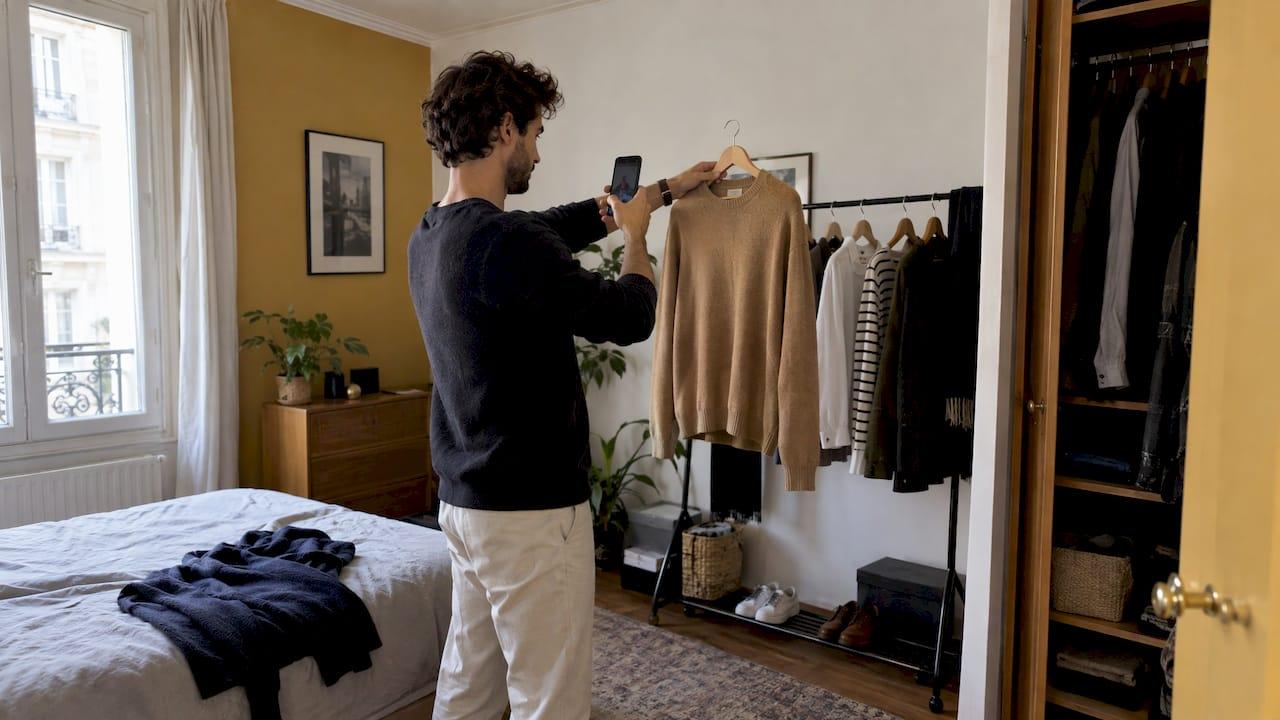
Wardrobe analytics means turning your closet into simple data: what you own, what you wear, how often, and with what. The payoff is concrete. You find the clothes you forget, buy less by mistake and get dressed faster. Mytenue, our AI stylist app, digitizes your wardrobe and builds outfits from it, so the insight turns into a look you can wear tomorrow.
TL;DR
- Wardrobe analytics = your inventory (color, fabric, style) plus your usage (what you actually wear).
- French closets are bigger than people think: about 175 garments on average, against 79 declared.
- Main benefits: less dormant stock, smarter purchases, faster outfit choices, lower cost per wear.
- You do not need to track everything. Start with 10 to 15 items and build from there.
Table of Contents
- What wardrobe analytics actually is
- Benefit 1: you see what you really own
- Benefit 2: you find the forgotten pieces
- Benefit 3: smarter, cheaper purchases
- Benefit 4: faster everyday outfit choices
- Benefit 5: a style that gets more consistent
- Benefit 6: a lighter footprint
- How to start without spending a weekend
- Who gains the most
- Our perspective
- Try it on your own wardrobe
- FAQ
- Sources
What wardrobe analytics actually is
Two kinds of information drive it. Inventory data describes each piece: color, brand, pattern, material. Usage data records when you wear it. Early academic work on smart closets showed that combining both lets a system derive your habits, such as which colors, patterns and garment types you pair most.
Today your phone does this. You photograph your pieces, the app tags them, and each outfit you plan or wear adds to the picture. No sensors, no spreadsheet.
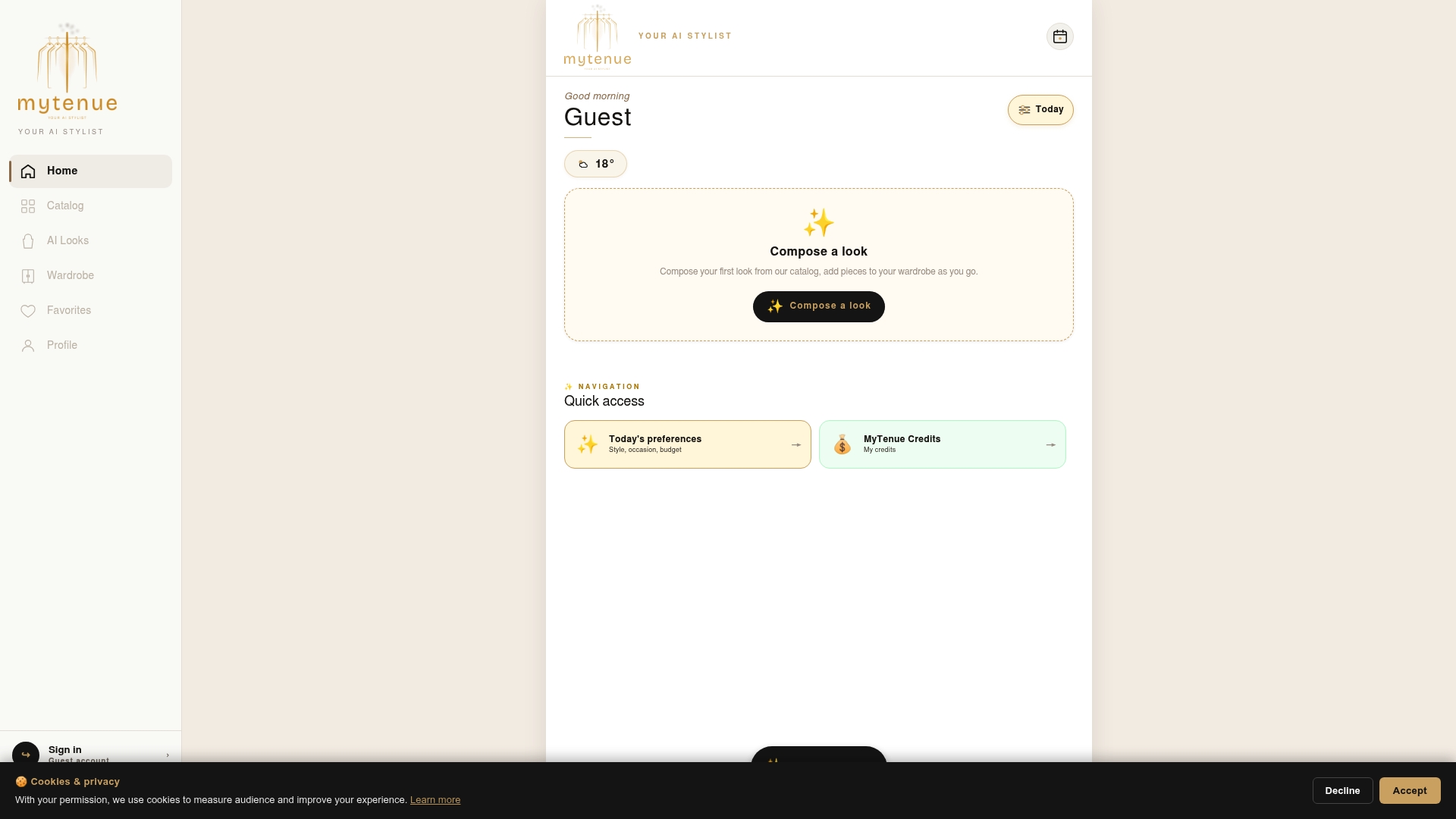
In Mytenue, the AI analyzes color, fabric, style and occasion compatibility for each item. Wardrobe digitization and organization are built in, and the calendar records what you plan to wear. If you want the full method, our guide to AI wardrobe analysis walks through it.
Benefit 1: you see what you really own
Most people underestimate their wardrobe. The ADEME study, run with the ObSoCo research institute, counted around 175 garments per French person on average, while people declared only 79. That is a gap of 1 to 2.2 between guess and real count, according to ADEME's 2025 press kit.

The same study found that more than half of the clothes in French closets are "dormant", meaning unused. In the detailed 2024 survey report, 40 of the 79 declared pieces fell in that category.
So the first benefit is simply a clear map. Once every piece is listed, you stop shopping for things you already have.
Benefit 2: you find the forgotten pieces
Usage data shows the gap between the clothes you defend and the clothes you wear. Figures from the Wardrobe Diary Project, reported by Forbes in 2023, say the average tracked wardrobe holds 184 pieces and that up to 70% of garments are worn four times a year or less.
In France, about 120 million garments bought more than three months ago have never been worn, or only once or twice. The Conversation covered the ADEME figures in September 2025.
A wear log makes this visible. Sort by last worn date and the neglected pieces rise to the top. Then the useful question is not "should I get rid of it?" but "what could I pair it with?" That is where outfit generation helps: Mytenue builds looks from your own wardrobe, so a forgotten blazer gets a new role.
Benefit 3: smarter, cheaper purchases
Analytics turns shopping from impulse into gap-filling. If your data shows ten tops and two pairs of trousers that match them, you know what is missing. Before buying, you can test how a new item works with what you own. Our wardrobe gap analysis method suggests checking 2 to 3 outfits before you pay.
Cost per wear is the other lens. Wardrobe Diary Project data, again via Forbes, puts an efficient range at roughly $0.55 to $2.20 per wear, with some items reaching $33. Regular use, more than purchase price, is what drives that number down.
Example: a €90 jacket worn 45 times costs €2 per wear. A €30 top worn twice costs €15 per wear. The cheaper item is the worse deal.
For students and anyone on a budget, this is the strongest argument. Spending drops when you buy fewer, better-matched pieces. Our guide to smart shopping goes deeper.

Benefit 4: faster everyday outfit choices
Decision fatigue is real at 7:30 a.m., especially with kids to get out the door. When your clothes are digitized, you pick from a list of tested combinations instead of staring at hangers.
With Mytenue, you get daily suggestions adapted to the weather. You can plan outfits ahead in the calendar, and preview them on your personal avatar with virtual try-on. Editorial flat-lay images show the full look laid out, so you judge it in seconds.
Planning a week on Sunday evening takes minutes and removes the morning scramble.
Benefit 5: a style that gets more consistent
Data shows patterns you do not notice. Maybe 70% of your wardrobe is navy and grey, or your best-worn pieces share the same cut. Seeing that helps you decide what to keep building on and where to add contrast.
Look scoring helps here. Mytenue includes integrated look scoring and checks color, fabric, style and occasion compatibility. You get a quick read on why a combination works instead of guessing.
Benefit 6: a lighter footprint
Wear more, buy less: that is the sustainable logic. A 2025 MDPI study of wardrobe management apps reported that 470 users described changes tied to less overconsumption and more use of their clothes. It also notes that disconnection from the clothes we already own encourages unnecessary purchases.
Secondhand can fit in too. When your data shows pieces you will truly never wear, passing them on makes sense, and sustainable secondhand habits help that clothing keep circulating. Just keep the goal in view: a smaller, better-used wardrobe, not faster turnover. For a practical plan, see our durable wardrobe plan with wear counts.
How to start without spending a weekend
- Scan a first batch. Digitize 10 to 15 items in one to two hours. Begin with what you wear weekly. Our digitizing guide shows how.
- Let the AI tag them. Color, fabric, style and occasion are analyzed for you.
- Generate outfits. Ask for looks from what you own, then try them on your avatar.
- Log what you wear. A quick tap each day is enough to build usage data.
- Review monthly. Check the unworn pieces, then decide: restyle, rotate or pass on.
Tracking everything is not required. A partial wardrobe already gives useful patterns, and you can add pieces over time.
Who gains the most
| Reader | Main gain |
|---|---|
| Young professionals | Polished, repeatable work outfits |
| Busy parents | Quick daily suggestions, weather included |
| Students | Fewer purchases, more looks per piece |
| Fashion enthusiasts | Deeper AI analysis of color, fabric and style |
Our perspective
A closet is full of information you never see. We built Mytenue so that information works for you.
Most apps stop at the list. We think the list is only the start. Once your wardrobe is digitized, the AI should create looks from it, show them on your avatar, score them and plan them around the weather. That is the loop: know what you own, wear it better, buy only what completes it.
The result is a Dressing sublimé: your own clothes, styled with more confidence and less effort. Analytics is not about numbers for their own sake. It is about getting dressed well.
Ahmed
Try it on your own wardrobe
Mytenue is available on iOS and Android, with web access too. The Free plan lets you start. Paid plans are Basic at 5.99 € per month, Premium at 9.99 € per month and Gold at 16.99 € per month. Download from the Mytenue app page, scan your first pieces and see your styliste IA at work.
Want to go further? Read how predictive fashion technology uses your data to anticipate what you need.
FAQ
What is the main benefit of wardrobe analytics?
Clarity. You see what you own and what you actually wear. That cuts duplicate purchases and brings forgotten pieces back into rotation. French data shows the gap is large: people own far more than they think.
How much should I track?
As much as is useful, and no more. Start with 10 to 15 frequently worn items. Add more when you have time. Even a partial log reveals your habits.
Does it help on a tight budget?
Yes. Cost per wear shows which items pay off, and gap analysis stops you buying pieces that match nothing. You spend on what completes your wardrobe.
Is wardrobe analytics only for fashion experts?
No. It suits anyone who wants to dress better with less effort. The app does the tagging and the outfit suggestions, so you only photograph your clothes.
Sources
- ADEME textile press kit, June 2025
- ADEME/ObSoCo detailed report, 2024
- The Conversation, overconsumption of clothing in France
- Forbes, tracking wardrobe usage
- SCITEPRESS, unobtrusive user profiling with RFID
- MDPI, wardrobe management apps
- Sustainable secondhand shopping habits