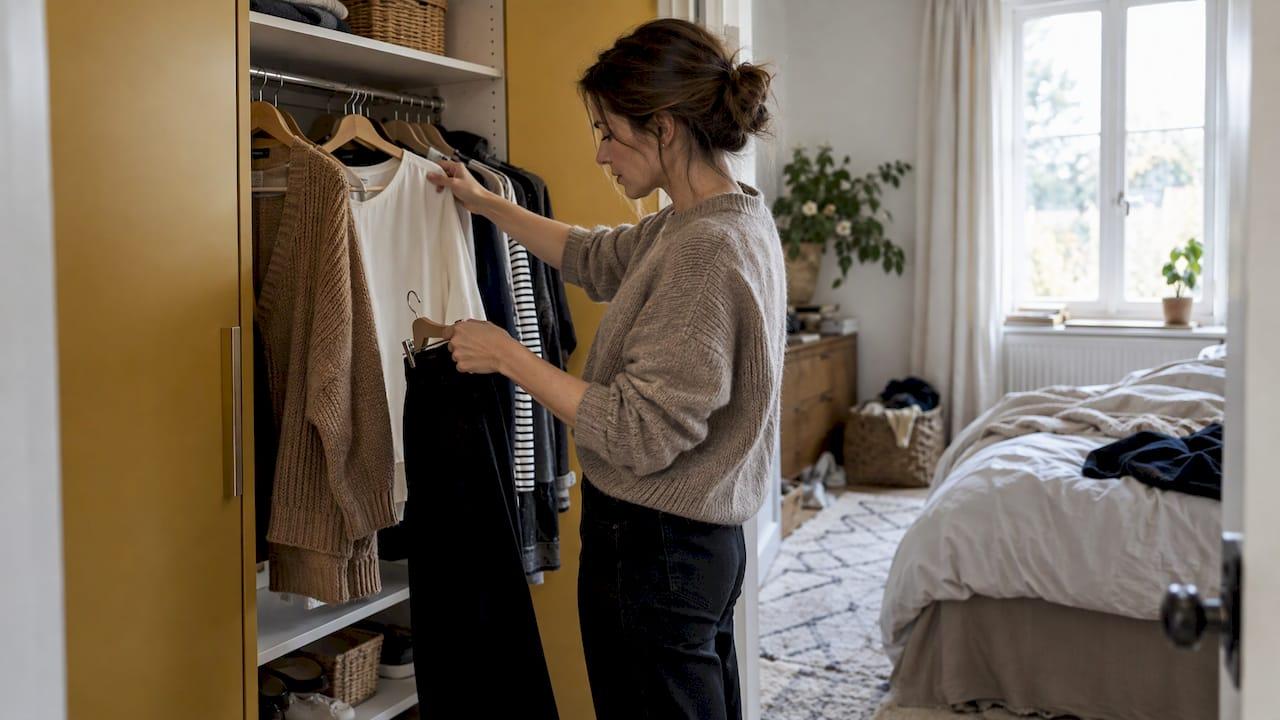
The fastest way to plan outfits as a busy parent is to stop deciding every morning. Pick a few repeatable formulas, make the choices once a week, and let your wardrobe do the rest. Our app, MyTenue, is built for exactly that: it digitizes your wardrobe, generates outfits from the clothes you already own and lets you plan the week in a calendar.
This guide gives you the full routine. It covers the formulas, the pieces that mix easily, the Sunday method, and how to handle weather, school runs and work days.
TL;DR
- Morning fatigue comes from too many micro-choices, so limit options the night before or the week before.
- Build 3 to 5 tested outfit formulas: one bottom, one top, one layer, one pair of shoes.
- Keep a small color palette so every piece combines with at least three others.
- Spend about 20 minutes on Sunday preparing the week, then adjust for weather and schedule changes.
- MyTenue turns your digitized wardrobe into outfits, virtual try-ons and a weekly calendar.
Table of Contents
- Why mornings feel so hard
- Step 1: Choose your outfit formulas
- Step 2: Choose pieces that mix and match
- Step 3: Shrink the wardrobe to what you actually wear
- Step 4: Plan the week in 20 minutes
- Step 5: Adapt to routine, weather and occasion
- Step 6: Look polished without extra time
- How to choose a styling approach that fits a busy routine
- Perspective
- Try the routine with MyTenue
- FAQ
- Sources
Why mornings feel so hard
The problem is rarely a lack of clothes. It is the number of small decisions packed into a few minutes: what is clean, what matches, what suits the weather, what survives a school run, a meeting and a park afternoon. French brand Boutique Maman explains that morning fatigue comes from these micro-choices, and that the most effective fix is to limit options the night before. Its suggested base is simple: one bottom, one top, one optional layer and one pair of shoes.
That base is the whole idea of outfit planning for busy parents. You are not trying to be more stylish at 7:40 a.m. You are moving the thinking to a calmer moment.
Three habits make this work:
- Formulas instead of freestyle. A formula is a structure, not a single outfit.
- A smaller, cohesive wardrobe. Fewer pieces that combine well beat a full closet of orphans.
- A fixed planning slot. Ten to twenty minutes, once a week.
Step 1: Choose your outfit formulas
The simplest formula, which Maman Modeuse illustrates, is one bottom plus one top plus one outer layer: jeans or trousers, a tee or shirt, then a cardigan, fine sweater or jacket. Everything else is a variation.
Boutique Maman recommends building 3 to 5 ready-to-wear formulas with clothes already tested together. Its examples: a Breton top with raw denim, a soft shirt with black trousers, or a fine sweater with a midi skirt. It also describes a "soft uniform" of straight jeans or fluid trousers, a plain tee or fine knit, a short jacket or vest, and clean sneakers or simple ankle boots. The repetition builds a visual signature and speeds up choices.
If you want formulas by situation, here are ones that work in practice:
| Situation | Formula | Why it works |
|---|---|---|
| School run, errands, park | Stretch-waist trouser, jersey top, short jacket | Comfort and support, per Cache Cache |
| Home, then out | Wrap dress, cardigan, loafers | Dresses up with one layer |
| Active weekend | Stretch jeans, crewneck sweater, dressy sneakers | Moves with you, still looks put together |
| Rainy morning | Ponte leggings, longline tee, knit jacket, ankle boots | A rainy-day formula from Kinunplugged |
| Five-minute rescue | Black jersey dress, oversized chambray shirt tied at the waist | One piece plus one layer |
The school-run capsule formula from Kinunplugged breaks it into four layers of choice: a soft base, a structured or textured top layer, an easy bottom and a practical shoe. The goal is to get dressed in under five minutes and still look intentional.
Keep one flexible substitute
Schedules change. A late meeting, a sick child, a surprise rain shower. Dr.isla recommends five repeatable formulas plus one flexible substitute outfit kept ready for schedule changes. A blazer-ready or jacket-ready option is a good candidate, because one layer can move you from playground to office.
Step 2: Choose pieces that mix and match
A formula only works if the pieces combine. Three tricks make that easy.
A small palette
Boutique Maman suggests black, navy, ecru, grey, beige or khaki to multiply combinations. If you love color, one strong tone can act as an anchor without complicating things. The blog S'organiser chez soi likewise advises easy neutrals plus one or two accent colors. If you want a method for choosing your palette, our guide to testing a wardrobe color palette at home walks you through it, and our color combinations that always work give you ready-made pairings.
The three-association rule
Before buying anything, check that it goes with at least three pieces you already own. Le Bon Sens warns that a piece that does not will probably become an orphan. For a parent on a budget, this one rule saves more money than any sale.
Fabrics that survive real days
Cache Cache points to jersey, fluid viscose, stretch cotton and fabrics with polyester or elastane as materials that resist active days and keep their shape. The same page lists what to avoid on busy parent days: very white garments that stain easily, delicate fabrics needing special care, tie-front tops, rigid belts and very low necklines.
Reliable basics
Daily Mom suggests a capsule of reliable basics: a classic white shirt, wide-leg jeans, tailored trousers, a cozy cardigan, neutral sweaters, a leather or suede jacket, simple flats and a versatile dress. These layer well and carry across seasons. For leggings, the same piece suggests balancing the fitted shape with slightly oversized pieces on top.
If you want a ready list by season, see our wardrobe essentials for every season. For a more polished, work-friendly version, our professional capsule wardrobe with 15+ outfits is a good template.
Step 3: Shrink the wardrobe to what you actually wear
You do not need a magic number. Hizno notes that common benchmarks sit around 30 to 40 pieces per season, excluding underwear, sportswear and pajamas, while stressing that lifestyle matters more than count. Another guide, Linen & Light Co., defines a capsule as a smaller collection of 20 to 30 pieces that all mix and match, and observes that most people wear the same 20% of their clothes 80% of the time.
A practical way to start:
- Sort. Pull out what is damaged, uncomfortable, never worn or hard to match. Fashion-et-Tendances proposes four piles: keep, repair, resell or donate, recycle.
- Spot your repeats. Nicole Rate suggests looking at what you already reach for regularly, the most comfortable pieces and the easiest to combine, and storing the rest out of sight to test a smaller wardrobe.
- Document. Photograph pieces together in a phone album, or hang two or three outfits together.
Photo albums work, but they are manual. This is where our app takes the work off your hands: you digitize and organize your wardrobe in MyTenue, and the AI builds outfits from those clothes. For a deeper audit, our capsule wardrobe planning guide takes two hours and ends with a size for your capsule.
Give the physical closet a system too
A digital wardrobe is easier to run when the real one is tidy. Sorting by category, keeping outfit pieces within reach and following simple closet organization basics means that what you plan on Sunday is actually easy to grab on Tuesday.
Step 4: Plan the week in 20 minutes
The routine most French parenting sources agree on is a Sunday session. OrgaParents recommends taking 20 minutes on Sunday evening to prepare the week's outfits for the whole family, with children choosing from two or three defined options, which reduces morning negotiations. Mamandragore suggests that for a parent with a toddler, two or three complete outfits may be enough, plus a spare tee in the diaper bag.
Here is a version for adults:
- Open your calendar. Note school drop-offs, video calls, client meetings, weekend plans. Styles et Tendances suggests checking the agenda first, then assembling complete outfits with shoes and accessories for five looks.
- Match each day to a formula. Meeting day: blazer formula. Park day: stretch-trouser formula.
- Put each look together. Hang it, group it on a shelf, or photograph it.
- Keep one spare. The flexible substitute from earlier.
- Check the forecast Sunday night and swap if needed. A layer is usually all that changes.
MyTenue handles steps 1 to 3 in one place. The app includes outfit planning with a calendar, daily weather-adapted suggestions and AI analysis of color, fabric, style and occasion compatibility. You scroll, pick, and the week is set.
Step 5: Adapt to routine, weather and occasion
No two parents have the same week. A guide on French capsule wardrobes notes that a capsule must fit your job, climate and habits: someone working from home has different needs from someone constantly traveling or meeting clients.
S'organiser chez soi gives a nice example for freelance mothers in fall: comfortable clothes for outings with the kids, a blouse for video calls and a polished touch for client meetings, adapted by layering sweaters, a trench or coat and a cardigan.
Some practical rules:
- Layer rather than swap. The base stays; the cardigan, trench or coat changes with the weather.
- Shoes decide the day. Trainers, clogs, loafers or weatherproof ankle boots, depending on the forecast.
- Bag as a tool. People recommends a reliable woven bag that fits phone, wallet, keys, water bottle and laptop.
- Travel days. If work takes you on the road, our business trip capsule wardrobe shows how to pack less and still look sharp.
Step 6: Look polished without extra time
Planning is not only about speed. It is about feeling like yourself. Stylist's fashion director Kitty McGee says a well-cut blazer over a tee or vest and jeans elevates a look, even with trainers. She also likes a long ankle-grazing dress as an outfit that takes zero brain power, and mid-blue jeans as the mainstay of a work-and-mum wardrobe.

Marie Claire offers two more ideas: sweats built like five-pocket jeans with a thick cotton cardigan, and a boxy, sized-up button-down tucked into a skirt with ballet flats and a market tote.
The core idea from I do deClaire is that a core outfit formula is a personal uniform, but more flexible: a structure that works for your body, schedule and lifestyle, which you remix with color, accessories or seasonal tweaks. When you know which combinations flatter you, half the mental load disappears.
For a French take on the same idea, our French chic capsule wardrobe shows 12 pieces and endless looks.
How to choose a styling approach that fits a busy routine
Whatever method you pick, judge it on four points:
- Does it start from clothes you own? The fastest plan uses your existing wardrobe, with new pieces added only where there is a gap.
- Does it respect your calendar? An outfit for a client meeting and one for a park day are different problems.
- Does it take under 20 minutes a week? If not, you will drop it by October.
- Does it help you see the result before you dress? Seeing the combination ahead of time removes the last hesitation.
MyTenue is designed around these four points. It generates outfit recommendations from your wardrobe, plans them in a calendar, adapts suggestions to the weather and offers high-quality virtual try-on on a personal avatar. It also creates editorial flat-lay images of your outfits, so a look is visible at a glance.
Perspective
We built MyTenue because the hardest part of getting dressed is not taste. It is time. Most parents already own enough clothes for a good week. What is missing is someone to put the pieces together before the morning rush.
That is why we start from your wardrobe. Our AI stylist looks at color, fabric, style and occasion compatibility, then proposes outfits from what you already have. You try them on virtually, keep the ones you like, and place them in your calendar.
We also like the way this works for the planet and the budget. Mixing what you own with a few well-chosen new pieces means fewer impulse buys and more outfits per item.
The goal is simple: five minutes on Sunday, calm mornings all week.
Ahmed
Try the routine with MyTenue
MyTenue is available on iOS and Android, with mobile and web access and a French and English interface. There are four plans: Free, Basic at €5.99 per month, Premium at €9.99 per month and Gold at €16.99 per month, as published on our site when this article was written. Start with the free version, digitize a handful of pieces and see what the AI stylist proposes for your week. You can download the app and see the plans.
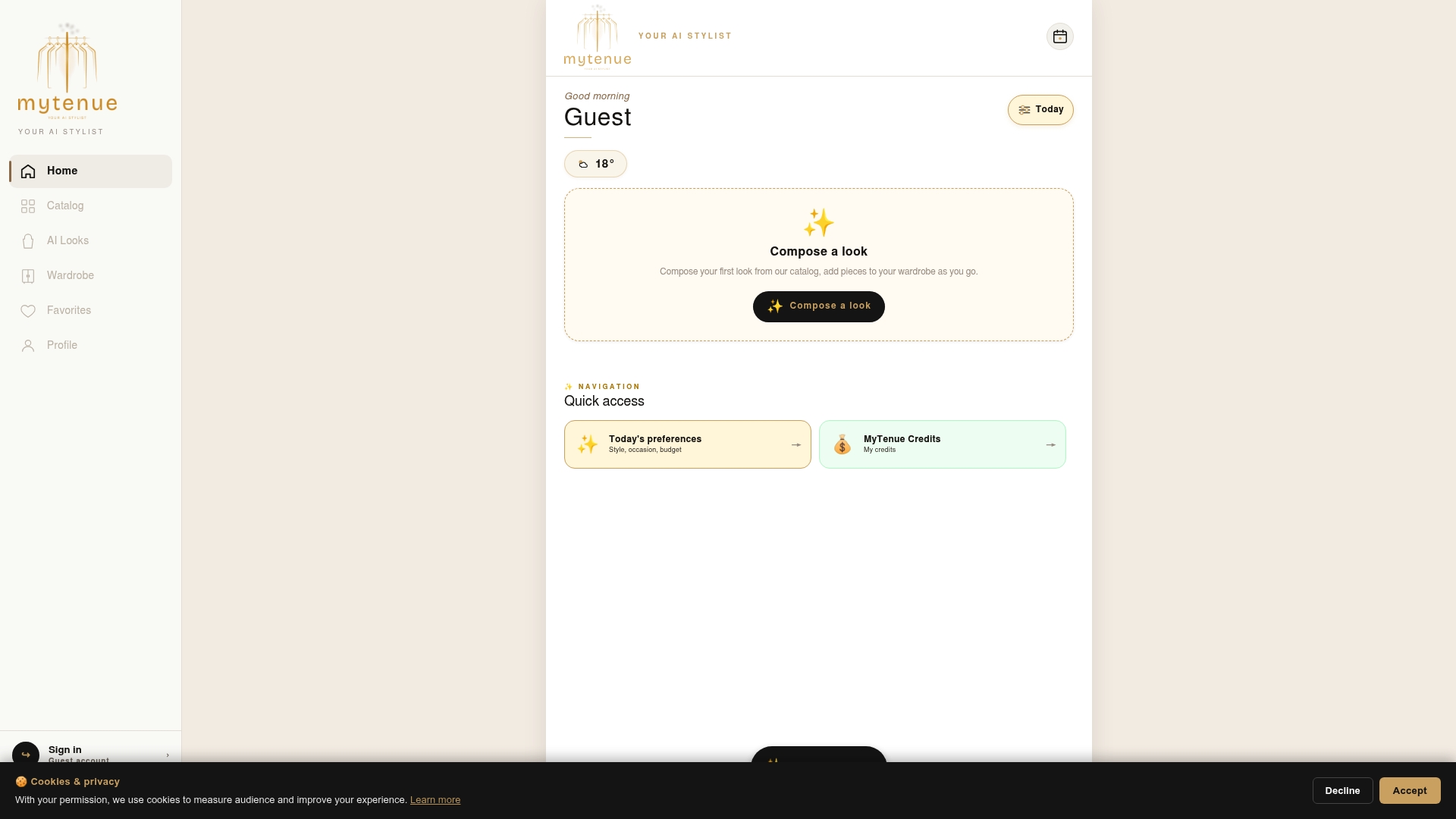
The premium catalog with loyalty credits is there for the day you want to fill a gap in your wardrobe with a new piece.
FAQ
How many outfits should I plan for the week?
Five is a good target, one per workday, with one flexible substitute. OrgaParents recommends preparing five outfits ready to put on, and Mamandragore says two or three may be enough with a young child. Start small and add as the routine settles.
What are the easiest pieces to mix and match?
Neutral basics: jeans or soft trousers, tees and fine knits, a cardigan or short jacket, and clean sneakers or simple ankle boots. Add one or two accent colors. A piece that combines with at least three items you own is a safe buy.
How long does a weekly outfit plan take?
About 20 minutes on Sunday evening is the benchmark in French parenting guides, and less once you have your formulas. With MyTenue, the AI proposes outfits from your digitized wardrobe, so you mainly choose and confirm.
What should I avoid wearing on busy parent days?
Cache Cache lists very white garments that stain easily, delicate fabrics that need special care, tie-front tops, rigid belts and very low necklines. Pick stretch, jersey and easy-care fabrics instead.
Do I need a capsule wardrobe to plan outfits?
No, but it helps. A smaller group of pieces that all combine makes formulas easy. Benchmarks run from about 20 to 40 pieces per season, and your lifestyle matters more than the number.
Sources
- Boutique Maman: S'habiller vite le matin
- Maman Modeuse: garde-robe capsule
- Cache Cache: rester stylée avec des enfants
- Kinunplugged: The School Run Capsule
- Dr.isla: Weekly Outfit Planning
- S'organiser chez soi: capsule wardrobe automne
- Le Bon Sens: garde-robe idéale
- Daily Mom: School Drop Off Outfits
- Hizno: Capsule wardrobe
- Linen & Light Co.: Capsule Wardrobe for Moms
- Fashion-et-Tendances: garde-robe capsule femme
- Nicole Rate: Simple Capsule Wardrobe for Moms
- OrgaParents: préparer les vêtements de la semaine
- Styles et Tendances: s'habiller vite le matin
- Mamandragore: garde-robe de maman pratique
- People: busy mom fall outfit formulas
- Stylist: school run to commute
- Marie Claire: Two-Piece Outfit Formulas
- I do deClaire: Core Outfit Formula