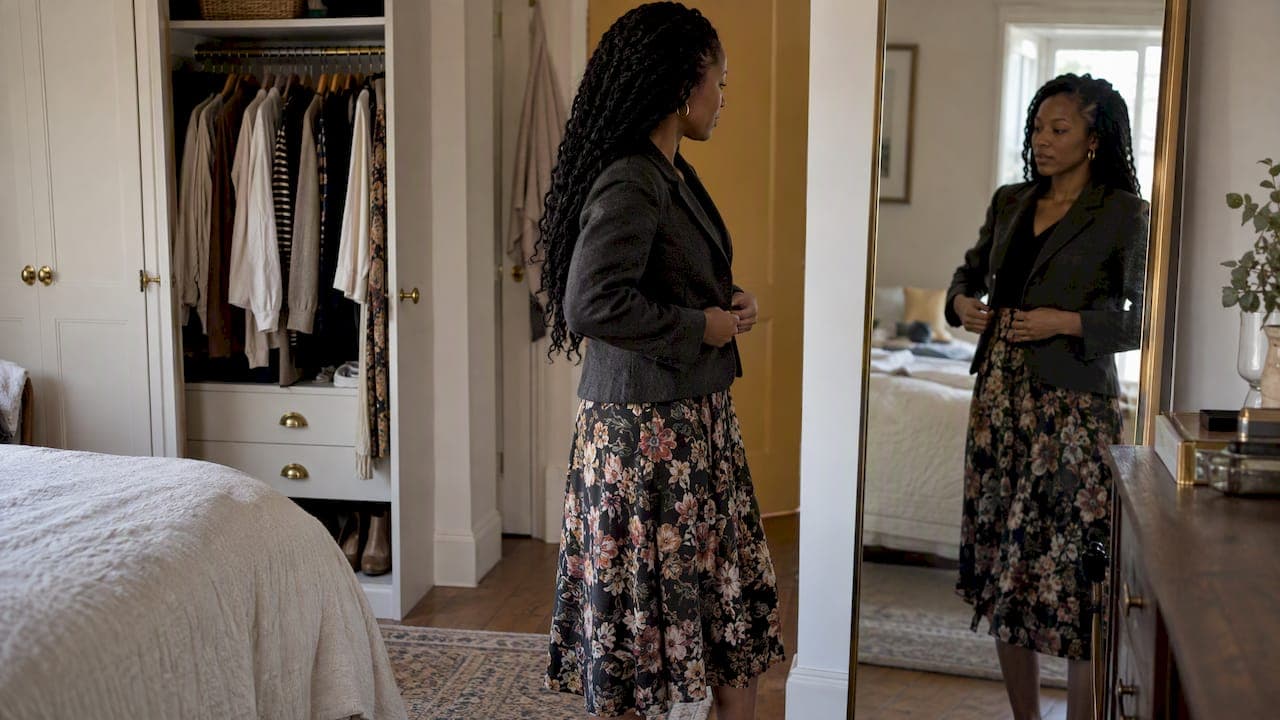
You can make new outfits from your closet without buying anything. Pick one anchor piece, test it against every plausible top, add a third layer, then choose shoes and bags last. Photograph what works so you never have to rebuild it. Below: the method, formulas for work, college and busy mornings, tricks for changing the look of one piece, and how to spot a real gap before you spend.
TL;DR
- Start from one anchor piece and try it with everything, without deciding in advance what "should" work.
- Keep the structure, change one detail: shoes, belt, scarf, sleeves or coat.
- In France, the average wardrobe holds 175 garments and fewer than half are worn, so the answer is often already on your rail.
- Photograph the looks that work, then plan them on a calendar.
- Buy only after you have tested 2 to 3 outfits with the item you think is missing.
Table of Contents
- Why your closet holds more outfits than you think
- The anchor method: build an outfit in five steps
- Easy formulas for work, college and busy mornings
- Make one piece look different
- Adapt your outfits to the season and weather in France
- Plan, photograph and find the real gaps
- Rewearing saves money and cuts waste
- Our perspective
- Let your AI stylist do the testing
- A 30-minute plan to start tonight
- FAQ
- Sources
Why your closet holds more outfits than you think
Most of us wear a small slice of what we own. According to ADEME, the French agency for ecological transition, a French wardrobe contains 175 garments on average, and people wear fewer than half of them. ADEME's own advice is simple: before shopping, check whether you already own what you want, rediscover forgotten pieces and repair favorites.

That is good news. It means the "nothing to wear" feeling is rarely a shortage of clothes. It is a shortage of combinations you have tried.
A stylist quoted in The Guardian argues that a new combination can satisfy the brain's appetite for novelty just as a new item does. Her examples are easy to try tonight: a floral skirt with a jacket you have never paired it with, or a jumper layered over a dress.
If you want a longer read on the same idea, our guide on getting more outfits from the closet you already have goes deeper.
The anchor method: build an outfit in five steps
This method comes from stylists and wardrobe writers, and it works because it removes guesswork. You test, you do not theorize.
- Choose an anchor. Pick one piece that suits your mood or the occasion: trousers, a skirt, a dress, a jacket. Irene Kim's wardrobe method starts the same way.
- Hold it against every plausible top. Include folded knitwear and the shirts you forgot. Looking Good Girls recommends doing this without deciding beforehand what should work. Surprises come from the tops you would have skipped.
- Add the third piece. A bottom, a top and a third piece (a blazer, cardigan, open shirt or vest) is the basic structure of a finished outfit.
- Choose shoes and bags last. Check colour, texture, print, proportion and mood. One wrong shoe can flatten a good outfit, and one right one can lift it.
- Photograph it. A quick mirror shot or a flat lay becomes a library you can reuse on tired mornings.
Treat it as play. Irene Kim describes experimentation as deliberate and non-judgmental: you try plausible combinations rather than assuming what goes together. Give yourself 20 minutes, a playlist and a clear bed.
A worked example
Say your anchor is straight, mid-blue jeans.
- With a white T-shirt, a black blazer and loafers: office-casual.
- With a striped knit, a trench and white sneakers: weekend errands.
- With a silk blouse, the same blazer and heeled boots: dinner.
Three outfits, one anchor, only the supporting pieces moved. Repeat with a skirt, then a dress, and you have a month of looks.
Easy formulas for work, college and busy mornings
Formulas help when you have five minutes. The Quality Edit names neutral straight-leg or loose trousers, neutral sneakers, black boots and loafers or flats as versatile foundations. It also suggests pairing a statement top with playful accessories and noticeable shoes.
For parents on a tight clock, Hurry Up Mummy lists formulas that need almost no thought: leggings, a top and an open layer; jeans, a plain top and flat shoes; a midi dress with flat shoes; coordinated separates with neutral shoes.
| Situation | Formula | Swap to change it |
|---|---|---|
| Office | Straight trousers + plain top + blazer + loafers | Swap the top for a fine knit, or loafers for ankle boots |
| College | Jeans + T-shirt + open overshirt + sneakers | Add a scarf, or swap sneakers for boots |
| School run | Leggings + long top + open layer + flats | Change the layer, keep the base |
| Evening | Midi dress + jacket + boots | Add a belt or swap the jacket for a coat |
| Weekend | Jeans + striped knit + trench | Change the bag and the shoes |
Writing your own five formulas takes ten minutes and saves you every Monday morning. If you are building for the office, our professional capsule wardrobe plan shows how to stretch a few pieces into 15 or more outfits.
Make one piece look different
You rarely need a new outfit. You need a new detail.
French editor Eugénie Trochu, interviewed by Who What Wear, keeps a small core and changes one decisive element: shoes, belt, scarf, sleeves or coat. Her repeatable core is straight jeans, a black blazer, simple white or black T-shirts and a brown bag. Coats, jewelry, collars, gloves and boots supply the variation. Repeating is a structure, not a rut.
Here are more levers, all inexpensive:
- Fix the fit with tiny gestures. Per The Guardian's stylists, pushing up sleeves, tucking a top, adding a belt or popping a shirt collar can make an outfit look intentionally styled.
- Change the color pairing. Putting Me Together suggests repeating a color from a print elsewhere in the outfit.
- Change the silhouette. Fitted on top and wide below, then the reverse.
- Layer in unexpected ways. A shirt or T-shirt under a sleeveless dress turns a summer piece into an autumn one.
- Change the dressiness. Sneakers under a tailored trouser, or a blazer over a plain dress.
For more combinations that need nothing new, see remix your closet: new outfit combos you already own.
Adapt your outfits to the season and weather in France
Mainland France has four distinct seasons, but a single day can swing. Paris, for example, has a temperate climate, and travel guides to Paris weather recommend layers because not every day matches the average. A tee under a sweater in winter lets you cool down indoors.
That advice works for any French city. Use your layers as the adjustable part of the formula:
- Spring and autumn: keep the base light (T-shirt, shirt, fine knit) and rely on the third piece: trench, denim jacket, cardigan. Add a compact umbrella to your bag by default.
- Summer: dresses and light trousers carry the season. A thin overshirt covers air-conditioned offices and cooler evenings.
- Winter: swap the outer layer and the shoes first, then add knits, scarves and gloves. The base outfit can stay the same.
To build a season-proof core, our wardrobe essentials for every season guide lists what to keep within reach for each one. Check the forecast the night before, not the morning of: it is the cheapest styling habit there is.
Plan, photograph and find the real gaps
Once you have a few good combinations, store them. DeftBrain suggests a short routine:
- Sort clothes into tops, bottoms, layers and shoes.
- Find neutral connectors for orphaned items, the pieces that go with nothing yet.
- Try one new combination a week.
- Photograph successful outfits.
- Reconsider anything unworn for a year.
If you want to digitize the whole rail, our closet inventory workflow takes you from an empty rack to a digital list in seven steps. A full capsule wardrobe audit takes about two hours.
Before you buy: five questions
When a gap seems real, ADEME's responsible-consumption guide offers five questions:
- Do I really need it?
- Can I wait?
- Do I already own something nearly identical?
- Where was it made?
- Will I use it often?
Then test it. Try to build 2 to 3 outfits with the item you imagine buying, using only what you own. If you cannot, the gap is real and you know exactly what to look for. Our wardrobe gap analysis walks through that test step by step.
Rewearing saves money and cuts waste
Limiting new purchases and extending the life of what you own is, according to ADEME, the most effective upstream action on clothing waste. Their care advice is practical: follow care labels, wash only when necessary, use moderate temperatures and limit tumble-drying to reduce premature fibre wear. Clothes you will not wear again can be donated or resold, or placed clean and dry in a textile collection container.
Second-hand is not a free pass. ADEME's second-hand buying guide points out that nearly 50% of second-hand purchases lead to overconsumption through accumulation or rapid replacement, and that low prices can tempt you into pieces you rarely wear. The same five questions apply. When you do shop second-hand with a plan, mixing it with what you own works well: see why mixing secondhand and new pieces elevates your style.
Our perspective
We built Mytenue on one belief: your best next outfit is probably already in your dressing room.
The hard part is not taste. It is time. Trying twenty combinations in front of a mirror on a weekday morning is unrealistic, so most people fall back on the same three looks. We designed our AI stylist to do the testing for you. You digitize your wardrobe, and the app proposes outfits from your own pieces, adapted to the weather and the occasion.
We also think you should see a look before you wear it. That is why we offer virtual try-on on your personal avatar, and editorial flat-lay images you can save and plan on a calendar. Our look scoring checks color, fabric, style and occasion compatibility, so you get a reason behind each suggestion, not just a picture.
For us, sustainable style starts with wearing more of what you have. New pieces still have a place, but they come second, once you know what truly completes your wardrobe.
Ahmed
Let your AI stylist do the testing
Mytenue is an AI stylist app for iOS and Android. Scan your clothes, get outfit ideas from your own wardrobe, try them on your avatar, check the weather-adapted daily suggestion, and plan the week.
The interface is available in French and English, on mobile and web. Plans published on our site:
- Free
- Basic: 5,99 € per month
- Premium: 9,99 € per month
- Gold: 16,99 € per month
Start with the free version, then upgrade if you want more. See the plans and download the app.
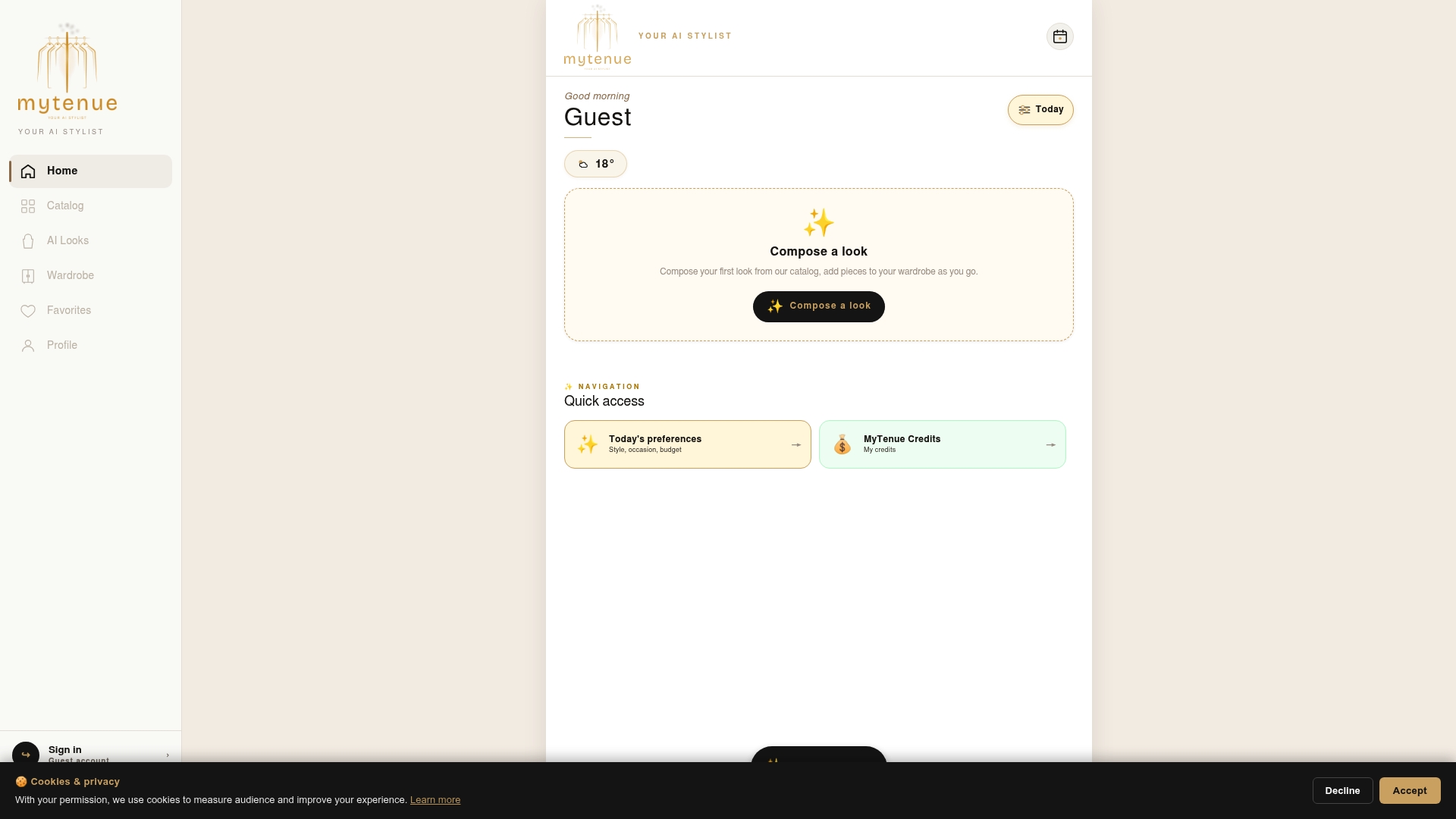
Your dressing room, sublimated. Your AI stylist is one tap away.
A 30-minute plan to start tonight
You do not need a weekend. Try this once:
- Minutes 0 to 5: pick three anchors you like but rarely wear.
- Minutes 5 to 20: build two outfits around each, using the five steps above. Photograph all six.
- Minutes 20 to 25: note one detail to vary per outfit: shoes, belt, scarf, sleeves or coat.
- Minutes 25 to 30: put the six looks on your calendar for the coming week.
At the end of the week, note which ones you actually enjoyed. Keep those as formulas. Retire the rest without guilt. After a month you will have a personal set of 15 to 20 outfits that you know work, and a clear view of what is genuinely missing.
For more ways to refresh without shopping, our effortless wardrobe upgrade strategies and the guide to outfit recycling are good next reads.
FAQ
How do I make outfits from clothes I already own?
Start with one anchor piece and try it with every plausible top, then add a third layer and choose shoes and bags last. Photograph the combinations that work. Repeat with a different anchor each time.
What if I feel I have nothing to wear?
That feeling usually points to a lack of tested combinations, not a lack of clothes. In France, people wear fewer than half of their garments, according to ADEME. Rediscover forgotten pieces first, then change one detail such as shoes, belt or scarf.
How do I know if I really need to buy something?
Ask whether you already own something nearly identical, whether you can wait, and whether you will use it often. Then try to build 2 to 3 outfits with the item you imagine buying. If you cannot make them from your own closet, the gap is real.
Can an app help me create outfits from my wardrobe?
Yes. Mytenue digitizes your clothes, suggests outfits from them, shows them on your personal avatar and adapts ideas to the weather. It also lets you plan looks on a calendar. A free version is available, and paid plans are listed on our app page.
Sources
- ADEME: Quels sont les enjeux d'une mode plus durable ?
- ADEME: Comment consommer plus responsable ?
- ADEME: Que faire de ses vêtements usagés ?
- ADEME: Comment bien acheter des vêtements d'occasion ?
- The Guardian: Stylists on 20 free and easy ways to liven up your look
- Who What Wear: Eugénie Trochu on the art of repeat outfits
- Looking Good Girls: How to Build Outfits From Clothes You Already Own
- Irene Kim: What I'm Wearing no. 76
- The Quality Edit: How to style the staples you already have
- Hurry Up Mummy: Easy Outfit Formulas for Busy Mums
- Putting Me Together: 6 Ways to Create New Outfits With What's In Your Closet
- DeftBrain: How to build outfits from what you already own
- Paris weather: what to pack and how to dress